
🐕🦺💼 Emotional Support Animal (ESA) vs. Service Dog: The New DOT and Housing Rules Explained

It is one of the most common – and costly – misunderstandings in modern pet ownership. You might think your emotional support animal has the same rights as a service dog. You might believe a certificate from a website lets you and your dog into a restaurant or an airplane cabin. In 2026, both assumptions are dead wrong. The legal chasm between a service dog and an emotional support animal (ESA) is now wider than ever, shaped by the Department of Transportation’s (DOT) withdrawal of in-flight ESA protections, HUD’s shifting housing guidance, and a wave of state laws that criminalize the misrepresentation of assistance animals. For renters and travelers who rely on their animals for emotional stability, understanding these distinctions is not a matter of etiquette—it is a matter of federal protection. This guide will walk you through the exact state of the law in 2026, from the altitude of an aircraft cabin to the lease agreement on your apartment.

📌 Quick Answer — What's the Difference?
Under the Americans with Disabilities Act (ADA), a service dog is individually trained to perform specific tasks for a person with a disability and has broad public access rights. An Emotional Support Animal (ESA) provides comfort through its presence alone, requires no specialized training, and is primarily protected under housing laws (the Fair Housing Act), not for public access or air travel. In 2026, the DOT treats ESAs as regular pets for air travel, while the Fair Housing Act still requires landlords to make reasonable accommodations for legitimate ESAs.
🧠 The Core Distinction: Training Is Everything
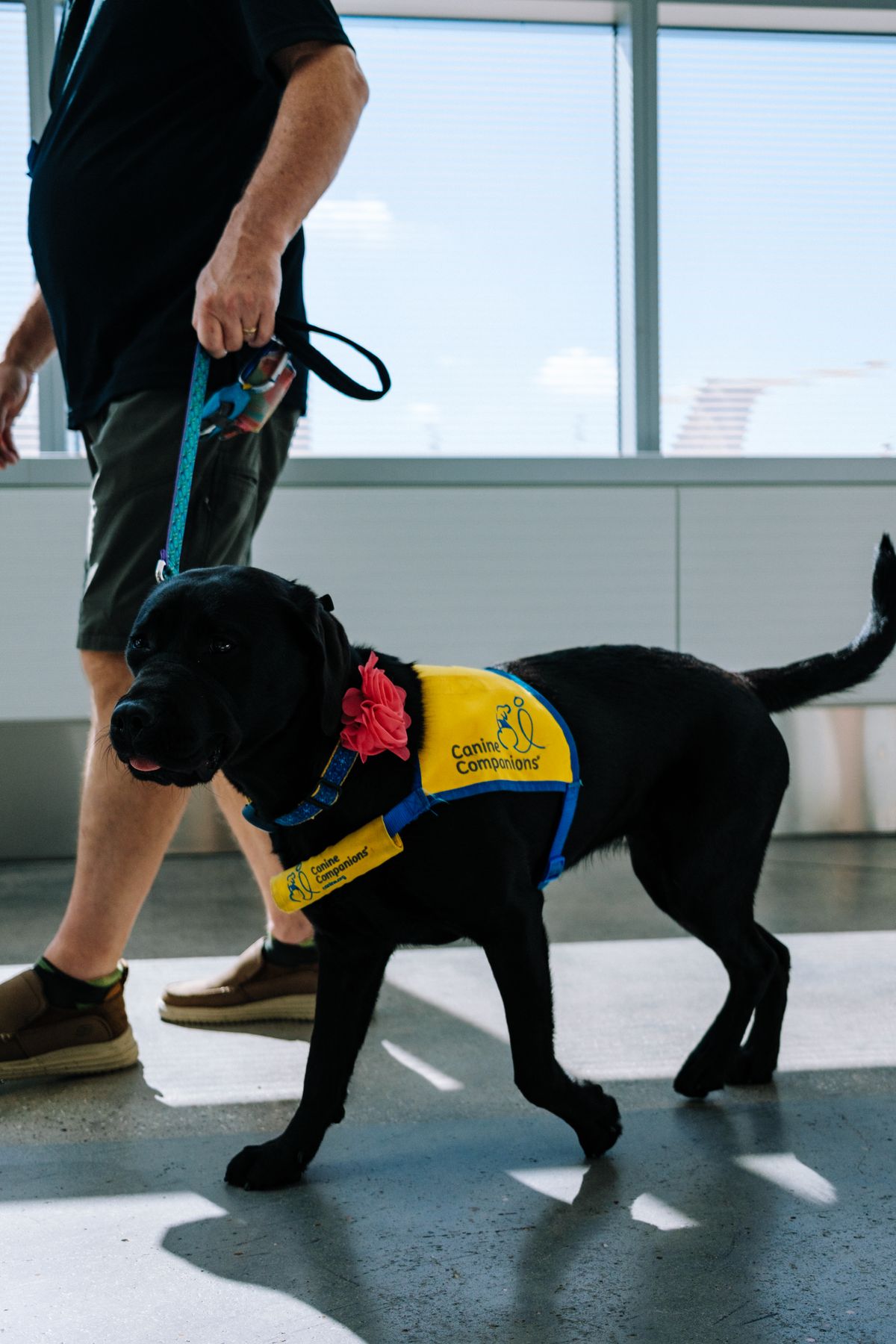
The difference between a service dog and an ESA is not about the owner's need—it is about the dog's training. Service dogs are defined by their ability to perform disability-mitigating tasks. An ESA is defined by the emotional comfort its companionship provides. The Department of Justice has set a clear precedent: if a dog is trained to sense an oncoming panic attack and take a specific action—nudging, guiding, or applying pressure—to lessen its impact, that dog is a service animal. But if the dog's only function is to be present and comforting, it is an ESA and is not protected under the ADA.[reference:0]
This distinction creates a cascade of legal consequences. A service dog can accompany its handler into restaurants, grocery stores, hospitals, and government buildings. An ESA cannot. A service dog, with proper DOT documentation, flies in an airplane cabin for free. An ESA is treated as a pet, subject to fees and carrier policies.[reference:1]
🧪 Service Dog vs. ESA: A Side-by-Side Breakdown
Service Dog (ADA & ACAA): Requires task-specific training. Protected in public spaces (restaurants, stores, hotels, hospitals). Flies free in cabin under DOT rules. Landlord cannot charge pet fees. Only dogs (and in some cases miniature horses) qualify.
Emotional Support Animal (FHA): No task training required. No public access rights. Treated as a pet by airlines. Protected in housing under the FHA. Can be any species commonly kept in households. Landlord cannot charge pet fees but can request legitimate documentation.
✈️ DOT Rules: The Sky Is No Longer the Limit for ESAs
If there is one change in the last five years that has fundamentally reshaped the ESA landscape, it is the Department of Transportation's 2020 revision to the Air Carrier Access Act (ACAA). The DOT's final rule, effective in 2021, explicitly redefined service animals for air travel to include only dogs that are individually trained to work or perform tasks for a person with a disability. Emotional support animals were removed from the definition entirely.[reference:2][reference:3]
The result is straightforward: U.S. airlines are no longer required to recognize ESAs as assistance animals entitled to fly free in the cabin. ESAs are legally treated as pets for air travel.[reference:4] Today, most major U.S. carriers treat emotional support animals as standard pets, charging fees typically ranging from $75 to $200 per flight segment.[reference:5] Airlines can enforce weight limits, require specific carriers, and restrict breeds—all policies that do not apply to trained service dogs.
For service dog handlers, the process has become more structured but remains accessible. Airlines may require the DOT Service Animal Air Transportation Form, and they can refuse transport if the dog is out of control, not house-trained, or would block the aisle.[reference:6] In 2026, carriers are increasingly pushing handlers to review documents and approve bookings through online portals, often with a 48-hour deadline.[reference:7]
🏠 Housing Protections: The FHA Still Shields ESAs—But the Ground Is Shifting
While ESAs have lost their wings, they still have a solid legal floor under their paws in housing. The Fair Housing Act (FHA) requires housing providers to make reasonable accommodations for individuals with disabilities, including the right to keep an assistance animal even in buildings with no-pet policies.[reference:9] ESAs are classified as assistance animals under the FHA, meaning they are not subject to pet deposits, pet rent, or breed restrictions.[reference:10]
However, the regulatory foundation has recently been shaken. On April 3, 2026, HUD's Office of Fair Housing and Equal Opportunity (FHEO) formally withdrew eight key fair housing guidance documents, including the two cornerstone documents on assistance animals from 2013 and 2020.[reference:11] These documents provided landlords with detailed instructions on how to evaluate ESA requests, what documentation to require, and how to distinguish legitimate ESAs from pets with fake certificates. Now, they are gone.
It is crucial to understand that the Fair Housing Act itself has not changed. What has changed is HUD's interpretive roadmap. In practice, this means housing providers are shifting from a guidance-based mindset to a statute-based mindset: the law hasn't disappeared, but the official federal playbook for how to comply has been torn up.[reference:12] For tenants, the practical implication is clear: the strength of your ESA accommodation request now depends more heavily than ever on the quality and legitimacy of your documentation.
The FHA covers a broad range of housing—apartments, condos, HOAs, and most privately owned rental properties. Exceptions include owner-occupied buildings with four or fewer units and single-family homes sold or rented without a real estate agent.[reference:13]
📜 State Laws: The New Front Line for ESA Fraud and Verification
Congress has not passed a federal law specifically addressing ESA fraud. But states have stepped aggressively into the vacuum. In 2026, the penalties for misrepresenting an animal as a service dog or ESA have real teeth—and in some states, real jail time.
California continues to enforce one of the strictest regimes. Under Assembly Bill 468 (AB 468), which took effect in 2022, an ESA letter is valid only if it comes from a licensed mental health professional with whom the individual has had an established clinical relationship, and the professional must have personal knowledge of the individual's disability. Knowingly misrepresenting an ESA as a service animal is a misdemeanor under California Penal Code Section 365.7, punishable by up to six months in jail and a $1,000 fine.[reference:15][reference:16]
Wisconsin has proposed legislation that would impose fines up to $500 for providing fraudulent prescriptions or documentation for emotional support animals in housing situations.[reference:17] In Texas, misrepresenting whether an animal is a pet, service animal, or ESA can result in fines, denied housing accommodations, and removal of the animal from the premises.[reference:18] Virginia law explicitly prohibits fraudulent documentation under the Virginia Consumer Protection Act.[reference:19]
Even where no specific statute targets ESA fraud, general forgery and fraud laws apply. Creating or using a fake ESA letter may constitute forgery, which carries criminal penalties in every state.[reference:20]
🗺️ State-by-State ESA Penalty Reference (2026)
| State | Key ESA/Service Animal Law | Maximum Penalty |
|---|---|---|
| California | AB 468 + Penal Code § 365.7 | 6 months jail, $1,000 fine |
| Wisconsin | Proposed legislation targeting fake ESA documentation | Fines up to $500 |
| Texas | Misrepresentation penalties for service animal/ESA claims | Fines, housing denial, animal removal |
| Virginia | Code § 36-96.3:1(F) — Consumer Protection Act | Civil penalties under VCPA |
| Florida | SB 1084 (2020) — criminalizes fake ESA/service animal claims | Misdemeanor charges, community service |
| Montana | 30-day provider-client relationship required before ESA letter | Invalidation of letter |
📋 The 6-Step Guide: How to Legally Protect Your Rights with an ESA or Service Dog
Does your dog perform a specific, trained task that mitigates your disability? If yes, it may qualify as a service dog under the ADA. If your animal's only function is to provide emotional comfort, it is an ESA. Be honest about this distinction: misrepresenting an ESA as a service dog is illegal in many states.
✓ Service dogs require task training; ESAs do not.Your ESA letter must come from a licensed mental health professional who has an established clinical relationship with you. In states like California and Montana, a minimum 30-day relationship is required before a letter is valid. Avoid any website promising "instant" or "24-hour" ESA letters—these are almost certainly fraudulent and will not hold up to landlord scrutiny.[reference:22][reference:23]
⚠ A letter from a provider you have never met in person or via telehealth is not legitimate under current standards.If you have a trained service dog, complete the DOT Service Animal Air Transportation Form before your flight. Submit it through the airline's online portal at least 48 hours before departure. Bring printed and digital copies to the airport. If your dog is an ESA, book it as a pet and expect to pay the airline's standard pet fees.[reference:24]
✓ Service dogs fly free with proper documentation; ESAs fly as pets.Landlords cannot charge pet fees or deposits for ESAs or service animals. They cannot enforce breed restrictions against assistance animals. However, they can require a valid ESA letter from a licensed professional, and they can reject an accommodation if the specific animal poses a direct threat or would cause substantial property damage.[reference:25]
✓ Document every communication with your landlord in writing.If your landlord refuses a legitimate ESA or service dog accommodation, you can file a complaint with HUD's Fair Housing and Equal Opportunity office or your state's fair housing agency. The FHA complaint process is free and does not require an attorney. You generally have one year from the date of the discriminatory act to file.
✓ A formal HUD complaint triggers a mandatory investigation of the landlord's conduct.California, Florida, Wisconsin, Texas, Virginia, and Montana all have unique requirements and penalties. Check your state's laws annually—the landscape is evolving rapidly. If you relocate to a new state, verify that your existing ESA letter complies with your new state's requirements before submitting it to a new landlord.
⚠ An ESA letter valid in one state may not meet the requirements of another.❓ Frequently Asked Questions (FAQ)
Question: Can my ESA fly with me in the cabin in 2026?
Answer: Under federal DOT regulations, no—airlines are no longer required to accommodate ESAs as service animals. Your ESA can still fly in the cabin only if the airline permits pets and you pay the applicable pet fee. Some international carriers, such as Air France and Aeromexico, may still accept ESAs with proper documentation, but all major U.S. carriers now treat ESAs as pets for air travel purposes.[reference:26]
Question: Does the withdrawal of HUD guidance mean landlords can now reject my ESA?
Answer: No. The FHA itself remains unchanged, and its core requirement—that landlords provide reasonable accommodations for tenants with disabilities—is still federal law. What has changed is that the official HUD guidance explaining how to apply the law has been withdrawn. This creates uncertainty but does not eliminate tenant protections. A well-documented ESA letter from a legitimate licensed professional remains the strongest defense of your housing rights.[reference:27]
Question: What is the difference between a Psychiatric Service Dog (PSD) and an ESA?
Answer: A PSD is a service dog that has been trained to perform specific tasks to assist a person with a psychiatric disability—such as alerting before a panic attack, interrupting self-harm, or guiding a disoriented person. An ESA provides emotional comfort through its presence but has no task-specific training. PSDs are protected under the ADA and ACAA for public access and air travel. ESAs are not.[reference:28]
Question: Can a landlord charge me pet rent for my ESA?
Answer: Under the FHA, landlords generally cannot charge pet fees, pet rent, or pet deposits for legitimate ESAs. However, a 2025 federal court ruling (Henderson v. Five Properties, Louisiana) found that a landlord could charge a fee when the tenant could not demonstrate that waiving the fee was medically necessary. This ruling is binding only in the 5th Circuit and does not override state protections like California's FEHA. The legal landscape on this specific question is evolving, and tenants should check their state and circuit laws.[reference:29]
Question: Are online ESA letters legitimate?
Answer: Most are not. A legitimate ESA letter requires a clinical evaluation by a licensed mental health professional who has an established relationship with you. A letter obtained after a brief online questionnaire with no real interaction does not meet the legal standard in most states. California's AB 468 explicitly requires personal knowledge of the individual's disability. If your ESA letter came from a website that offers "instant" or "guaranteed" approval without a clinical consultation, it is almost certainly invalid.[reference:30]

Keep Your ESA Letter, DOT Forms, and Accommodation Requests Organized
Store all your documentation—ESA letters, vaccination records, landlord communications, and airline forms—in one secure place, ready for the next time you need to prove your rights.
Download Patify📚 Key References and Further Reading
- U.S. Department of Transportation — Final Rule: Traveling by Air with Service Animals (December 2020)
- ADA Great Lakes Center — Service Animal vs. Emotional Support Animal FAQs (Updated April 2026)
- SLPM Property Management — Fake ESA Letters Have a Kill Switch Now: 2026 Landlord Guide
- RL Property Management — HUD's 2026 Fair Housing Guidance Changes: What Landlords Need to Know
- Miami Law Review — Airline Crackdown: No, Emotional Support Animals Are Not Service Animals (2026)
- Hepper.com — 6 Situations Where a Landlord Can Legally Reject an ESA (2026)
- Keep the Tail Wagging — New 2026 Service Animal Flight Regulations
- HUD.gov — Assistance Animals and Fair Housing: Official HUD Resource Page
Legal Disclaimer: This article summarizes U.S. federal and select state laws regarding service animals and emotional support animals as of May 2026. Laws, regulations, and agency guidance change frequently. This is not legal advice. For specific questions about your rights or obligations, consult a qualified attorney in your jurisdiction.
![[2026 Warning] Fake ESA Letter Evictions: How Landlords Are Catching Pet Owners](https://images.unsplash.com/photo-1548199973-03cce0bbc87b?auto=format&fit=crop&w=1200&q=80)