
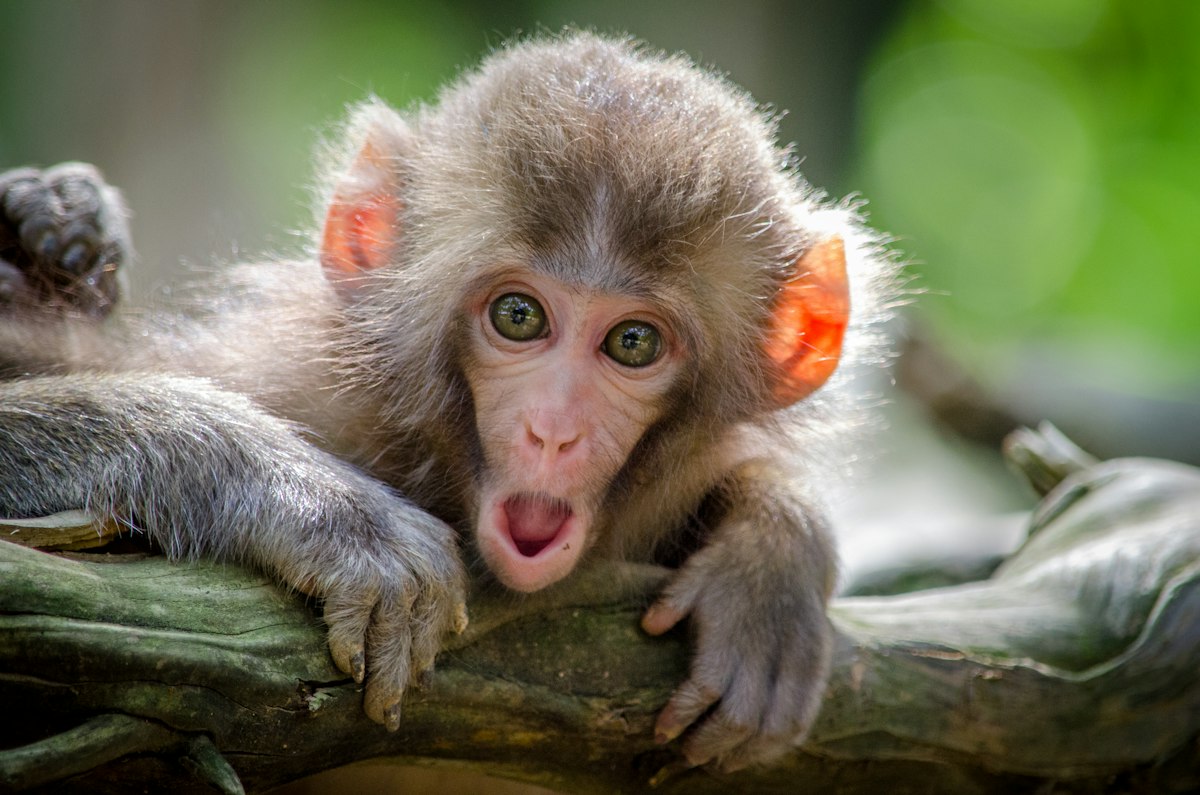
Finger Monkey (Pygmy Marmoset) as a Pet: Legality, $5,000 Cost, and What Videos Don't Show (2026)

The video has probably appeared in your feed. A tiny primate, barely bigger than a human hand, clinging to someone's finger with the wide-eyed intensity of an animal simultaneously delighted and terrified. The comments section goes predictably berserk. Twenty million views in four days. Someone in the replies: I need one immediately where do I get one.
Here is what that video does not tell you. It was almost certainly filmed in the first few months of the animal's life — the window during which a baby pygmy marmoset (Cebuella pygmaea) is genuinely tractable, curious, and photogenic. It does not show you what the same animal looks like at eighteen months, when sexual maturity arrives along with territorial aggression, scent-marking, and a set of canine teeth capable of leaving puncture wounds that require stitches. It does not tell you that the animal lives fifteen to twenty years, that the federal government banned importing them for pets in 1975, that the purchase price is only the beginning of a lifetime cost that routinely exceeds fifty thousand dollars, or that in twenty-nine states, owning one is a misdemeanor or worse.
None of this means finger monkeys are impossible to keep well. A small number of dedicated, experienced exotic animal keepers do it appropriately. But the gap between the video and the reality is the largest of any animal in the modern pet trade — and most of the content online about finger monkeys is generated by people who either own one in its photogenic infancy or are trying to sell you one.
📋 In This Guide
- What a pygmy marmoset actually is — biology and natural behavior
- The federal law that most people don't know exists
- Complete 2026 US state-by-state legal map
- Florida — the most detailed permit example
- UK: The April 2026 licensing law that changed everything
- The real cost: purchase through lifetime
- The disease risk that drives the federal ban
- The welfare science: what happens to marmosets in homes
- Four things finger monkey videos never show
- Frequently asked questions
What a Pygmy Marmoset Actually Is — Before We Talk About Laws
The pygmy marmoset (Cebuella pygmaea) is the world's smallest monkey and one of the smallest primates on Earth. Adults weigh between 3 and 5 ounces — roughly the weight of a deck of cards — and measure 4.5 to 6 inches from nose to base of tail, with a tail that's longer than the body itself. They are native to the western Amazon basin, where they live in the rainforest understory of Brazil, Peru, Ecuador, Colombia, and Bolivia. A 2021 taxonomic revision recognized two species: the western pygmy marmoset (Cebuella pygmaea) and the eastern pygmy marmoset (Cebuella niveiventris), both listed as Vulnerable on the IUCN Red List. Both are listed in CITES Appendix II, which controls international trade.
In the wild, pygmy marmosets live in tight family groups of five to twelve individuals. The group structure is cooperative in a way that is fairly unusual even among primates: male marmosets are typically the primary caregivers for infants, females commonly give birth to twins or triplets, and every adult member of the group participates in carrying, protecting, and feeding the young. The group territory is small — around 0.1 to 0.4 hectares — but it is defended intensely, and the social bonds within the group are maintained through constant vocal communication, mutual grooming, and coordinated foraging.
This social architecture is the single most important thing to understand about pygmy marmosets as pets. They are not animals that evolved to function as individuals or pairs in isolation from their species. They are animals whose entire behavioral repertoire assumes constant presence of conspecifics — members of the same species — engaged in the same activities. When that social context is removed, the behavioral consequences are not subtle.
🐒 The nickname explains nothing: The name "finger monkey" comes from the behavior of captive-bred infants clinging to a human finger for warmth and security — mimicking the clinging they would otherwise do to their father or an older sibling in the wild. The behavior is not a sign that the animal is comfortable or thriving. It is a sign that the animal is in an unfamiliar environment and seeking the nearest available warm surface that approximates a caregiver. Understanding this distinction is the foundation of understanding why these animals are so complicated to keep well.
The Federal Law That Most People Looking to Buy Don't Know Exists
Before a single state law enters the picture, there is a federal regulation that shapes the entire US pet marmoset market: 42 CFR §71.53, administered by the Centers for Disease Control and Prevention (CDC) under the Public Health Service Act.
Since October 10, 1975 — more than fifty years ago — this regulation has prohibited the importation of nonhuman primates (NHPs) into the United States except for scientific, educational, or exhibition purposes. The regulation explicitly prohibits accepting, maintaining, selling, reselling, or distributing imported NHPs (including their offspring) for use as pets, as a hobby, or as an avocation. It is not a recent development. It predates the internet, social media, and the entire modern viral video cycle that has driven finger monkey interest to its current heights.
What this means practically: every pygmy marmoset legally sold as a pet in the United States today must be from a domestic captive breeding colony. It cannot be a recently imported animal. It cannot be an animal whose lineage traces to an import that occurred after 1975 through a pet trade channel. The breeding stock that supplies the US pet marmoset market is a closed, domestic population — concentrated in a small number of states where primate breeding is legal — and its limited size is one of the primary reasons prices are high and waiting lists are long.
"NHPs are a potential source of pathogens and communicable or zoonotic disease that may be fatal to humans, including filoviruses, hepatitis, Herpes B virus, tuberculosis, and parasitic infections. Quarantine requirements for imported NHPs are designed to reduce this communicable disease risk."
— Federal Register, Control of Communicable Disease; Requirements for Importers of Nonhuman Primates, 2013 final rule (citing National Research Council, 2003)The regulation also covers CITES Appendix II requirements for international trade. Any pygmy marmoset entering the US legally — even for scientific purposes — must be accompanied by a CITES export permit from the country of origin and a US import permit, with 31-day post-arrival quarantine and mandatory disease testing. This regulatory infrastructure does not exist for pet trade imports because pet trade imports are not permitted.
The practical consequence of understanding this is important for prospective buyers: anyone offering a "freshly imported" pygmy marmoset, or an animal documented as originating abroad after 1975 through any non-scientific channel, is offering you something obtained illegally. The legitimate domestic breeding market is small, verifiable, and generally transparent about their animals' provenance.
Complete 2026 US State-by-State Legal Status
The federal import ban creates the floor. State law builds the structure above it. The patchwork is genuinely bewildering — neighboring states can have diametrically opposite rules, and the legal basis for state bans varies from public health statutes to wildlife classification codes to agricultural regulations.
The Ownership Landscape at a Glance
Banned (no private ownership): Alabama, Alaska, Arizona, California, Colorado, Connecticut, Georgia, Hawaii, Illinois, Iowa, Kentucky, Louisiana, Maine, Maryland, Massachusetts, Minnesota, Montana, New Hampshire, New Jersey, New Mexico, New York, Oregon, Rhode Island, Texas, Utah, Vermont, Washington, and Washington D.C. — approximately 29 states and D.C.
Legal with state permit: Delaware (registration required), Florida (Class III permit), Kansas, Michigan, Missouri, Pennsylvania, and several others with varying permit structures.
Legal without state permit: Arkansas, Idaho, Indiana, Mississippi, Nebraska, Nevada, North Carolina, Ohio, Oklahoma, South Carolina, Tennessee, and Wisconsin — though local ordinances frequently apply.
Always check locally: Even in permissive states, cities, counties, and HOAs impose additional restrictions. A state-level green light does not guarantee local legality.
Florida — The Most Detailed Permit Process in the US
Florida is worth examining in detail because it has the most comprehensively documented permit system for marmoset ownership in the country, and it illustrates precisely what legitimate regulatory oversight of this activity looks like when a state has decided to permit rather than ban.
The Florida Fish and Wildlife Conservation Commission (FWC) classifies squirrel monkeys, marmosets, and tamarins as Class III wildlife — the lowest-restriction category of captive wildlife in Florida's three-tier system. Class III animals are those considered to pose the least potential danger to people, and they include a wide range of exotic animals beyond primates.
To obtain a Florida Class III permit for a pygmy marmoset, an applicant must: be at least 16 years old; complete a permit application with the FWC; submit a husbandry form documenting their knowledge of the species' care requirements; complete a contingency plan form (what happens to the animal in a disaster, if the owner becomes incapacitated, or if the animal escapes); demonstrate that structural caging requirements are met before the animal arrives; and pay the applicable permit fee. The structural requirements for marmosets are specific: appropriate thermal ranges, minimum cage dimensions, enrichment requirements, and sanitation protocols must all be documented.
⚠️ Florida's Capuchin and Spider Monkey distinction: While marmosets and tamarins are Class III in Florida, capuchin monkeys, woolly monkeys, and spider monkeys are also technically Class III by species designation — but the FWC requires them to follow Class II animal husbandry standards, which include 1,000 hours of documented experience working with the species (or an alternative two-part written examination), significantly higher caging standards, and a formal inspection before the animal arrives. This two-tier system within a single species classification is an example of the kind of complexity that makes Florida law research difficult without direct FWC consultation.
UK: The April 2026 Licensing Law That Changed the Landscape
For UK readers: England introduced mandatory primate licensing from April 6, 2026, under the Animal Welfare (Primate Licences) (England) Regulations 2024. This represents the most significant change to UK primate ownership law in decades and directly affects anyone keeping marmosets, tamarins, squirrel monkeys, capuchins, spider monkeys, lemurs, or bush babies.
Under the new scheme, all primate keepers — whether keeping animals as pets or otherwise — must hold a licence from their local authority. The regulations set out strict standards requiring keepers to demonstrate what the legislation describes as zoo-level welfare standards: appropriate social grouping, species-specific housing, veterinary care plans, and demonstrable knowledge of primate behavioral needs. Keeping a primate without a licence after April 6, 2026 is an offence punishable by up to six months imprisonment, an unlimited fine, or both.
The stated aim of the scheme is not to ban primate keeping but to ensure that only those who can genuinely provide appropriate standards — which for marmosets means, at minimum, keeping them in social groups with species companions, providing heated enclosures replicating tropical conditions, and demonstrating access to a veterinarian experienced with primates — are permitted to do so. The RSPCA has consistently taken the position that no private home can replicate the social and environmental conditions marmosets need, but the licensing framework stops short of a full ban and instead raises the welfare bar significantly.
🇬🇧 Wales, Scotland, and Northern Ireland: The April 2026 licensing scheme applies specifically to England. Wales, Scotland, and Northern Ireland have separate legislative competence for animal welfare. If you are in one of these nations, verify current rules directly with the relevant authority — do not assume that England's Regulations apply to your situation.
The Real Cost: What Owning a Pair of Pygmy Marmosets Actually Costs
The question in the headline asks about the $5,000 cost. That figure is the purchase price of a single animal from a reputable domestic breeder. It is also, emphatically, not the total cost — and responsible ownership of pygmy marmosets requires two animals, not one. Here is the honest breakdown.
| Cost Category | Estimated Amount | Notes |
|---|---|---|
| Purchase price (single animal) | $1,500 – $7,000 | Varies by breeder reputation, age, and demand. Prices from Florida and Tennessee breeders run $3,000–$5,000 for a healthy weaned juvenile. |
| Second animal (pair recommended) | $1,500 – $7,000 | Most welfare organizations and experienced keepers consider pair or group housing non-negotiable. Budget for two from the start. |
| Initial enclosure build | $1,500 – $4,000 | Minimum 5-foot tall cage with multiple levels, appropriate bar spacing, safe locking. Custom stainless or powder-coated enclosures preferred for longevity and hygiene. |
| Heating and lighting setup | $500 – $1,500 | Pygmy marmosets require ambient temperatures of 75–85°F (24–29°C) and full-spectrum UVB lighting to support vitamin D synthesis. Ceramic heat emitters, UVB bulbs, thermostats, and backup heating run significant upfront costs. |
| Initial vet exam and health certificate | $300 – $600 per animal | An exotic animal veterinarian familiar with New World primates — not a standard small animal vet — is essential. Finding one in your area is a prerequisite before acquiring any primate. |
| State permit (where required) | $20 – $200 per year | Florida Class III permits cost approximately $20–$50 annually. Some states charge significantly more and require inspection fees. |
| Annual food cost (pair) | $800 – $2,000/year | Pygmy marmosets require a diverse diet: commercially prepared primate diet, fresh fruit, vegetables, insects (crickets, mealworms), gum arabic for tree sap substitution, eggs, and limited high-quality protein. Fresh food must be offered multiple times daily. |
| Annual veterinary care (pair) | $600 – $2,000/year (routine) | Annual wellness exams, tuberculosis testing (required in many permit states), fecal parasite screening, and dental checks. Emergency or illness costs are additional and can run $2,000–$5,000 for a single incident requiring specialist intervention. |
| Enrichment, toys, substrate | $300 – $800/year | Cognitive enrichment, foraging opportunities, climbing structures, hammocks, and substrate replacement are ongoing requirements, not optional extras. |
| Estimated Year 1 total (pair) | $8,000 – $25,000 | Including purchase, setup, and first year care. Significant variation based on state, breeder, and enclosure choices. |
| Estimated lifetime total (pair, 15–20 years) | $40,000 – $80,000+ | Based on $3,000–$5,000 annual ongoing costs after the first year. Does not include emergency veterinary costs or enclosure replacement. |
🚨 The rehoming problem nobody mentions: A significant number of pet pygmy marmosets are surrendered or abandoned by owners who did not anticipate the care demands and behavioral changes of adulthood. Primate sanctuaries and exotic animal rescues are chronically over capacity with surrendered marmosets from well-meaning owners who simply could not manage the reality of the commitment. Before purchasing any primate, contact your nearest exotic animal sanctuary and ask whether they are currently at capacity with surrendered marmosets. The answer is consistently yes. That answer tells you something important about the gap between the purchase decision and the fifteen-year commitment that follows it.
The Disease Risk That Drives the Federal Ban
The CDC's 1975 prohibition on importing nonhuman primates for the pet trade was not arbitrary bureaucracy. It was a response to a documented history of zoonotic disease transmission from captive primates to humans — some of which had been fatal. Understanding the specific pathogens involved explains why the federal posture on this has not changed in fifty years despite significant shifts in US exotic pet culture.
Herpesvirus B (Macacine alphaherpesvirus 1) is the most well-known primate-to-human zoonosis. It occurs naturally in macaques and can be transmitted through bites or scratches. In humans, untreated infection has a fatality rate above 70%. Marmosets are not natural hosts for Herpes B — but they can carry other herpesviruses of their own that are not well-characterized in terms of human infection risk. More relevantly, a marmoset kept by someone who also has contact with macaques or other primates represents a disease bridge risk.
Tuberculosis (TB) is bidirectional — humans can transmit TB to captive primates, and primates can transmit it back. This is why Florida's Class III permit requires annual TB testing of all permitted primates. An animal that has been exposed to an infected human, or that has been maintained in close proximity to other primates in a breeding colony, can be a TB carrier without obvious clinical signs.
Salmonella, Shigella, and other bacterial pathogens are shed in the feces of clinically healthy nonhuman primates at rates significantly higher than in domestic animals. Handling animals without gloves, allowing primates to come into contact with food preparation surfaces, or inadequate enclosure hygiene creates direct transmission pathways to household members — particularly children and immunocompromised individuals.
Monkeypox entered the US zoonotic risk conversation specifically through the exotic animal trade: the 2003 US monkeypox outbreak — the first occurrence outside Africa — was traced to pet prairie dogs that had been co-housed with Gambian pouch rats imported from West Africa. Nonhuman primates are not the same vector, but the event demonstrated how quickly novel pathogens can move through the US exotic pet trade and why the CDC's cautious posture on NHP importation has remained consistent.
The World Wildlife Fund's formal welfare assessment of common marmosets is direct: "Marmosets, especially those that come from the wild, are known to carry zoonotic diseases that can be life threatening to humans." The same assessment notes that their sharp canine teeth may cause bite wounds — and bites are the primary transmission route for several of the pathogens above.
The Welfare Science: What Captivity Does to Marmosets
The legal and financial questions are answerable with enough research. The welfare question is less comfortable but arguably more important for anyone who genuinely cares about the animal rather than the idea of the animal.
Pygmy marmosets are cognitively complex, socially interdependent, and adapted to an environment — the multi-layered Amazonian forest understory — that cannot be replicated in a house. The University of Stirling's Marmoset Care Programme, which maintains one of the most comprehensive scientific resources on captive marmoset welfare, documents a list of negative welfare indicators that are consistently observed in improperly housed captive marmosets: excessive scent marking, persistent self-scratching that moves beyond normal grooming into compulsive self-directed behavior, gouging (repeated digging motions not associated with feeding), agitated locomotion, and hypervigilance.
What the Video Shows vs. What Is Actually Happening
Context MissingThe infant clinging to a finger is seeking warmth and security from the nearest available substitute for a parent. In the wild, newborn marmosets are carried on the back of their father or an older sibling from birth — they are almost never not in physical contact with another primate for the first several months of life. The clinging behavior in a human-raised infant is not contentment. It is the same need expressed in the only direction available.
The apparent calm and docility of the infant is developmental, not dispositional. Juvenile marmosets are tractable in a way adult marmosets are not because their social hierarchy is not yet established and their territorial and reproductive hormones have not activated. The behavioral profile changes at sexual maturity — typically around 12 to 18 months — in ways that most first-time owners are not prepared for. A-Z Animals, which surveyed marmoset behavioral literature extensively, notes that the transition from juvenile tractability to adult aggression is the primary reason many owners return or surrender their animals.
PETA's documentation of captive marmoset behavioral abnormalities in laboratory settings (hair-pulling, self-biting, stereotypic backflips) reflects extreme conditions that private pet situations rarely replicate in severity. But the same underlying social deprivation mechanism operates in both settings: a primate whose need for species-specific social interaction is not met will develop behavioral pathologies regardless of whether it is in a laboratory or a living room.
The Bite Risk Owners Consistently Underestimate
Commonly MinimizedThe argument that a pygmy marmoset is too small to cause serious harm is factually wrong. Their canine teeth are proportionally long for their body size — the same teeth used to gouge bark from trees to access gum are entirely capable of creating puncture wounds that penetrate through a finger to the bone. Multiple primate sanctuary operators and exotic animal rehabilitators report bite wounds as the most common injury associated with pet marmoset ownership. Unlike a dog bite, which typically involves blunt crushing force, a marmoset bite is a deep puncture — the wound class most prone to serious infection, including from the bacterial pathogens the animal may be asymptomatically carrying.
Adult marmosets bite for reasons that seem unpredictable to owners but are entirely rational from the animal's perspective: territorial defense of the enclosure, food guarding, fear response to rapid movement or unfamiliar stimuli, sexual frustration, and redirection of aggression from an inaccessible source onto the nearest reachable target. In the wild, these behaviors are managed by the social group. In a human household, there is no social group to absorb or redirect them.
Four Things Finger Monkey Videos Never Show
The smell
Consistently DocumentedMarmosets scent-mark their territory constantly using scent glands located at the base of the tail and around the genitals. In the wild, this serves as a communication system across a home range of up to 0.4 hectares. In a household, it means that every surface the animal has access to is progressively marked with a musky, persistent odor that standard household cleaning does not eliminate. Experienced marmoset keepers are unanimous: the smell is significant, it permeates furniture and soft furnishings, and it does not fade as the animal ages.
The noise at 3 AM
Consistently DocumentedPygmy marmosets are crepuscular, meaning their peak activity periods include the transition between dark and light. Their vocal repertoire — used for long-distance communication in the forest — includes a trill that can be heard at significant distance and is used regularly during the animal's active periods. Multiple owners report being awakened by vocalizations in the early morning hours. Marmosets living in a household cannot be trained out of their natural activity timing, and their noise level is substantially higher than their body size would suggest.
What happens when you leave for work
Never ShownA pygmy marmoset in the wild is never alone. The troop functions as a continuous social unit from birth until death. An animal left alone in an enclosure for eight or more hours while its owner is at work is experiencing a level of social isolation that has no natural analogue in its behavioral history. This is not a theoretical welfare concern — it is the primary driver of the abnormal behaviors documented by marmoset welfare researchers. Marmoset ownership is not compatible with a standard working schedule unless the animal has a social companion of the same species and ideally a social group.
Year fifteen
Almost Never DocumentedPygmy marmosets can live 15 to 18 years in captivity under good conditions. The viral video subject is probably between six weeks and six months old. The same animal at fifteen years is a middle-aged primate with fifteen years of accumulated behavioral patterns, social needs, and veterinary history — and the same person who filmed the original video is now dealing with the animal in their mid-thirties or forties. The commitment implied by the initial purchase is longer than the average American marriage. Virtually none of the finger monkey content on the internet is made by people who have owned the same animal for fifteen years and are documenting the full arc of that commitment.