

Last verified: October 2, 2026
Hedgehog Colors: Separate Show Class, Quill Shade and Pattern
Quick answer: pet African pygmy hedgehog color names are not governed by one universal worldwide chart. The current North American Quills Association (NAQA) show standard uses seven broad color classes: Dark Eyed Solid, Red Eyed Solid, Pinto/Reverse Pinto, Albino, Snowflake/White, Odd Eyes and Any Other Color. Breeders may also use finer shade names such as gray, brown, chocolate, cinnamon or apricot. Those systems answer different questions.
Patify decoder: identify quill band color → eye color → amount/distribution of unbanded white quills → skin/nose/mask clues. Do not turn a breeder shade name into a guaranteed genotype from one photo.
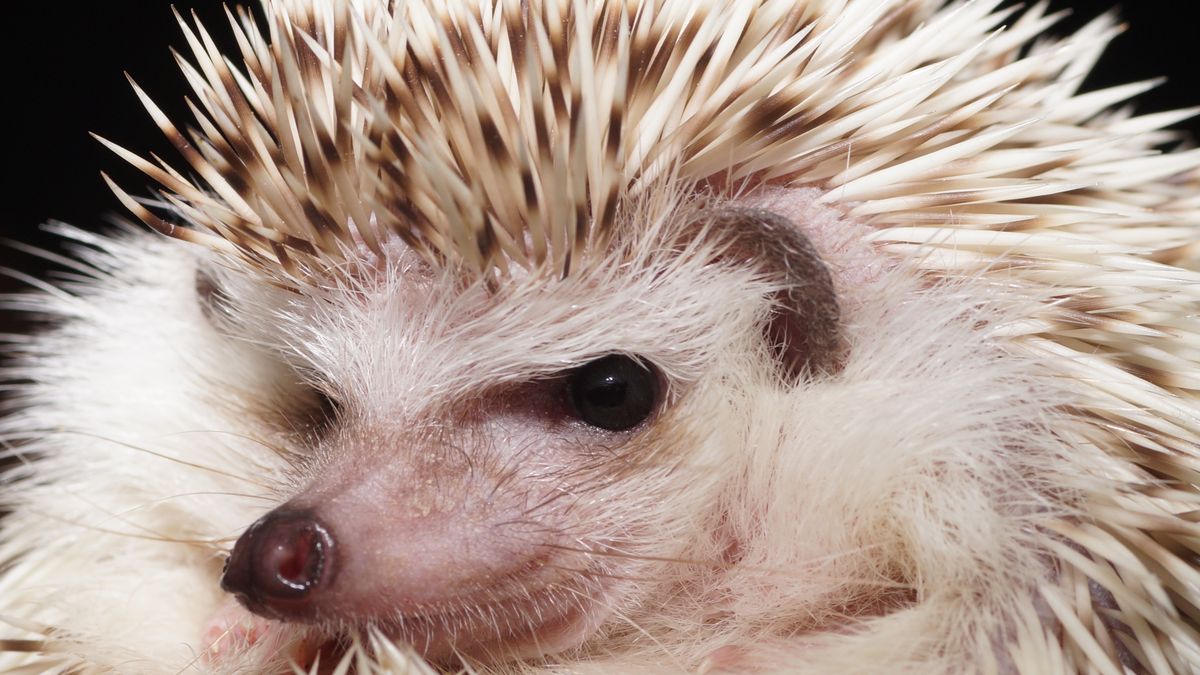
Why Two Hedgehog Color Charts Can Both Be “Right”
Hedgehog color nomenclature has changed over time and differs between show systems, breeders and color-breeding projects. A modern show organization may group animals broadly for judging, while a breeder may use much narrower shade labels to describe mating outcomes.
NAQA's current African Pygmy Hedgehog standard deliberately uses broad classes. That avoids forcing every animal into dozens of historic shade labels and lets judges score consistency of color, pattern and phenotype within the entered class.
Practical rule: if you are entering a show, use that show organization's current standard. If you are describing a pet, record what is visible. If you are predicting offspring, use pedigree and validated breeding records rather than a photo chart.
The 7 NAQA Hedgehog Color Classes
| Class | Defining visual feature | What it is not |
|---|---|---|
| Dark Eyed Solid | Solid coat of banded quills with dark eyes | Not one exact shade; mask presence is not the primary divider |
| Red Eyed Solid | Solid banded-quill coat with red/pink/ruby/garnet eyes | Not automatically albino |
| Pinto / Reverse Pinto | Spots/patches created by banded vs unbanded quills | Not a base pigment shade |
| Albino | All white, zero banded quills, pink-to-ruby eyes | Not simply a very pale dilute |
| Snowflake / White | Banded quills mixed with unbanded white quills | Not the same architecture as pinto patches |
| Odd Eyes | One dark eye and one red eye | Eye class does not describe the entire quill shade |
| Any Other Color | Animals outside the other six, including some near-albino/reverse-pinto edge cases | Not a single specific color |
This broad classification is useful because it separates three things people often mix together: quill pigment, pattern and eye phenotype.
What About Salt & Pepper, Gray, Brown, Chocolate, Cinnamon and Apricot?
Those names come from finer hedgehog-fancy shade systems and breeder use. They can be helpful descriptive shorthand, but their boundaries are less universal than the current NAQA show classes.
| Hobby shade family | Typical visual idea | Why caution is needed |
|---|---|---|
| Salt & pepper / dark gray | Very dark quill bands, dark mask/nose/skin impression | Lighting can make dark gray/brown phenotypes converge |
| Gray | Cooler dark banding without the warm brown emphasis | No universal RGB-like boundary exists |
| Brown / chocolate | Warmer brown quill bands and related skin/nose changes | Breeder systems do not always define “chocolate” identically |
| Cinnamon | Lighter warm brown/cinnamon banding | Can overlap visually with warm pale shades in photos |
| Apricot / cinnicot | Paler orange-tan family, often with reduced dark pigment | Historic genetics models are not routine commercial DNA tests |
Use these names as phenotype descriptions only when you know which breeder/show vocabulary is being used.
Pinto, Snowflake and White: Pattern Is Not Base Color
Pinto
Pinto creates distinct patches of unbanded white quills among colored/banded areas. Reverse pinto shifts the balance toward much more white. The key concept is patch distribution.
Snowflake
Snowflake mixes white unbanded quills through the colored coat rather than organizing them into distinct pinto patches. NAQA describes an approximately half-banded/half-unbanded look as the preferred snowflake balance.
White
Within the current NAQA Snowflake/White class, “white” is used when fewer than about 10% of quills remain banded. That can look dramatically pale while still being different from an albino.
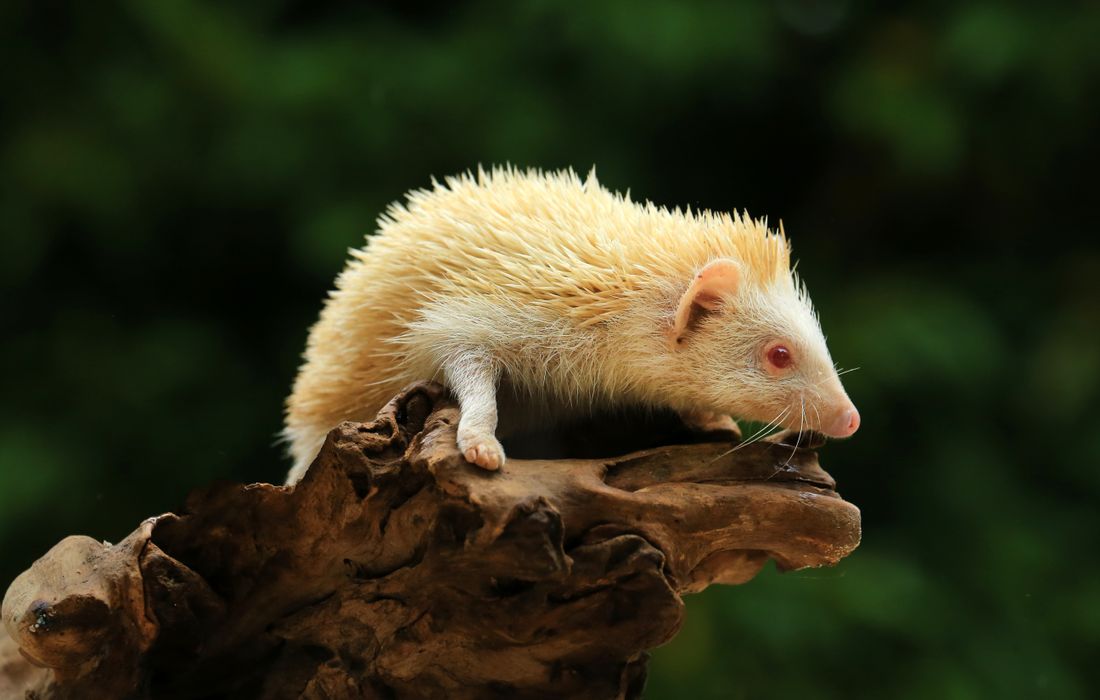
Albino vs a Very Pale Hedgehog
NAQA's albino class requires an all-white quill coat with zero banded quills and pink-to-ruby eyes. That gives you a strong practical separator: pale banded quills or dark eyes mean you should not casually label the animal albino.
Red-eyed solids also exist as a separate class, so red eyes alone do not equal albino. Read the quills and eyes together.
How to Identify a Pet Hedgehog Color From Photos
- Use neutral daylight. Warm indoor light can turn gray bands brown and cream bands orange.
- Photograph quills close-up. You need to see whether individual quills are banded or unbanded.
- Map white distribution. Distinct patches suggest pinto; evenly mixed white quills suggest snowflake.
- Check eye color. Dark, ruby/red or odd eyes can change classification.
- Record nose/skin/mask. These support shade identification but should not override the quill architecture.
- Account for age/quilling. Juveniles replacing quills may look temporarily less uniform.
- Name the system. “NAQA Dark Eyed Solid” and “breeder calls this cinnamon” can both be recorded without pretending they are the same type of label.
Hedgehog Color Genetics: Evidence Is Uneven
A frequently cited color-breeding project by Ryan Dickey analyzed pedigree/test-cross data from 229 hedgehogs and proposed several color/pattern loci. The author explicitly described limitations, including relatively small samples and uncertain findings for some traits. It is useful as historical breeder research, not as a substitute for a modern validated DNA panel.
Peer-reviewed genomic work on Atelerix albiventris exists—for example research on skin appendage/spine development—but routine pet-hobby color labels are not all mapped to validated commercial variants. That is why Patify does not convert a photo into a genotype or “carrier” prediction.
Breeding caution: color should never be the only selection goal. Temperament, health history, pedigree diversity and congenital problems matter more than producing a rare-looking shade.
Frequently Asked Questions About Hedgehog Colors
How many hedgehog colors are there?
There is no single universal count. NAQA currently uses seven broad show color classes, while breeder shade systems may use many more descriptive names.
What is the most common pet hedgehog color?
Dark-eyed banded-quill phenotypes are common, but reliable population percentages are not published by the current show standard. Avoid invented prevalence claims.
What is a pinto hedgehog?
A hedgehog with distinct patches of banded and unbanded white quills.
What is a snowflake hedgehog?
A hedgehog with unbanded white quills intermixed through the colored/banded coat rather than concentrated into pinto patches.
Is a white hedgehog always albino?
No. NAQA has a Snowflake/White class distinct from Albino. Eye color and whether any quills remain banded are important.
Can a hedgehog have two different eye colors?
Yes. NAQA has an Odd Eyes class for animals with one dark and one red eye.
Can I identify hedgehog genetics from a photo?
No. Photos can describe visible phenotype, but hidden alleles/carrier status require pedigree or validated genetic evidence.
Sources Checked
- North American Quills Association — African Pygmy Hedgehog Show Standard
- Atlantis Hedgehogs — historical test-cross color study by Ryan Dickey
- Scientific Reports — African pygmy hedgehog skin-appendage transcriptomics
Sources reviewed October 2, 2026.