

Last verified: September 30, 2026
Hermit Crab Tank Setup: Build for Molting, Modified Gills and Decades of Growth
Quick answer: a land hermit crab tank needs a warm, humid, escape-proof enclosure with deep tunnel-holding substrate, both freshwater and marine-saltwater pools deep enough for submersion, natural spare shells, climbing/hiding structure and enough floor space for multiple crabs. The plastic “critter keeper” sold at beach shops does not meet these needs.
Current Land Hermit Crab Owners Society (LHCOS) standards recommend approximately 10 gallons per small-to-medium crab, around 75–85°F / 24–29°C, roughly 70–85% relative humidity, and substrate at least 3× the height of the largest crab.
Patify crabitat rule: optimize the enclosure for the underground molt first. If the substrate is too shallow, dry or collapses easily, the most important biological event in the crab’s life cannot happen safely.
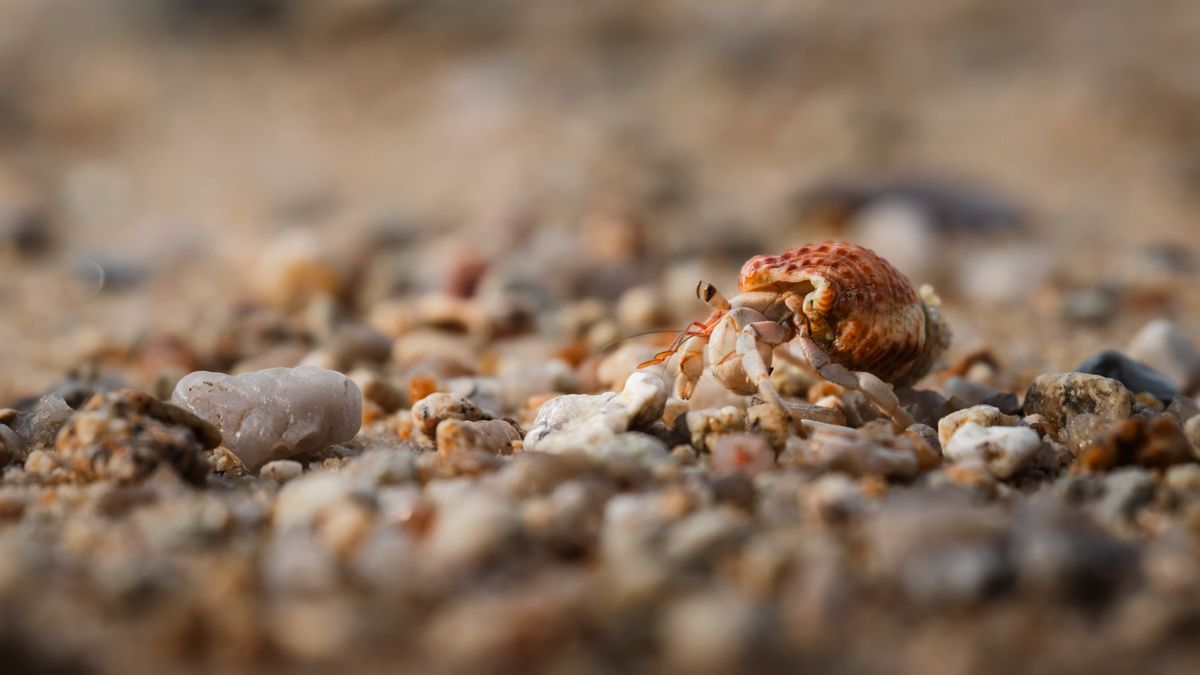
Scope: This Guide Is for Land Hermit Crabs
Land hermit crabs belong primarily to the genus Coenobita (excluding the giant coconut crab context), and they spend adult life on land while still depending on humid air and water access. Marine hermit crabs live primarily underwater and require an aquarium, not this setup.
Species matter. Purple pinchers (Coenobita clypeatus) are common in the U.S. pet trade, while Ecuadorians and other Coenobita may prefer somewhat different temperatures, shells and behavior.
Hermit Crab Tank Setup Checklist
| Need | Minimum functional idea | Why |
|---|---|---|
| Enclosure | Sealed/semi-sealed aquarium-style tank | Retains humidity and prevents escape |
| Substrate | At least 3× largest crab’s height | Safe underground molt tunnels |
| Heat | Stable ~75–85°F range | Tropical metabolism/digestion |
| Humidity | Approx. 70–85% RH | Modified gills must remain moist |
| Freshwater pool | Dechlorinated, submersion depth + exit | Hydration and shell water |
| Marine saltwater pool | Marine aquarium salt mix, submersion depth + exit | Osmoregulation/species needs |
| Shells | Multiple natural unpainted options | Growth, safety, conflict prevention |
| Climbing/hides | Cork, wood, hides, foliage | Exercise and cover |
Tank Size: Plan for More Than One Crab and More Than One Year
LHCOS current habitat standards use 10 gallons per small-to-medium crab as a minimum baseline and note that larger species require more. The older Hermit Crab Association care guide similarly warns that tiny plastic carriers do not have enough room once deep substrate, two pools and décor are installed.
Gallons are only a shortcut. Floor area and substrate volume are the practical limits. The setup must fit:
- deep molt substrate;
- two submersion pools;
- shell shop;
- food station;
- climbing structures;
- hides;
- separate space for multiple crabs to retreat.
A larger crab can require dramatically more room than a tiny juvenile. Do not design the permanent tank around the crab’s beach-shop size.
Substrate: Deep Enough to Molt and Stable Enough to Hold a Tunnel
LHCOS says substrate should be at least three times the height of the largest crab. The Hermit Crab Association describes a commonly used mix of about 5 parts children’s play sand to 1 part coconut fiber, moistened so it holds a sandcastle shape without dripping.
Substrate should be:
- deep;
- moist but not waterlogged;
- able to hold a tunnel/cave;
- free of fertilizer/pesticide contamination;
- not calcium sand, gravel or coarse mulch that cannot support safe tunnels.
The purpose is not cosmetic. During molt, a crab may remain underground for weeks or months. Collapsing, shallow or saturated substrate can be fatal.
Heat: Warm the Crabitat Air, Not the Molting Zone From Below
LHCOS currently targets roughly 75–85°F / 24–29°C. It emphasizes heat sources that warm the enclosure air rather than simply heating substrate.
The Hermit Crab Association’s practical guide places heat mats on the side or back of the enclosure rather than underneath the deep substrate. Bottom heat can dry or overheat the underground molting zone.
Safer heat setup
- use a reliable digital thermometer;
- place heat source above the substrate line where possible;
- use a thermostat for controllable electrical heat;
- maintain normal darkness at night;
- avoid heat rocks and direct contact burn hazards.
Humidity: Hermit Crabs Breathe With Modified Gills
LHCOS current standards use approximately 70–85% relative humidity. Its care material explains that modified gills/respiratory structures must remain moist; chronically dry air can cause respiratory distress and molting problems.
A sealed or semi-sealed lid, deep moist substrate and large water pools make humidity more stable than constant manual misting.
High humidity does not mean soggy substrate. Waterlogged substrate can flood molt tunnels and create anaerobic conditions.
Two Pools: Freshwater and Marine Saltwater
LHCOS standards require both fresh and marine-grade saltwater, deep enough for the crab to submerge completely, with safe ways to climb in and out.
Freshwater
- use dechlorinated/conditioned water;
- provide textured ramp/mesh/rocks for exit;
- clean as contamination requires.
Saltwater
- mix with marine aquarium salt, not table salt;
- follow the salt manufacturer’s concentration directions;
- also provide safe entry and exit.
The Hermit Crab Association warns that simply letting tap water sit does not reliably address chloramine or heavy metals; use an appropriate conditioner.
Shell Shop: Natural, Unpainted and Multiple Sizes
LHCOS treats shells as life-support resources, not décor. Hermit crabs do not grow their own shell and may repeatedly test alternatives as their body grows.
Provide:
- multiple natural unpainted shells;
- several nearby sizes;
- opening shapes preferred by the species;
- clean shells placed where crabs can inspect them.
Avoid painted, glazed, varnished or dyed shells. LHCOS warns that coatings can interfere with normal shell use and may expose crabs to harmful materials.
Climbing, Hides and Nighttime Activity
Hermit crabs are strong climbers and can be much more active after dark than owners realize.
Useful enrichment
- cork bark;
- cholla/driftwood suited to the enclosure;
- secure climbing mesh;
- coconut hides;
- leaf litter and moss areas;
- foraging food placed at different heights;
- large exercise wheel designed so legs cannot be trapped.
Keep heavy objects supported from the enclosure floor or otherwise stabilized so a digging crab cannot undermine them.
Molting: Do Not Dig Up a Buried Hermit Crab
LHCOS says molting animals need deep substrate, stable heat/humidity and minimal vibration/disturbance. The Hermit Crab Association notes that a molt may last weeks or months.
A crab that disappears underground is not automatically missing or dead.
Non-interference rule: do not dig up a molting crab simply to check it. Emergency intervention is reserved for genuine tank emergencies such as flooding, collapse or other immediate danger.
Crabitat Floor Plan: Fit the Life-Support Zones Before Decoration
A functional land-hermit-crab enclosure needs enough floor and vertical volume for several resources at once. Use a layout map before filling the tank.
| Zone | What goes there | Design rule |
|---|---|---|
| Deep molt zone | Largest uninterrupted substrate area | Keep heavy unsupported décor out of the tunneling zone |
| Freshwater pool | Dechlorinated water + exit ramp | Full submersion possible |
| Saltwater pool | Marine-saltwater mix + exit ramp | Separate from fresh pool; no table salt |
| Shell shop | Multiple natural spare shells | Easy to inspect; not buried under décor |
| Food/foraging | Varied diet, leaf litter, enrichment | Keep foods out of pool splash where possible |
| Climbing canopy | Cork, wood, netting, foliage | Secure so digging cannot cause collapse |
The common space mistake is to fill a 10–20 gallon tank with oversized décor first, then discover there is no uninterrupted substrate area deep enough for a safe molt.
Pool Engineering: Deep Enough to Submerge, Easy Enough to Escape
“Two water dishes” is not enough detail. Each pool needs to function for the largest crab in the colony.
- Choose depth by crab size. The crab must be able to submerge its shell/body as recommended by LHCOS.
- Create two independent exits. Plastic craft mesh, textured rock or another stable grippy ramp can work.
- Stabilize the pool. A crab digging beside it should not tip it into the substrate.
- Protect the molt zone. Leaking/overflowing pools can flood underground tunnels.
- Make cleaning possible. You should be able to remove or siphon the pool without excavating half the tank.
For deeper pools, some keepers use bubblers or simple filtration to extend water quality, but equipment does not eliminate regular inspection and water-quality maintenance.
Shell Selection Workflow: More Than “One Bigger Shell”
Hermit crabs can be selective about shell shape and opening. A useful shell station offers several correctly sized options rather than one replacement chosen by the keeper.
- Identify the crab species when possible.
- Note the opening shape of the shell currently worn.
- Measure the opening—not only the outside shell diameter.
- Offer several natural unpainted shells near the current size and slightly larger.
- Keep alternatives available even after a crab changes shells; it may switch back.
- For a group, multiply the options so one preferred shell does not become a conflict bottleneck.
Shell preference can vary by species. Do not force a crab out of its shell to “upgrade” it.
Bringing Home a New Hermit Crab: Stabilize Before You Handle
Newly purchased crabs may arrive dehydrated, stressed and nutritionally depleted after collection and retail transport. The priority is a correct habitat, not handling or forced bathing.
- place the crab into a fully established warm/humid tank;
- provide both pools and appropriate food immediately;
- provide multiple shells;
- minimize handling;
- watch for a crab that buries quickly—it may need to molt;
- avoid repeatedly digging to find it.
If adding a new crab to an existing colony, inspect for obvious mites/injury and consider a controlled observation period consistent with experienced LHCOS/rescue practice. Do not use pesticide/insecticide products on the crab or tank without specialist guidance.
Food Station: Variety Matters More Than “Hermit Crab Pellets”
LHCOS emphasizes varied nutrition rather than relying on a single commercial pellet. Land hermit crabs are opportunistic omnivores and need sources of protein, calcium, plant matter and other nutrients.
Offer small portions and remove foods before they become heavily moldy or foul. Keep foods away from active molt tunnels and avoid products containing unsafe pesticides or seasoning.
A shell is partly built from mineral resources, so a calcium source should be available as part of a balanced feeding system. Nutrition is a separate subject from habitat, but poor diet can undermine even a technically excellent tank.
Hermit Crab Tank Maintenance
| Task | Frequency / trigger |
|---|---|
| Temperature/humidity check | Daily |
| Food replacement | Daily / before spoilage or mold |
| Pool check | Daily; change/clean when contaminated |
| Spot clean surface waste | As needed |
| Shell inspection/top-up | Regularly and as crabs grow |
| Substrate replacement | Not routine; only when a real problem requires it |
Do not perform scheduled deep substrate changes while a crab may be molting underground. Mature substrate is supposed to remain stable.
The Pet-Trade Reality: Consider Adoption/Rehoming First
LHCOS currently states that land hermit crabs available through the conventional pet trade are wild-caught and emphasizes the welfare/conservation problems of impulse sales and painted-shell practices.
If you want hermit crabs, consider adoption or rehoming through an experienced rescue/community rather than creating new retail demand. If you already own pet-store crabs, improving their habitat now still matters.
14 Common Hermit Crab Tank Mistakes
- Plastic critter keeper as permanent housing.
- Wire/open cage that cannot retain humidity.
- Substrate too shallow to molt.
- Dry sand with no tunnel stability.
- Calcium sand or gravel as primary substrate.
- Heat mat under the molting substrate.
- No thermometer or hygrometer.
- Only freshwater.
- Using table salt instead of marine salt mix.
- Pools too shallow for submersion.
- No safe pool exits.
- Painted shells.
- Digging up a buried molter.
- Adding multiple crabs without enough shells/space/resources.
Frequently Asked Questions About Hermit Crab Tank Setups
What size tank do hermit crabs need?
LHCOS currently uses about 10 gallons per small-to-medium crab as a minimum baseline, with more space for larger species and larger individuals.
Do hermit crabs need friends?
Most land hermit crab species are social, but social housing only works when the enclosure provides enough shells, food, pools and molt space.
How deep should hermit crab substrate be?
At least about three times the height of the largest crab, deep enough for complete burial and stable tunnels.
What substrate should I use?
A common established approach is play sand mixed with coconut fiber, kept moist enough to hold tunnels without dripping.
What humidity do hermit crabs need?
LHCOS uses roughly 70–85% relative humidity for land hermit crab habitats.
What temperature do hermit crabs need?
Current LHCOS habitat guidance uses approximately 75–85°F / 24–29°C, with exact preference varying by species.
Do hermit crabs need salt water?
Yes. Land hermit crabs need access to both dechlorinated fresh water and marine-grade saltwater.
How deep should water bowls be?
Deep enough for full submersion, with textured safe entry/exit so the crab cannot become trapped.
Can I use table salt?
No. Use a marine aquarium salt mix intended to create seawater.
How many spare shells should I provide?
Provide multiple natural unpainted options in appropriate sizes and opening shapes; more crabs require a larger shell selection.
Can I use painted shells?
No. LHCOS standards recommend natural unpainted shells only.
Why did my hermit crab disappear?
It may be molting underground. Do not dig it up unless there is a genuine emergency such as flooding or tank collapse.
Do hermit crabs need UVB?
Basic ethical care standards focus on heat, humidity, substrate, water, diet and lighting cycle; UVB recommendations vary by specialist. Do not use UVB as a substitute for the core habitat requirements.
How long do hermit crabs live?
The older Hermit Crab Association guide notes that decades are possible in captivity. Treat them as long-term animals, not disposable novelty pets.
Sources Checked for This Guide
- Land Hermit Crab Owners Society — Basic Care Standards
- LHCOS — Habitat & Housing Standards
- LHCOS — Shell Standards
- LHCOS — Molting & Growth Standards
- Hermit Crab Association — Basic Hermit Crab Care: substrate mix, water, heat-placement and long-term husbandry context.
- Pexels — hermit crab image
- Pexels License
Editorial note: this guide is specifically for land hermit crabs and prioritizes current LHCOS standards, using the older Hermit Crab Association guide only where its practical substrate/water guidance remains consistent; the cover is a verified 5038×3361 landscape Pexels image and is responsively constrained on mobile and desktop. Sources were reviewed September 30, 2026.
Social Housing: “Hermit” Does Not Mean Solitary
LHCOS says most land hermit crab species are social and lists social interaction as a core care need. Keeping multiple animals means the tank must be large enough to prevent competition over shells, pools, food and molting space.
Adding more crabs without expanding resources can make “social housing” worse rather than better.