🐕📋 Rover "Sitter Guarantee" Denials 2026: What They Won't Cover If Your Dog Escapes

You booked a Rover sitter because the profile said "experienced," "fully fenced yard," "treats dogs like family." Your dog escaped during the stay. Or was injured. Or — worst of all — was hit by a car and didn't survive. You opened a claim with Rover's Trust & Safety team, expecting the advertised $25,000 Sitter Guarantee to cover your costs. Instead, you received a denial letter citing policy language you never saw before booking. This guide exposes exactly what that guarantee covers, the specific exclusions Rover uses to deny claims, and the legal pathways available to owners who have been left with nothing.

▶ When a dog escapes during a Rover sitting arrangement, the platform's $25,000 Sitter Guarantee is frequently denied under exclusions owners were never told about at booking.
📌 Quick Answer — TL;DR
Rover's $25,000 Sitter Guarantee is not pet insurance. It is a discretionary reimbursement fund with broad exclusions that include: injuries or deaths where "negligence cannot be proven," incidents outside the booked service period, pre-existing conditions, and situations where the owner communicated with the sitter outside the app. Consumer complaint records and litigation show that the majority of escape/injury claims result in partial payment or full denial. Your strongest protections are documentation, off-app communication avoidance, and knowledge of your state's consumer protection options.
🚨 What Rover doesn't advertise: The $25,000 figure is a maximum — not a standard payout. According to consumer complaint filings reviewed by animal law advocates, average payouts in cases that are approved are substantially lower. The guarantee also explicitly excludes consequential damages, emotional distress, and the "intrinsic value" of your pet — which courts in most states still recognize as your only recoverable amount.
📄 What Rover's Sitter Guarantee Actually Is (And Isn't)
The "Sitter Guarantee" is described by Rover as protection "if something goes wrong during a booking." But the legal structure behind it is critical to understand before you ever file a claim. Based on Rover's published Terms of Service and guarantee documentation, the program functions as follows:
Discretionary Reimbursement Fund
Rover administers a discretionary fund — not a licensed insurance product. This distinction matters legally: insurance products are regulated by state insurance commissioners; discretionary funds are not. Rover retains sole discretion to approve, deny, or reduce any claim.
Vet Bills for Covered Incidents
The guarantee is designed to cover veterinary bills for injuries sustained during a booked service. The operative word is "covered" — which is defined by Rover's internal claims team, not by an independent adjuster or regulatory standard.
Broad, Discretionary Exclusions
The Terms of Service and guarantee documentation contain multiple exclusions that give Rover broad latitude to deny claims. These exclusions are not displayed prominently at booking — they require reading the full Terms of Service to find.
Not Pet Insurance — No State Oversight
Because the guarantee is not insurance, it is not subject to state insurance department oversight, unfair claims practice acts, or mandatory coverage ratios. Rover's denial of a guarantee claim cannot be appealed to a state insurance commissioner.
💡 The insurance-adjacent marketing problem: Consumer law scholars note that marketing a discretionary fund with "$25,000" coverage language creates insurance-adjacent expectations in consumers without the legal protections that accompany licensed insurance products. Several state attorneys general have this pattern on their consumer protection radar — but as of 2026, no enforcement action specifically targeting Rover's guarantee marketing has been publicly announced.
🚫 The 9 Most Common Denial Reasons — With Rover's Actual Language
Drawing from publicly available CFPB consumer complaints, Better Business Bureau filings, small claims court records, and consumer advocacy forum documentation, the following denial patterns emerge as the most frequently reported in 2024–2026:
This is the most frequently cited denial reason in consumer complaints. Rover's claims team — not a court, not an independent investigator — determines whether the sitter was negligent. In escape cases where the sitter claims the dog "slipped the leash" or "squeezed through a gap," this standard is nearly impossible to meet without video evidence or a witness. Consumer advocates note this creates a structural bias toward denial: the burden of proving negligence falls on a grieving pet owner, evaluated by a team employed by the party being claimed against.
If you texted your sitter directly, exchanged WhatsApp messages, or communicated via any channel outside the Rover app, Rover's claims team has used this as grounds for denial. Consumer complaint records show this denial is applied even when the off-platform communication was entirely unrelated to the incident — for example, sending a picture via text message to check in.
If the booking confirmation shows a drop-off at 9:00 AM but you actually dropped off at 8:45 AM, and your dog escaped at 8:50 AM, this denial applies. Similarly, extensions that were agreed verbally but not updated in the app create a window of unguaranteed service that owners are rarely warned about.
This denial is applied broadly. If your dog had any prior veterinary record of anxiety, escape behavior, reactivity, or orthopedic issues — and those issues are deemed to have "contributed" to the incident — the claim is denied. Consumer reports show this exclusion has been applied even in cases where the pre-existing condition was disclosed to the sitter in advance and the sitter accepted the booking regardless.
You booked "drop-in visit" but the sitter took your dog on a walk. You booked "dog boarding" but the sitter took your dog to an off-leash dog park. If the incident occurred during an activity outside the literal scope of the booked service type, Rover applies this exclusion. Sitters frequently expand the scope of service as a gesture of goodwill — without realizing it voids guarantee coverage for their clients.
Pet owners in crisis — searching for a missing dog, dealing with emergency veterinary care, processing grief — are unlikely to be thinking about a 72-hour reporting window. Rover enforces this deadline strictly according to multiple consumer complaint records, even in cases where the delay was caused by active emergency response.
When a dog dies during a Rover sitting — from an escape, a car accident, a fight with another dog — the guarantee covers only veterinary bills incurred before death. It does not cover the "value" of your dog, replacement cost, or any acknowledgment of the bond you lost. Owners who paid thousands for a purebred, a trained service dog, or simply a beloved companion receive veterinary bill reimbursement (if approved) and nothing more.
If your dog was injured by another dog at the sitter's home, or if your dog injured another dog during the sitting and you are being claimed against, the Sitter Guarantee explicitly does not cover these scenarios comprehensively. Multi-animal households — common among Rover sitters — create this risk constantly.
Rover positions itself as a secondary payer — expecting owners to pursue the sitter's personal insurance first. Most residential sitters do not have commercial liability endorsements on their homeowner's or renter's policies that cover pet-sitting activities. The result: neither the sitter's insurance nor Rover's guarantee pays, and the owner is left with nothing.

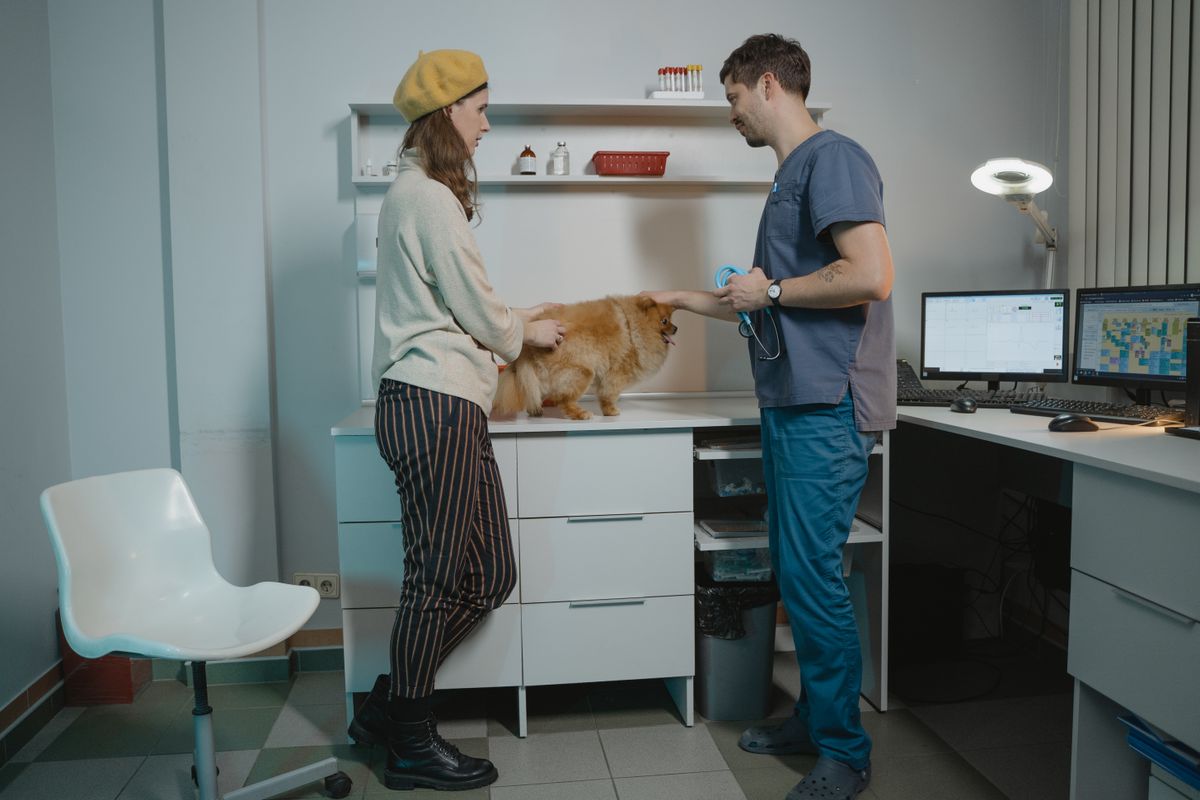
▶ Keeping all Rover communications within the app and documenting every detail of the booking before drop-off is the most effective protection against claim denial.
📊 What Rover's Guarantee Actually Pays vs. What Owners Expect
| Scenario | Owner Expectation | Typical Guarantee Outcome | Legal Recovery Options |
|---|---|---|---|
| Dog escapes, found safe | Search costs, reward posters, flyer printing reimbursed | ❌ Usually denied — not "veterinary expenses" | Small claims if sitter negligence documented |
| Dog escapes, hit by car, survives | Full vet bill covered up to $25,000 | ⚠ Partial — if negligence established, vet bills only | Small claims + sitter personal liability |
| Dog escapes, hit by car, dies | Market value or replacement cost of dog | ❌ Denied — death = property loss, not vet bill | Sitter negligence suit; state-specific damage rules apply |
| Dog injured by sitter's dog | Vet bills from multi-animal incident covered | ⚠ Contested — "third party animal" exclusion frequently applied | Sitter's homeowner's insurance (if covered) + small claims |
| Dog lost, never found | Dog's replacement value, emotional distress | ❌ Both denied — no vet bills, no "intrinsic value" coverage | Negligence suit — state law determines "property" damage cap |
| Dog medication missed, health decline | Resulting vet bills covered | ⚠ Causation dispute — Rover requires proof of direct link | Documentation of medication instructions essential |
| Dog injured during unauthorized activity | Vet bills covered regardless of activity | ❌ Denied — "outside booked service type" exclusion | Stronger negligence claim actually — sitter exceeded scope |
⚔️ Fighting a Denial: The Escalation Playbook
Rover's first-response denials often arrive via in-app message without specific policy language citation. Respond in writing (in-app) requesting: (a) the exact section of Rover's Terms of Service cited as the denial basis, (b) the name and title of the reviewer, and (c) confirmation that this is Rover's final determination. This creates a paper trail and forces specificity that makes your appeal more targeted.
✓ Written denial with specific citation = anchor for your appealThe strongest appeals combine multiple evidence types. Gather immediately:
- All in-app messages with the sitter — screenshot everything chronologically
- Booking confirmation showing exact service type, dates, and times
- Sitter's profile representation — screenshot "fenced yard," "experienced," any specific safety claims at booking time
- Veterinary records and invoices — all costs, with dates matching the incident
- Police report or animal control report if filed — official documentation of the incident
- Witness statements if available — neighbors, passersby who saw the escape or incident
- Photos of the scene — fence gaps, broken gates, leash condition if relevant
The Consumer Financial Protection Bureau (CFPB) accepts complaints against companies that engage in deceptive consumer practices, including deceptive marketing of financial-adjacent products. Filing at consumerfinance.gov creates a federal record, triggers a required response from Rover within 15 business days, and — critically — patterns of complaints influence regulatory priority. Filing takes 10 minutes and costs nothing. Consumer advocates note that Rover guarantee denials that followed a CFPB complaint have a meaningfully higher resolution rate than those that did not.
✓ Free, federal record, 15-day required response — file regardless of outcome expectationRover is headquartered in Seattle, Washington, making Washington State AG a primary venue — but your own state's AG consumer protection division can also receive complaints. The claim: Rover's marketing of the Sitter Guarantee as "$25,000 coverage" constitutes deceptive advertising under state UDAP statutes when the product's actual coverage is substantially narrower than advertised. States with active digital platform consumer protection enforcement include California, New York, Texas, and Illinois.
⚠ State AG complaints don't guarantee your specific case is resolved — but they build the regulatory record that leads to eventual enforcement actionThe most underused and most effective avenue: suing the individual sitter in small claims court for negligence. The sitter, not Rover, had physical custody of your dog. The sitter's duty of care is well-established in tort law. Small claims courts handle claims up to $5,000–$25,000 depending on state, require no attorney, and resolve within 60–90 days. You do not need to name Rover in the suit to recover damages.
- File in the county where the incident occurred or where the sitter resides
- Your evidence package (step 2) is your entire case
- Key argument: the sitter's profile representations ("fenced yard," "experienced," "safe environment") created a specific duty of care that was breached
- Damages available: veterinary bills, documented search costs, and in many states, "fair market value" of the dog

▶ Documenting the sitter's yard, equipment, and environment before drop-off — and keeping all communication in the Rover app — creates the evidence base for any future claim.
🛡️ How to Protect Yourself Before the Booking
✓ What Protects Your Claim
- All communication stays in the Rover app — never text or WhatsApp the sitter
- Booking confirmation matches the actual service you're receiving
- Sitter's profile claims ("fenced yard," "solo pet care") are screenshotted at booking time
- Written drop-off checklist in-app: medications, behavioral notes, emergency vet
- Incident reported to Rover within 24 hours via in-app reporting
- Photos of the sitter's environment taken at drop-off
- Your own pet insurance that covers "care, custody, and control" away from home
✗ What Kills Your Claim
- Any communication with sitter outside the Rover app
- Agreeing to verbal booking extensions not updated in the app
- Allowing sitter to take dog to locations not included in booked service type
- Reporting incident more than 72 hours after it occurred
- No documentation of sitter's environment or profile at booking time
- No witness or physical evidence if sitter disputes the incident account
- Disclosing behavioral history that Rover can cite as "pre-existing issue"
💙 The independent pet sitter alternative: Consumer advocates note that professional pet sitters who are members of the National Association of Professional Pet Sitters (NAPPS) or Pet Sitters International (PSI) carry commercial general liability insurance that covers their services — unlike most Rover sitters whose personal homeowner's policies exclude pet-sitting activities. The cost may be higher, but the insurance coverage is real, regulated, and independently claims-assessed.
🏛️ The Legal Landscape: Animals as Property and the Damages Gap
Understanding what you can legally recover is critical for setting realistic expectations. In the US, companion animals are legally classified as personal property in most states — meaning damages for a pet's death or injury are typically limited to market value or replacement cost.
Property Valuation Rule
Standard tort damages for a dog's death are limited to "fair market value" — often effectively zero for a mixed breed rescue. This is the gap that makes both Rover's guarantee and direct litigation inadequate for many owners.
Non-Economic Damages Permitted
Tennessee's statute (T.C.A. § 44-17-403) allows up to $5,000 in non-economic damages for companion animals. Oregon and a growing number of states have similar provisions. These statutes are your strongest legal lever in direct suit against a sitter.
Sitter Profile = Contract
Legal scholars in animal law note that a sitter's Rover profile representations ("fully fenced yard," "never lost a dog") can constitute contractual warranties. A sitter who represented specific safety conditions and failed to maintain them may face breach of warranty claims beyond basic negligence.
Rover's Section 230 Shield
Rover's Terms of Service position the platform as a marketplace connecting independent contractors — not a service provider. This "marketplace" framing is reinforced by Section 230 protections. Suing Rover directly for the sitter's negligence is extremely difficult; suing the sitter directly remains the viable path.
✅ Emergency Response Checklist — If Something Goes Wrong
🐕 Your Dog Was Lost or Injured During a Rover Sitting
- Report the incident to Rover via in-app message within 24 hours — do not wait for the situation to resolve first.
- Screenshot all in-app messages with your sitter immediately — before anything is deleted.
- Screenshot the sitter's Rover profile as it existed at booking time — profile representations are evidence.
- If dog is missing: file a report with local animal control and police (creates official record).
- Photograph the sitter's premises — fence gaps, gate condition, leash condition — on the day of the incident.
- Collect any witness contact information immediately.
- Request the denial reason in writing if Rover denies your claim — do not accept a verbal or vague message denial.
- File CFPB and state AG complaints within 30 days of denial — parallel tracks, not sequential.
- Consult a small claims court guide in your state — the sitter, not Rover, is your primary litigation target.
- Contact an animal law attorney if damages exceed small claims limit or if the sitter's insurance is involved.
❓ Frequently Asked Questions
Question: My Rover sitter's profile said "fully fenced yard" but the fence had a gap my dog escaped through. Is that covered?
Answer: This is one of the stronger claim scenarios — and one of the most frustrating denial patterns. Rover's claims team has denied these cases under the "negligence cannot be established" standard even when the gap is documented, arguing the sitter was unaware of the gap. Animal law attorneys advise that this scenario is better pursued as a direct negligence suit against the sitter: the profile representation ("fully fenced") created a specific duty of care, the reality (gap in fence) was a breach, and the escape was the direct result. In small claims court, this causation chain is straightforward to present. Rover's denial does not preclude the sitter's individual liability.
Question: I texted my sitter a few times outside the Rover app — does that automatically void my claim?
Answer: It creates a significant risk of denial based on publicly documented complaint patterns. Rover's Terms of Service prohibit off-platform communication specifically to maintain platform liability protections and tracking. Consumer complaints show this exclusion is applied broadly — including cases where the off-platform communication was unrelated to the incident. If you have already communicated outside the app, do not compound it. File your claim immediately via in-app messaging, document everything that occurred on-platform, and if the claim is denied on this basis, the CFPB complaint pathway arguing deceptive marketing is your strongest counter.
Question: Can Rover ban me for filing a claim or a complaint?
Answer: Rover's Terms of Service give the platform broad discretion to suspend or terminate accounts. Consumer advocates note that accounts filing large claims or legal complaints have faced suspension in reported cases. Document this if it occurs — account suspension following a consumer complaint filing may constitute retaliatory conduct that supports a separate unfair business practice claim. Before filing, back up all booking history, messages, and receipts from your Rover account.
Question: My dog died during a Rover stay. The sitter says it wasn't their fault. What can I realistically recover?
Answer: In most US states, the legal recovery for a dog's death is limited to fair market value — which for a mixed breed dog with no economic function (breeding, service, competition) is often near zero. Rover's guarantee will not cover "intrinsic value" or emotional distress. The realistic paths to recovery are: (1) small claims court against the sitter for negligence, seeking fair market value or documented purchase price; (2) in states with non-economic companion animal damage statutes (Tennessee, Oregon, and emerging others), up to $5,000 in non-economic damages; (3) if the sitter's conduct was egregious, potentially a tort claim in civil court with a consumer rights attorney. The honest answer is that the legal system currently fails pet owners whose companions have no market value but incalculable personal worth. This is why breed, training documentation, and purchase price receipts matter for claim purposes.
Question: What should I look for when choosing a pet sitter to avoid this situation?
Answer: Consumer advocates and animal law practitioners recommend: (1) certified professional sitters (NAPPS or PSI members) who carry independent commercial liability insurance — verified by requesting a certificate of insurance, not just a profile badge; (2) sitters with no claim history on Rover (hard to verify externally but can be asked directly); (3) in-person meet-and-greet to inspect the actual environment against the profile description; (4) sitters who agree to keep your dog as the only pet in their care during the booking period; (5) your own pet insurance with "care, custody, and control" coverage that activates while your dog is with a third party.

Document Every Pet-Sitting Arrangement with Patify
Sitter contacts, emergency vet info, behavioral notes — all documented before anything goes wrong.
Download Patify⚖️ Legal Disclaimer: This article is for informational purposes only and does not constitute legal advice. Rover's Terms of Service, guarantee terms, and insurance coverage change over time. Consult a licensed attorney for advice specific to your situation. All case examples are drawn from publicly available consumer complaint records and court filings.