
Cat health · Grooming · Shedding · Hair loss
Why Is My Cat Shedding So Much? What’s Normal & What Actually Helps
Last updated: September 5, 2026
Quick answer: a lot of loose hair can still be normal if the coat stays evenly covered and the skin looks healthy. The bigger warning sign is not the amount of hair on your sofa—it is hair loss on the cat: bald or thinning patches, broken hairs, redness, crusts, sores, intense licking/scratching, or a sudden coat change.
The most useful distinction: shedding is old hair leaving as new hair grows; alopecia is visible loss or thinning of the coat; overgrooming is self-removal of hair and is often driven by itch, pain, or skin disease—not automatically stress.
Book a veterinary exam if you can see bald/thin areas, inflamed or crusty skin, repeated scratching/licking, a rapidly changing coat, or shedding/hair loss alongside weight loss, appetite change, lethargy, vomiting, diarrhea, increased thirst, or other illness signs.
Normal shedding vs. hair loss: use the cat, not the couch, as your test
Merck Veterinary Manual notes that shedding can look dramatic while still being part of normal hair replacement. When there are no bald patches or obvious thinning, shedding is more likely to be physiological. Inflammatory hair loss, by contrast, is common in cats and may be caused by parasites, fungal or bacterial infection, allergies, itch, pain, or self-trauma.
| What you notice | More consistent with normal shedding | More consistent with a medical hair-loss problem |
|---|---|---|
| Hair around the home | Loose fur on bedding, clothing and furniture | May occur too, but the cat also looks visibly thin/bald |
| Coat coverage | Even coat without new bare areas | Patchy, symmetric, focal or progressive thinning/alopecia |
| Skin | Looks comfortable and intact | Redness, crusts, scale, sores, discharge, thickening or color change |
| Grooming | Usual self-grooming | Repeated licking, chewing, scratching or rubbing; owners may not always witness it |
| Whole-cat health | Normal appetite, weight, energy and behavior | Weight/appetite change, lethargy, pain, systemic signs or a major behavior change |
Indoor cats can shed year-round. VCA notes that cats living mostly indoors often lose low levels of undercoat and guard hairs throughout the year, while cats exposed to stronger seasonal changes may have more noticeable seasonal sheds.
Why is my cat shedding so much? 7 possibilities worth separating
1. Normal coat cycling
Old hairs are continuously replaced. Outdoor exposure, climate, daylight, coat density, age and individual genetics can change how noticeable that cycle is.
2. Long or dense coat
A long-haired or heavily undercoated cat can put far more visible hair into the home without being unhealthy. Coat maintenance needs often matter more than a simple high-shedding breed label.
3. Fleas or other parasites
Flea allergy dermatitis can cause intense itch and self-induced alopecia even when you do not see many fleas. Mites and other ectoparasites can also contribute to skin disease.
4. Allergy or inflammatory skin disease
Feline allergic skin disease can show up as itching, head/neck lesions, crusts, eosinophilic lesions or self-induced hair loss. Food and environmental triggers are possibilities, but appearance alone cannot identify the allergen.
5. Ringworm or another infection
Dermatophytosis can cause broken hair, scaling, crusting and areas of hair loss. Circular lesions are classic but not required. Ringworm can spread to people, so suspected cases deserve veterinary diagnosis.
6. Overgrooming from itch, pain or stress
A cat can lick away fur without the owner ever seeing intense grooming. VCA stresses that psychogenic alopecia should be a diagnosis of exclusion because many cats with overgrooming actually have an underlying medical or dermatologic cause.
7. Nutrition or systemic disease
True nutritional deficiencies can damage coat quality, but they are uncommon in cats eating a properly stored, complete and balanced diet. Systemic illness, endocrine disease, pain, infection and other conditions can also change coat quality or grooming behavior.
What actually helps normal shedding?
If your cat has an evenly covered, healthy-looking coat and no red flags, the highest-value interventions are simple.
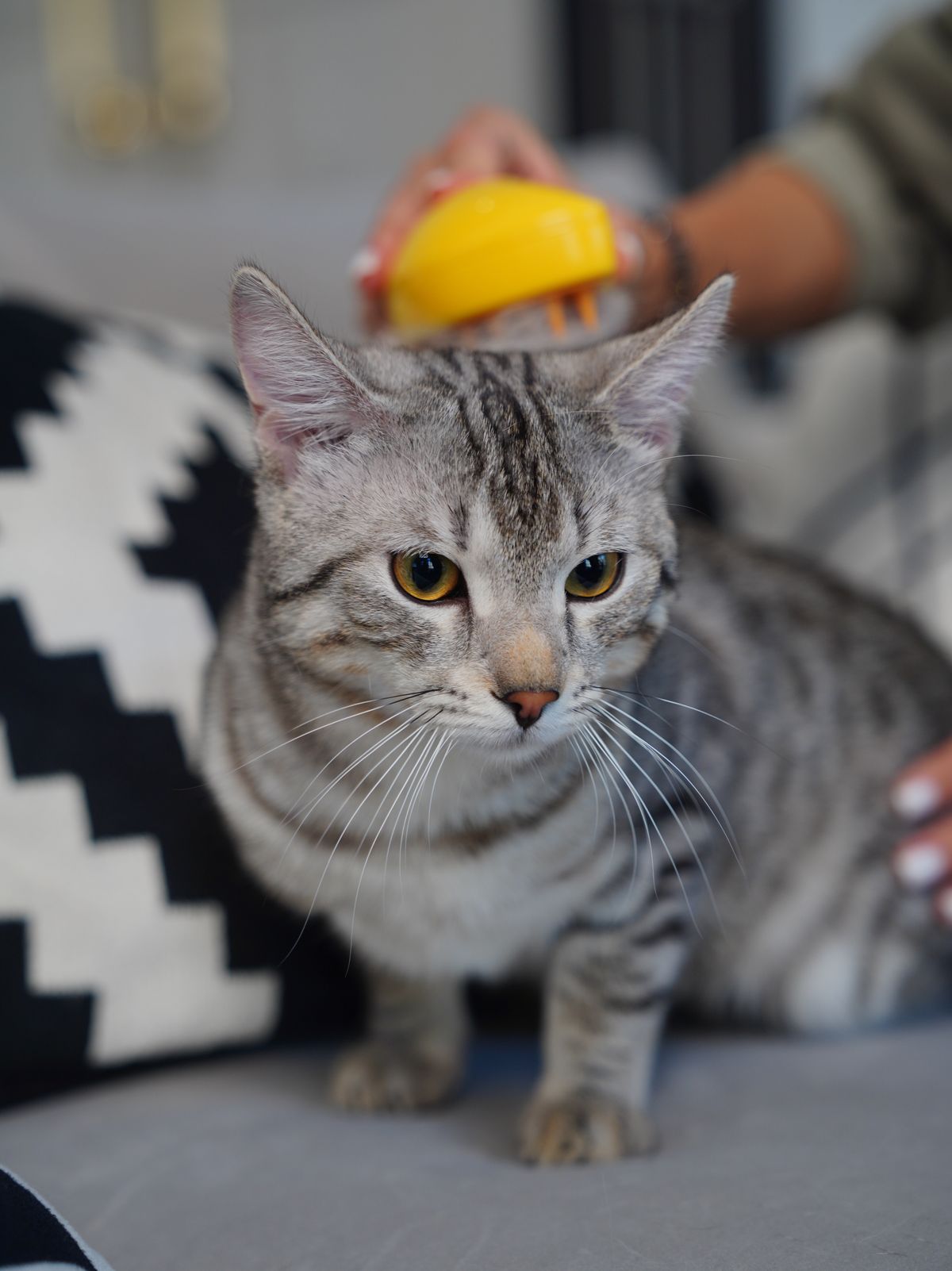
- Brush the loose hair before it reaches the furniture. VCA recommends regular brushing for all cats with hair. Long, silky or curly coats often need daily attention to prevent tangles and mats; short coats usually need less frequent brushing.
- Use the gentlest tool that works for your cat's coat. Short coats often do well with a soft/bristle or rubber grooming tool; medium/long coats may benefit from a long-toothed metal comb. Avoid repeatedly scraping the same skin with aggressive de-shedding tools.
- Keep sessions voluntary and short at first. Stop if the cat becomes tense, swats, bites, tries to escape, or the skin looks irritated. Grooming should not become a wrestling match.
- Inspect while you brush. Part the coat and look for fleas/flea dirt, redness, scale, crusts, sores, lumps, broken hairs and mats.
- Remove mats safely. Do not slide scissors under a mat; feline skin can tent up into the blades. VCA recommends clippers rather than scissors, and extensive matting is safer with a professional groomer or veterinary team.
Evergreen rule: there is no evidence-based brush every cat exactly three times a week rule. Coat type, mat risk, tolerance and the amount of loose hair determine the schedule.
Food and supplements: fix deficiencies, not marketing labels
The old internet advice to buy a food because meat is the first ingredient, because it is grain-free, or because it contains a fashionable oil is not a reliable way to judge nutritional adequacy. Merck recommends focusing on a complete and balanced diet appropriate for the cat's life stage.
- Do not switch diets solely because your healthy cat sheds. Normal shedding is not proof of poor nutrition.
- Do not assume grains are fillers. Ingredient order does not tell you whether the finished diet meets all nutrient requirements.
- Essential fatty-acid deficiency is possible but uncommon in cats eating properly preserved complete and balanced commercial diets.
- Do not stack fish oil, biotin, zinc or vitamin supplements onto a complete diet without a reason. Excess supplementation can create its own problems.
- If coat change is accompanied by weight loss, appetite change or other illness, diagnose the cause before shopping for supplements.
Should you bathe a shedding cat?
Usually not as a routine shedding treatment. VCA notes that most healthy adult cats groom themselves well and rarely require a bath. Bathing may be appropriate when the cat cannot groom properly, is unusually dirty, or when a veterinarian prescribes topical therapy for a skin condition.
Do not create a fixed every 4–6 weeks bath schedule just to control fur. Repeated bathing can be stressful and can aggravate skin problems in some cats. If bathing is needed, use a product specifically suitable for cats and follow veterinary directions when skin disease is present.
Parasite control: one schedule does not fit every cat
Parasite prevention should be based on geography, indoor/outdoor exposure, other pets, travel, hunting and the products available where you live. A universal deworm every 3 months plus spot-on every month rule is not appropriate for every cat.
Never use a dog flea/tick product on a cat unless the label specifically says it is safe for cats. Merck notes that cats are particularly vulnerable to permethrin toxicity, which can cause severe neurologic signs including tremors and seizures.
If your cat is scratching or overgrooming, your veterinarian may recommend a flea-control trial even when you have not found adult fleas, because flea allergy can produce marked self-induced hair loss.
Stress and overgrooming: rule out itch and pain first
Moving house, social conflict, a new pet, boredom or unpredictable routines can contribute to stress, and some cats do overgroom in response. But the cat is stressed should not be the first explanation for bald areas.
VCA states that psychogenic alopecia is reserved for cases in which medical causes have been excluded. Parasites, flea allergy, environmental or food allergy, infection, pain and systemic disease can all produce the same visible result.
What you can safely do meanwhile: keep routines predictable, provide hiding places and vertical space, offer species-appropriate play, avoid punishment for licking, and photograph the affected areas every few days. But book an exam if visible thinning or skin lesions persist.
Low-cost ways to keep cat hair under control at home
You do not need an expensive de-shedding system to keep normal loose hair manageable.
- Washable throw: cover the cat's favorite sleeping area and wash the cover instead of deep-cleaning upholstery constantly.
- Slightly damp rubber glove: useful on many fabric surfaces because loose hair gathers as you sweep in one direction. Test delicate upholstery first.
- Reusable lint brush/roller: good for clothing and quick furniture cleanups without constant disposable refills.
- Vacuum little and often: especially around cat beds, stairs, upholstery edges and baseboards where fur accumulates.
- Damp microfiber cloth: useful on many hard surfaces; avoid soaking wood or electronics.
- Wash bedding routinely: shake or vacuum loose hair first so it does not simply redistribute through the wash.
For allergy households: cat allergy is primarily an allergen-protein problem, not a hair allergy. Removing fur and cleaning can reduce the material carrying allergens, but an air purifier or vacuum is not a treatment for the cat's shedding itself.
Breed matters less than coat type and the individual cat
Breed lists often create false precision. VCA notes broad coat differences—Sphynx/Rex-type cats shed very little, while cats such as Maine Coons can shed heavily—but grooming needs are better predicted by coat length, texture, undercoat density, mat tendency and the cat's ability to self-groom.
| Coat type | What you may notice | Useful approach |
|---|---|---|
| Short, smooth coat | Loose hair can still be obvious on fabric despite a thin coat | Regular gentle brushing; increase frequency during heavier shedding if the cat tolerates it |
| Dense short coat | Large amount of fine undercoat | Regular brushing/comb suited to undercoat; watch skin for over-brushing |
| Long or silky coat | More visible loose hair plus higher mat risk | Often daily grooming, especially high-friction areas behind ears, armpits and hind legs |
| Curly/Rex coat | Often low shedding but hair shafts can be delicate | Gentle grooming based on individual coat; avoid aggressive de-shedding |
| Hairless/very sparse coat | Little conventional shedding | Skin care replaces brushing needs; follow breed-appropriate veterinary/grooming guidance |
When should cat shedding go to the vet?
| Pattern | Why it matters | Suggested next step |
|---|---|---|
| Bald or clearly thinning patches | This is alopecia, not simply fur around the house | Veterinary appointment |
| Redness, crusts, scale, sores, discharge or odor | Inflammation, infection or parasites become more likely | Prompt veterinary assessment |
| Persistent scratching, licking, chewing or rubbing | Itch or pain may be driving self-induced hair loss | Veterinary workup rather than a stress-only assumption |
| Circular hair loss or broken hairs | Ringworm is one possibility and is zoonotic, but appearance alone cannot diagnose it | Contact your vet; reduce unnecessary close contact until assessed if ringworm is suspected |
| Coat change + weight/appetite/energy/thirst change | May indicate a broader medical problem | Veterinary exam and appropriate testing |
| Senior, overweight or painful cat becomes greasy or matted | The problem may be reduced ability to groom rather than excess hair production | Check for arthritis, obesity, dental pain or systemic disease |
Emergency? Shedding by itself is rarely an emergency. Seek urgent care when the coat problem is part of a true acute illness—for example severe weakness or collapse, breathing difficulty, major trauma, severe pain, or a serious suspected toxin exposure.
Frequently asked questions
Why is my indoor cat shedding all year?
That can be normal. Indoor light and temperature patterns are less seasonal, and VCA notes that indoor cats may shed small amounts of undercoat and guard hair throughout the year.
How much shedding is too much?
There is no useful grams-of-hair cutoff. Look at the cat: new bald or thin areas, broken hairs, skin lesions, itch, pain or a major health change matter more than the amount in the vacuum.
How often should I brush my cat?
Long, silky or curly coats may need daily grooming to prevent mats; short coats often need less. Adjust to coat type, shedding level and tolerance rather than following one universal weekly number.
Will better food stop shedding?
No food stops normal hair cycling. A complete and balanced diet supports skin and coat health; unexplained coat change should not be treated by repeatedly switching foods without investigating medical causes.
Should I add fish oil or omega-3 for shedding?
Not automatically. Essential fatty-acid deficiencies are uncommon on a complete and balanced diet, and supplements can add calories or cause adverse effects. Ask your veterinarian if there is a specific reason and dose for your cat.
Does shaving stop a cat from shedding?
No. It only makes the shed hairs shorter while the coat grows back. VCA notes that most cats, including long-haired cats, do not need shaving for summer heat. Shaving may be appropriate for severe matting or specific medical or grooming needs.
Are circular bald spots always ringworm?
No. Ringworm can cause circular hair loss, broken hair and scale, but it can look different and other skin diseases can look similar. A veterinarian may use examination, Wood's lamp, microscopy and fungal testing to confirm it.
My cat is licking the belly bald. Is it anxiety?
Possibly, but not safely assumed. Fleas, allergy, other skin disease and pain can all cause self-induced alopecia. Behavioral or psychogenic alopecia is a diagnosis made after medical causes are excluded.
Sources & editorial standard
This guide was rebuilt to separate normal shedding from alopecia and overgrooming, and to remove unsupported percentage reductions, rigid seasonal timelines, ingredient-list myths, fixed bathing schedules, universal parasite intervals and overly precise breed-by-breed shedding rules.
- Merck Veterinary Manual: Hair Loss (Alopecia) in Cats
- Merck Veterinary Manual: Feline Atopic Skin Syndrome
- Merck Veterinary Manual: Ectoparasiticides Used in Small Animals
- Merck Veterinary Manual: Dog and Cat Foods
- VCA Animal Hospitals: Coat and Skin Appearance in the Healthy Cat
- VCA Animal Hospitals: Grooming and Coat Care for Your Cat
- VCA: Compulsive Disorders and Overgrooming in Cats
- Cornell Feline Health Center: Feline Skin Diseases
- Cornell Feline Health Center: Ringworm in Cats
Educational information only. Visible hair loss, persistent itch, skin lesions or a sudden coat change deserve individualized veterinary assessment.
Track coat changes with Patify

Track the cat—not just the fur on the sofa
Save photos of thinning areas, brushing notes, parasite treatments, diet changes, weight and veterinary findings so you can see whether the coat is actually changing over time.
View Patify on Google PlayBottom line
Lots of loose fur is not the same thing as hair loss. If the coat remains evenly covered and the skin looks healthy, regular gentle grooming and simple home fur-control usually do more than expensive anti-shedding products. If the cat itself is becoming bald, itchy, sore or unwell, stop treating it as a cleaning problem and investigate the cause.