
Does Cat Food Go Bad If Left Out? Wet vs. Dry Safety Times

Substantially updated August 2026 and source-checked against FDA pet-food storage guidance plus current manufacturer instructions from Purina, Royal Canin, and Hill's.
📌 Quick answer: Yes, cat food can deteriorate after it is served. Wet food needs the shortest window. Follow the package or manufacturer instructions for your exact diet; verified guidance currently ranges from about 1 to 4 hours for served wet food. Dry kibble tolerates room-temperature serving much better, but it should still be refreshed regularly, protected from moisture and heat, and not treated as indefinitely fresh.
The confusing part is that reputable sources do not all give the same number. That does not mean one of them must be wrong. Different diets have different formulations, packaging, preservatives, moisture levels, and manufacturer-validated handling instructions.
So instead of asking only, “How many hours has the bowl been down?”, ask four questions: what type of food is it, what does that manufacturer say, how warm and humid is the room, and has the food already been eaten from?
What this guide answers
- Wet vs. dry: the practical table
- Why do Purina, Royal Canin, and Hill's give different times?
- How long can wet cat food sit out?
- How long can dry cat food stay in the bowl?
- How long does opened wet food last in the refrigerator?
- What about wet food mixed with kibble?
- What if cat food was left out overnight?
- Does summer heat change the answer?
- Can you tell by smell if cat food is bad?
- What if your cat ate questionable food?
- FDA bowl and storage hygiene
- Frequently asked questions
Cat food left out: the practical decision table
| Situation | What current guidance supports | Practical action |
|---|---|---|
| Served wet/canned/pouch food | Published manufacturer limits differ. Purina says discard after more than 1 hour; Royal Canin says 2 hours; Hill's says 4 hours when ambient temperature is above 50°F/10°C. | Follow the instructions for your exact food. If you cannot verify them, use a conservative short window rather than stretching the longest number you find online. |
| Unused wet food still in the opened can/pouch | FDA says promptly refrigerate or discard unused/leftover canned and pouched pet food and keep the refrigerator at 40°F/4.4°C or below. | Cover/seal and refrigerate promptly. Then follow that manufacturer's refrigerated-use window. |
| Dry kibble served in a clean bowl | Dry food is less perishable than wet food. Royal Canin uses a 24-hour maximum for kibble left out for the pet; FDA emphasizes cool, dry storage below 80°F/26.7°C. | Refresh at least daily, sooner if the food becomes damp, dirty, stale, pest-contaminated, or exposed to heat. |
| Wet + dry mixed together | Adding wet food introduces the higher-moisture component. | As a practical safety rule, manage the mixture using the wet-food time limit for that product. |
| Raw pet food | FDA treats raw pet food as a separate pathogen-control issue and recommends strict sanitation. | Do not use ordinary kibble/wet-food timelines as a substitute for the product's raw-food handling instructions. |
Why do reputable sources say 1 hour, 2 hours, or 4 hours?
This is the part most articles flatten into one confident number.
Purina's current cat-food storage guide says wet food left in the bowl for more than one hour should be picked up and thrown away.
Royal Canin says its wet diets should be discarded after a maximum of two hours once opened and served to the pet.
Hill's says moist/canned food remaining in a bowl should be emptied within four hours when ambient temperature is above 50°F.
These are manufacturer handling instructions, not three universal microbiology laws. They apply to the companies' diets and guidance systems. FDA's pet-food storage page does not replace them with a single room-temperature hour limit; instead, it tells owners to promptly refrigerate or throw out leftover canned/pouched food and to keep refrigerated food at 40°F/4.4°C or below.
The right answer is not “Google says two hours.” The right answer is “check the exact food first, then do not extend its validated handling guidance just because another brand publishes a longer window.”
How long can wet cat food sit out?
Wet food deserves the strictest handling because it contains substantially more moisture than kibble and begins changing once it is exposed to room air, a feeding bowl, and the cat's mouth.
For a precise answer, use the label or manufacturer guidance for your exact diet. Current verified examples range from one hour to four hours. If the room is warm, humid, sunny, or the food has been repeatedly licked and revisited, there is no benefit in pushing toward the longest published limit.
🌡️ Do not turn “4 hours” into a universal permission slip. Hill's four-hour guidance is its published handling recommendation under stated conditions. Purina and Royal Canin publish shorter limits. The food you actually bought should decide the upper limit.
For a dedicated deep dive into wet food only—including feeding schedules and room-temperature scenarios—see Patify's wet cat food sit-out safety guide.
How long can dry cat food stay in the bowl?
Kibble does not behave like opened canned food. Its lower moisture content makes rapid wet-food-style spoilage less likely, so the main household problems are usually loss of freshness, oxidation, humidity, dirt, saliva, insects, and other contamination.
Royal Canin currently recommends discarding its dry diet after a maximum of 24 hours once it has been left out for the pet. FDA's broader storage advice is to keep dry pet food in a cool, dry place below 80°F/26.7°C and, where possible, in its original bag with the top folded tightly.
That means “dry food can sit out forever” is also the wrong conclusion. Refresh the bowl at least daily, and replace it sooner if the kibble becomes damp, oily-smelling, dusty, insect-contaminated, or mixed with wet food or water.
How long does opened wet cat food last in the refrigerator?
There is no single universal refrigerator number either.
FDA says to refrigerate unused or leftover canned/pouched food promptly, cover it tightly, and keep the refrigerator at 40°F/4.4°C or below. How long the opened product remains acceptable after that depends on the manufacturer.
| Source | Current published refrigerated guidance | What that means |
|---|---|---|
| Royal Canin UK | Ideally 48 hours; 72 hours maximum for opened wet diets. | Use the product promptly and keep cans/pouches covered in an airtight container. |
| Royal Canin US | Use opened canned product within 48 hours. | Even guidance from the same manufacturer can vary by market/product documentation. |
| Hill's | Opened cans stored at about 40–45°F: maximum 5–7 days. | This should not be copied onto another manufacturer's diet. |
✅ Best rule: write the opening date on the lid, refrigerate promptly, and follow the exact product's instructions. A longer window published by another company does not automatically apply to your food.
Can you put food back in the refrigerator after your cat has eaten from it?
It is better to separate unused food still in the can/pouch from food already served in the bowl. Once food has been in the feeding dish and contacted saliva, fur, household dust, or repeated room-temperature exposure, it is no longer the same storage situation as untouched product that was promptly covered and refrigerated.
The practical approach is portion control: serve a smaller amount, keep the untouched remainder refrigerated immediately, and discard the served portion when it reaches that product's room-temperature limit.
What if I mix wet food and dry kibble?
Treat the mixture like wet food for timing purposes. That is a conservative inference from the higher-moisture component: once kibble is coated with wet food, it no longer has the dry environment that gives plain kibble its greater room-temperature stability.
If your cat prefers mixed meals but grazes slowly, offer smaller portions more often instead of leaving a large wet-coated bowl down all day.
Cat food was left out overnight. Keep it or throw it away?
Wet food left out overnight
Throw it away. Overnight exposure exceeds the published room-temperature limits from Purina, Royal Canin, and Hill's.
Dry kibble left out overnight
Plain dry kibble in a clean, dry indoor bowl is a different situation. An overnight period is within Royal Canin's 24-hour served-kibble guidance, but replace it if it is damp, dirty, mixed with wet food, exposed to pests, or sitting in a very hot/humid location.
Does summer heat shorten the safe window?
Heat and moisture make food-storage conditions less forgiving. FDA specifically advises keeping dry pet food below 80°F/26.7°C because excess heat or moisture can contribute to nutrient breakdown.
For served wet food, do not invent a temperature calculator such as “every 10°C cuts the time exactly in half.” That is not a universal pet-food safety equation. Instead, use the manufacturer's limit as an upper boundary and shorten exposure when food is sitting in direct sun, a hot room, a non-air-conditioned space, or another clearly unfavorable environment.
Can you tell if cat food has gone bad by smell?
Sometimes food gives obvious warning signs: mold, abnormal discoloration, a swollen or damaged package, unusual texture, insects, or an off/rancid odor. If something looks or smells wrong, discard it.
But normal appearance is not permission to ignore time and storage instructions. A served food does not need to look dramatically spoiled before its recommended room-temperature window has ended.
FDA also advises discarding pet food from damaged packaging when seals are broken or containers are compromised. When in doubt about a specific lot or package, keep the lot number and manufacturer details so a complaint can be investigated if needed.
What if your cat ate food you think was spoiled?
One episode of vomiting or a soft stool can have many causes, so do not automatically diagnose food poisoning at home. What matters is whether your cat is becoming systemically unwell.
Veterinary evaluation becomes more important with:
- repeated or persistent vomiting
- bloody vomit or severe/bloody diarrhea
- marked lethargy or weakness
- abdominal pain
- dehydration or inability to keep water down
- persistent loss of appetite
- fever or other signs of generalized illness
VCA advises prompt medical attention for severe or bloody diarrhea accompanied by generalized illness, and for vomiting associated with lethargy, appetite loss, abdominal pain, diarrhea, or dehydration. Cornell also notes that sustained anorexia is particularly important in cats because loss of appetite can contribute to serious metabolic complications such as hepatic lipidosis.
🚨 Do not wait for an arbitrary “three vomits” rule. A cat that is weak, painful, repeatedly vomiting, passing blood, dehydrated, or refusing food needs assessment based on the whole clinical picture—not a counter.
The FDA food-safety habit most owners underestimate: wash the bowl
FDA's pet-food storage guidance is clear: wash and dry pet-food bowls after each use, wash and dry scoops and measuring utensils after each use, and wash water bowls daily.
That recommendation is more useful than claiming one bowl material is automatically “bacteria-proof.” Whatever material you use, choose a feeding surface that is intact, easy to clean, and washed consistently.
Smaller portions reduce waste and make wet-food timing much easier to manage.
Cover cans or seal pouches/containers and keep the refrigerator at 40°F/4.4°C or below.
Manufacturer refrigerator limits are difficult to follow if nobody remembers when the can was opened.
Discard old crumbs, wash/dry the bowl, then add fresh kibble.
FDA recommends original packaging where possible; it also preserves the lot number and product information if a safety problem occurs.
What about serving refrigerated wet food cold?
Cold wet food is not automatically unsafe. Purina notes that many cats prefer wet food closer to room temperature and suggests allowing refrigerated food to sit for about 15 minutes before serving if the cat dislikes it cold.
That is primarily a palatability issue—not evidence that refrigerated food causes “whisker fatigue” or predictable stomach cramps. If warming food, warm only the portion being served and avoid making it hot enough to burn the mouth.
Related Patify guide
Frequently asked questions
How long can wet cat food sit out?
Can wet cat food stay out for four hours?
Can dry cat food sit out all day?
How long does opened canned cat food last in the refrigerator?
Can I refrigerate food that my cat already ate from?
Does wet cat food go bad faster in summer?
Can cats eat wet food straight from the refrigerator?
What should I do if my cat ate food that had been left out too long?
- U.S. FDA — Proper Storage of Pet Food & Treats
- U.S. FDA — Tips for Safe Handling of Pet Food and Treats
- Purina — How to Store Cat Food
- Purina — Serving Refrigerated Wet Cat Food
- Royal Canin UK — Food Storage FAQ
- Royal Canin US — Food Storage FAQ
- Hill's Pet Nutrition — Cat and Dog Food Storage Tips
- VCA Animal Hospitals — Vomiting in Cats
- VCA Animal Hospitals — Diarrhea in Cats
- Cornell Feline Health Center — Anorexia
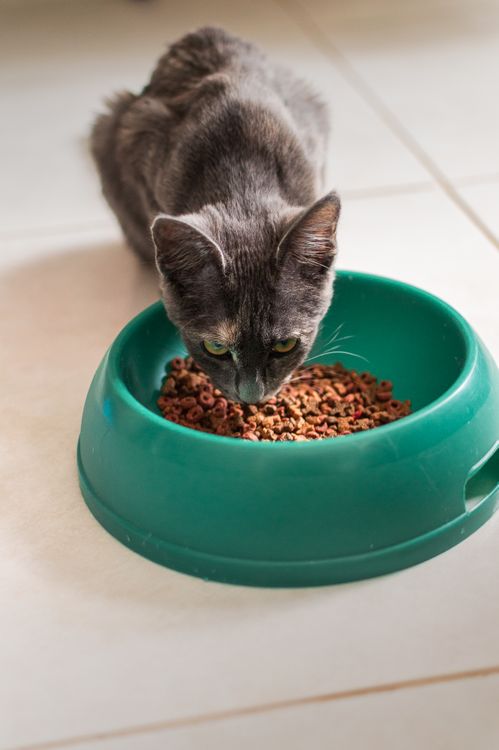
- Cover image: Eduardo López / Pexels — gray cat eating from a green bowl; Pexels page marked “Free to use,” checked August 14, 2026.