

Last verified: October 1, 2026
Chinchilla Colors: Separate What You See From What the Pedigree Proves
Quick answer: domestic chinchillas occur in many colors because breeders have combined the natural standard grey coat with mutations such as Wilson White, Tower Beige, Black Velvet, Ebony, Sapphire and Violet. But color names do not all describe the same genetic mechanism. Some are dominant or incomplete-dominant, some are recessive, some are cumulative/polygenic, and many familiar names are combinations.
That makes photo identification useful but limited. You can often describe the visible phenotype—grey, mosaic white, beige, velvet-patterned, ebony-wrap, violet or sapphire—but a photo cannot prove every recessive carrier state, exact line or breeding genotype.
Patify color-ID rule: describe phenotype first, then inheritance, then pedigree. Never reverse the order by assigning a rare genotype because a photo “looks close.”
Color, Mutation, Blend and Carrier Are Different Things
Mutation Chinchilla Breeders Association terminology distinguishes dominant mutations, recessive mutations and combinations/blends. Chinchillas.com also cautions that several inheritance classifications remain based largely on breeder observation rather than complete molecular genetic characterization.
| Term | Meaning | Example |
|---|---|---|
| Standard | Natural wild-type/agouti reference color | Standard grey |
| Dominant / incomplete dominant | One copy is visible; two-copy state may differ or be nonviable depending mutation | Wilson White, Tower Beige, Black Velvet/TOV |
| Recessive | Visual expression generally requires the recessive genotype; carriers can look non-visual | Sapphire, Violet |
| Cumulative / polygenic | Expression varies with accumulated inheritance and selection | Ebony-type wrap intensity |
| Combination / blend | Two or more mutations appear together | Pink White, White Violet, Tan |
This distinction matters because “white chinchilla,” “mosaic,” “silver” and “Pink White” can all involve the Wilson White gene while producing visibly different coats.
Chinchilla Color Chart: 12 Useful Categories
| Color / label | Genetic category | Typical visual clues | What a photo cannot prove |
|---|---|---|---|
| Standard Grey | Wild type | Grey veiling, dark band/tipping, bright white belly | Hidden recessive carrier status |
| Wilson White / Mosaic | Incomplete dominant; homozygous lethal | White coat with variable grey/black markings; black eyes | Exact mosaic pattern inheritance |
| Silver | Wilson White expression | Even pale grey/silver appearance with white influence | Not a separate simple mutation |
| Tower Beige | Dominant/incomplete-dominant family | Beige/champagne coat, pink ears, red/pink eyes | Exact hetero/homo status from weak photos |
| Black Velvet / TOV | Dominant/heterozygous-only; homozygous lethal | Dark head/back “velvet” veiling, white belly | Hidden combo genes without pedigree |
| Ebony | Cumulative/complex | Grey-to-black wrap including belly; darkness varies | Exact accumulated genetic contribution |
| Sapphire | Recessive | Soft blue-grey, white belly, pink ears | Carrier status in standard-looking animals |
| Violet | Recessive | Lavender/violet-grey tone, white belly | Carrier status |
| Pink White | Wilson White + Beige | White/beige mosaic tones, pink ears, red/pink eyes | Precise genotype beyond documented parentage |
| Tan / Beige Wrap | Beige + Ebony | Beige-to-chocolate wrap, colored belly | Exact ebony intensity inheritance |
| White Sapphire / White Violet | Wilson White + recessive visual | White mosaic overlay with sapphire/violet base areas | Specific carrier history without records |
| Blue Diamond-type | Multi-recessive combination | Blue-violet/periwinkle-grey appearance | Cannot be safely diagnosed from color alone |
1. Standard Grey: The Reference Color
Chinchillas.com calls Standard Grey the natural, wild-type/agouti coat and the foundation used to judge mutation colors. A good standard animal has a grey body with characteristic banded fur and a clear white belly.
“Standard” does not mean one exact shade. Light, medium and dark standards exist, and breeder selection can make two standards look surprisingly different.
Why standards matter in genetics
Because visually standard animals can carry recessive genes, a grey coat does not mean “no mutation genes.” A standard-looking chinchilla may be a documented carrier for Sapphire, Violet or another recessive project.
2. Wilson White, White Mosaic and Silver
Sunshine Chinchillas traces Wilson White to the Blythe Wilson Ranch in California in 1955. The gene can create animals that are almost entirely white, sharply mosaic, or evenly silvered.
“Mosaic” describes the visible patching pattern. “Silver” is generally treated as another Wilson White expression rather than a separate mutation.
Breeding warning: Wilson White is associated with a homozygous lethal factor. White × White pairings are therefore avoided because embryos inheriting two copies are not viable.
3. Tower Beige: One Copy vs Two Copies
Tower Beige is a dominant/incomplete-dominant color family. Sunshine Chinchillas describes heterozygous beige as darker and homozygous beige as lighter/brighter. Pink ears and red-to-pink eyes are characteristic clues.
Do not use “champagne” as if it were a universally standardized genotype. Breeder terminology can vary, so a sales label should be backed by parentage if genotype matters.
4. Black Velvet / TOV: Dark Top, White Belly
Black Velvet—also called Gunning Black or TOV (“Touch of Velvet”)—produces dark veiling over the face, shoulders and back while retaining a bright white belly in classic expression.
Chinchillas.com and breeder-genetics references describe the homozygous form as nonviable, meaning visual Black Velvet animals are effectively heterozygous for the trait.
Important: TOV is not the same thing as Ebony. A very dark Ebony may have a dark belly, while classic Black Velvet retains the white belly pattern.
5. Ebony: Why “Light, Medium, Dark, Extra Dark” Is a Spectrum
Ebony is commonly described as cumulative: repeated inheritance and selection can deepen the wrap effect over generations. That is why breeder labels such as light Ebony, medium Ebony and extra-dark Ebony describe a spectrum rather than neat single-copy categories.
The visual hallmark is the wrap: body color extends onto the belly rather than stopping at a bright white belly line.
Because expression is variable, a photograph can often support “Ebony-type wrap,” but it is poor evidence for a precise accumulated genetic formula.
6. Sapphire
Larsen Sapphire is generally treated in breeder practice as a recessive mutation. Typical visual descriptions emphasize a cool crystal-blue/blue-grey tone, white belly, dark eyes and pink ears.
A standard-looking animal can carry Sapphire without looking blue. That makes pedigree essential when a seller claims “Sapphire carrier.”
7. Sullivan / Afro Violet
Violet is another recessive mutation. Sunshine Chinchillas describes a light bluish-violet cast over the grey coat, black eyes and a clean white belly.
Violet can be combined with Wilson White, Beige, Ebony or TOV, creating labels such as White Violet, Beige Violet and TOV Violet. Those are stacked traits, not separate unrelated species of color.
8–12. Combination Colors: Read the Name as a Formula
| Combination | Genetic ingredients | Visible idea |
|---|---|---|
| Pink White | Wilson White + Tower Beige | White/beige mosaic, pink ears, reddish eyes |
| White Ebony | Wilson White + Ebony | White patches over grey-to-black wrap background |
| Tan | Beige + Ebony | Beige-to-chocolate wrap including belly |
| White Sapphire | Wilson White + visual Sapphire | White mosaic over blue-grey base areas |
| White Violet | Wilson White + visual Violet | White mosaic over violet-grey base |
Once several mutations are stacked, color identification becomes much less reliable from internet photos. Lighting can push cool grey toward brown, warm beige toward orange, and dark Ebony toward Black Velvet.
The Two Color Pairings Pet Owners Should Know About
Multiple long-standing breeder references identify two classic homozygous-lethal systems in domestic chinchillas:
- Wilson White × Wilson White-family animals
- Black Velvet/TOV × Black Velvet/TOV-family animals
National Chinchilla Society guidance likewise warns against pairing two animals that each carry White, or two that each carry Velvet.
This does not mean a healthy White or Black Velvet chinchilla is itself “lethal” or sick. The welfare issue concerns breeding two copies into an embryo.
Do not use this article as a breeding calculator. Complex mutation pedigrees can hide White/TOV inside combination names. Breeding decisions should use a documented pedigree and an experienced ethical breeder/exotics veterinarian where appropriate.
How to Decode a Chinchilla Sales Label
A breeder listing can combine visible color, hidden carrier information and coat/fur traits in one line. Read each piece separately instead of treating it as one color name.
Example: “TOV White Violet, VC/SC lines”
- TOV signals the Velvet-family gene/phenotype.
- White signals Wilson White-family expression.
- Violet states the recessive Violet phenotype is expressed.
- VC / SC may be breeder shorthand for Violet Carrier / Sapphire Carrier where documented.
The visible animal cannot independently prove every carrier suffix. Ask for a pedigree when a hidden gene materially affects price or a future breeding decision.
| Seller wording | Safe interpretation |
|---|---|
| “Mosaic” | Wilson White-family visual pattern; not a unique separate simple gene |
| “Silver” | Wilson White expression with more even grey/white frosting |
| “TOV” | Touch of Velvet / Black Velvet-family gene is present |
| “Wrap” | Color extends around belly rather than leaving classic white belly |
| “Carrier” | Pedigree/genetic history claim; often not visible |
| “Homo Beige” | Two Beige copies; usually lighter than heterozygous Beige |
Why Chinchilla Colors Change Under Different Lighting
Dense chinchilla fur contains bands and tips that reflect light differently across the coat. Warm household bulbs can make a cool Standard, Sapphire or Violet animal look brown; strong flash can wash out veiling; underexposure can make a medium Ebony look extra dark.
For repeatable identification photos:
- use indirect daylight or a neutral-white lamp;
- turn off strong warm ambient lighting;
- avoid phone “vivid” or automatic beauty filters;
- include a white/neutral object in the frame for color reference;
- photograph the belly, ears and eyes as well as the back;
- do not compare two animals photographed under different white balance.
This is especially important for Violet and Sapphire, where the useful clue is a cool hue—not simply “pale grey.”
How to Identify a Chinchilla Color From Photos
- Use neutral daylight or neutral-white lighting.
- Show the whole body. Belly color is critical for Velvet vs Ebony-type questions.
- Show ears and eyes. Beige-family eye/ear color can be informative.
- Photograph both sides. White mosaic placement can be asymmetric.
- Do not overexpose white fur. Highlight clipping erases mosaic detail.
- Compare juvenile and adult photos. Fur tone can change as the coat matures.
- Add parent colors/pedigree. This is how recessive-carrier claims become testable.
- Use uncertainty labels. “Violet-type cool grey; genotype unconfirmed” is better than inventing a rare combination.
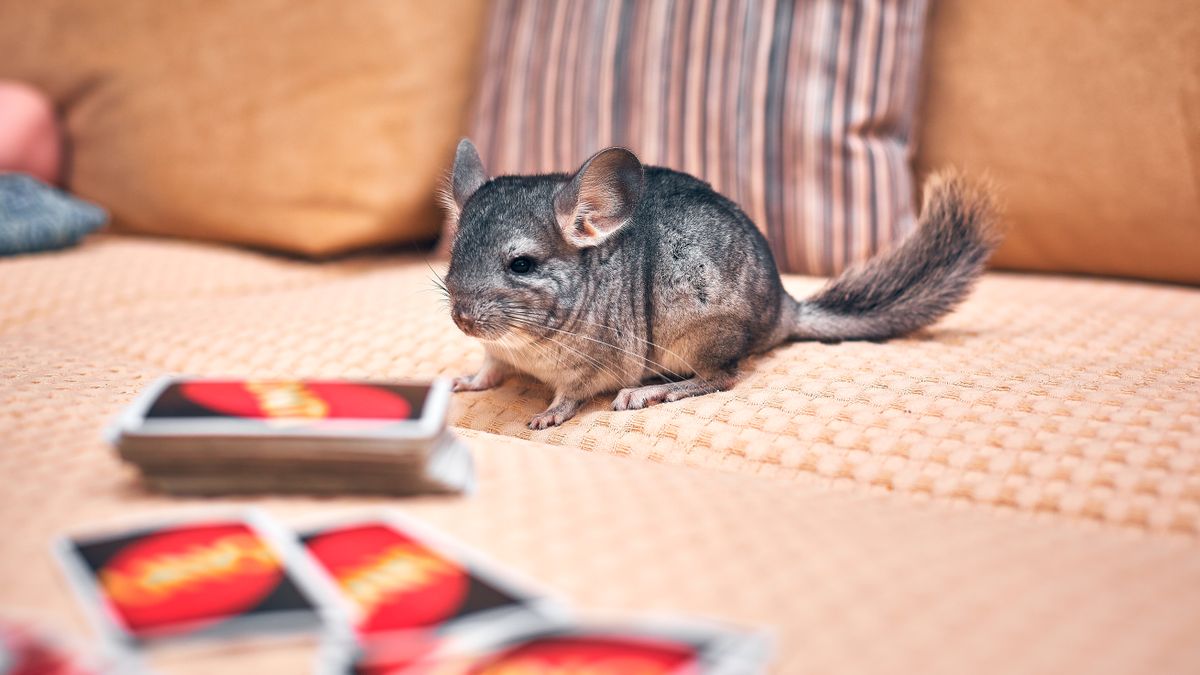
Pexels currently has good free chinchilla photography but not a reliable, breeder-verified atlas of every color mutation. For that reason, this article uses breeder genetics references for color definitions rather than mislabeling stock images as specific mutations.
Does Coat Color Change Chinchilla Care?
For normal pet husbandry, color is far less important than species needs: cool temperature, high-fiber diet, appropriate cage space, dust baths and exotics-veterinary access.
If your chinchilla begins picking up food and dropping it, eating less hay or producing fewer droppings, that is a health question—not a color question. Patify’s chinchilla appetite and dental-warning guide covers that separately.
10 Common Chinchilla Color-ID Mistakes
- Calling Silver a separate mutation from Wilson White.
- Calling every dark chinchilla Black Velvet.
- Ignoring belly color when comparing TOV and Ebony.
- Thinking all White chinchillas are genetically identical in appearance.
- Calling every pale beige “champagne” as if it were one genotype.
- Trying to see recessive carrier status in a photo.
- Using warm indoor lighting to identify Violet/Sapphire.
- Assuming a breeder trade name has a universal genetic definition.
- Ignoring lethal-factor combinations in a breeding discussion.
- Choosing a pet by rarity before temperament, health and husbandry fit.
Frequently Asked Questions About Chinchilla Colors
What is the natural chinchilla color?
Standard grey is the natural wild-type reference color used in domestic chinchilla breeding.
What is the rarest chinchilla color?
There is no stable universal answer because rarity depends on region, breeder population and combination. Rare does not mean healthier or better as a pet.
Is White Mosaic a separate gene?
White Mosaic is an expression of Wilson White rather than a completely separate mutation.
What is a Silver chinchilla?
“Silver” generally describes a more evenly frosted/grey Wilson White expression, not a separate simple mutation.
What is the difference between Black Velvet and Ebony?
Classic Black Velvet has dark top veiling with a bright white belly. Ebony produces a wrap effect that can darken the belly as well.
Is Violet recessive?
Yes, breeder genetics references classify Sullivan/Afro Violet as a recessive mutation.
Is Sapphire recessive?
It is generally treated as recessive in breeder practice, though some references note the inheritance classification is observational rather than fully molecularly characterized.
Can two White chinchillas be bred together?
Responsible breeder guidance says no because Wilson White has a homozygous lethal factor.
Can two Black Velvet chinchillas be bred together?
Responsible breeder guidance avoids TOV × TOV because the homozygous form is nonviable.
Can I identify a chinchilla’s hidden genes from a photo?
No. Recessive carrier status and exact combination ancestry require pedigree or other genetic evidence.
Does color change how I care for a chinchilla?
Usually no. Core care should follow the species, not coat rarity.
Are expensive colors healthier?
No. Price and rarity do not establish health, temperament, dental quality or breeding ethics.
Sources Checked for This Guide
- Sunshine Chinchillas — Colors & Mutations: phenotype descriptions, combination naming and breeder inheritance conventions.
- Chinchillas.com — Recognized Color & Fur Mutations: Wilson White and Black Velvet lethal-factor notes, mutation history.
- Chinchillas.com — Breeding Herd Foundation Guidelines: standard grey, dominant/recessive and observational-inheritance caveat.
- Mutation Chinchilla Breeders Association — Genetics: dominant/recessive terminology and Sapphire/Violet descriptions.
- National Chinchilla Society — Buying the Right Chinchilla: White/Velvet lethal-pairing warning and pedigree context.
- Pexels — chinchilla cover image
- Pexels License
Editorial note: breeder terminology is used conservatively, inheritance claims are separated from visible phenotype, and stock photography is not misrepresented as a pedigree-confirmed color mutation. Sources were reviewed October 1, 2026.