Dog Tartar: What You Can Safely Do at Home — and What You Can’t
Those yellow-brown, hard deposits along your dog's gumline are usually mineralized plaque, also called calculus or tartar. Once calculus is firmly attached to the tooth, scraping it off at home is not a safe substitute for veterinary dental care. Home care is most valuable before that point: removing soft plaque, slowing new buildup, and noticing changes before they become painful.
Quick answer: Daily toothbrushing is the most effective home-care step for controlling plaque. It does not reliably remove established calculus. If you can see substantial tartar, inflamed or bleeding gums, persistent bad breath, loose or damaged teeth, facial swelling, or pain while eating, schedule a veterinary dental exam.
Plaque, tartar and periodontal disease are not the same thing
Plaque
A soft bacterial biofilm that forms on teeth. Regular mechanical cleaning, especially brushing, can reduce it.
Tartar / calculus
Plaque that has mineralized into a hard deposit. Its rough surface gives new plaque more places to adhere.
Periodontitis
Inflammation and destruction of the tooth-supporting tissues, including periodontal attachment and bone. It is more than “a lot of tartar.”
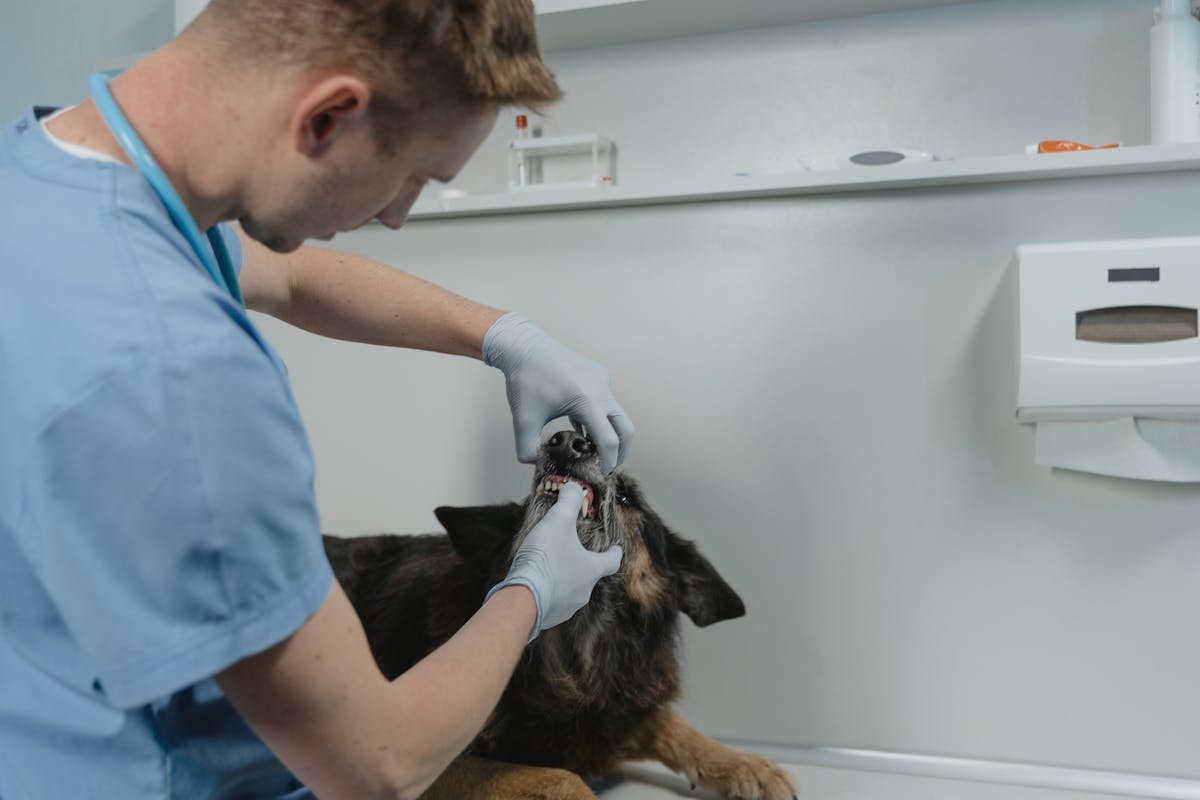
What owners cannot see matters. The amount of visible tartar does not reliably tell you how much disease exists below the gumline. Periodontal probing and intraoral dental radiographs can reveal pockets, root disease and bone loss that are not obvious during a quick awake exam.
Does tartar cause heart or kidney disease?
Periodontal disease is an inflammatory, infectious process, and veterinary guidelines recognize that oral disease can have effects beyond the mouth. Research has also found associations between periodontal disease and systemic health problems. That does not mean a visible patch of tartar directly causes heart or kidney disease in an individual dog.
The oral reason for treatment is already important enough: gingivitis and periodontitis can cause chronic pain, infection, loss of supporting bone and eventual tooth loss. There is no need to turn the message into “tartar causes heart disease.”
Can you scrape tartar off your dog's teeth at home?
Do not use dental scalers, picks, pliers, nail clippers or other metal tools to chip calculus off your dog's teeth. Even if some visible material comes away, you have not examined or cleaned the disease-prone area below the gumline.
Home scraping can create injury without providing a complete dental treatment. It can cut the gingiva, damage a tooth surface, fracture a compromised tooth, or make a dog fearful of future mouth handling.
Common home-remedy myths
| DIY method | Verdict | Why |
|---|---|---|
| Coconut oil | Not a tartar remover | It does not dissolve mineralized calculus, and it should not replace brushing or evidence-based dental products. |
| Baking soda | Not recommended as DIY pet toothpaste | It is not acidic, but it is also not a dog-formulated oral-care product and offers no safe advantage over pet toothpaste. |
| Lemon juice or vinegar | Avoid | Acidic home remedies can irritate oral tissues and do not provide appropriate calculus treatment. |
| Human toothpaste | Do not use | Dogs swallow toothpaste. Human products are not designed for routine swallowing by dogs, and some may contain ingredients such as xylitol that are dangerous to them. |
| Dental scrapers | Leave to veterinary dentistry | Visible scraping does not address subgingival disease or allow a complete periodontal exam. |
How to brush your dog's teeth
Start by briefly lifting the lip and touching the muzzle. Introduce pet toothpaste, then the brush, over several short sessions. Stop before your dog becomes stressed.
A small soft-bristle pet toothbrush works well for many dogs. Finger brushes can be easier for some dogs, but use whichever tool lets you clean gently and consistently.
Lift the lip and brush gently along the gumline. You usually do not need to force the mouth wide open; the outer surfaces are both accessible and important.
Plaque reforms continuously. AAHA guidance recommends daily brushing for meaningful plaque control. A realistic routine your dog accepts is better than occasional aggressive cleaning.
Do not brush through obvious pain. If the gums are very inflamed or bleeding, a tooth is loose, or your dog resists because the mouth seems painful, have the mouth examined before pushing harder with home care.
Dental chews, water additives and VOHC products
Brushing is the foundation, but additional products can help. The most useful shortcut is to choose products with evidence behind the specific plaque or tartar claim.
The Veterinary Oral Health Council (VOHC) publishes accepted dog products across categories including dental diets, edible chews, water additives, oral gels/sprays, toothpastes, toothbrushes and wipes. A VOHC Seal means the product met VOHC criteria for plaque and/or tartar control; it does not mean the product treats established periodontal disease.
Be careful with very hard chews
Bones, antlers and other very hard chew items can fracture teeth. A chew does not become good dental care simply because it creates a lot of mechanical abrasion.
Carrots, apples, dry food and wet food: what actually cleans teeth?
The old “raw carrots are natural toothbrushes” and “wet food sticks to the teeth, so mix it with kibble” rules are too simplistic.
Regular dry kibble
Dry food is not automatically a dental diet. Many ordinary kibbles fracture during chewing without creating a clinically meaningful cleaning effect.
Dental diets
Some diets are specifically engineered and tested to reduce plaque and/or tartar. VOHC acceptance is a better signal than simply seeing the word “dry.”
Carrots or apple pieces
They may be acceptable treats for some dogs in appropriate portions, but they should not be marketed as reliable plaque-removal tools.
Wet food
Wet food is not automatically bad for teeth. Overall oral hygiene and whether the diet has demonstrated dental effects matter more than texture alone.
When does your dog need a professional dental exam?
| What you notice | What to do |
|---|---|
| Light plaque, healthy-looking gums, no pain | Improve home care and have the mouth checked during routine veterinary exams. |
| Visible tartar or persistent bad breath | Schedule a dental exam; visible buildup can underestimate disease below the gumline. |
| Red or bleeding gums | Arrange a prompt exam rather than brushing harder. |
| Loose, broken or discolored tooth | Prompt veterinary dental evaluation. |
| Pain while chewing, dropping food, marked drooling or facial swelling | Seek veterinary care promptly; same-day assessment may be appropriate depending on severity. |
| Major facial trauma, heavy oral bleeding or severe systemic illness | Urgent/emergency veterinary care. |
Why a complete dental procedure requires general anesthesia
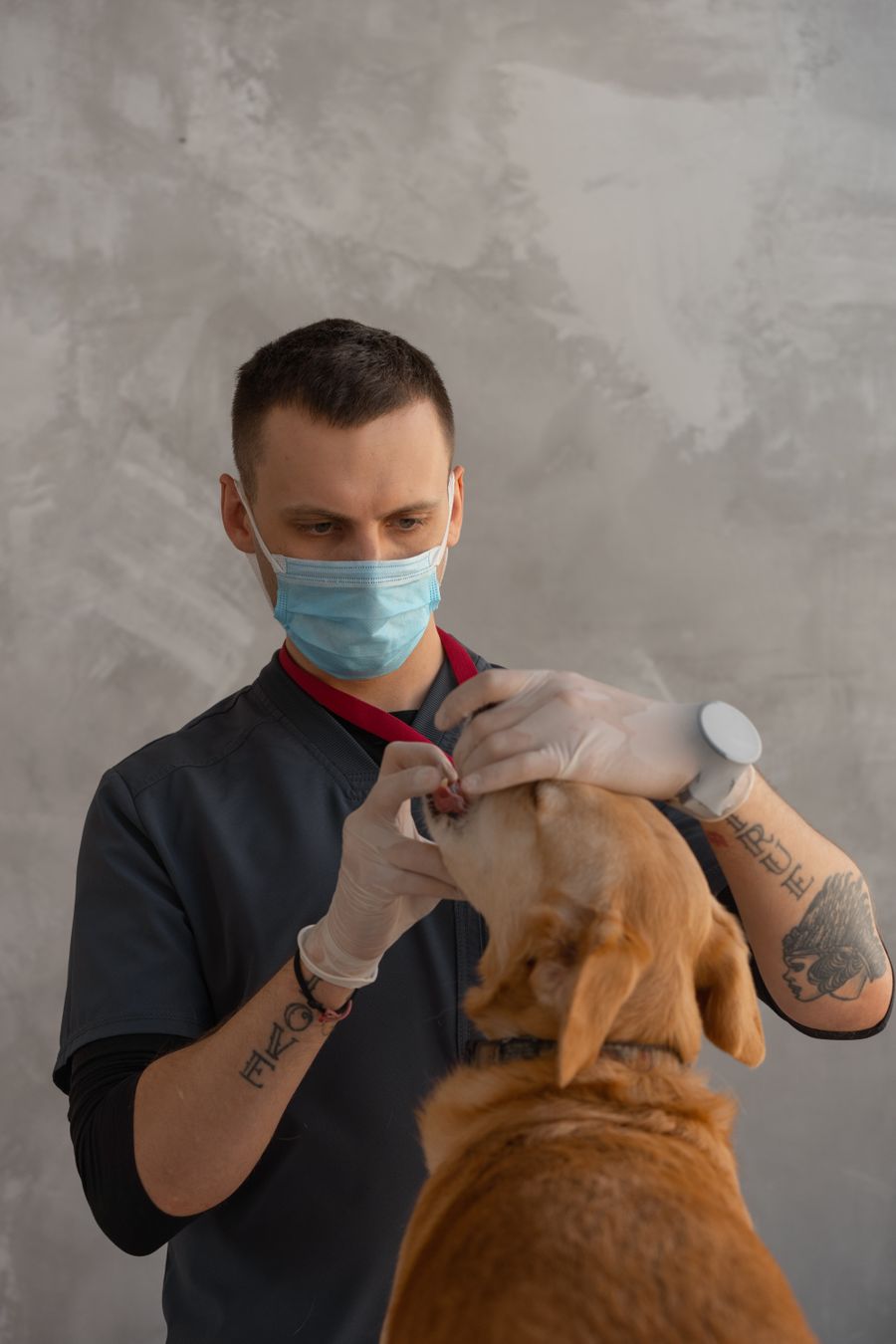
A veterinary dental procedure is not just cosmetic tartar removal. The team needs to examine each tooth, probe the periodontal tissues, clean above and below the gumline, obtain intraoral dental X-rays, treat disease that is found, and protect the airway while water and debris are used in the mouth.
“Anesthesia-free dental cleaning” is not an equivalent alternative. AAHA states that nonanesthetic dentistry cannot adequately clean below the gumline or provide the diagnostic examination needed for periodontal disease. The AVDC likewise says anesthesia-free tooth scraping is not a replacement for a comprehensive dental procedure under anesthesia.
Anesthetic risk is assessed for the individual dog. Age, heart or kidney disease, other medications, physical-exam findings and the planned procedure all matter. Being a senior dog, by itself, is not a reason to leave painful dental disease untreated.
What happens during a professional dog dental procedure?
- Pre-anesthetic history, physical examination and individualized testing as indicated.
- General anesthesia with airway protection and physiologic monitoring.
- Complete tooth-by-tooth oral examination and charting.
- Periodontal probing.
- Intraoral dental radiographs.
- Scaling above and below the gumline.
- Polishing after scaling.
- Treatment or extraction of diseased teeth when indicated.
- Appropriate pain management and home-care instructions.
Marketing terms such as “laser tartar removal” do not define the quality of a dental procedure. The clinically important questions are whether the dog received a complete anesthetized oral exam, subgingival cleaning, dental radiographs, appropriate monitoring, and treatment of diseased teeth.
How often should a veterinarian check your dog's teeth?
The mouth should be assessed during routine wellness examinations, and the schedule for professional dental procedures should be individualized. Small breeds, crowded teeth, prior periodontal disease and limited home care can increase the need for closer dental follow-up.
A blanket rule that every dog needs a professional cleaning on exactly the same schedule is not useful. Neither is waiting until teeth become loose. Your veterinarian should base timing on the oral exam, risk factors and previous dental findings.
Frequently asked questions
Can I scrape tartar off my dog's teeth myself?
It is not recommended. Home scraping does not examine or treat disease under the gumline and can injure oral tissues or damage a compromised tooth.
Does coconut oil remove dog tartar?
No. It does not dissolve mineralized calculus and should not replace brushing or evidence-based dental care.
Why can't I use human toothpaste?
Dogs swallow toothpaste. Human toothpaste is not designed for that use, and some products may contain ingredients that are inappropriate or dangerous for dogs, including xylitol. Use a pet-specific toothpaste.
Do raw bones clean a dog's teeth?
They can create mechanical abrasion, but they also carry a meaningful tooth-fracture risk and other potential complications. Evidence-based dental chews are a safer dental-care choice.
Is dry food better for teeth than wet food?
Not automatically. Regular kibble is not the same as a tested dental diet. If you want a food with a dental claim, look for evidence such as VOHC acceptance and discuss it with your veterinarian.
How often should I brush my dog's teeth?
Aim for daily brushing. AAHA guidance notes that plaque forms continuously and that daily brushing is the most effective home-care routine.
Can an anesthesia-free cleaning be enough?
Not for comprehensive veterinary dentistry. It cannot provide the same subgingival cleaning, periodontal probing, full diagnostic exam and dental radiographs as an anesthetized procedure.
My senior dog needs dental work. Is anesthesia too risky?
Age alone does not answer that question. The veterinary team assesses anesthetic risk from the individual dog's exam, medical history, comorbidities, medications, testing and procedure.
Does every visible patch of tartar need emergency removal?
No. Tartar is not usually an emergency by itself, but it should be assessed because the visible amount does not reliably reflect what is happening below the gumline.
What does the VOHC Seal mean?
It means a dental product met Veterinary Oral Health Council criteria for its stated plaque and/or tartar-control claim. It is a useful evidence-based filter for home-care products.
Veterinary sources and review standard
This page is designed to stay evergreen. The core guidance remains stable; the source list and visible review date are updated when veterinary dental guidance changes.
- AAHA — Dental Care Guidelines for Dogs and Cats
- AAHA — Nonanesthetic Dentistry
- American Veterinary Dental College — Position Statement on Anesthesia-Free Dentistry
- Veterinary Oral Health Council — Accepted Products for Dogs
- Merck Veterinary Manual — Dental Disorders of Dogs
- Merck Veterinary Manual — Periodontal Disease in Small Animals
Track dental care with Patify

Keep brushing, dental exams and oral-health changes in one timeline
Track brushing, bad breath, gum changes, dental procedures and follow-up appointments. A simple timeline can make it easier to notice whether your dog's oral health is changing.
Download Patify freeBottom line
Home dental care should control plaque, not scrape calculus. Daily brushing with pet toothpaste is the most effective home routine, and VOHC-accepted products can add evidence-based support. Once tartar, gum inflammation, loose teeth or oral pain are present, your dog needs a veterinary dental assessment. Comprehensive professional dentistry goes beyond visible scaling: it includes an anesthetized oral exam, cleaning below the gumline, dental X-rays and treatment of any diseased teeth.