
🐕💩 Dog Diarrhea: What to Do in the First 24 Hours & When It’s an Emergency (2026)
A single loose stool in an otherwise bright adult dog is very different from repeated watery diarrhea in a puppy, black tarry stool, collapse or diarrhea with persistent vomiting. The safest first step is triage — not an automatic 24-hour fast and not a cabinet full of human medications.
📌 Use this guide for the first 24 hours: decide whether brief home monitoring is reasonable, keep water available, offer an appropriate easy-to-digest diet if your dog is not vomiting, track frequency and behavior, and know which changes move the situation from “watch” to “same-day vet” or “emergency now”.
🚨 Call an emergency veterinary hospital now for collapse, profound weakness, pale/white gums, a swollen or very painful abdomen, repeated vomiting with inability to keep water down, black/tarry stool, large-volume or severe bloody diarrhea with systemic illness, suspected poisoning, or suspected intestinal obstruction.
⚡ The 30-Second Triage: Home, Same-Day Vet, or ER?
🟢 Brief home monitoring may be reasonable
Adult dog; one or a few loose stools; still bright and interactive; drinking; no vomiting; no blood or black stool; no abdominal pain; no known toxin/foreign-body exposure; no major underlying disease.
🟠 Call your vet the same day
Fresh red blood, mucus that persists, reduced appetite, diarrhea plus any vomiting, repeated diarrhea, puppy/senior dog, chronic disease, recent medication change, or no clear improvement over roughly 24–48 hours.
🔴 Emergency care now
Black/tarry stool; severe or protracted bloody diarrhea; collapse; pale gums; severe weakness; repeated vomiting and cannot keep water down; distended/painful abdomen; suspected poison; suspected obstruction; severe dehydration; heatstroke signs.
⚠️ Fresh red blood is not automatically the same emergency as collapse + hemorrhagic diarrhea. A small streak can occur with lower-bowel inflammation, but Cornell still advises veterinary evaluation when stool contains fresh blood. Severity, frequency and the dog's overall condition determine how urgent it is.
🥣 First 24 Hours: A Safer Home-Care Plan
Diarrhea increases fluid loss. Plain fresh water is the default. If your dog cannot keep water down, is becoming weak or is not drinking, home care is no longer enough.
For uncomplicated diarrhea without vomiting, there is no need to automatically withhold food for a full day. Modern GI care generally favors appropriate nutrition rather than unnecessary prolonged fasting. If vomiting is present, ask your veterinarian how long to rest the stomach before re-feeding.
A veterinary gastrointestinal diet is the most complete option. If your veterinarian recommends a temporary home bland diet, use it only short term; chicken-and-rice is not nutritionally complete for long-term feeding.
Keep the diet simple while the gut settles. Avoid table scraps and high-fat foods, which may worsen GI signs or contribute to pancreatitis in susceptible dogs.
Write down frequency, amount, blood/mucus, vomiting, appetite, drinking, activity and any unusual food/garbage exposure. Improvement should look like fewer episodes, better consistency and a dog who remains bright.
💧 What About Pedialyte, Rice Water or Electrolyte Drinks?
Plain water is the safest default. Do not use a human electrolyte drink as a routine substitute for veterinary fluid therapy. Products vary in sodium, sugar, flavoring and other ingredients, and a dog who is significantly dehydrated may need subcutaneous or IV fluids rather than an oral home remedy.
💡 If your veterinarian specifically recommends an oral electrolyte product, use the exact product and amount they advise. Never assume a “sugar-free” human drink is pet-safe; products containing xylitol are dangerous to dogs.
🍗 What Should I Feed a Dog With Diarrhea?
Best option
A veterinary therapeutic GI diet: highly digestible and formulated to be nutritionally complete.
Short-term home option
Only if appropriate for your dog and your vet agrees: a simple low-fat bland meal such as cooked lean protein with a digestible carbohydrate.
Pumpkin
Plain pumpkin can add fiber for some dogs, but it is not a universal treatment and too much can worsen stool in some cases.
Probiotics
Veterinary probiotics may be recommended in some acute diarrhea cases, but product/strain quality matters and they are not a substitute for diagnosis when red flags are present.
⚠️ “Chicken + rice is the gold standard for every dog” is too broad. It can be a temporary bland meal for some dogs, but allergies, pancreatitis risk, chronic disease or nutritional needs may make another diet more appropriate.
💊 Imodium or Pepto-Bismol: Not “Always Toxic,” but Not DIY Drugs
The old version of this article said these medications were categorically toxic. That is not accurate. Veterinarians sometimes use loperamide (Imodium) or bismuth compounds (Pepto-Bismol) in selected dogs — but the wrong dog, wrong cause or wrong dose can create problems.
Loperamide / Imodium
Should not be used for diarrhea caused by some infections or toxins and can be dangerous in dogs with the MDR1/ABCB1 mutation, including susceptible herding breeds.
Bismuth / Pepto-Bismol
Can interact with medications and is inappropriate in some dogs with ulcers, bleeding problems or other risk factors. It can also turn stool dark, complicating interpretation.
🚫 Do not give either medication unless your veterinarian specifically tells you to use it for this dog and this episode.
🩸 Blood in Diarrhea: Same-Day Vet vs Emergency
| What you see | What it can mean | Action |
|---|---|---|
| Small streaks of bright red blood | Often lower-GI irritation/colitis, but parasites, infection and other disease are possible. | Call your veterinarian the same day, especially if repeated. |
| Frequent or large-volume bloody diarrhea | Can occur with acute hemorrhagic diarrhea syndrome (AHDS), infection, toxin exposure and other serious disease. | Urgent/emergency evaluation, especially with weakness or vomiting. |
| Black, sticky, tarry stool (melena) | Digested blood from higher in the GI tract is one important possibility. | Veterinary evaluation urgently; ER if the dog is weak, pale or unwell. |
🎨 Stool Color Is a Clue — Not a Diagnosis
A stool-color chart cannot diagnose the cause of diarrhea. Color is useful only when combined with history, frequency, medications, diet and the dog's overall condition.
| Appearance | Possible explanations | What matters most |
|---|---|---|
| Brown, loose/watery | Diet change, dietary indiscretion, stress, parasites, infection and many other causes | Frequency + overall behavior + duration |
| Mucus/jelly coating | Large-bowel irritation/colitis is common; parasites are one possibility | Persistence, blood, straining, fecal testing |
| Bright red blood | Lower-GI bleeding/inflammation among several possibilities | Amount, recurrence and systemic illness |
| Black/tarry | Possible digested GI bleeding; iron/bismuth can also darken stool | Urgent veterinary assessment |
| Green/yellow | Diet, bile, rapid transit and other causes | Do not diagnose from color alone |
🔍 Common Causes — From Mild to Serious
Dietary indiscretion
Garbage, rich food, sudden diet change or too many treats are common triggers, but “most diarrhea is garbage gut” should not be treated as a diagnosis.
Stress
Travel, boarding, household changes and other stressors can contribute to acute diarrhea.
Parasites
Giardia and intestinal worms are important possibilities, especially in puppies or dogs with exposure risks.
Infectious disease
Parvovirus is especially dangerous in young or incompletely vaccinated dogs. Other infectious causes also occur.
Foreign body
Vomiting, abdominal pain, reduced appetite and a history of swallowing toys/fabric/bones raise concern for obstruction.
Toxins / systemic disease
Some toxins, pancreatitis, Addison's disease, liver/kidney disease, cancer and immune disease can include diarrhea among their signs.
🐶 Puppy Diarrhea: Lower Threshold for Calling the Vet
Puppies can dehydrate more quickly, and young/incompletely vaccinated puppies have a higher concern for serious infectious disease such as parvovirus. A puppy with diarrhea should generally prompt a same-day veterinary call, and urgent care is warranted if there is vomiting, blood, lethargy, poor appetite, fever, dehydration or rapid worsening.
🚨 Do not use a prolonged fast in a puppy unless a veterinarian specifically instructs you to. Juvenile animals have less reserve and can develop problems from unnecessary food restriction.
🧑⚕️ What to Bring to the Vet
- A fresh stool sample in a clean, leak-proof container if you can collect one.
- Keep the sample refrigerated unless your veterinary clinic gives different instructions.
- Photos of the stool if collection is not possible.
- Start time, number of episodes, blood/mucus, vomiting and appetite changes.
- Everything the dog may have eaten in the previous 24–48 hours, including garbage and chewed objects.
- Current medications and supplements.
- Vaccination/deworming history, especially for puppies.
- Any recent boarding, travel, dog-park/daycare or sick-dog exposure.
🛏️ If Your Dog Is Resting at Home, What Should You Monitor?
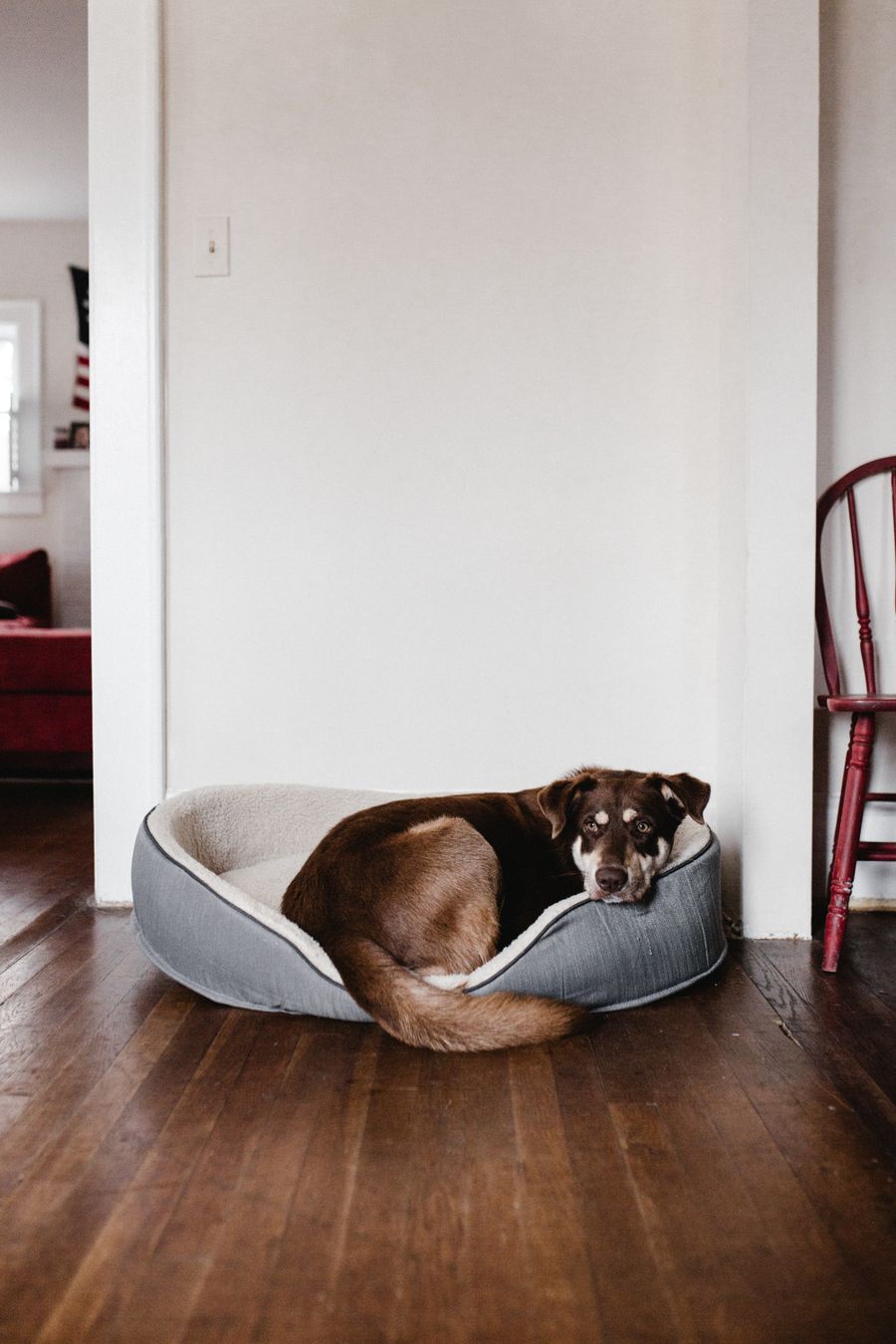
- Is your dog alert when you interact?
- Are they drinking and urinating?
- Are stools becoming less frequent or more formed?
- Has vomiting started?
- Is there new blood or black/tarry stool?
- Is the abdomen becoming painful or distended?
- Are appetite and energy improving rather than declining?
❓ Frequently Asked Questions
Should I fast my dog for 12–24 hours?
Not automatically. For uncomplicated diarrhea without vomiting, routine prolonged fasting is not necessary. If vomiting is present, your veterinarian may advise a temporary food rest before small meals are reintroduced.
Is rice good for dog diarrhea?
Plain rice can be part of a short-term bland meal for some dogs, but it is not a cure and chicken-and-rice is not nutritionally complete for long-term use. A veterinary GI diet is often a better-balanced option.
Can I give pumpkin?
Plain pumpkin may help some dogs because it adds fiber, but it is not universally effective. Avoid pumpkin-pie filling and stop if stool worsens.
Can I give Imodium?
Only if your veterinarian recommends it. Loperamide can be inappropriate with toxins/infections and can cause severe adverse effects in dogs with MDR1/ABCB1 sensitivity.
Can I give Pepto-Bismol?
Only under veterinary direction. Bismuth products can interact with other drugs, are unsuitable for some dogs and can darken stool, which may complicate evaluation for GI bleeding.
My dog has a little bright red blood but acts normal. ER?
A small streak is not automatically the same as severe hemorrhagic diarrhea, but Cornell recommends veterinary care when fresh blood is present. Call your vet the same day; go urgently if bleeding is heavy/repeated or your dog becomes weak, vomits or seems painful.
My dog has diarrhea and vomiting. What should I do?
Call your veterinarian. The combination raises dehydration risk. Repeated vomiting, inability to keep water down, weakness or a painful/distended abdomen warrants emergency assessment.
How long can mild diarrhea be watched?
If an otherwise healthy adult dog remains bright and there are no red flags, brief monitoring may be reasonable. If there is no clear improvement within 24–48 hours, or diarrhea persists toward 48–72 hours, veterinary evaluation is appropriate sooner rather than later.
Can a vaccinated dog still get parvovirus?
Vaccination greatly reduces risk, but no vaccine is perfect and incomplete puppy vaccination leaves important vulnerability. Bloody diarrhea, vomiting and lethargy in a puppy require prompt veterinary assessment regardless of assumed vaccine status.
🔬 Veterinary Sources Used for This Update
- Cornell University College of Veterinary Medicine — Diarrhea: worry or wait?
- Cornell University Hospital for Animals — Emergency and Critical Care
- Cornell Animal Health Diagnostic Center — Canine Diarrhea Diagnostic Plan
- Merck Veterinary Manual — Disorders of the Stomach and Intestines in Dogs
- VCA — Loperamide in dogs
- VCA — Bismuth compounds
📱 Track Symptoms With Patify

Stool frequency, appetite, vomiting and vet notes in one timeline
Log when diarrhea started, how often it happens, food changes, vomiting, medications and veterinary advice. A clear timeline can make a clinic visit more useful than trying to remember every detail later.
DOWNLOAD PATIFY FREE🎯 Bottom Line
Mild acute diarrhea in an otherwise well adult dog can sometimes be watched briefly at home, but “fast for 24 hours and give chicken-and-rice” is not a universal veterinary protocol. Keep water available, feed appropriately if the dog is not vomiting, avoid DIY human medications, and escalate based on the dog's overall condition. Black/tarry stool, severe bloody diarrhea, repeated vomiting, collapse, pale gums, suspected toxin or obstruction are not home-care situations.