
Last updated: September 13, 2026 · Reading time: approx. 14 minutes
Fake Service Dog Laws: Vests, Misrepresentation Penalties and ADA Rules

Pet law & accessibility · Researched against current ADA.gov guidance, U.S. DOT air-travel rules, HUD housing guidance and state statutes.
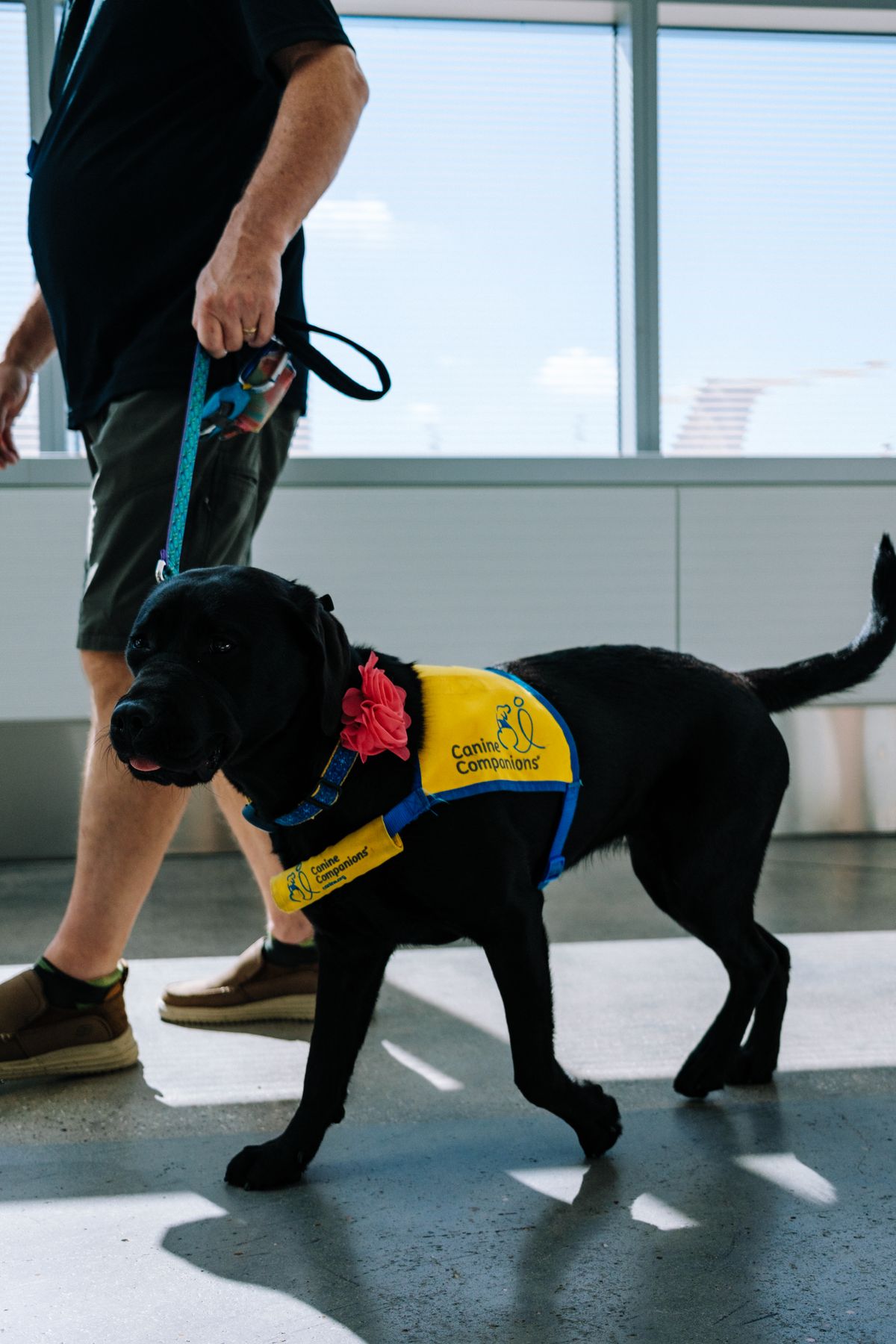
The most important fact about a “fake service dog vest” is that the vest itself does not determine legal status. Under the Americans with Disabilities Act (ADA), a legitimate service dog does not need a vest, government certificate, online registration or professional training program. What matters is whether the dog is individually trained to perform work or tasks directly related to a person's disability. Separate state laws can penalize intentional misrepresentation, but the elements and penalties are not uniform nationwide.
The law in one minute
No federal service-dog certificate exists: online registration papers do not create ADA rights.
Vest ≠ proof: a real service dog can work without a vest, while a pet in a vest does not become a service dog.
Current state-law count: Animal Legal & Historical Center's 2026 map identifies 35 states with specific public-access service-animal misrepresentation laws.
Businesses have only two ADA questions: they cannot demand papers, ask for a diagnosis or force a task demonstration.
Housing and flights use different federal frameworks: Fair Housing Act/HUD rules and Air Carrier Access Act/DOT rules should not be mixed with ordinary ADA public-access rules.
First correction: the current 2026 map identifies 35 state “true ban” laws
The old version overstated how many states specifically criminalize or penalize fake service-dog claims. The 2026 Animal Legal & Historical Center map from Michigan State University College of Law currently identifies 35 states with what it calls true bans on fraudulent representation of pets as service animals in public-access contexts.
That does not mean the remaining states have no relevant law. Some have separate statutes addressing fraudulent assistance-animal claims in housing, general fraud rules, disability-access laws or local ordinances. Animal Legal & Historical Center separately tracks housing-assistance-animal fraud and currently identifies 19 states in that category.
What makes a dog a service animal under the ADA?
For ordinary ADA public-access rules, a service animal is a dog individually trained to do work or perform tasks for a person with a disability. The task must be directly related to the disability.
No professional program required
A person with a disability may train the dog personally. The ADA does not require graduation from a service-dog organization.
No vest required
The dog does not need a special harness, patch, ID tag or vest to qualify.
No federal certification
Online certificates or registrations do not create ADA rights and cannot be demanded by businesses as proof.
Task training matters
The dog must be trained to take a specific disability-related action; comfort from presence alone is not enough under the ADA.
Psychiatric service dog vs emotional support animal
A psychiatric disability can absolutely be served by a legitimate service dog. The distinction is task training, not whether the disability is visible or physical.
For example, ADA guidance explains that a dog trained to detect an oncoming anxiety attack and take a specific action may qualify as a psychiatric service dog. A dog whose mere presence provides comfort does not qualify as a service animal under the ADA.
| Question | ADA service dog | Emotional support / comfort animal |
|---|---|---|
| Disability-related task training? | Yes | Not required when support comes from presence alone |
| General public-access right under ADA? | Generally yes, subject to ADA rules | No general ADA public-access right |
| Federal certification required? | No | No federal “ESA registry” creates rights either |
| Housing protection? | Potentially under FHA/HUD assistance-animal rules | Potentially under FHA/HUD assistance-animal rules when requirements are met |
| Airline treatment? | ACAA/DOT service-dog rules apply | Not treated as a service animal by DOT solely because it provides emotional support |
What can a restaurant, store or hotel actually ask?
If it is not obvious what service the dog provides, ADA-covered staff may ask only:
- Is the dog a service animal required because of a disability?
- What work or task has the dog been trained to perform?
Staff may not request service-dog certification or registration, demand medical documentation, ask the person to identify their diagnosis, or require the dog to demonstrate its task.
Can a business remove a real service dog that is misbehaving?
Yes, in specific circumstances. ADA guidance says a dog can be required to leave if it is out of control and the handler does not take effective action, or if it is not housebroken. Other limited exclusions can apply where a particular animal creates a direct threat or its presence would fundamentally alter a service.
That rule is about the animal's conduct in the setting — not a legal declaration that the handler is fraudulent.
Selected state misrepresentation laws — checked September 13, 2026
The following examples show why “every state gives jail time” is inaccurate. These are selected current statutes, not a complete 50-state legal survey.
| State | Current rule | Potential consequence | Important nuance |
|---|---|---|---|
| Florida | Knowing and willful misrepresentation as a qualified service-animal user or trainer | 2nd-degree misdemeanor; up to 60 days imprisonment and up to $500 fine under general penalty statutes, plus 30 hours community service | Statute requires knowing/willful misrepresentation; wearing a vest is not the sole element. |
| California | Knowingly and fraudulently representing oneself as owner/trainer of a guide, signal or service dog | Misdemeanor; up to 6 months county jail and/or up to $1,000 fine | Intent matters. This is not a rule that every poorly behaved vested dog creates an automatic conviction. |
| Texas | Intentionally or knowingly representing an animal as an assistance/service animal when it is not specially trained or equipped to help a person with a disability | Misdemeanor; up to $1,000 fine plus 30 hours community service | The current statute does not state a 30-day jail term; the old Patify table did. |
| Arizona | Fraudulent misrepresentation to a public place | Civil penalty up to $250 per violation | This is a civil-penalty model, not a jail-time statute. |
| Washington | Misrepresentation to secure disability-related service-animal rights or privileges when the person knew or should have known the animal did not qualify | Civil infraction; current maximum/default monetary penalty $500 | Washington also specifies the limited inquiries that may be made. |
Is buying a vest or online certificate itself illegal?
Not as a general federal rule. The ADA does not regulate service-animal status by clothing or certificates. Online businesses may sell vests, cards and registrations, but ADA.gov states that purchased certification or registration documents do not convey any ADA rights.
State statutes vary in how they define prohibited conduct. Some expressly mention use of service-animal identifiers; others focus on intentional or fraudulent representations used to obtain disability-related privileges. That is why the legally meaningful question is not “Did the dog wear a vest?” but “What representation was made, for what purpose, and what does the applicable state law require?”
Housing: do not use the restaurant ADA test on a landlord
The old article said landlords can simply use the ADA's two service-dog questions and that ESA fraud is the same thing as public-access service-dog fraud. That mixes separate legal systems.
HUD explains that the Fair Housing Act can require a reasonable accommodation for a broader category of assistance animals, including animals that provide emotional support. If the disability and disability-related need are not apparent, a housing provider may request reliable disability-related information supporting the accommodation request.
Air travel: DOT, not ordinary ADA public-access rules
Commercial air travel is governed by the Air Carrier Access Act and U.S. Department of Transportation rules rather than the ADA's ordinary public-accommodation framework.
DOT defines a service animal for air travel as a dog individually trained to perform work or tasks for a qualified individual with a disability. Airlines may require the U.S. DOT Service Animal Air Transportation Form attesting to the dog's health, behavior and training, and an additional relief-attestation form for flights of eight hours or more.
Emotional support animals are not service animals under the current DOT definition solely because they provide comfort.
Service dogs in training: state law can matter
The ADA itself does not treat a service animal in training as a fully trained service animal for public-access purposes. But some states extend access rights to trainers or service animals in training.
That means the statement “incomplete training = automatically fake everywhere” is wrong. Check the law of the state where the access occurs.
How should businesses handle uncertainty without discriminating?
1. Start with the ADA, not stereotypes
Do not judge by breed, vest, handler age, visible disability, whether the dog was professionally trained, or whether it is being carried.
2. Ask only the permitted questions when appropriate
If the service is not obvious, trained staff can ask the two ADA questions. Do not demand certificates or task demonstrations.
3. Manage actual behavior
If the dog is genuinely out of control and the handler does not regain control, or if it is not housebroken, follow ADA removal rules while still offering service to the person without the animal.
4. Separate access management from criminal enforcement
A business can manage whether an animal remains on the premises under ADA rules. Whether intentional state-law misrepresentation occurred is a separate legal question.
5. Train staff consistently
Written procedures reduce both wrongful denial of legitimate teams and improvisational “fake dog investigations.”
How should members of the public respond?
A member of the public generally has no need to interrogate a stranger about disability status or demand that a dog demonstrate a task. Avoid photographing or confronting disabled handlers merely because a dog looks unusual, is small, is carried, lacks a vest or has an invisible task.
If a dog is creating an immediate safety issue, alert the business or appropriate authority. If you have concrete evidence of intentional misrepresentation covered by a specific state law, use the ordinary local reporting process rather than conducting your own investigation.
What happened to the “real prosecution stories”?
The old article described a Tampa restaurant case, a Denver airport arrest and a Texas housing prosecution as if they were verified recent cases. Reliable primary documentation for those specific stories was not established, so they have been removed.
For legal/YMYL content, a colorful anecdote is not worth publishing unless the charging document, court record, agency release or similarly reliable source can be verified.
Current legal check — September 13, 2026
| Old claim | Current evidence-based position |
|---|---|
| “Nearly every state criminalizes fake service dogs” | Animal Legal & Historical Center currently identifies 35 states with true public-access fraudulent-service-animal bans. |
| “A legitimate service dog must be certified” | False under ADA. No federal certification or professional-program requirement. |
| “Businesses can make the dog demonstrate its task” | False. ADA prohibits requiring a task demonstration. |
| “A carried dog is probably fake” | False stereotype. ADA guidance expressly recognizes circumstances where a service dog may be carried. |
| “Texas can jail you for 30 days under its current misrepresentation statute” | The current cited Texas provision specifies up to $1,000 plus 30 hours community service, not a 30-day jail term. |
| “ESA = no legal rights anywhere” | False. ESAs do not receive general ADA public access, but qualifying assistance animals can receive Fair Housing Act accommodations. |
| “Airports use ordinary ADA rules” | Commercial air travel is governed by ACAA/DOT service-animal rules. |
Frequently asked questions
Is it illegal to buy a service-dog vest online?
Can a real service dog have no vest or certificate?
Can a store ask me to show my dog's task?
Can an ESA become a service dog?
Can a business remove a legitimate service dog?
How many states have fake-service-dog laws?
Do airlines require service-dog paperwork?
Bottom line
Fraudulently passing a pet off as a service animal can carry real consequences in many states, including misdemeanor or civil penalties. But accurate enforcement begins with accurate disability law.
A vest is neither proof of legitimacy nor proof of fraud. A real service dog does not need certification or professional training. Businesses cannot demand a diagnosis, papers or a task demonstration. ESAs, housing and flights follow different legal frameworks. And as of the current 2026 legal map, the defensible national figure is 35 states with specific public-access fraudulent-service-animal bans, not the broader figure used in the old article.
This article provides general legal information, not legal advice. State statutes, local ordinances, criminal classifications and federal agency guidance can change. For a live dispute, verify the current law in the relevant jurisdiction and consult a qualified attorney or disability-rights resource.