

Last updated: September 26, 2026
Giant Rabbit Breeds: Compare Size Before You Fall for the Photo
Quick answer: the Flemish Giant is the clearest reference point for a giant pet rabbit in the United States. PetMD gives a typical adult Flemish Giant weight of about 15–20 lb, while the American Rabbit Breeders Association (ARBA) says the breed has no maximum weight and can exceed 20 lb. But “giant rabbit” is not one standardized pet category. Checkered Giants, Giant Chinchillas, Giant Angoras, French Lops and English Lops all bring different body shapes, coat work and space demands.
The biggest ownership mistake is treating these rabbits like oversized Holland Lops. A giant rabbit changes the scale of the living space, litter box, traction, carrier, hay storage and veterinary handling. The breed name is only the start.
Patify rule: compare giant breeds by adult body geometry and care load, not by a viral record-holder or a breeder photo of a juvenile.
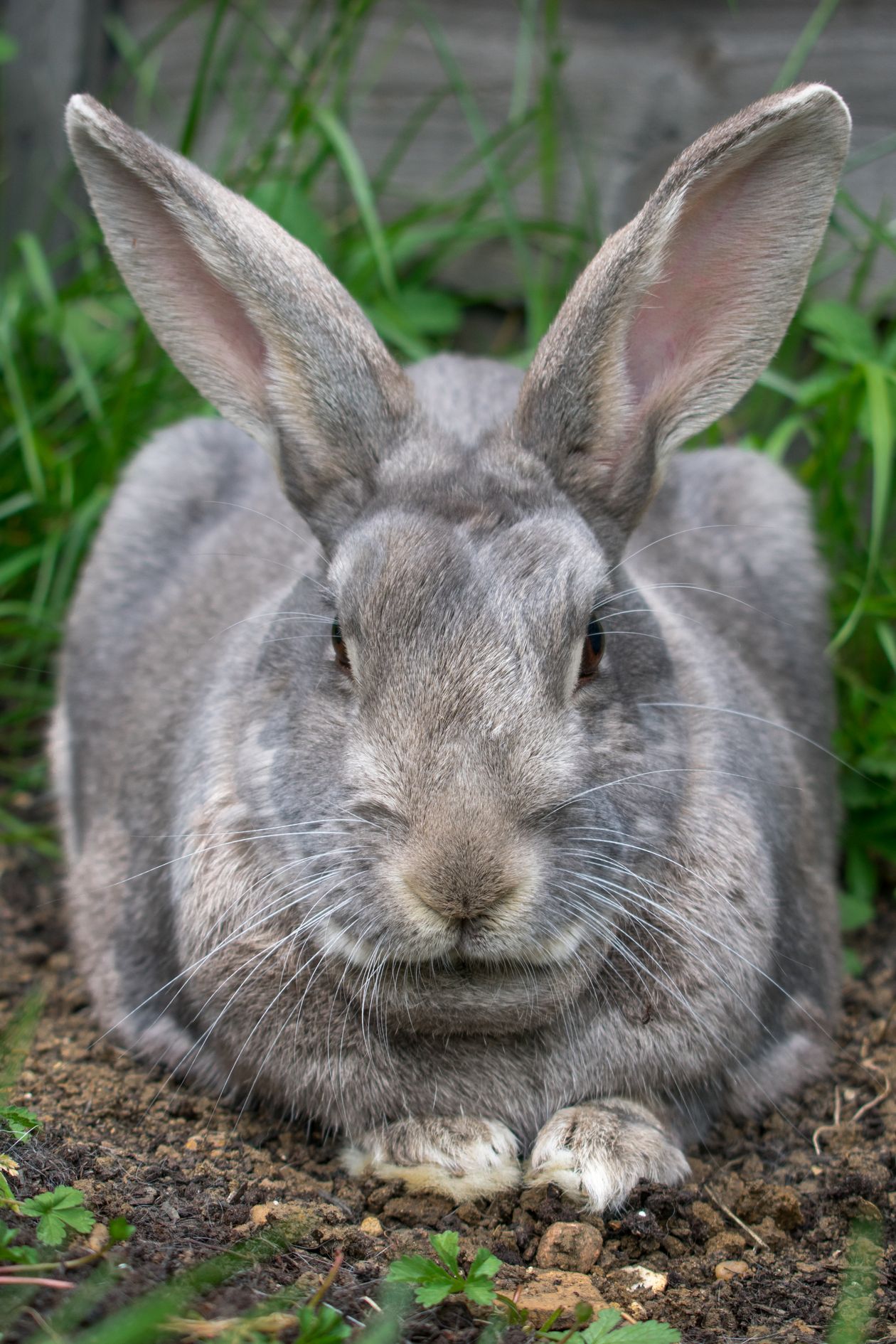
First: “Giant” Does Not Mean the Same Thing on Every Breed List
For a U.S. comparison, ARBA recognition is the cleanest way to separate formal breed names from internet labels. ARBA's current recognized-breed pages include Flemish Giant, Checkered Giant, Giant Chinchilla, Giant Angora, French Lop and English Lop among its large breeds.
ARBA also uses different weight language across breeds:
- some breeds have a published maximum weight;
- some giant breeds have no maximum weight in the senior standard;
- “no maximum” does not mean every adult is enormous or that heavier is automatically healthier.
What about the Continental Giant?
The Continental Giant is a real breed and is recognized by the British Rabbit Council, but it does not appear on ARBA's current U.S. recognized-breeds list. You may still find Continental Giant breeders in the United States, including people who are ARBA members; ARBA membership or a breeder-directory listing is not the same thing as ARBA breed recognition.
Giant and Large Rabbit Breeds: U.S. Size Comparison
For breeds without a dependable current typical-pet range, this table uses ARBA's own maximum/no-maximum marker rather than inventing an “average adult weight.”
| Breed | Current ARBA size marker | Body / coat clue | Care load that changes most |
|---|---|---|---|
| Flemish Giant | No maximum; ARBA says they often exceed 20 lb. PetMD typical adult: 15–20 lb | Long, powerful semi-arched giant | Floor area, litter box, traction, carrier |
| Checkered Giant | No maximum | Full-arch “running” breed | Horizontal movement space |
| Giant Chinchilla | Maximum 16 lb | Large commercial/semi-arch type with chinchilla coloration | Heavy-body flooring + large litter system |
| Giant Angora | No maximum | Largest ARBA Angora; wool coat | Grooming/shearing workload |
| French Lop | No maximum | Massive, heavy-boned lop | Floor space, traction, oversized litter box |
| English Lop | No maximum | Very long ears; semi-arch type | Clean floor, ear-safe environment, space |
| American | Maximum 12 lb | Large semi-arch breed | Large-rabbit housing and litter box |
| American Chinchilla | Maximum 12 lb | Large Chinchilla breed | Hay/litter capacity, floor area |
| New Zealand | Maximum 12 lb | Large commercial breed | Room to stretch/run, large litter box |
| Silver Fox | Maximum 12 lb | Large commercial breed with standing coat | Space, litter capacity, grooming during molts |
| Champagne d'Argent | Maximum 12 lb | Large commercial breed | Space, hay/litter volume |
The bottom five are better described as large rabbits than record-setting giants, but they belong in the same ownership conversation because a 10–12 lb rabbit already outgrows many products sold for “small animals.”
1. Flemish Giant: The U.S. Giant-Rabbit Reference Point
ARBA says Flemish Giants have no maximum weight and often exceed 20 lb. PetMD gives a more useful household range: adults commonly weigh 15–20 lb and may stretch roughly 2.5–4 ft long.
That length is why photos can be misleading. A Flemish Giant sitting in a loaf looks compact; a fully stretched rabbit can occupy the length of a small dog bed.
Housing reality
PetMD's Flemish-specific guidance gives a cage reference of at least 36 in wide × 36 in tall × 120 in long, with additional exercise/social time. Rabbit.org increasingly favors x-pens, rabbit-proofed rooms and free-roam style living spaces rather than treating a cage as the whole home.
Best fit: a home that can dedicate substantial floor area and provide non-slip surfaces, an oversized litter box and a carrier/transport plan that actually fits the adult rabbit.
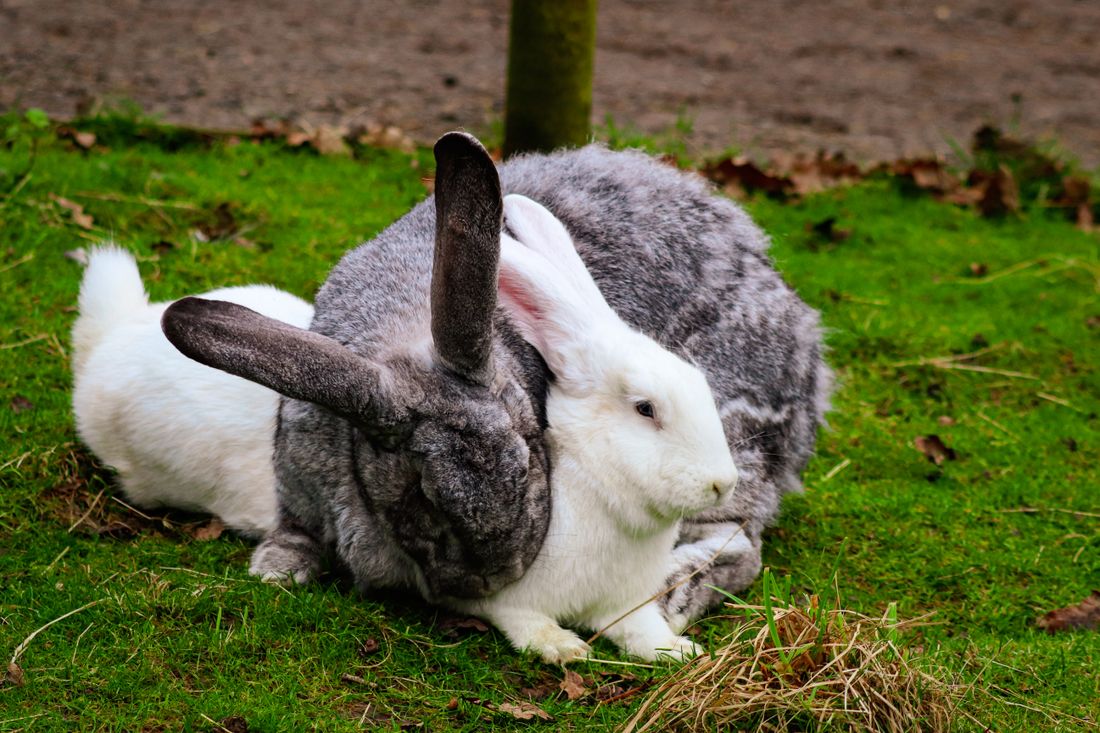
2. Checkered Giant: Large and Built to Move
The Checkered Giant has no ARBA maximum weight, but its most important care clue is not the number on the scale. ARBA classifies it as a running/full-arch breed and explicitly says it requires a large cage to move comfortably.
For a companion home, translate that into long, unobstructed horizontal movement space. A technically tall enclosure with poor run length misses what this body type is designed to do.
Best fit: people who can offer a large indoor pen or bunny-proofed room rather than a compact hutch footprint.
3. Giant Chinchilla: Giant Name, Defined ARBA Ceiling
Unlike several giants with no maximum, ARBA lists the Giant Chinchilla at a maximum of 16 lb. It was developed in the United States and formally recognized by ARBA in 1928.
That makes it a useful reminder that the word “giant” does not automatically mean “bigger than every Flemish.” Breed standards describe type as well as scale.
For a pet home, the Giant Chinchilla still belongs firmly in heavy-rabbit planning: soft solid flooring, large litter box, generous exercise space and a hay system sized for a large adult.
4. Giant Angora: The Giant With the Highest Coat Workload
ARBA calls the Giant Angora the largest of its four recognized Angora breeds and lists no maximum weight. The crucial difference is the coat: ARBA says Giant Angora wool must be shorn because the breed does not molt the wool coat in the same way.
That changes ownership more than another few pounds of body weight. A Giant Angora requires an intentional coat-management system, appropriate grooming equipment, regular hands-on coat checks and a plan for safe wool removal.
Do not choose this breed only because it looks spectacular. The wool is the husbandry project.
5. French Lop: Massive, Heavy-Boned and Easy to Underestimate
ARBA describes the French Lop as a massive, heavy-boned rabbit with no maximum senior weight. It can look shorter and more compact than a Flemish Giant in photographs, but compact shape does not make it a small rabbit.
In the house, French Lop planning should look much closer to giant-rabbit planning than “lop rabbit” shopping:
- oversized litter pan;
- wide turning space;
- soft, dry, non-slip flooring;
- large carrier;
- low, stable enrichment rather than fragile small-pet platforms.
6. English Lop: Large Body, Extra-Long Ears
ARBA says the English Lop has the longest ears of any rabbit breed and lists no maximum senior weight. For companion care, those ears make the floor environment especially important: keep walking/resting areas clean, dry and free of sharp snags.
English Lops also need the same basic large-rabbit space calculation as other heavy breeds. Long ears are not a reason to reduce exercise or confine the rabbit to protect the ears; they are a reason to make the environment safer.
Large but Not Necessarily “Giant”: The 12-lb ARBA Group
Several ARBA breeds top out around 12 lb, including the American, American Chinchilla, New Zealand, Silver Fox and Champagne d'Argent. A 12-lb rabbit is still a physically substantial house pet.
This category matters because retail sizing is deceptive. A litter pan, hide or carrier labeled “rabbit” may be designed around a 4–6 lb animal and become unusable long before a large breed is mature.
Continental Giant vs Flemish Giant in the U.S.
| Flemish Giant | Continental Giant | |
|---|---|---|
| ARBA recognized? | Yes | No, not on the current ARBA recognized-breeds list |
| British Rabbit Council? | Separate British/Flemish terminology applies | Recognized by BRC |
| U.S. breeders exist? | Yes | Yes |
| Should care be planned as giant-rabbit care? | Yes | Yes |
The important point for a U.S. buyer is paperwork language. Someone can be an ARBA member and breed Continental Giants without the Continental Giant itself being an ARBA-recognized breed. If pedigree/show status matters, ask which registry and breed standard the breeder is using.
How Much Space Does a Giant Rabbit Need?
There is no single U.S. regulation-sized rectangle that works for every breed and household, but three principles are well supported:
- A cage is not the full living environment. Rabbit.org favors exercise pens, rabbit-proofed rooms or similar large indoor living spaces.
- Horizontal movement matters. A giant rabbit needs room to take real hops, turn, stretch fully and accelerate without immediately hitting a wall.
- Size for the adult, not the baby. A starter enclosure that fits an eight-week-old giant can become useless surprisingly quickly.
Rabbit.org's housing guidance says a resting cage/condo should be around three to four times the adult rabbit's stretched body length and emphasizes that it should be connected to or located within a larger exercise area. PetMD's Flemish-specific 120-in length reference shows how large that becomes in practice.
The painter's-tape test
Before adopting a giant rabbit, tape the planned enclosure on the floor. Then add:
- an adult-sized litter box;
- hay station;
- water bowl;
- hide/rest area;
- open path for several hops.
If the accessories consume the run lane, the nominal footprint is not enough.
Giant Rabbit Litter Boxes: Cat Pan Often Beats “Rabbit Toilet”
Rabbit.org recommends a box large enough for the rabbit to turn around and stretch, and specifically suggests an under-bed storage box with low sides for larger breeds or bonded pairs. Tiny triangular corner trays are frequently too small.
For a giant rabbit, litter-box dimensions affect both training and hygiene. The rabbit must be able to sit with the entire rear inside while eating hay without hanging over the front edge.
Patify's rabbit litter-training guide includes box/hay layouts, a 7-day tracker and an accident decoder that distinguishes bad placement from a box that is simply too small.
Flooring Is a Health Issue for Heavy Rabbits
Merck Veterinary Manual specifically names heavy breeds such as Flemish Giants and Checkered Giants as susceptible to ulcerative pododermatitis (sore hocks). Hard/wire surfaces, obesity, dirty wet flooring and poor pressure distribution increase risk.
For giant rabbits, use:
- solid flooring rather than exposed wire;
- soft, dry resting surfaces;
- good traction so powerful hind legs do not slide;
- daily checks for damp litter/rest areas;
- routine foot inspection for thinning fur, redness, callus or sores.
Rabbit.org also warns that slick hardwood, tile and linoleum can contribute to poor traction and joint problems. “Easy to mop” is not enough if the rabbit cannot push off naturally.
Do Giant Rabbits Eat Dramatically More?
They usually consume more absolute food than small rabbits, but the safest budgeting method is not “double the food for a double-sized rabbit.” Hay should remain available freely, while pellet amounts are adjusted by body weight, body condition, age and veterinary guidance.
Current feeding guidance even differs between reputable sources:
- VCA gives an adult reference of about 1/4 cup Timothy-based pellets per 5 lb of body weight daily;
- Oxbow's current Essentials Adult Rabbit directions list 3/4 cup daily for mature rabbits over 10 lb, alongside unlimited grass hay.
Those are not identical formulas. For a 15–20 lb giant, use the rabbit's body condition and your rabbit-savvy veterinarian—not arithmetic alone—to set pellet quantity.
Budget hay by pounds actually consumed
A current U.S. retail snapshot illustrates why bulk storage matters: Chewy lists Oxbow Western Timothy Hay at $25.49 for 9 lb, $51.99 for 20 lb and $84.99 for 40 lb. That is a dated product example, not a recommendation and not a monthly giant-rabbit average.
Weigh or record hay purchases for 30 days after the adult rabbit settles in. That household consumption rate is more useful than an internet claim that “a giant rabbit costs $X in hay per month.”
Giant Rabbit Budget: What Actually Scales Up?
| Cost line | Why a giant changes it | How to budget honestly |
|---|---|---|
| Housing | More pen panels / dedicated room footprint | Measure adult-size living area before adoption |
| Litter box | Small-pet trays may be unusable | Price large cat pans or under-bed boxes |
| Litter | Larger tray = more absorbent material | Track 30-day replacement volume |
| Hay | Higher absolute intake | Track pounds consumed; compare bulk price per pound |
| Pellets | Portion can rise with body weight | Use vet/body-condition target, not free-feeding |
| Carrier | Many “rabbit carriers” are too small | Test adult internal dimensions and weight rating |
| Flooring | More square footage of non-slip washable surface | Price rugs/mats as housing equipment |
| Grooming | Coat-specific; Giant Angora is a major outlier | Include shearing/grooming tools or professional help |
| Veterinary care | Handling, medication and surgery logistics may be more complex | Ask your rabbit vet about giant-breed experience and local fees |
The most expensive giant is not necessarily the heaviest one. A Giant Angora can create more recurring grooming labor/cost than a short-coated rabbit of similar mass; a Checkered Giant can demand a larger run geometry than a stockier breed.
Health Planning: Size Changes Risk, but Does Not Diagnose Disease
The clearest heavy-breed issue supported by veterinary guidance is foot pressure / sore hocks. Merck specifically flags Flemish and Checkered Giants among susceptible heavy breeds.
That does not mean every giant rabbit will develop pododermatitis. Risk changes with flooring, moisture, body condition, mobility, genetics and foot-fur quality.
Large body size can also make ordinary problems harder to manage physically. Before adoption, identify a rabbit-experienced veterinarian and ask whether the clinic has:
- safe handling capability for a 15–20+ lb rabbit;
- a scale and carrier pathway large enough for the patient;
- rabbit anesthesia/dental experience;
- after-hours referral options.
“Gentle Giant” Does Not Mean Easy to Pick Up
ARBA and breed profiles often describe giant rabbits as placid or docile, but personality labels do not change physics. A frightened 18-lb rabbit has extremely powerful hind legs.
Design daily care so lifting is rarely necessary: floor-level litter boxes, ramps instead of repeated carrying, a carrier the rabbit can walk into and vet transport that supports the whole body. Breed temperament should never be used as permission for children to carry a giant rabbit unsupervised.
Which Giant Rabbit Breed Fits Which Home?
Flemish Giant
For people who want the classic giant-rabbit experience and can dedicate truly large indoor floor space.
Checkered Giant
For homes that can prioritize long, open movement space for an athletic full-arch breed.
Giant Chinchilla
For people wanting a heavy recognized giant with short coat care rather than Angora wool management.
Giant Angora
For experienced owners who specifically want—and are prepared to maintain—a wool breed.
French Lop
For homes ready for a massive heavy-boned lop and giant-scale litter/housing equipment.
English Lop
For owners prepared to make the environment safe for extremely long ears as well as a large body.
Do not select a breed because a list labels it “calmest,” “best with kids” or “most affectionate.” Individual temperament, socialization, health and previous handling can overwhelm breed stereotypes.
The Giant Rabbit Reality Test
- Measure the adult living footprint, not the baby pen.
- Put an oversized litter box inside the taped footprint.
- Add a hay station and water bowl without blocking the run lane.
- Walk the flooring barefoot/socked and check traction.
- Locate a carrier that fits the adult rabbit comfortably.
- Price hay by the pound and track a realistic storage location.
- Identify a rabbit-savvy veterinarian that can handle a giant patient.
- If considering Giant Angora, map the grooming/shearing routine before adoption.
- If considering Continental Giant, confirm which registry/standard the breeder uses.
- Only then decide whether the size is still appealing.
Bottom Line: The Largest Rabbit Is Not Automatically the Hardest Rabbit
For U.S. owners, the Flemish Giant is the strongest benchmark for a true giant companion rabbit: PetMD places typical adults around 15–20 lb, while ARBA places no maximum and notes that some exceed 20 lb. But the ownership burden depends on more than weight.
A Checkered Giant may need extra run length. A Giant Angora adds intensive wool care. A French Lop concentrates a lot of mass into a heavy-boned body. An English Lop brings unusually long ears into the housing equation. Giant Chinchillas reach a defined ARBA maximum of 16 lb. And a 12-lb New Zealand or Silver Fox can already require much of the same oversized equipment.
Think in five dimensions: adult body length, movement style, coat, foot/flooring needs and equipment scale.