
H3N2 Canine Influenza in Dogs: Daycare Risk, Symptoms, Vaccines & Isolation
Short answer: H3N2 canine influenza is a contagious respiratory virus that spreads most efficiently when dogs have close contact in places such as shelters, boarding kennels, daycare, grooming facilities, dog parks and events. In the United States, H3N2 causes localized outbreaks rather than continuous nationwide transmission. We did not find evidence of a national 2026 canine-influenza vaccine shortage in current USDA, AAHA or AVMA sources. Vaccine availability can still vary locally, so high-contact dogs should have an individualized vaccination plan with their veterinarian.
What owners need to know now
Current U.S. strain: CDC says H3N2 is the canine influenza strain currently causing disease in dogs; H3N8 has not been reported in the U.S. since 2016 and does not appear to be actively circulating.
Incubation: Clinical signs commonly begin about 2–3 days after infection.
Shedding: Viral shedding peaks around days 3–4; H3N2 shedding has been documented for as long as 24 days.
Isolation: Cornell recommends 21 days of isolation for dogs with H3N2 influenza.
Vaccination: AAHA classifies canine influenza vaccine as noncore and recommends it according to lifestyle and exposure risk.
Treatment: Mostly supportive. Antibiotics do not treat the virus itself, and Merck states oseltamivir is neither approved nor recommended for canine influenza.
Major correction from the previous Patify version: the earlier article was built around a claimed 2026 “critical vaccine shortage,” manufacturing consolidation, antigen reformulation and nationwide scarcity. We could not verify that narrative. USDA’s 2026 records instead show multiple licensed canine-influenza products from Merck/Intervet, Zoetis and Elanco, including Elanco’s USDA-approved bivalent vaccine and Merck’s newer H3 RNA-particle product.
What is H3N2 canine influenza?
Canine influenza is an influenza A infection adapted to dogs. H3N2 originated from an avian influenza lineage and was first recognized in dogs in Asia before being detected in the United States in 2015. CDC now describes canine H3N2 as the strain currently associated with U.S. dog-flu activity. It is genetically and epidemiologically different from the seasonal H3N2 influenza viruses that circulate in people.
CDC says H3N2 is not endemic across the U.S. dog population. Instead, multiple localized outbreaks occur and then may fade out, sometimes after reintroduction through dog movement. Cornell research indicates that sustained circulation is most likely in large metropolitan shelter systems, while boarding kennels, daycare, shows and agility events can help move the virus between dog populations.
Why daycare and boarding increase risk
The important risk factor is not the label “daycare” itself — it is close, repeated dog-to-dog contact. H3N2 spreads through respiratory secretions and contaminated objects, hands and clothing. Cornell notes that transmission is most efficient in restricted spaces such as shelters, boarding kennels and daycare centers; casual contact is less likely than close contact.
Frequent dog contact
Dogs that regularly mix with unfamiliar dogs have more opportunities for exposure than dogs that stay within a stable household.
Incubation before signs
A dog can be infected before an owner realizes anything is wrong, so symptom screening cannot prevent every introduction.
Shared staff and objects
Leashes, bowls, toys, hands and clothing can contribute to fomite spread if infection-control practices are poor.
Regional outbreaks matter
Risk changes by time and place. Ask your veterinarian whether CIV has been detected locally rather than assuming every U.S. daycare has the same risk.
Symptoms and timeline
Most affected dogs develop a mild respiratory illness and recover in roughly 2–3 weeks. Typical signs include cough, sneezing, nasal or eye discharge, fever, lethargy and reduced appetite. Some dogs remain asymptomatic but can still transmit infection.
| Stage | What current sources support | Owner action |
|---|---|---|
| After exposure | Signs often begin about 2–3 days after infection. | After a known exposure, avoid contact with other dogs and call your veterinarian for case-specific guidance. |
| Early illness | Cough, fever, nasal discharge, sneezing, lethargy or reduced appetite may occur. | Call before arriving at a clinic so staff can reduce exposure to other patients. |
| Peak shedding | Cornell reports peak virus shedding around days 3–4 after infection. | Strict separation from other dogs is important. |
| Recovery | Many dogs recover in 2–3 weeks; cough may persist longer. | Do not end isolation solely because the dog looks better. |
| Extended H3N2 shedding | Shedding for as long as 24 days has been documented in some dogs. | Cornell recommends a 21-day isolation period for H3N2. |
When is it an emergency?
Seek urgent veterinary care for breathing difficulty, blue/gray or very pale gums, collapse, marked weakness, persistent high fever, inability to drink or rapidly worsening respiratory effort. Secondary bacterial pneumonia is one of the important complications of canine influenza.
Merck Veterinary Manual reports an overall canine-influenza mortality rate of approximately 1–5%. Most infections are not fatal, but puppies, older dogs, immunocompromised dogs and dogs that develop pneumonia may need more intensive care.
What about the old “80% mild, 20% pneumonia” claim?
The previous article converted broad descriptions of clinical disease into an overly precise pneumonia percentage. Merck and CDC support the statement that most dogs have mild disease and a smaller proportion become severely ill, but they do not support telling owners that exactly 20% of infected dogs develop pneumonia. That number has been removed.
Is there really a canine influenza vaccine shortage in 2026?
Not at the national level based on the authoritative sources reviewed for this update. USDA’s April 2026 product code book listed multiple licensed canine-influenza products, including bivalent H3N2/H3N8 vaccines from multiple manufacturers. Current USDA product records include:
- Nobivac Canine Flu Bivalent — Intervet/Merck Animal Health.
- Vanguard CIV H3N2/H3N8 — Zoetis.
- TruCan Ultra CIV H3N2/H3N8 — Elanco, USDA-approved in 2025.
- Nobivac NXT Canine Flu H3N2 — an H3 RNA-particle vaccine in current USDA records, modified February 2026.
USDA licensing does not guarantee that every clinic has every product in stock on a particular day. Local backorders can occur. But a local clinic’s inventory problem should not be generalized into a nationwide “vaccine crisis” without supporting supply data.
Who should consider canine influenza vaccination?
AAHA classifies canine influenza as a noncore vaccine: it is recommended based on geography, lifestyle and likelihood of exposure rather than automatically for every dog. Dogs that frequently attend daycare, boarding, grooming, dog shows, sporting events or other high-contact environments may have substantially greater exposure risk.
AAHA’s current schedule for H3N8/H3N2 vaccination is a two-dose initial series given 2–4 weeks apart, followed by revaccination annually for dogs for whom the vaccine remains indicated. Your veterinarian should also consider local H3N2 activity and the specific product being used.
Do not use vaccination as post-exposure treatment. The earlier article suggested that dogs exposed to a confirmed H3N2 case should receive immediate priority vaccination because vaccination during incubation might reduce severity. We did not find authoritative guidance supporting that claim. After a known exposure, isolation, monitoring and veterinary advice are the priorities.
Can a vaccinated dog still get H3N2?
Yes. Licensed canine-influenza vaccines are intended to reduce disease associated with infection; they do not justify promising complete sterilizing immunity. Vaccine performance depends on product, immune status, strain match and exposure intensity. That is why facilities still need infection-control measures even when vaccination is required.
Cornell also notes that contemporary U.S. H3N2 viruses have diverged genetically from the virus introduced in 2015. This is an active research area and another reason to follow current veterinary guidance rather than assuming vaccine protection is absolute.
Daycare infection control: what actually matters
The old Patify version gave facilities a pseudo-score based on HEPA filters, group size under 10 and one preferred disinfectant. Those thresholds were not supported as official CIV standards. A better owner checklist is:
- Does the facility exclude dogs with cough, nasal discharge, fever or recent respiratory exposure?
- Does it have a written outbreak-notification and isolation policy?
- Can staff explain how they clean organic debris before disinfecting?
- Do they use a disinfectant according to the product label, including correct dilution and contact time?
- Are bowls, toys, leashes and cleaning tools managed to reduce cross-contamination?
- Do they separate sick/exposed dogs from unaffected groups and limit staff/equipment crossover?
- Do they require or strongly recommend lifestyle-appropriate respiratory vaccines based on veterinary advice?
ASPCApro notes that canine influenza is not particularly resilient in the environment and that most disinfectants routinely used in animal shelters can be effective against CIV when used at the correct dilution and contact time. The previous statement that quaternary ammonium products are generally “insufficient for CIV” was misleading: concerns about quats are especially important for hard-to-kill non-enveloped viruses, whereas influenza A is an enveloped virus.
What to do if your dog starts coughing after daycare
- Stop dog-to-dog contact immediately. Skip daycare, boarding, grooming, dog parks and playdates.
- Call your veterinarian before arriving. Clinics may want your dog to enter through a separate route or wait outside to protect other patients.
- Share the exposure timeline. Mention daycare/boarding dates and whether other dogs at the facility are ill.
- Ask about diagnostic testing early. Merck notes that nasal or pharyngeal PCR is most useful early in illness; later testing can become falsely negative as shedding falls.
- Follow the isolation plan. For confirmed H3N2, Cornell recommends 21 days of isolation.
- Watch breathing, hydration and energy. Worsening respiratory effort or systemic illness warrants prompt reassessment.
Treatment: supportive care, not a standard “Tamiflu protocol”
Canine influenza treatment is mainly supportive. Mild cases may need rest, hydration support and monitoring. Dogs with secondary bacterial pneumonia may require antibiotics, oxygen, fluids, imaging or hospitalization depending on severity.
Important correction: the older article suggested oseltamivir (Tamiflu) could be discussed for severe cases or post-exposure prophylaxis. Merck Veterinary Manual states that oseltamivir is neither approved nor recommended for canine influenza. Owners should not seek or administer human antivirals on their own.
Antibiotics also do not treat influenza virus itself. They are used when a veterinarian identifies or strongly suspects a secondary bacterial infection.
H3N2 vs “kennel cough”: symptoms overlap too much for a home diagnosis
Canine influenza is part of the broader canine infectious respiratory disease complex (CIRDC). Bordetella, parainfluenza, respiratory coronavirus and several other pathogens can cause very similar cough, discharge and fever. A loud or “honking” cough does not reliably tell you which organism is responsible.
That means the old side-by-side table claiming that Bordetella usually responds to doxycycline while H3N2 has a distinct predictable fever/shedding profile was too simplistic. Testing, outbreak context and the veterinarian’s exam are more useful than trying to diagnose the pathogen from cough sound alone.
Can H3N2 infect cats or people?
Cats: H3N2 can infect cats, but the current U.S. evidence suggests this is uncommon. Cornell reports a shelter-associated cat outbreak in the Chicago area in 2016 and states that no additional U.S. cat H3N2 reports have been identified on its current FAQ. There is no H3N2 vaccine for cats.
People: CDC states that there has not been a single reported human infection with a canine influenza virus anywhere in the world. Canine H3N2 is considered a low threat to people. Routine hygiene around any sick animal remains sensible.
Owner action plan
- Ask your veterinarian whether H3N2 is currently circulating in your region.
- If your dog regularly mixes with unfamiliar dogs, review whether CIV vaccination fits their lifestyle.
- Do not assume a cough after daycare is “just kennel cough.” Call your veterinarian and isolate first.
- Do not send a recently exposed or coughing dog back to daycare simply because energy and appetite are normal.
- Ask boarding/daycare facilities how they handle respiratory outbreaks and how quickly owners are notified.
- Do not give leftover antibiotics, cough medications or human antivirals without veterinary direction.
Frequently Asked Questions
Is there a 2026 national H3N2 dog-flu vaccine shortage?
We did not find evidence of a current national shortage in USDA, AAHA or AVMA sources. USDA records show multiple licensed canine-influenza products from several manufacturers in 2026. Individual clinics can still have temporary local inventory problems.
How long should a dog with H3N2 stay away from other dogs?
Cornell recommends 21 days of isolation for H3N2 because some infected dogs shed virus much longer than dogs with the older H3N8 strain. Follow your veterinarian’s instructions if your dog’s diagnosis or circumstances differ.
How soon after exposure do symptoms appear?
Cornell reports onset of clinical signs approximately 2–3 days after infection, with peak viral shedding around days 3–4.
Can my dog look recovered but still be contagious?
Yes. H3N2 shedding has been documented for as long as 24 days in some dogs, which is why symptom improvement alone is not a reliable end point for isolation.
Should every dog get a canine influenza vaccine?
No. AAHA treats CIV as a lifestyle/risk-based noncore vaccine. Dogs that attend daycare, boarding, shows or similar high-contact settings are among those most likely to benefit.
Can I vaccinate immediately after a daycare exposure to stop the infection?
Vaccination is preventive, not treatment for an infection already incubating. Contact your veterinarian, separate the dog from other dogs and follow monitoring/testing advice after known exposure.
Does Tamiflu treat H3N2 in dogs?
Merck Veterinary Manual states that oseltamivir is neither approved nor recommended for canine influenza. Treatment is primarily supportive, with antibiotics used only for secondary bacterial infection when clinically indicated.
Sources checked September 20, 2026
- CDC — About Dog Flu: current U.S. strain context, human risk and general clinical course.
- Cornell AHDC — Canine Influenza H3N2 Updates: incubation, shedding, 21-day isolation, transmission and testing.
- Cornell — H3N2 FAQ: high-contact risk settings, vaccination and feline spillover history.
- Cornell — Understanding and Control of Epidemic H3N2 Influenza Viruses in Dogs: current outbreak ecology and viral evolution.
- AAHA Canine Vaccination Guidelines: CIV as a noncore risk-based vaccine and vaccination schedule.
- Merck Veterinary Manual — Canine Influenza: diagnosis, mortality range, supportive care and oseltamivir guidance.
- USDA APHIS — Licensed Veterinary Biological Products and current CIV product summaries.
- USDA APHIS — Nobivac NXT Canine Flu H3N2.
- Elanco — USDA approval of TruCan Ultra CIV H3N2/H3N8.
- ASPCApro — Canine Influenza Virus: Diagnosis, Treatment & Control: sanitation and outbreak-control principles.
Educational information only. Respiratory signs in dogs can have many causes; diagnosis, testing, vaccination and isolation decisions should be made with a veterinarian.
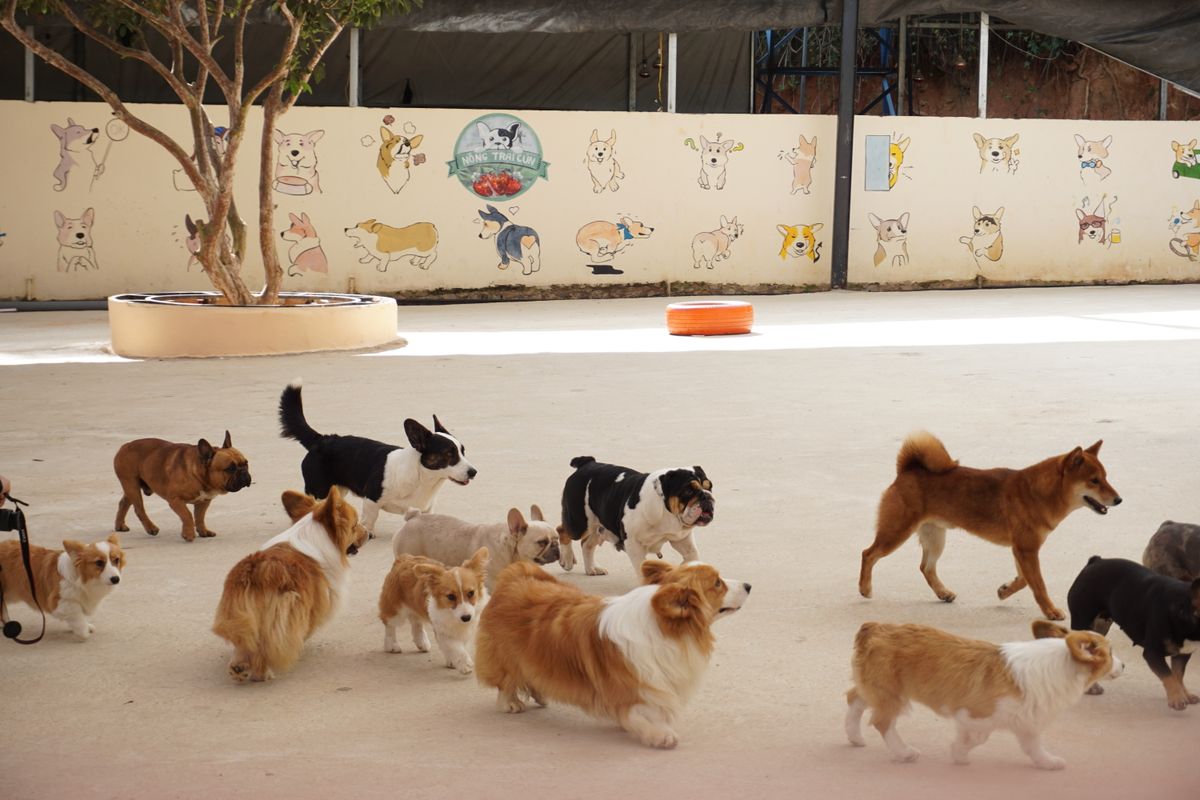
Cover photo: Cá Bảo / Pexels, group of dogs at pet daycare. Pexels marks the image free to use.