


Last updated: September 25, 2026
Hamster or Gerbil? The Biggest Difference Is the Social Contract
Quick answer: a Syrian hamster is normally a one-animal household; pet gerbils should normally live with other compatible gerbils. Both need much more space and digging depth than old-fashioned starter cages suggest, but they use that space differently. Hamsters build deep private burrows and are heavily active at night. Gerbils build and constantly remodel shared tunnel systems, chew aggressively and often show activity in shorter bursts across the day and night.
If you want one pet and can respect daytime sleep, a hamster can be a better structural fit. If you want to watch a social pair dig, communicate and rebuild an enclosure together, gerbils may fit better. Neither is a tiny-cage pet, and neither should be chosen because the shop enclosure looks convenient.
Choose by household fit: number of animals, active hours, burrow space, cleaning style, handling expectations, chewing/destruction tolerance and access to a small-mammal veterinarian.

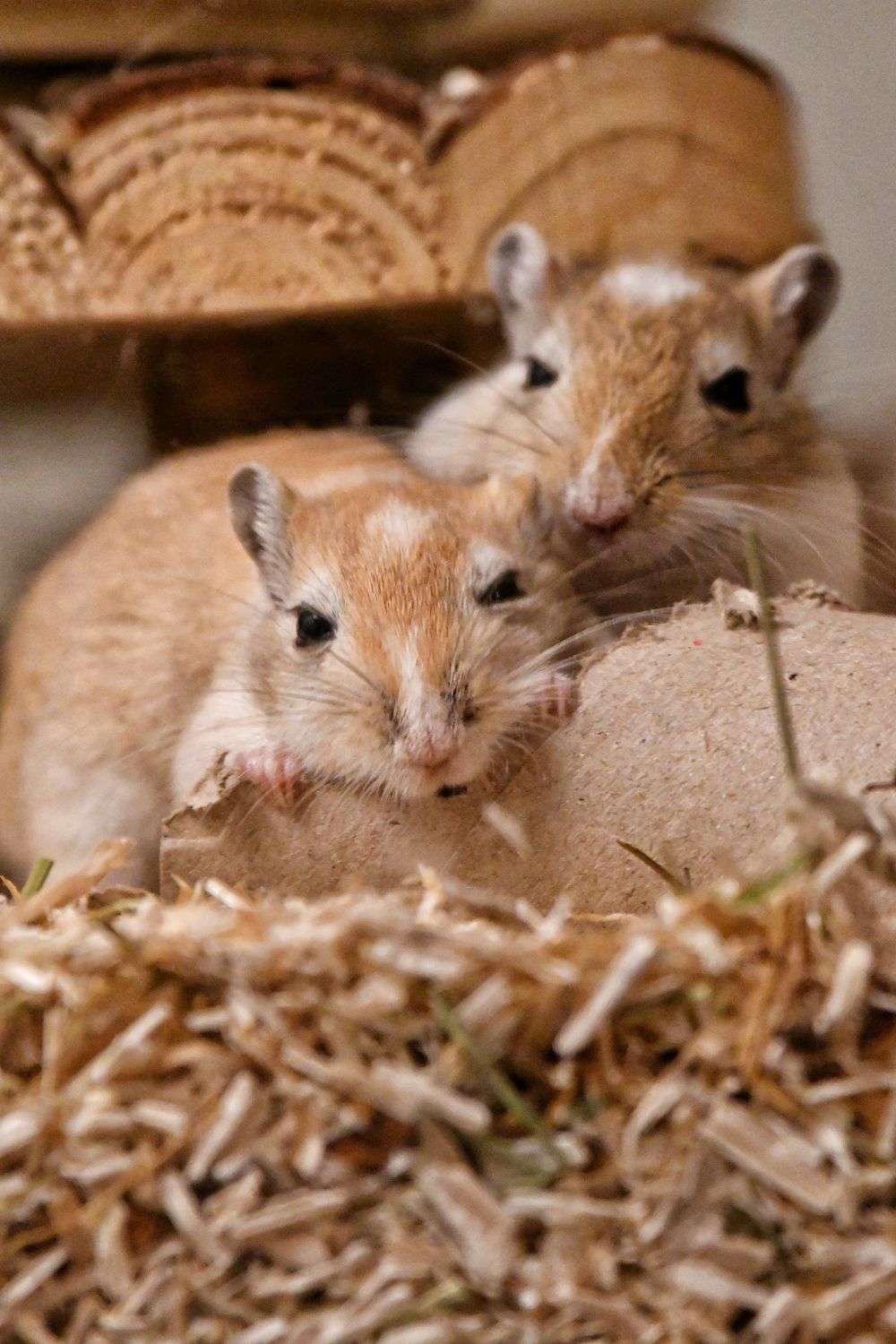
Hamster vs Gerbil: The Practical Decision Table
| Decision factor | Hamster | Gerbil | What it means at home |
|---|---|---|---|
| Social setup | Syrian and Chinese hamsters should live alone; dwarf species still do not require company | Should live with compatible gerbils, commonly a same-sex pair | If you can keep only one animal, a Syrian hamster fits the biology better |
| Peak activity | Mainly dusk/night; daytime sleep should be protected | Often active in bursts across day/night; PetMD describes Mongolian gerbils as crepuscular | Gerbils may be visible more often, but neither is an on-demand daytime toy |
| Core habitat | Large floor area + very deep bedding + solid wheel | Large tank/gerbilarium + deep, stable digging material + chew-safe structure + wheel | Both need serious burrowing space |
| Current welfare benchmark | About 100 × 50 cm / 39 × 20 in floor space, with ~25 cm / 10 in bedding | Blue Cross: at least 100 × 40 × 40 cm for 2–4 gerbils, with generous digging depth | Neither belongs in a colorful mini-cage |
| Cleaning pattern | Spot clean every few days; deep clean often once or twice monthly | Spot clean every few days; Blue Cross suggests full clean about every 3–6 weeks | Both rely on familiar scent, so do not sterilize the habitat unnecessarily |
| Odor | Usually manageable with correct enclosure and spot cleaning | Often relatively low because gerbils produce little urine | Gerbils can smell less, but a large pair enclosure still contains a lot of bedding |
| Chewing/destruction | Chews and digs, but habitat layouts can remain relatively stable | Heavy chewer and enthusiastic habitat remodeler | Gerbil owners should expect cardboard and layouts to be destroyed on purpose |
| Handling | Can tame well; may bite if startled or awakened | Often curious but quick; many prefer exploring over sitting still | Neither should be grabbed or forced to cuddle |
| Tail safety | Never grab by tail | Especially important: gerbil tails can be seriously injured/degloved | Scoop/cup instead of tail restraint |
| Lifespan | Syrian hamsters commonly about 2–3 years | Often about 2–3 years; some reach 4–5+ with good care | Both are relatively short-lived commitments |
Space: Both Need to Burrow, but the Architecture Is Different
Hamster: broad floor + deep private burrow
PDSA recommends a hamster enclosure with at least 100 × 50 cm of floor space and enough height to hold at least 25 cm / 10 in of bedding. PetMD's September 2026 Syrian hamster care sheet gives a very similar U.S. minimum of 40 × 20 × 16 in.
That bedding is functional architecture. Hamsters sleep, hide and cache food below the surface. A tall wire tower with a thin bedding tray is not a substitute for usable floor and burrow depth.
Gerbil: shared tunnel engineering
Blue Cross recommends at least 100 × 40 × 40 cm for two to four gerbils and specifically says a normal hamster cage is not a suitable gerbil home. A tank or gerbilarium works better because it can hold the large volume of substrate needed for tunneling.
Gerbils do not politely leave your interior design intact. Their job description includes digging under objects, packing tunnels, shredding cardboard and moving bedding to places you had not selected.
The visual difference: a good hamster enclosure should look like one animal has enough territory to disappear underground. A good gerbil enclosure should look like two small civil engineers have been given permission to redesign the ground floor.
When Will You Actually See Them?
Syrian hamster: protect the sleep schedule
RSPCA says wild hamsters are usually active at dusk and night and need to sleep undisturbed during the day. PetMD similarly warns that waking a sleeping hamster can trigger a startle/bite response.
If your only free time is directly after lunch, a nocturnal pet may become frustrating. The humane answer is not to wake the hamster every afternoon—it is to choose an animal whose natural schedule matches yours.
Gerbil: more fragmented activity
RSPCA says gerbils need opportunities to exercise and play at all times of day and night; PetMD describes Mongolian gerbils as crepuscular, with strong activity around dawn and dusk. Individual households often see multiple shorter activity periods rather than one long night shift.
That can make gerbils more interesting to watch during waking hours, but there is no guaranteed timetable. A gerbil that is underground is not malfunctioning; burrowing is the activity.
Cleaning and Smell: The Difference Is More Interesting Than “Which Stinks Less?”
Both species rely heavily on scent. With either one, repeatedly stripping the enclosure to a sterile blank slate can create unnecessary disruption.
Hamster cleaning pattern
Blue Cross recommends spot cleaning every few days and says a deeper clean is often needed only once or twice per month, depending on enclosure size and toilet habits. Around a third of clean old bedding can be returned after cleaning so the enclosure still smells familiar.
Gerbil cleaning pattern
Blue Cross recommends spot cleaning every few days and a full clean roughly every 3–6 weeks. It notes that gerbils come from dry/desert environments and produce relatively little urine and waste, so a correctly managed enclosure is often easy to keep free from strong smells.
Gerbils therefore can be a good fit for an owner who is particularly sensitive to urine odor. But their cleaning day is not necessarily “easier”: deep shared tunnels mean a lot of substrate to remove, preserve and rebuild.
Real-life version: hamster care often means protecting one animal's carefully scented private territory. Gerbil care often means accepting that the pair has built a subway system under everything you intended to keep neat.
Yes, Both Can Use a Wheel — But the Wheel Is Not the Habitat
RSPCA recommends a good-quality, large-diameter, solid and axle-free wheel for both hamsters and gerbils. The back should not be forced into a tight curve while running, and the surface should not trap feet.
The myth worth killing is that a wheel compensates for poor housing. It does not. A hamster still needs deep bedding and floor space; gerbils still need a large burrowing system and social space.
Gerbils Win the “I Will Destroy This Cardboard” Category
Both animals need safe things to chew because their incisors grow continuously. Gerbils, however, are particularly enthusiastic gnawers. RSPCA recommends wood/hay tunnels rather than plastic items because gerbils readily chew plastic, and Blue Cross recommends cardboard tubes, boxes, wooden toys and branches.
Better choices
- plain cardboard boxes and tubes;
- untreated safe wood;
- hay/wood tunnels;
- ceramic bowls;
- glass tank walls for gerbils;
- secure metal mesh lid outside chewing reach.
Watch carefully
- plastic tunnels and hides;
- fabric with loose fibers;
- painted/coated wood;
- anything containing exposed glue, staples or wire;
- soft objects that become ingestible fragments after chewing.
If you enjoy making enrichment from cardboard and then watching it cease to exist, gerbils can make that hobby very rewarding.
Handling: Neither Species Owes You a Cuddle
Hamsters
Well-socialized hamsters can become comfortable with gentle handling. PetMD advises allowing a newly homed hamster time to settle, holding over a soft surface and never squeezing or grabbing the tail. A sleeping hamster may bite when startled.
Gerbils
PDSA describes gerbils as small, delicate and fast-moving and notes that many are more interested in climbing onto a hand or exploring than being held for long periods. PetMD gives the most important handling rule: never grab a gerbil by its tail, because serious tail injury can occur.
If your dream pet is one that sits still on your lap for long cuddling sessions, neither hamster nor gerbil is a reliable choice. If your idea of interaction includes hand-feeding, voluntary climbing, training and watching natural behavior, both can be satisfying.
Which Is Better for Children?
Neither should be treated as a low-stakes “starter pet.” Both are fast, fragile animals that can be dropped, frightened or mishandled.
A hamster may be easier to manage as a one-animal household, but its sleep schedule can clash badly with a child's desire to interact after school. A gerbil pair may be awake more often, but gerbils are quick and tail injuries make grabbing especially dangerous.
PetMD recommends adult supervision during handling for both Syrian hamsters and gerbils. The adult should also be responsible for correct housing, cleaning and veterinary decisions.
Diet: Similar Category, Different Species
Hamsters and gerbils are both omnivorous rodents, but they should receive a nutritionally complete food formulated appropriately for their species rather than sharing whatever seed mix happens to say “small animal.”
PetMD recommends a balanced hamster food for Syrian hamsters with limited appropriate grains, vegetables, fruits and treats. Its gerbil guidance similarly recommends a complete gerbil pellet/lab block with limited supplemental foods.
Scatter feeding part of the normal ration can provide foraging enrichment for both species. Fresh foods should be offered in portions small enough that they are not hidden underground and left to spoil.
Lifespan: Both Are Short-Lived, but Gerbils Can Stretch Longer
PetMD's September 2026 Syrian hamster care sheet gives a typical lifespan of about 2–3 years. Its gerbil lifespan review also puts many pet gerbils around 2–3 years, while noting that some live 4–5 years or longer with good care.
That range should be treated as planning information, not a promise. Genetics, health, environment and veterinary care can shorten or extend an individual life.
Owner Reality Check: The Gerbil Enclosure Will Not Stay Decorated
Anecdotal, not veterinary evidence: a September 2026 discussion among experienced hamster and gerbil owners repeatedly returned to one practical difference: gerbils rearrange everything. Owners described cardboard being shredded, bedding thrown around and tunnel layouts changing constantly, while hamster habitats often remain visually more recognizable between cleanings.
That anecdote lines up with the species biology in welfare guidance—gerbils have a strong, continuous drive to dig and gnaw. The lesson is not that gerbils are “messier.” It is that a gerbil habitat should be designed to be used and remodeled, not preserved as a miniature living-room display.
Choose a Hamster If…
- you want one pet rather than a social pair;
- you can protect daytime sleep and interact mostly in the evening/night;
- you can fit roughly 100 × 50 cm / 40 × 20 in of floor space;
- you can provide around 25 cm / 10 in of stable burrowing bedding;
- you want to maintain one animal's scent territory;
- you are prepared for a fast animal that may bite if startled awake.
Choose Gerbils If…
- you can adopt a compatible same-sex pair or established group;
- you want to watch social interaction as well as human-animal interaction;
- you enjoy digging, tunnel-building and destructive enrichment behavior;
- you can fit a large tank/gerbilarium with deep substrate;
- low urine odor matters to you;
- you are comfortable with a pet that may prefer climbing/exploring over sitting still.
Neither list produces a universal winner. It identifies which daily routine you are more likely to maintain well.
The “Build It on the Floor First” Test
- For a hamster, tape out approximately 100 × 50 cm / 40 × 20 in on the floor.
- Now imagine a secure enclosure tall enough for about 25 cm / 10 in of bedding, plus wheel and hides above it.
- For gerbils, tape out at least 100 × 40 cm and imagine the tank filled deeply enough to sustain a real shared burrow system.
- Decide whether you are budgeting for one hamster or at least two gerbils.
- Put the enclosure where night digging/wheel noise will not ruin your sleep.
- Locate a veterinarian who treats hamsters/gerbils before adoption.
If the real habitat feels too large, do not solve that problem by buying a smaller cage. Choose a different pet.
If the Hamster Side Is Winning
Patify's guinea pig vs hamster decision guide can help if you are still choosing between a larger social herbivore and a solitary burrowing hamster. The next Patify hamster cluster expands enclosure construction and setup so “starter cage” marketing does not set the welfare standard.
Social Life: One Hamster vs a Gerbil Pair
Hamster
RSPCA describes hamsters as generally solitary. Syrian and Chinese hamsters should live alone. Some dwarf species can sometimes remain in stable littermate pairs or trios, but they do not need another hamster to be happy and groups can break down later.
The practical lesson for a new owner is simple: if you are choosing a Syrian hamster, plan one complete enclosure for one hamster.
Gerbil
RSPCA says gerbils are intelligent, sociable animals and should not be kept alone. Same-sex pairs or stable groups formed early in life are the normal plan. PetMD likewise recommends adopting compatible same-sex gerbils together.
That does not mean you can keep adding strangers. Established gerbil groups can be territorial, and introductions require care.
If a lease, parent or household rule allows exactly one small mammal: do not buy one gerbil and expect extra human attention to replace gerbil companionship. A solitary species such as a Syrian hamster is the more biologically coherent option.