

Last verified: October 1, 2026
Planted Aquarium Setup: Balance Light, Nutrients, CO₂ and Plant Mass
Quick answer: the easiest planted aquarium is not the one with the most equipment. A beginner-friendly setup uses a fully cycled freshwater tank, reliable filtration, plant-compatible substrate, moderate controllable light, easy plants and consistent fertilizer. Pressurized CO₂ is optional for many low-tech plants and becomes useful when you deliberately increase light and growth demands.
The governing idea is balance: light drives demand. As light increases, plants require more available nutrients and carbon. If one resource lags behind, plant growth stalls while algae may exploit the imbalance.
Patify planted-tank rule: start with less light and easier plants than you think you need. Increase complexity only after new growth proves the current system is stable.
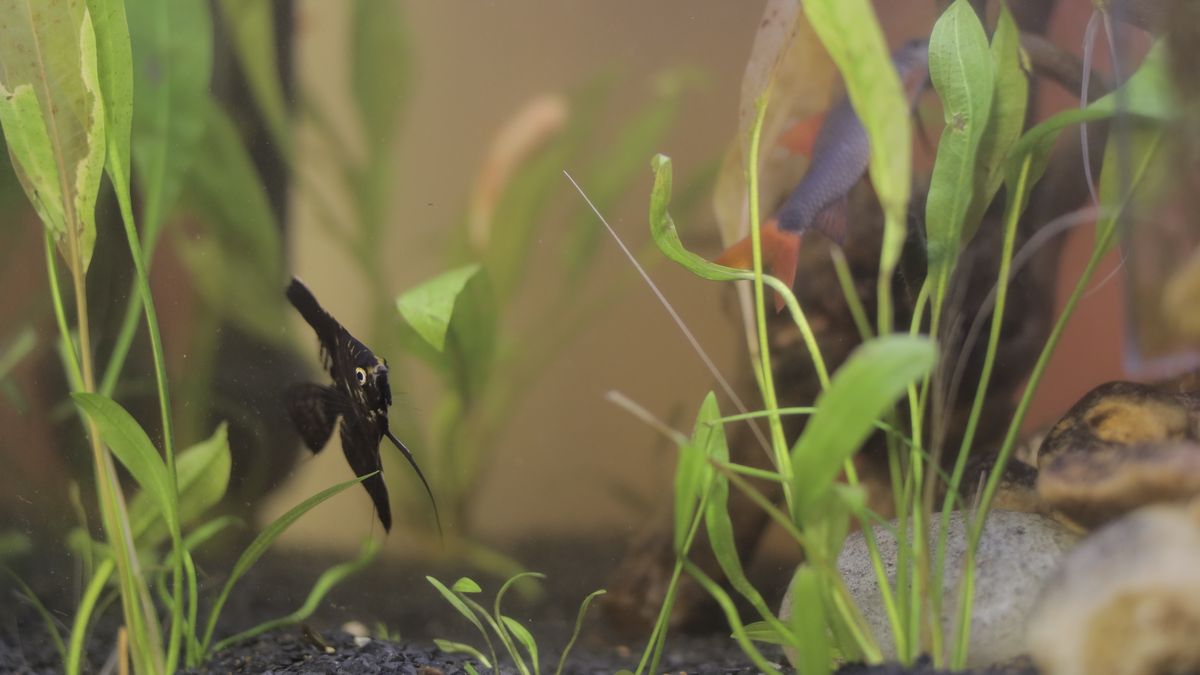
Low-Tech vs High-Tech Planted Aquarium
| System | Light | CO₂ | Plant choice | Difficulty |
|---|---|---|---|---|
| Low-tech | Low–moderate | No injected CO₂ | Anubias, Java fern, Cryptocoryne, Vallisneria, many mosses, selected floaters | Best beginner starting point |
| Medium | Moderate | Optional | Broader stem/rooted selection | More pruning/fertilizer tuning |
| High-tech | Moderate–high | Pressurized CO₂ common | Carpets, demanding red/stem plants | Highest tuning and failure speed |
Aquarium Co-Op explicitly encourages beginners to start with easy slow-growing plants under lower light and all-in-one fertilizer before adding injected CO₂.
Planted Aquarium Setup Checklist
- aquarium and stand sized for the intended fish/invertebrates;
- filter with adequate biological/mechanical capacity;
- heater if the selected livestock/plants require tropical temperatures;
- full-spectrum plant-capable LED with timer/dimmer;
- substrate matched to root-feeding plants;
- hardscape: inert or water-compatible wood/stone;
- easy foreground/midground/background/epiphyte plants;
- liquid fertilizer and/or root tabs based on plant feeding style;
- water conditioner;
- ammonia/nitrite/nitrate test kit;
- siphon, algae tool and pruning scissors;
- optional pressurized CO₂ only if the plant/light plan justifies it.
Plan the Tank by Plant Function, Not Just Height
| Plant group | Placement | How it feeds / attaches |
|---|---|---|
| Epiphytes | Wood/rock, foreground-midground | Rhizome attached above substrate; nutrients largely from water column |
| Root feeders | Substrate, often mid/background | Benefit from nutrient-rich substrate/root tabs |
| Stem plants | Mid/background | Fast-growing; many use water-column nutrients efficiently |
| Rosette plants | Midground focal areas | Root-based growth; need space around crown |
| Floaters | Surface | Direct air CO₂ and strong nutrient access; can shade plants below |
| Carpet plants | Foreground | Often highest demand for light/CO₂ depending species |
Aqueon recommends sketching hardscape and plant placement before filling the tank, with tall species toward the back, focal species midground and lower plants forward. The functional categories above add a second question: where does this plant actually obtain nutrients and where must its rhizome/crown sit?
Substrate: Rooted Plants Need More Than Decorative Pebbles
Aqueon recommends coarse sand or fine gravel for rooted aquatic plants and notes that plant-specific substrates can supply minerals or alter water chemistry. It cautions against chunky gravel that anchors roots poorly and carbonate-rich substrates such as crushed coral when you do not want rising pH/alkalinity.
Three practical strategies
- Inert sand/fine gravel + root tabs: inexpensive and predictable.
- Nutrient-rich aquasoil: powerful for rooted plants, but may alter pH/hardness and can release nutrients/ammonia depending product.
- Mixed zones: inert decorative foreground with nutrient substrate under root-heavy planting areas.
Do not bury the rhizome of Anubias or Java fern. Attach it to hardscape or keep the rhizome exposed.
Lighting: Stop Using Watts per Gallon
Aqueon notes that watts measure electricity use, not usable plant light, so “watts per gallon” is outdated across modern LED and high-output fixtures. PAR is a more meaningful measure of photosynthetically active radiation.
Its plant guide gives low-light plants a rough 20–30 PAR category, but the correct intensity depends on plant species, tank depth, mounting height and shading.
Photoperiod
There is no universal perfect number. Aqueon often uses roughly 10–12 hours for established planted tanks, while many hobbyists start shorter when balancing a new setup. Patify recommends beginning conservatively with a consistent timer, then adjusting by plant growth and algae response rather than extending light to compensate for weak intensity.
More hours are not a substitute for the right intensity, spectrum, nutrients and carbon.
Easy Plants That Actually Fit a Beginner Low-Tech Tank
| Plant | Why useful | Common mistake |
|---|---|---|
| Anubias | Low-light, slow growth, hardscape epiphyte | Burying rhizome |
| Java fern | Low-light epiphyte | Burying rhizome / expecting rapid growth |
| Cryptocoryne | Low–moderate light rooted plant | Panic after temporary “crypt melt” following change |
| Vallisneria | Fast background spreader | Planting in unsuitable chemistry/too little root nutrition |
| Java moss | Cover for shrimp/fry; tolerates lower light | Letting detritus accumulate inside dense clumps |
| Floating plants | Rapid nutrient uptake/shade | Covering entire surface and starving lower plants of light |
Fertilizer: Feed the Plant Where It Feeds
Aqueon separates strong root feeders from plants that absorb more through leaves/water column. That gives a simple rule:
- root tabs / nutrient substrate: useful for swords, crypts and other heavy root feeders;
- liquid fertilizer: useful for stems, epiphytes and other water-column feeders;
- both: appropriate for mixed aquascapes.
Do not diagnose every yellow leaf as “add more fertilizer.” New leaves, old leaves, pinholes, transparent tissue, growth rate and water parameters all matter.
Do You Need CO₂?
No—not for every planted aquarium. Aquarium Co-Op explicitly says beginners can start with easy plants, lower lighting and fertilizer without injected CO₂.
Injected CO₂ becomes valuable when you want faster growth, demanding carpets, intense coloration or a high-light system whose carbon demand exceeds natural availability.
It is not an algae medication. Aquarium Co-Op emphasizes that healthy planted tanks require balance among light, fertilizer and carbon dioxide; adding CO₂ does not automatically fix algae.
High-tech rule: increasing light without simultaneously improving carbon/nutrient consistency is one of the fastest ways to turn a manageable low-tech tank into an algae problem.
Plant Mass at Launch: More Healthy Plants Usually Beats More Empty Hardscape
New planted aquariums are biologically immature. Starting with enough healthy plant mass—especially some faster growers—means more active tissue is available to use nutrients while the tank stabilizes.
That does not mean packing every centimeter. Build open flow paths and leave room for mature plant size, but avoid launching a “planted aquarium” with three tiny slow-growing Anubias under intense light and expecting them to outcompete algae.
A balanced beginner planting mix
- one or two fast background/stem species;
- several rooted midground plants;
- hardscape epiphytes such as Anubias/Java fern;
- optional floaters kept below full surface coverage.
Water Chemistry: Choose Plants for Your Tap Water When Possible
Aqueon notes that many common aquatic plants grow well in moderately soft water and neutral-to-slightly-acidic/alkaline aquarium conditions, but species differ. Instead of rebuilding your tap water with chemicals for ordinary beginner plants, choose plants and livestock compatible with the stable water you already have whenever practical.
Active aquasoils, limestone, crushed coral, driftwood and CO₂ can all shift pH or hardness. Understand which material is changing the water before correcting numbers with another additive.
CO₂ Safety: Growth Benefit Comes With a Control Responsibility
Pressurized CO₂ can transform demanding planted tanks, but livestock still require adequate oxygen and a stable environment.
- run CO₂ on a predictable schedule rather than continuously by guesswork;
- ensure useful water circulation distributes dissolved CO₂;
- stop increasing injection if fish show respiratory distress;
- maintain surface gas exchange appropriate to livestock;
- do not use CO₂ to chase an arbitrary pH number.
If a low-tech tank already grows healthy plants, there is no husbandry obligation to add pressurized CO₂.
A Planted Tank Still Needs a Nitrogen Cycle Before Fish
Live plants can consume ammonium/nitrate, but they do not make an uncycled aquarium automatically safe for fish. RSPCA strongly recommends fishless cycling and explains that the biological filter converts toxic ammonia to nitrite and then nitrate.
Only add fish once testing shows the aquarium can maintain 0 ammonia and 0 nitrite after the expected cycle has established. Cycling duration varies; RSPCA notes it takes time and should be judged by water tests rather than appearance.
Fast-growing plants can help nutrient uptake, but the biofilter still protects the aquarium when plant growth slows, leaves melt or pruning removes biomass.
Planted Aquarium Build Order
- Choose livestock and plant difficulty before equipment.
- Choose tank dimensions and final location.
- Install hardscape dry and confirm stability.
- Add substrate and slope/terraces.
- Plant root feeders and stems while substrate is damp.
- Attach epiphytes/moss to rock or wood.
- Fill slowly to avoid uprooting.
- Start filter/heater/light timer.
- Begin fishless cycling.
- Start conservative fertilizer according to plant mass/product guidance.
- Add CO₂ only if planned and tune it before livestock.
- Wait for measurable cycle completion and plant stabilization.
- Add compatible livestock gradually.
First 30 Days: What Is Normal?
| Observation | Often means | Response |
|---|---|---|
| Some old leaves melt | Transition from emersed nursery growth to submerged growth | Remove dying tissue; look for new submerged growth |
| Brown diatoms on surfaces | Common young-tank phase | Manual cleaning, patience, stable maintenance |
| Stem plants reach surface quickly | Good growth / too much shade developing below | Trim and replant tops |
| Plants pale while growth stalls | Light/nutrient/carbon imbalance possible | Diagnose before increasing everything |
| Algae explodes after light increase | Demand exceeded system balance | Reduce light; restore consistency |
Algae Troubleshooting: Change One Variable at a Time
Aqueon recommends small, patient changes and allowing time to evaluate them. That is especially important because plants respond over days or weeks, not minutes.
- Confirm the light is on a timer.
- Reduce excessive photoperiod/intensity before buying more chemicals.
- Remove dying leaves and excess organic debris.
- Confirm fertilizer is consistent—not zero one week and triple dose the next.
- If injecting CO₂, confirm delivery is stable across the photoperiod.
- Maintain circulation so nutrients/carbon reach plant leaves.
- Manual-remove algae while the underlying balance is corrected.
Plant Problem Matrix
| Symptom | Possible cause | Do not assume |
|---|---|---|
| Old leaves yellow | Nitrogen/macronutrient shortage, natural aging | That iron fixes every yellow leaf |
| New leaves pale | Micronutrient/iron availability, pH-related uptake | That stronger light is needed |
| Pinholes in older leaves | Potassium shortage is one possibility | One photo proves deficiency |
| Long stretched stems | Insufficient light or crowding/shading | More fertilizer fixes light |
| New leaves small/stalled in high light | CO₂/nutrient limitation possible | More hours of light will help |
| Rhizome rot | Rhizome buried or stagnant conditions | The whole tank needs more fertilizer |
Weekly Planted Aquarium Maintenance Rhythm
- test livestock-critical water parameters;
- perform appropriate partial water change;
- remove damaged/dead leaves;
- trim stems and thin floaters;
- wipe viewing glass;
- check filter flow/intake;
- dose fertilizer consistently;
- check CO₂ equipment if used;
- record changes before altering light or dosing.
A planted tank becomes easier when maintenance is predictable. Large reactive changes often create more instability than the original imperfection.
Frequently Asked Questions About Planted Aquariums
Are planted aquariums hard for beginners?
They do not have to be. Low-light plants, moderate lighting, simple fertilizer and no injected CO₂ can be very manageable.
Do I need CO₂ for a planted tank?
No. Many beginner plants grow without injected CO₂. CO₂ is most useful when plant/light demands are intentionally higher.
What substrate is best for planted aquariums?
Fine gravel/coarse sand plus root tabs works well for many setups; nutrient aquasoil is useful for heavy root-feeding/high-demand systems.
Can I use regular gravel?
Fine aquarium gravel can work, especially with root tabs. Very coarse chunky gravel can anchor plants poorly and trap debris.
How many hours should aquarium plants get light?
There is no universal number. Use a timer, start conservatively and adjust by plant growth and algae rather than leaving lights on longer to compensate for poor intensity.
Do aquarium plants need fertilizer?
Usually yes over the long term, especially in lightly stocked tanks. The delivery method depends on whether the plants feed mainly through roots or the water column.
Can plants cycle an aquarium?
Fast-growing plants help consume nitrogen compounds, but do not skip water testing or assume new plants replace a mature biological filter.
Can I add fish immediately to a planted tank?
No. Establish the nitrogen cycle and confirm safe water parameters before stocking fish.
Why are my new plants melting?
Many commercial aquatic plants were grown emersed and lose old leaves while adapting to submerged growth. Look for healthy new growth before declaring failure.
Why do I have algae?
Algae often reflects excess light, unstable CO₂/nutrients, immature tank biology or accumulated organics. Diagnose the system rather than buying one “algae cure.”
What are easy beginner plants?
Anubias, Java fern, many Cryptocoryne, Vallisneria, Java moss and selected floating plants are common low-tech choices.
Should I leave aquarium lights on overnight?
No. Fish and plants need a consistent day/night cycle.
Is high light always better for plants?
No. High light raises carbon/nutrient demand and can destabilize a tank that is not prepared for it.
Sources Checked for This Guide
- Aqueon — Planning a Planted Aquarium: lighting, substrate, fertilizer, CO₂ and slow-change approach.
- Aqueon — Choosing the Right Aquarium Plant: low-light PAR categories and plant placement.
- Aqueon — Aquatic Plant Basics: light, substrate, circulation and nutrients.
- Aquarium Co-Op — Aquarium CO₂ System: low-tech starting strategy and light/fertilizer/CO₂ balance.
- RSPCA — Aquarium Environment: biological filtration and fishless cycling.
- Pexels — landscape planted-aquarium image
- Pexels License
Editorial note: this guide treats planted aquariums as a balance among light, nutrients, carbon, plant mass and biological filtration, avoids watts-per-gallon rules, and does not present injected CO₂ as a beginner requirement. Sources were reviewed October 1, 2026.