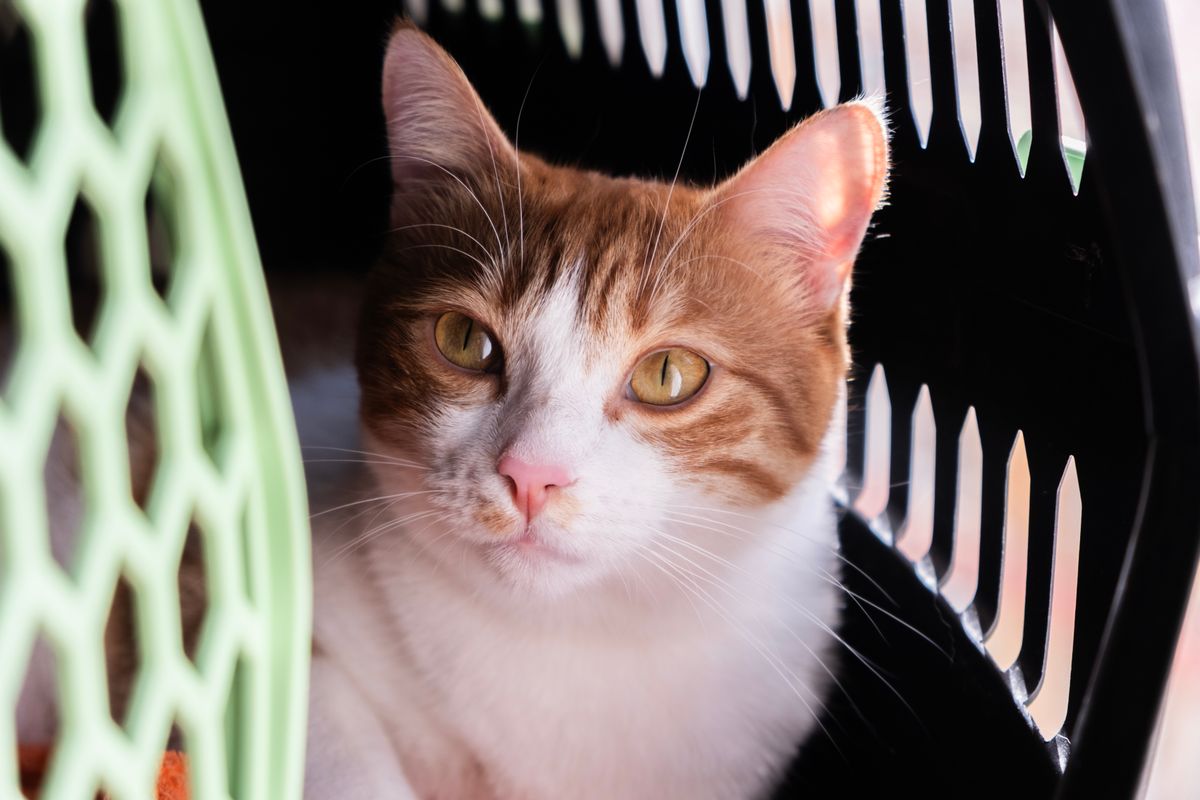

Savannah Cat Legality by State 2026: The F1–F5 Generation Guide

The question "are Savannah cats legal where I live" has a more complicated answer than almost any other pet you could ask it about. It's not just a yes or no. It's a yes or no depending on which generation of Savannah cat you're talking about — and then it's also a yes or no depending on your specific city, not just your state. Someone in Albany, New York can legally own an F5 Savannah cat. Someone in Manhattan, 150 miles south, cannot legally own any Savannah cat at all, regardless of generation.
This matters for obvious reasons, but it matters especially because Savannah cats are expensive. The cheapest ones cost over $1,000. The more desirable early-generation cats run $15,000–$20,000. People fall in love with photos of these animals online — the tall, spotted, half-wild look is genuinely striking — and sometimes buy before they've done the legal homework. A few of them find out later, in the worst possible way, that "later" in this case might mean an animal control officer at the door.
This guide is the homework you should do before any of that happens.
📋 In This Guide
- What F1 through F5 actually means — the biology
- The 2026 legal map — state by state
- States with total bans — all generations illegal
- States with generation-based restrictions
- The city trap: where state law isn't enough
- What Savannah cats actually cost by generation in 2026
- The red flags that scream scam
- What owning one is actually like
- Frequently asked questions
What F1 Through F5 Actually Means
The letter F stands for filial — a genetics term for generational relationship. The number tells you how many generations of breeding separate the cat from its wild ancestor, the African Serval.
An F1 Savannah's mother was an actual wild Serval. Not a Serval-descended cat, not a hybrid — a Serval. Its father was a domestic cat. The result is a cat that is genetically 50% wild. These animals can weigh 20–25 pounds, have a vertical jump of up to 8 feet, and retain behaviors that most owners of domestic cats would find genuinely startling. They bond intensely with one or two people and can be aloof or actively difficult with everyone else. They are not house cats that happen to look exotic. They are wild animals that happen to occasionally tolerate living in houses.
Each subsequent generation is one step further from that wild ancestor:
| Generation | Serval DNA | Typical Weight | Temperament Profile | Avg. Price Range (2026) |
|---|---|---|---|---|
| F1 | ~50% | 17–25 lbs | High energy, one-person bonding, cautious with strangers, needs significant space | $15,000–$20,000+ |
| F2 | ~25% | 16–25 lbs | Similar to F1 but slightly more social; still requires experienced owner | $4,000–$9,000 |
| F3 | ~12.5% | 12–20 lbs | More adaptable, better with families; retains wild energy and athleticism | $1,500–$4,000 |
| F4 | ~11–15% | 10–16 lbs | Behaves comparably to a domestic cat; athletic, curious, trainable | $1,000–$2,500 |
| F5+ | ~11–12% | 10–14 lbs | Domestic in behavior; still has the signature spotted look and tall build | $1,000–$2,500 |
One biological quirk that most buyers don't know until they're already researching breeders: F1 through F4 males are almost always sterile. This is the primary reason Savannah breeding is so logistically complicated and so expensive. Every generation requires careful matching of the female Savannah with an unrelated male — and a fertile male Savannah typically doesn't appear consistently until the F5 generation. The sterility issue is why good F1 and F2 females with proven breeding programs are disproportionately expensive and rare, and it's one reason that prices below market rate for these generations are almost always a scam signal.
The 2026 Legal Map — State by State
The legal landscape divides into four broad categories. Most people jump straight to the list without understanding why the laws differ — which means they often misread them. The generation-based restrictions aren't random bureaucratic line-drawing. They reflect a genuine regulatory philosophy: the closer a cat is to its wild ancestor, the more its behavior resembles a wild animal, and the more risk it poses if it escapes, injures someone, or is abandoned. That logic isn't wrong. F1 Savannahs have seriously injured people. They have escaped suburban enclosures and triggered public safety responses. The restrictions exist for reasons.
| State | Legal Status | Notes |
|---|---|---|
| Alabama | All generations legal | No state permit required; check local ordinances |
| Alaska | F4+ only | F1–F3 banned statewide |
| Arizona | All generations legal | Special license required; contact AZ Game and Fish Dept. |
| Arkansas | All generations legal | May require permit depending on local enforcement |
| California | All generations legal | No state restriction on Savannahs specifically; confirm with CA Dept. Fish & Wildlife |
| Colorado | F4+ only | F1–F3 banned. Denver city ban applies to ALL generations — even F5+ |
| Connecticut | All generations legal | No specific Savannah restriction |
| Delaware | All generations legal | Permit may be required; confirm with DE Dept. of Agriculture |
| Florida | All generations legal | Class III wildlife license required; widely available |
| Georgia | All generations BANNED | Explicitly listed as prohibited exotic species; no permit pathway |
| Hawaii | All generations BANNED | Strict exotic animal import laws; virtually no exceptions |
| Idaho | All generations legal | Permit may be required in some counties |
| Illinois | All generations legal | Department of Natural Resources oversight; verify locally |
| Indiana | All generations legal | Some cities/counties may have local restrictions or permit requirements |
| Iowa | F4+ only | F1–F3 restricted statewide |
| Kansas | All generations legal | No state-level restriction |
| Kentucky | All generations legal | No state-level restriction |
| Louisiana | All generations legal | Permit may be required in some areas |
| Maine | All generations legal | No state-level restriction |
| Maryland | All legal — weight limit | All generations permitted if the cat weighs under 30 lbs |
| Massachusetts | F4+ only | F1–F3 banned statewide |
| Michigan | All generations legal | No state-level restriction |
| Minnesota | All generations legal | No state-level restriction |
| Mississippi | All generations legal | No state-level restriction |
| Missouri | All generations legal | No state-level restriction |
| Montana | All generations legal | Permit may be required depending on circumstance |
| Nebraska | All generations BANNED | All hybrid cat ownership prohibited |
| Nevada | All generations legal | No state restriction; local ordinances may apply |
| New Hampshire | F4+ only | F1–F3 banned statewide |
| New Jersey | All generations legal | No state restriction |
| New Mexico | All generations legal | Some cities/counties may require permits |
| New York State | F5+ only | F1–F4 banned statewide. NYC and several counties ban ALL generations |
| North Carolina | All generations legal | No state restriction |
| North Dakota | All generations legal | No state restriction |
| Ohio | All generations legal | No state restriction |
| Oklahoma | All generations legal | No state restriction |
| Oregon | All generations legal | Some cities may have additional restrictions |
| Pennsylvania | All generations legal | No state restriction |
| Rhode Island | All generations BANNED | All hybrid cat ownership prohibited |
| South Carolina | All generations legal | No state restriction |
| South Dakota | All generations legal | No state restriction |
| Tennessee | All generations legal | No state permit required for any generation |
| Texas | All generations legal | TICA registration certificate required for F1–F5. County-level variations exist. |
| Utah | All generations legal | No state restriction |
| Vermont | F4+ only | F1–F3 banned statewide |
| Virginia | All generations legal | No state restriction |
| Washington | All generations legal | No state restriction; some city-level restrictions noted |
| West Virginia | All generations legal | No state restriction |
| Wisconsin | All generations legal | No state restriction |
| Wyoming | All generations legal | No state restriction |
This table reflects the legal landscape as of May 2026. Laws change. Before purchasing, verify directly with your state wildlife or agriculture agency and your local animal control office. The table is a starting point, not a legal opinion.
States With Total Bans — Every Generation, No Exceptions
Four states draw a hard line: Georgia, Hawaii, Nebraska, and Rhode Island. In all four, it doesn't matter whether your cat is an F1 that's half serval or an F7 that looks no different from a spotted tabby. The ban is categorical.
Georgia's Department of Natural Resources explicitly lists capybaras, Savannah cats, and a range of other exotic and hybrid animals as species that may not be held as private pets. There is no exotic animal permit that covers a Savannah cat. The state considers the hybrid status itself the issue, not the individual animal's behavior. If you own a Savannah cat and move to Georgia, or if you live in Georgia and unknowingly buy one from an out-of-state breeder who didn't mention the law, you are in violation of state wildlife code from the moment the animal crosses the state line.
Hawaii's ban is driven by a different concern: ecological protection. Hawaii has endemic species found nowhere else on earth, and its island ecosystems are uniquely vulnerable to introduced predators. The state's exotic animal import framework is among the strictest in the country, and hybrid cats — which could theoretically breed with feral cat populations — don't make the approved list.
Nebraska and Rhode Island both classify hybrid cat ownership as prohibited under their general wildlife possession statutes. In Rhode Island, this comes up occasionally in news coverage as a surprise to new residents who owned Savannahs legally in other states and relocated without checking.
States With Generation-Based Restrictions
This is where the legal framework gets genuinely interesting and where most confusion happens. Several states have threaded the needle in a way that acknowledges the difference between owning an animal that is half wild and owning one that is essentially domestic with unusual markings.
Alaska, Iowa, Massachusetts, New Hampshire, and Vermont all draw the line at F4. F4 and later generations are permitted; F1 through F3 are not. The cutoff reflects a reasonable reading of the behavioral data: by the F4 generation, Savannah cats are considered sufficiently removed from their wild ancestry to be regulated like domestic animals rather than exotic wildlife.
New York State sets the most conservative generation threshold of any state that doesn't outright ban all Savannahs: F5 and later only. F1 through F4 are prohibited. In practice, this means an F4 that would be legal in Massachusetts is illegal in New York. The reasoning has to do with New York's classification system, which considers F4 cats to still carry enough wild genetic material to warrant wildlife-level regulation.
Colorado follows the F4 cutoff at the state level but has an important local override: the city of Denver bans all Savannah cat generations, period. This creates a situation where someone in Colorado Springs can legally own an F4 Savannah but someone in Denver cannot legally own any Savannah at all.
Maryland takes a different approach entirely — rather than a generational cutoff, the state uses a weight threshold. All generations are permitted as long as the cat weighs under 30 pounds. Since F1 and F2 Savannahs can exceed 25 pounds and sometimes approach 30, this creates an odd regulatory situation where an oversized F2 might technically cross into prohibited territory. In practice, most Savannahs of all generations come in under 30 pounds, so this rule primarily affects outlier animals.
The City Trap: Where State Law Isn't Enough
This is the section most guides skip, and it's the one that causes the most expensive mistakes.
State law sets a floor — the minimum standard that applies everywhere in that state. But cities and counties can be stricter than their state. Denver can ban Savannahs even though Colorado allows F4+. New York City can ban all generations even though New York State allows F5+. And these aren't anomalies; they're examples of a broader pattern where municipalities with denser populations, more vocal animal control departments, or specific incidents in their history have adopted rules stricter than the state average.
Outside of Denver and New York City — the two most prominent examples — there are documented local restrictions in parts of Washington state (including Seattle), parts of Texas (particularly Montgomery County), and scattered municipalities in Oregon, Indiana, and New Mexico. The pattern is common enough that any prospective Savannah owner should call their city or county animal control office as a final verification step, regardless of what state law says.
⚠️ The moving problem: Many Savannah owners find out about city-level restrictions not when they buy the cat, but when they move. A cat you purchased legally in one part of a state may become illegal the moment you relocate to a city with stricter rules. Animal control in those jurisdictions can and does enforce. If you're moving, check both your destination state and your destination city before assuming your current cat travels legally with you.
What Savannah Cats Actually Cost in 2026 — by Generation
The price range for Savannah cats is wider than almost any other domestic pet, and understanding why it's wide is as important as knowing the numbers. An F1 female from a legitimate TICA-registered breeder costs $15,000 to $20,000. That price reflects: the cost of acquiring a healthy, USDA-licensed serval (itself a significant expense and regulated purchase), the difficulty of successful breeding (not all servals will mate with domestic cats; pregnancy rates are low; litter sizes are small), the intensive care required for F1 kittens in their first weeks, veterinary costs, health testing, and the breeder's overhead for maintaining what is essentially a small wildlife facility.
When someone offers you an F1 Savannah for $5,000, they are offering you something that is mathematically impossible to produce at that price responsibly. The red flag isn't the low price in isolation — it's the gap between what legitimate breeding costs and what they're charging. That gap is filled by cutting corners that you will discover later, or by outright fraud.
| Generation | Male Price Range | Female Price Range | Red Flag Price |
|---|---|---|---|
| F1 | $12,000–$16,000 | $15,000–$20,000+ | Anything under $10,000 |
| F2 | $4,000–$8,000 | $4,000–$9,000 | Anything under $2,500 |
| F3 | $1,500–$4,000 | $1,000–$4,000 | Anything under $1,000 |
| F4 | $1,000–$2,500 | $1,000–$2,500 | Below $700 |
| F5+ | $1,000–$5,000 (breeder quality) | $1,000–$2,500 | Below $700 |
One note on F5 male pricing: because F5 is the first generation where males are reliably fertile, an F5 male with strong lineage and good confirmation intended for breeding can command prices at the high end of that range. A pet-only F5 male is typically priced toward the lower end.
The Red Flags That Scream Scam
Savannah cat fraud is, according to the TICA (The International Cat Association), one of the most common exotic pet scams in the United States. The breed's high price ceiling and high buyer desire make it a natural target. Here is what legitimate breeders do, and what fraudulent ones don't:
- TICA registration. Every generation of Savannah cat should come with TICA paperwork confirming the lineage. No TICA papers means you cannot verify the generation you're buying.
- Health guarantees and vet records. Reputable breeders provide documentation of first vaccinations, parasite screening, and a health guarantee. A kitten sold without vet records is a kitten you know nothing about medically.
- They ask about you. Good Savannah breeders interview buyers. They ask about living situation, experience with cats, outdoor vs. indoor environment, whether other animals are present. A breeder who asks no questions and takes your money without a conversation is almost certainly not operating a responsible program.
- No in-person visits. Any legitimate breeder will allow you to visit the facility (or at minimum, video-call and show you the kitten with the parents). A breeder who ships first and shows nothing is a major fraud risk.
- Prices that are too low for the generation claimed. Already covered, but worth repeating: the price structure of responsible Savannah breeding makes very cheap early-generation cats impossible to explain legitimately.
What Owning One Is Actually Like
The legal question and the money question are the two hurdles most guides focus on. But there's a third one that doesn't come up enough: are you actually equipped to own one of these animals?
F1 and F2 Savannahs are not difficult the way a destructive puppy is difficult. They are difficult the way having a highly intelligent, physically capable, emotionally demanding animal that bonds ferociously with one person and can express displeasure in ways that your furniture will not recover from is difficult. These cats can jump to the top of any refrigerator, cabinet, or door frame. They need vertical space in the form of cat trees and shelving. They need active play, not the passive kind — interactive sessions, puzzle feeders, structured activity. A bored F1 or F2 Savannah will find its own entertainment, and you will not enjoy the results.
F3 through F5 are substantially more manageable. An F5 Savannah in terms of daily care needs is not dramatically different from a highly active, highly curious domestic cat. The wild ancestry is there in the athleticism and the watchful intelligence, but it's been diluted enough by domestic breeding that the day-to-day experience is less "managing a wild animal" and more "living with a cat that constantly needs to be doing something."
"Savannah cats like to jump and climb to high places. Some Savannah cats can even jump up to eight feet in the air. Unlike many other breeds, Savannah cats are not afraid of water and actually enjoy playing in it."
— World Population Review, Savannah Cat Legal States (2026)The water thing is real. Multiple Savannah owners report finding their cats in the shower, playing with the toilet, or deliberately getting into the sink. It doesn't cause problems, exactly, but if you have a bathroom door you're in the habit of leaving open and a cat that is determined to investigate standing water, you're going to have some interesting mornings.