

Holland Lop Rabbit Care UK: Ears, Housing, Diet and Health
There is an important UK naming point before anything else: the small lop type widely called a Holland Lop in North America is commonly referred to in Britain as the Miniature Lop or Mini Lop. UK veterinary records also often group “Mini lop–Holland lop” together. The care issues in this guide apply to small lop-eared companion rabbits regardless of which of those labels appears on an advert or veterinary record.
The essentials: keep rabbits with at least one compatible rabbit companion, give a bonded pair permanent access to a large living area, feed a high-fibre diet based on hay/grass, vaccinate against myxomatosis and RVHD-1/RVHD-2, and use a rabbit-savvy veterinary practice. Lop ears deserve extra attention because current RVC research shows a higher risk of hidden ear abnormalities, but routine weekly ear cleaning or monthly vet appointments are not universal breed requirements.
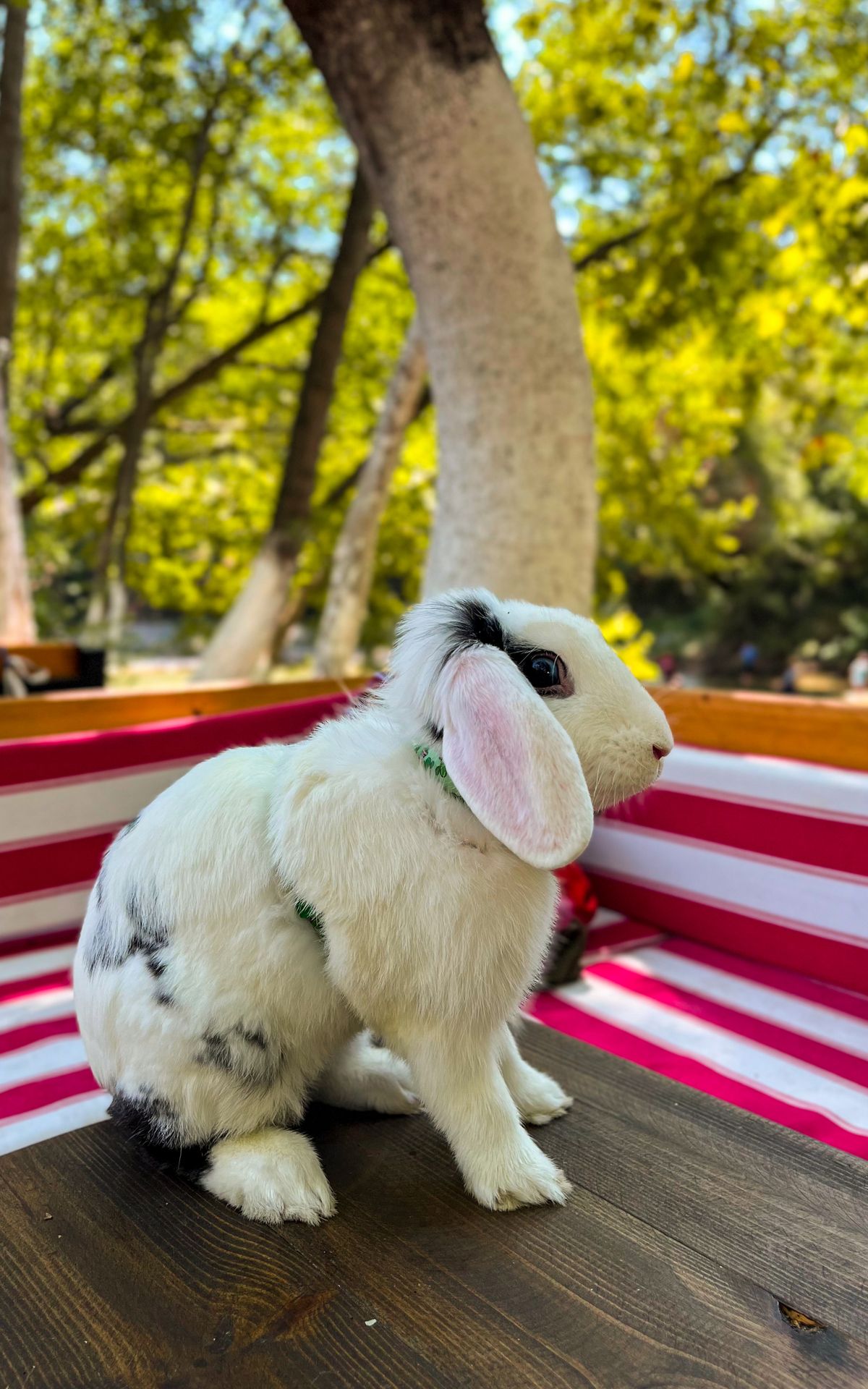
Holland Lop or Mini Lop in the UK?
The British Rabbit Council recognises the Miniature Lop in its Lop section. UK sources often shorten that to “Mini Lop”, while the American name “Holland Lop” remains common online and in imported breed terminology. That naming difference matters for search and shopping, but it does not change the welfare basics.
Avoid assuming that “Holland Lop”, “Mini Lop”, “Dwarf Lop” and “English Lop” are interchangeable labels. They describe different standards or larger lop types in UK rabbit terminology. If breed identity matters, rely on proper pedigree information rather than an advert title alone.
Lop ears: the health risk is real, but the care plan should be evidence-based
A 2025 RVC-led study of 435 rabbits confirmed that lop-eared rabbits had a markedly higher risk of several hidden ear abnormalities, including ear-canal narrowing and excess wax. These problems may not be visible from the outside, which is why veterinary otoscopic checks can be valuable.
What this does not mean: healthy ears do not automatically need to be flushed or wiped every week. Frequent manipulation of a normal ear canal is not a substitute for veterinary examination and can create irritation if done unnecessarily.
Ear care at home: observe, do not probe
Look at the visible ear
Watch for new crusting, discharge, strong odour, redness, swelling, wetness or a pain response when the outer ear is gently touched.
Do not insert cotton buds
Never put cotton buds, tweezers or other objects into the ear canal. They can push debris deeper and damage sensitive tissue.
Do not clean on a fixed schedule
Saline or ear cleaner is not a routine weekly requirement for every Holland Lop. If cleaning is medically indicated, your vet should show you which product and technique to use.
Ask for otoscopy when appropriate
Include ears in routine rabbit health checks. Rabbits with previous otitis, narrow canals, recurring wax or new signs may need more frequent examinations.
When ear signs need veterinary care
| Sign | What it may mean | What to do |
|---|---|---|
| Small amount of visible wax, rabbit otherwise normal | Not automatically an infection | Do not dig into the canal. Mention recurrent or increasing wax at the next health check. |
| Strong smell, thick/wet discharge, frequent head shaking, scratching or obvious pain | Otitis or another ear disorder possible | Arrange a prompt rabbit-savvy veterinary examination. |
| Swelling around the ear base, reduced appetite or marked discomfort | Deeper ear disease possible | Seek timely veterinary assessment; imaging may be needed depending on findings. |
| Head tilt, rolling, nystagmus, severe loss of balance, seizure or collapse | Vestibular/neurological emergency | Same-day or emergency veterinary care. |
Head tilt is a clinical sign, not a diagnosis. Middle/inner ear disease and Encephalitozoon cuniculi are important differentials. Do not start fenbendazole, meloxicam or ear medication from an online protocol without a veterinary assessment.
Housing: the UK minimum is about permanent usable space, not daily exercise hours
RWAF and PDSA both recommend a single permanent living area of at least 3 m × 2 m × 1 m for a pair of average-sized rabbits. RWAF stresses that the 3 m × 2 m footprint should be one continuous block of accessible ground-level space; upper floors do not count towards that footprint.
A hutch is not enough
Rabbits need to run, jump, stretch out and stand fully upright whenever they choose, not only during a scheduled three-hour exercise period.
Keep rabbits with rabbits
PDSA recommends bonded pairs or groups. Human attention and guinea pigs do not replace a compatible rabbit companion.
Add structure
Provide hides with more than one exit, tunnels, raised areas, digging opportunities, chew-safe items and multiple feeding/resting areas.
Protect from weather
Outdoor accommodation needs shade, ventilation, shelter from rain/wind and protection from predators and digging out.
Hot weather in the UK
Rabbits are heat-sensitive. PDSA says an ideal living-space temperature is around 18–20°C, while RWAF's June 2026 guidance treats temperatures around 26°C and above as a point where active cooling and a backup plan become increasingly important.
- Provide constant shade and airflow.
- Offer fresh cool water in accessible bowls.
- Use wrapped frozen water bottles or cool surfaces the rabbits can choose to lie beside.
- Do not trap warm air under solid covers.
- If a rabbit becomes weak, confused, collapses, breathes rapidly/open-mouthed or appears severely overheated, start appropriate cooling and contact a vet immediately.
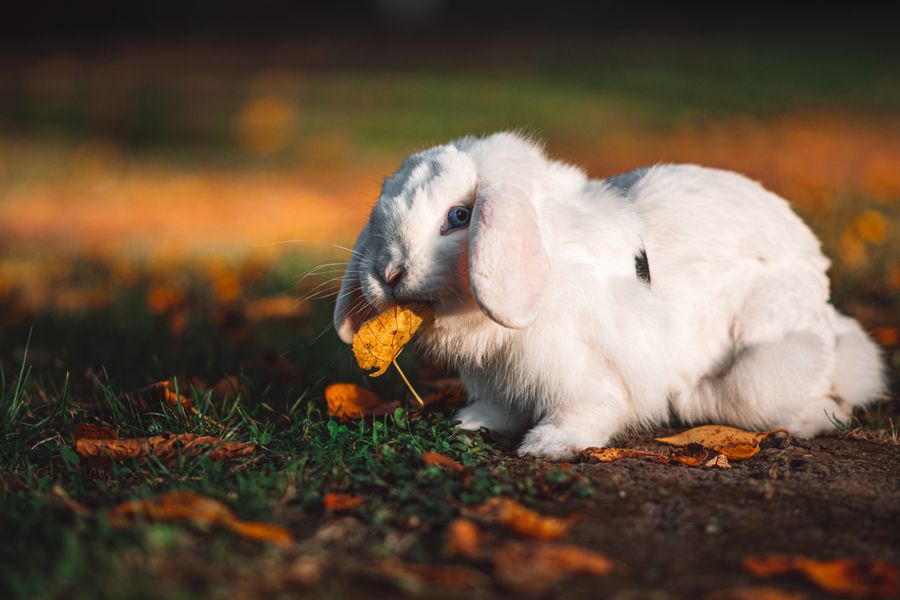
Diet: high fibre matters more than a branded percentage chart
PDSA recommends at least a rabbit's own body size in good-quality hay each day, suitable fresh greens and only a small quantity of rabbit nuggets. For practical welfare, hay/grass should be continuously available so rabbits can graze for long periods.
- Hay/grass: the foundation of the diet; fresh, clean and available every day.
- Leafy greens: offer a varied selection and introduce unfamiliar foods gradually.
- Nuggets/pellets: keep portions small; avoid muesli-style mixes that encourage selective feeding.
- Fruit and sugary treats: occasional and small rather than daily staples.
- Water: fresh water at all times; a heavy bowl supports a natural drinking posture and should be kept clean.
There is no need to make a rabbit's diet depend on one UK brand of hay, pellets or bedding. Fibre quality, total intake, body condition and individual dental/gastrointestinal health matter more than shopping lists.
GI stasis: do not deliberately wait twelve hours
Reduced gut movement in rabbits is often secondary to pain, dental disease, stress, dehydration or another underlying problem. The MSD Veterinary Manual, updated July 2026, advises prompt veterinary care if a rabbit stops eating or develops digestive signs such as fewer droppings.
Urgent signs: complete refusal of food, very little or no faeces, marked lethargy, abdominal pain, a distended abdomen or rapid deterioration. Do not wait for a rigid twelve-hour threshold before calling a vet.
Do not give motility drugs or aggressively syringe-feed a severely bloated or painful rabbit unless a veterinarian has assessed the situation; a mechanical obstruction needs to be considered.
Dental health: common in rabbits, but lop ears are not proven to be the independent cause
Dental disease is a major rabbit welfare problem. A large RVC VetCompass study found that about one in seven rabbits under UK primary veterinary care were diagnosed with dental disease during the study year. However, unlike earlier small studies, that large analysis found that lop ears and brachycephalic skull shape were not independent significant risk factors.
So the balanced message is: all rabbits need careful dental care. Holland Lops are not exempt, but “lop skull shape inevitably causes molar malocclusion” overstates the current evidence.
Signs worth acting on
- weight loss or a change in food preference,
- slower chewing or dropping food,
- wet chin/drooling,
- reduced faecal output,
- eye or nasal discharge,
- facial or jaw swelling.
Routine health checks should include the mouth. A complete examination of cheek teeth is not always possible in an awake rabbit; sedation/anaesthesia and dental imaging may be appropriate when disease is suspected. That is different from sedating every healthy Holland Lop twice a year by default.
Vaccinations in the UK: protect against myxomatosis, RVHD-1 and RVHD-2
PDSA's UK rabbit vaccine guidance, published in March 2026, recommends regular vaccination against all three diseases, including for house rabbits. It describes first vaccination from around five weeks of age and annual boosters as the typical schedule.
The exact product matters. The Veterinary Medicines Directorate currently lists Nobivac Myxo-RHD Plus as authorised in Great Britain; its product information covers myxomatosis, RHDV1 and RHDV2 from five weeks of age, with onset of immunity at three weeks and a one-year duration of immunity. Other rabbit vaccines are also authorised, so your vet should build the schedule around the actual products and previous vaccine history.
Neutering and companionship
PDSA recommends neutering pet rabbits because it prevents unwanted litters, reduces hormone-related fighting and lowers the risk of reproductive disease. Their current UK guidance says male rabbits may be castrated from around ten weeks, while many females can be spayed from around five months; larger breeds may mature later.
The right timing should still be individualised according to size, development, health and the experience of the practice.
Before surgery: rabbits should not be starved like cats or dogs. PDSA advises continuing food and water before the operation and taking familiar hay/greens to the practice.
Head tilt and E. cuniculi
E. cuniculi can cause neurological or kidney disease, but it is only one possible explanation for head tilt. Middle/inner ear disease and other neurological conditions can look similar.
- Head tilt, rolling, nystagmus or seizures need same-day veterinary assessment.
- A positive antibody result shows exposure/infection but does not automatically prove the cause of every current neurological sign.
- Do not rely on a fixed 24–48-hour fenbendazole promise.
- Do not copy anti-inflammatory or antiparasitic doses from an online article.
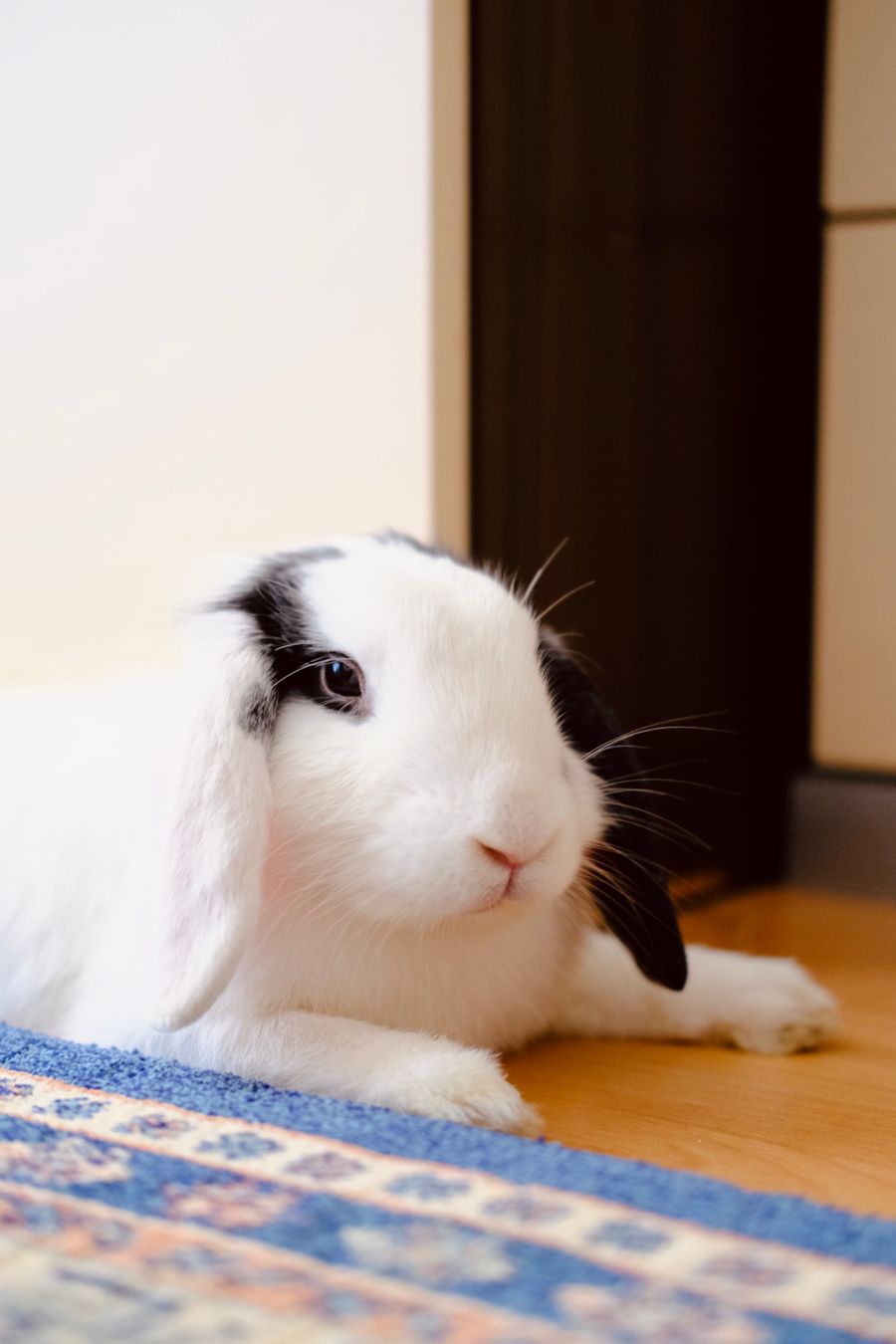
Bathing, grooming and daily checks
Healthy rabbits do not need routine full baths. Persistent soiling around the hindquarters deserves investigation for causes such as dental disease, obesity, arthritis, urinary problems or digestive upset rather than repeated bathing.
PDSA recommends daily checks for illness/injury and a dirty bottom, fresh water and hay, removal of wet/dirty bedding and regular grooming. Long-haired rabbits need more coat care than a typical short-coated Holland Lop.
In warm weather, check the hindquarters particularly carefully because flystrike can progress rapidly. Rabbits that cannot keep themselves clean need veterinary assessment, not just cosmetic cleaning.
When to seek urgent or same-day veterinary help
- complete loss of appetite or markedly reduced/no droppings,
- head tilt, rolling, nystagmus, seizure or collapse,
- severe breathing difficulty,
- a distended painful abdomen,
- major trauma or uncontrolled bleeding,
- suspected heatstroke,
- sudden severe pain or rapid deterioration.
Before bringing a Holland Lop or Mini Lop home
- Plan for a compatible rabbit companion rather than a single rabbit.
- Prepare permanent living space of at least 3 m × 2 m × 1 m for a pair, and provide more where possible.
- Find a rabbit-savvy vet and out-of-hours service before an emergency occurs.
- Confirm vaccination status for myxomatosis, RVHD-1 and RVHD-2.
- Ask about any history of ear disease, dental treatment or recurring gut problems.
- Prepare hay/grass, leafy greens, fresh water, hides, toilets, chew-safe items and digging/foraging opportunities.
- Budget for veterinary care or consider suitable insurance without relying on fixed internet price tables.
- Consider rescue first, especially bonded pairs already assessed for compatibility.
Frequently asked questions
Is a Holland Lop the same as a Mini Lop in the UK?
UK naming is confusing. The British Rabbit Council recognises the Miniature Lop, often shortened to Mini Lop, which is closely associated with the rabbit called the Holland Lop in North American terminology. UK veterinary data may record “Mini lop–Holland lop” together.
Do I need to clean a Holland Lop's ears every week?
No. Regularly inspect the visible ears, but routine cleaning or flushing is not automatically required. Lop rabbits have a higher risk of hidden ear disease, so veterinary otoscopy is more useful than unnecessary deep cleaning.
How much space do two rabbits need?
RWAF and PDSA recommend at least 3 m × 2 m × 1 m of permanent living space for a pair of average-sized rabbits, with more space encouraged.
Can a Holland Lop live alone?
That does not meet rabbits' normal social needs. PDSA recommends bonded pairs or groups, commonly a neutered male and neutered female.
How long can I wait if my rabbit stops eating?
Do not deliberately wait twelve hours. Reduced appetite and fewer droppings can become serious quickly, so contact a rabbit-savvy vet promptly, especially with pain, bloating or lethargy.
Does being a lop automatically cause dental disease?
No. Dental disease is common in rabbits, but the large 2024 RVC VetCompass study did not find lop ears or brachycephalic skull shape to be independent significant risk factors.
Which vaccines do UK rabbits need?
Myxomatosis, RVHD-1 and RVHD-2. PDSA recommends vaccination for indoor and outdoor rabbits, generally starting around five weeks and then using regular boosters according to the vaccine schedule.
When can rabbits be neutered?
PDSA says males can often be castrated from around ten weeks and females from around five months, although size, breed, development and health can change the timing.
Should rabbits be fasted before anaesthesia?
No. Rabbits do not need the prolonged pre-operative fasting used for cats and dogs. Follow your veterinary practice's instructions, but routine withholding of food and water is not recommended.
Is head tilt always E. cuniculi?
No. E. cuniculi is an important differential, but middle/inner ear disease and other neurological causes can look similar. Same-day veterinary assessment is appropriate.
UK rabbit-care sources and review standard
This article is designed to stay evergreen. Core welfare principles stay stable; ear-disease research, vaccine guidance and the visible review date are rechecked when recommendations change.
- Rabbit Welfare Association & Fund — minimum space recommendations
- PDSA — ideal rabbit housing and companionship
- PDSA — UK rabbit vaccination guidance
- PDSA — rabbit neutering and pre-operative feeding
- Royal Veterinary College — lop-eared rabbits and hidden ear disease
- RVC VetCompass — dental disease in UK pet rabbits
- MSD Veterinary Manual — digestive disorders and GI stasis
- Veterinary Medicines Directorate — Nobivac Myxo-RHD Plus product record (Great Britain)
- British Rabbit Council — UK rabbit breed naming and Lop section
Track rabbit health with Patify

Keep weight, vaccinations and symptoms in one timeline
Log weight, vaccination dates, changes in eating or droppings, and previous ear or dental problems. A simple timeline can make veterinary conversations more precise when something changes.
Download Patify freeBottom line
A Holland Lop does not need a complicated breed ritual; it needs excellent rabbit husbandry plus extra awareness of ear disease. Permanent space, rabbit companionship, high-fibre feeding, current vaccination and rabbit-savvy veterinary care matter more than weekly ear flushing, rigid percentage charts or brand lists. Lop ears do carry a well-supported risk of hidden ear disease, which is exactly why careful observation and appropriate otoscopy are preferable to unnecessary home manipulation.