
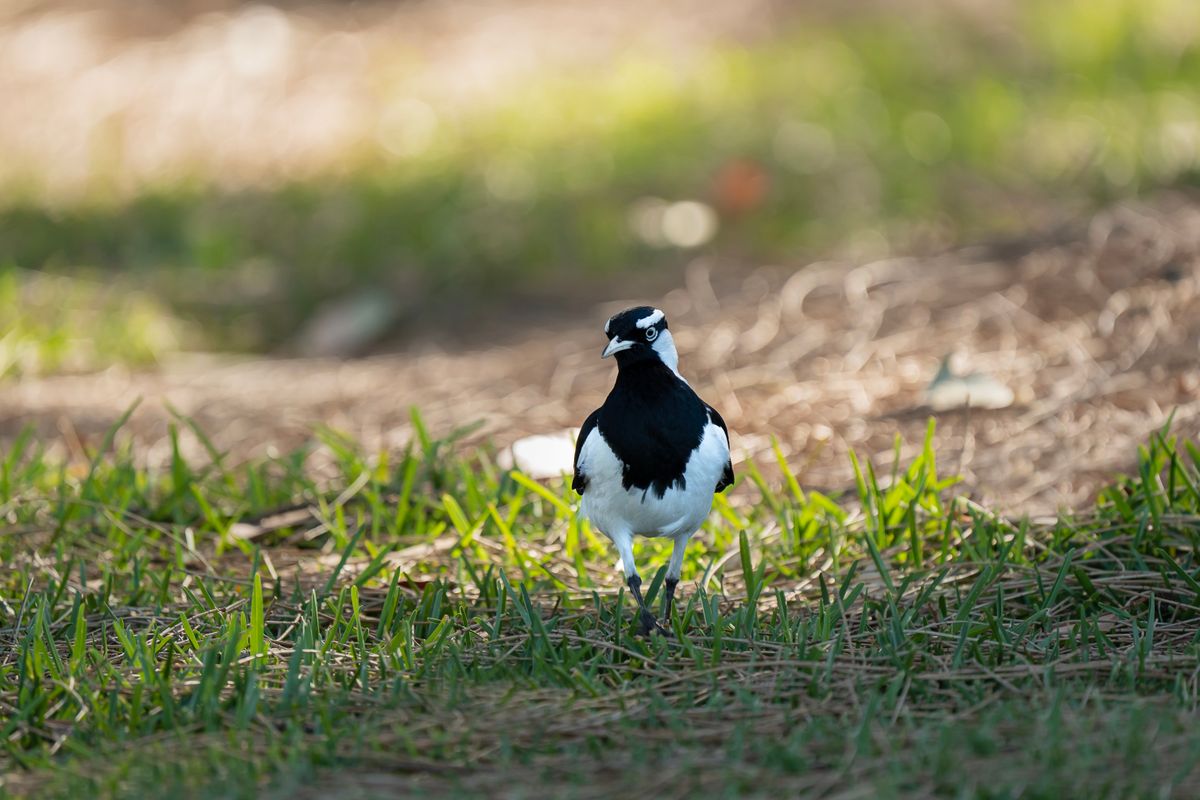
Found a Baby Magpie on the Ground? When to Leave It and When to Rescue It
Most fully feathered baby magpies found on the ground do not need to be rescued. Australian magpie fledglings commonly leave the nest before they are strong flyers, and their parents continue feeding and protecting them nearby. If the bird is bright, feathered, hopping or running and not injured, keep pets and people away and watch from a distance. Rescue is needed when the bird is clearly injured, has been attacked by a cat or dog, is very young and cannot be re-nested, is cold/lethargic, or remains genuinely unattended after a proper observation period.
30-second decision guide
Fully feathered + alert + hopping/running + parents nearby: leave it alone.
Healthy but beside a road, exposed to dogs/cats or in another immediate hazard: move it only a short distance to a nearby shrub/low branch and let the parents continue care.
Mostly naked/downy + cannot stand or perch: this is a nestling; return it to the nest or a safe artificial nest nearby if possible, then monitor.
Bleeding, drooping wing, unable to stand, breathing abnormally, cold, lethargic, or touched by a cat/dog: contact a wildlife rescuer or vet promptly.
Fledgling or nestling? This is the decision that matters
A young bird on the ground can look helpless even when everything is going exactly as nature intended.
| What you see | Most likely stage | What to do |
|---|---|---|
| Mostly/fully feathered, bright, hopping or running, flapping wings, short tail | Fledgling | Usually leave it. Move only a short distance if there is immediate danger. |
| Few feathers, lots of bare skin/down, unable to perch or move properly | Nestling | Needs help. Re-nest if safe or use an artificial nest nearby; contact wildlife rescue if this cannot be done. |
| Feathered but bleeding, wing hanging, unable to stand, breathing rapidly or very dull | Injured/sick bird | Wildlife rescue or veterinary assessment. |
| Known cat/dog contact, even without obvious wounds | Potentially injured | Veterinary/wildlife assessment; punctures and infection risk can be hidden. |
| Unexplained severe illness, unusual head/neck posture, breathing difficulty, or multiple sick/dead birds nearby | Possible disease event | Do not handle. Follow current H5 bird-flu reporting guidance. |
Why baby magpies spend time on the ground
WIRES specifically lists magpies among the species that can leave the nest before they are capable of strong upward flight. During this stage they may flap, run and hop on the ground while building flight muscles.
The parents are usually still doing the important work: bringing food, watching for predators and teaching the young bird how to forage.
WIRES notes that for some fledglings this learning period can last up to about a week. A grounded fledgling is therefore not automatically an orphan.
A parent may be watching you. Magpie adults can stay back if a person, dog or cat is standing close to the chick. Walk well away and observe discreetly rather than deciding after five minutes that the bird has been abandoned.
How long should I wait for the parents?
There is no single timer for every situation, but Australian wildlife organisations give a useful framework.
WIRES advises watching healthy feathered chicks from a distance and allows for parental return over a period ranging from at least 30 minutes to a few hours depending on the bird and circumstances. Wildlife Victoria similarly recommends confirming that the parents are absent before “bird-napping” a healthy fledgling. Wildcare Australia notes that parents may be away foraging and may take several hours to return.
If the bird is safe, bright and fully feathered, distance is often more helpful than intervention.
If sunset is approaching, the bird is deteriorating, or you are genuinely unsure whether it is being attended, call a wildlife rescue service for species-specific advice rather than leaving a vulnerable bird exposed overnight.
What if the fledgling is beside a road or exposed to pets?
You do not need to move a healthy fledgling kilometres away or take it home.
BirdLife Australia, WIRES, WA Wildcare and South Australian guidance all support the same principle: if a healthy fledgling is in immediate danger, move it only to a safe nearby location where its parents can still hear and find it.
Good choices can include:
- a nearby dense shrub;
- a low stable branch;
- the sheltered side of the same tree;
- a spot away from the road but still within the family’s territory.
Then move yourself, children and pets away.
Do not “rescue” a healthy fledgling by taking it to another suburb. Its parents are its best carers, and the bird is learning survival skills from them.
Will the parents reject it because I touched it?
No. The common belief that parent birds reject a chick because it smells like a human is not a good reason to leave a nestling in danger.
WA’s Wildcare guidance and Wildcare Australia both explicitly advise that healthy chicks can be picked up and re-nested when necessary and that parents will continue caring for them.
Handle only as much as needed, because unnecessary handling is stressful — but human scent is not the problem.
What to do with a nestling on the ground
A very young magpie with little feathering, poor balance and no ability to perch should not normally be sitting exposed on the ground.
If you can clearly identify the original nest and can reach it without climbing dangerously, place the chick back.
If the nest is inaccessible, a simple artificial nest may allow the parents to continue raising it. WIRES and Wildcare Australia describe using a secure basket/container with drainage holes, soft natural material and a nearby perch, positioned close to where the chick was found.
The goal is not to build a beautiful nest. It is to get the chick safely off the ground, near the original nest/territory and accessible to the parents.
Do not climb a tall tree or unstable ladder. If re-nesting cannot be done safely, call wildlife rescue. Human safety comes first.
A simple artificial nest
- Use a small hanging basket, sturdy container or similar vessel.
- Add drainage holes so rain cannot collect.
- Line it with soft leaves/grass or suitable soft material.
- Secure it firmly in a nearby tree/shrub, out of direct sun and obvious predator access.
- Keep it close to the location where the chick was found.
- Step well back and watch for the parents to return.
WIRES has documented magpie chicks successfully reunited with their parents using this type of “pretend nest” when the original nest was too high to reach.
A cat or dog touched the magpie — does it still need a vet?
Yes. BirdLife Australia advises veterinary assessment after cat or dog attacks even when no obvious wound can be seen. Tiny punctures can be hidden under feathers and contamination/infection can become serious.
If the bird is safe to handle under the current disease guidance, place it in a ventilated box with a towel, keep it warm, dark and quiet, and contact a vet or wildlife rescue service promptly.
Do not release a bird immediately just because it starts moving normally again after a pet attack.
Should I feed it mince, bread, worms or water?
No — not unless a wildlife carer or veterinarian specifically tells you to.
Baby birds have species- and age-specific diets. Food that seems sensible to us can be nutritionally inappropriate, and putting food or water directly into a stressed bird’s mouth can cause aspiration.
WIRES, RSPCA, Wildcare Australia, NSW Environment guidance and Bonorong all recommend withholding food and water while an injured/orphaned bird is being stabilised or transported unless a trained professional advises otherwise.
This is especially important for magpies: hand-rearing is not simply “feed it mince until it flies”. Correct diet, social development and avoidance of human imprinting matter for successful release.
What if the adult magpies are swooping me?
That can actually be evidence that the parents are present and protecting their young.
BirdLife Australia’s current September 2026 swooping guidance explains that magpies often swoop when chicks are in the nest or have recently fledged because the young are especially vulnerable.
If you have already established that the fledgling is healthy, back away calmly and give the family space. Do not remove the chick simply to stop the adults swooping.
If there is a serious public-safety issue near a school, playground or busy path, WIRES recommends contacting the local council for advice rather than trapping or harming the adult birds.
Important 2026 exception: H5 bird flu changes when you should handle a bird
Australia is currently responding to H5 bird flu in wildlife. That means normal rescue advice needs one important safety filter.
The Australian Government Department of Agriculture, Fisheries and Forestry says that if you see sick or dead wild birds you should avoid contact. Current warning signs can include inability to stand/walk/fly, breathing problems, unusual head or neck posture, severe incoordination or sudden death.
If you see multiple sick or dead birds, or a bird with unexplained disease signs in an affected context:
- Do not touch it.
- Keep children and pets away.
- Record the location and what you see; take a photo/video from a distance if safe.
- Call the 24-hour Emergency Animal Disease Hotline on 1800 675 888.
H5 exception: do not automatically box up a bird that appears sick for an unexplained reason during the current bird-flu response. Call first. A clearly displaced healthy fledgling is a different situation from a bird showing neurological/respiratory disease or a cluster of sick/dead wildlife.
If rescue is genuinely needed, how do I contain the bird?
For an injured/orphaned bird that a rescuer or vet advises you to contain — and where H5 precautions do not tell you to avoid handling — keep the setup simple:
- use a small secure cardboard box with ventilation holes;
- line the bottom with a towel or soft cloth;
- keep the bird warm, dark and quiet;
- keep children and pets away;
- minimise handling;
- do not offer food or water unless instructed;
- take it to a vet/licensed wildlife rehabilitator or follow the rescuer’s instructions.
NSW Environment and Heritage emphasises that native wildlife has specialised needs and should be transferred to licensed rehabilitation providers or qualified veterinarians rather than kept and hand-raised by the finder.
Who to call in Australia
A local veterinary clinic is always a practical first contact for an injured native bird. Wildlife rescue coverage varies by location, but current services include:
| Region | Service | Current contact |
|---|---|---|
| NSW | WIRES Rescue Office | 1300 094 737 |
| Victoria | Wildlife Victoria | (03) 8400 7300 |
| South-East Queensland | Wildcare Australia | 07 5527 2444 (24/7) |
| South Australia | Fauna Rescue SA | (08) 8289 0896 |
| Western Australia | DBCA Wildcare Helpline | (08) 9474 9055 |
| ACT | ACT Wildlife | 0432 300 033 |
| Tasmania | Bonorong Wildlife Rescue | 0447 264 625 |
| Northern Territory | NT Government lists regional wildlife rescue/vet contacts | Use the current NT injured-wildlife directory for Darwin, Katherine or Alice Springs |
For suspected H5 bird flu, the national Emergency Animal Disease Hotline is 1800 675 888.
Can I take the baby magpie home and raise it?
That is not the right default. Native-wildlife rehabilitation is regulated by states and territories and generally requires authorised or permitted carers.
There is also a welfare reason: a hand-raised bird can become imprinted on people, develop the wrong diet/behaviour and lose the survival skills it needs for release.
Parents are almost always the best option for a healthy chick. When professional care is genuinely needed, the goal is rehabilitation and release — not creating a pet.
Baby magpie decision tree
Feathered + alert
Leave it. Step away and look for parents.
Feathered + immediate danger
Move only a few metres to nearby cover/branch, then leave the family together.
Naked/downy nestling
Re-nest or create a nearby artificial nest if safe; call rescue if this fails.
Cat/dog contact
Vet/wildlife assessment even if injuries are not obvious.
Bleeding / drooping wing / collapse
Prompt professional rescue or veterinary assessment.
Possible H5 disease pattern
Do not touch; keep pets away and call 1800 675 888.
Frequently Asked Questions
Should I pick up a baby magpie sitting on the ground?
Usually not if it is fully feathered, alert and moving normally. Magpie fledglings commonly spend time on the ground while their parents continue feeding and protecting them nearby.
How do I know if a baby magpie has been abandoned?
Step well away and observe. Parents may avoid approaching while you or pets are nearby and can be away collecting food. If a healthy fledgling remains genuinely unattended after a proper observation period, contact wildlife rescue for advice rather than assuming it is orphaned.
Can I put a baby magpie back in the nest?
Yes if it is a true nestling and the original nest can be reached safely. Parents will not reject it simply because a person touched it. If the nest cannot be reached, a secure artificial nest close to the original location may work.
What if my cat caught a baby magpie but there is no blood?
It still needs professional assessment. Bite or claw injuries can be tiny and hidden beneath feathers, and infection can develop even when the bird initially looks normal.
What should I feed a baby magpie?
Do not feed it unless a wildlife carer or veterinarian instructs you. A healthy fledgling should be fed by its parents. An injured/orphaned bird needs species-appropriate care, not household foods or forced water.
Why are the adult magpies swooping me near the baby?
They are likely defending their young. Back away calmly and give the family space. Swooping around a healthy fledgling is not a reason to remove the chick.
Australian wildlife sources — checked 22 September 2026
- WIRES — Native Australian Birds: magpies commonly leave the nest before strong upward flight; parents continue feeding/protecting them.
- WIRES — Helping Chicks: nestling/fledgling stages, re-nesting, artificial nests, monitoring and no-food/no-water guidance.
- BirdLife Australia — Leave that baby bird alone: most grounded fledglings do not need rescue; observe parents from a distance.
- BirdLife Australia — Helping Injured Birds: injury signs, vet/wildlife rescue and cat/dog-contact guidance.
- Wildlife Victoria — Baby Birds: “bird-napping”, fledgling behaviour and current Victorian rescue contact.
- WA DBCA — Wildcare Helpline: healthy fledglings, re-nesting, parent return, human-scent myth and current WA rescue contact.
- Wildcare Australia — Birds: detailed fledgling/re-nesting guidance, pet-attack criteria and South-East Queensland practice.
- Australian Government DAFF — Wildlife and bird flu: current H5 advice to avoid handling sick/dead birds and report suspected events.
- Australian Government — Current H5 wildlife event data: national 2026 bird-flu status and reporting guidance.
- NSW Environment and Heritage — Sick or injured native animals: professional rescue, warm/dark/quiet containment and authorised rehabilitation.
Wildlife rescue and disease advice can change. A healthy magpie fledgling is usually best left with its parents; an injured bird needs professional advice, while a bird showing a possible H5 disease pattern should not be handled by the public.