

BC Cat Microchip Rules 2026: Vancouver, Surrey & Metro Vancouver ID/Fines Guide
British Columbia does not have one province-wide law requiring every owned domestic cat to be microchipped. Municipal rules differ—and even where identification is mandatory, a microchip is often only one accepted form of ID. Surrey requires identification for cats over six months but accepts a collar/tag, tattoo or microchip. Richmond likewise requires sufficient identification but does not require a microchip specifically. Coquitlam's cat-registration program is voluntary. New Westminster is the clearest municipality reviewed here with a mandatory permanent-ID rule, but it accepts either a traceable tattoo or microchip. This guide separates real microchip rules from cat-licence, at-large and impound rules, then explains B.C. registries, ISO standards, current costs and the H5N1 misconception.
The biggest 2026 correction
There is no province-wide B.C. cat-microchip mandate. BC SPCA continues to advocate for province-wide mandatory microchipping, which itself confirms that such a universal requirement has not yet been enacted.
Surrey: ID is mandatory for cats over six months, but microchip is only one valid option alongside collar/tag and traceable tattoo.
Richmond: cat owners must provide sufficient identification; collar/tag, tattoo and microchip are all examples.
Coquitlam: an owner may register a cat with permanent ID; this is not a universal microchip requirement.
New Westminster: every cat must have permanent traceable ID such as a tattoo or microchip; the current municipal ticket schedule lists a $500 penalty for a cat without permanent ID.
Vancouver, Burnaby, Victoria and District of North Vancouver: the current public bylaw materials reviewed do not support the old article's blanket “mandatory cat microchip” claims.
Province-wide B.C. rule: microchipping is recommended, not universally mandated
The BC SPCA recommends that cats, dogs and rabbits have a registered microchip and has publicly advocated for a province-wide requirement. But its current materials still describe province-wide mandatory microchipping as a policy goal rather than existing B.C. law.
That makes the legal question local: does your municipality require identification, permanent identification, registration, licensing or some combination? Those terms are not interchangeable.
Metro Vancouver and B.C. city-by-city snapshot
| Municipality | What the current rule actually says | Microchip mandatory for every owned cat? | Verified enforcement / fee point |
|---|---|---|---|
| Surrey | Cats over six months must have identification. City guidance says ID may be a tag, tattoo or microchip. | No—microchip is one accepted form | The currently posted consolidated cat bylaw states a $100 penalty on conviction for violations. Current shelter fees are separate from that bylaw penalty. |
| Burnaby | Current animal-control materials regulate cats in other ways, but the reviewed current bylaw materials did not show a general microchip requirement. | No general mandate verified | Do not use the old $150–$200 “unchipped cat” fine; the current bylaw-notice material reviewed does not substantiate it. |
| Richmond | Every cat must have sufficient identification so a finder can contact the owner. The bylaw says this may include collar/tag, tattoo or microchip. | No—microchip is optional within the ID rule | Richmond's public animal page identifies dog licensing separately; the old $200 unmicrochipped-cat fine was not supported. |
| Coquitlam | An owner may register a cat if it has permanent identification. Altered cats bearing permanent ID receive a specific at-large exception. | No universal requirement | The City operates a Cat ID Registration Program for microchipped/tattooed cats; registration is not written as mandatory for every cat. |
| New Westminster | All cats must have permanent traceable identification; City guidance names tattoo or microchip. | Permanent ID required, but microchip specifically is not the only option | Current municipal ticket schedule: $500 for “Cat without permanent Identification.” |
| City of Vancouver | Current Animal Control By-law licenses dogs. “Permanent identification” is defined as a microchip, but the operative microchip condition reviewed applies to aggressive dogs—not ordinary cats. | No general cat mandate | No general cat-licence or unmicrochipped-cat offence appears in the current bylaw reviewed. |
| Victoria | The current Animal Responsibility Bylaw directory points to Bylaw 11-044. The consolidated bylaw reviewed regulates cat conduct/impoundment but contains no microchip provision. | No general mandate verified | The bylaw lists a cat impound fee, not a $175 microchip fine. |
| District of North Vancouver | The current control/licensing bylaw reviewed is primarily dog-focused; no general cat permanent-ID or microchip offence was found. | No general mandate verified | The old $100–$150 unmicrochipped-cat claim was not substantiated by the current public bylaw reviewed. |
Municipal bylaws and ticket schedules change. For legal compliance, verify the current municipal bylaw before relying on a fine or enforcement number.
Surrey: identification is mandatory, microchipping is not the only way to comply
Surrey's Cat Spay/Neuter Regulation Bylaw requires an owner of a cat actually or apparently over six months old to maintain identification on the cat. The bylaw defines identification to include a collar/tag with current owner contact information, a traceable tattoo and a traceable microchip. Surrey's current responsible-pet page simplifies that rule as “ID (tag, tattoo or microchip).”
The same bylaw regulates sterilization and at-large behaviour. Current Surrey shelter guidance also makes an important practical distinction: dogs are required to be licensed; the cat-reclaim page does not impose a comparable cat-licence requirement.
Current Surrey Animal Resource Centre fees for an impounded cat are separate from an identification offence: the City presently lists $18 for a spayed/neutered cat and $67 for an unaltered cat, plus applicable boarding and medical charges.
Richmond: sufficient ID is required, but the bylaw expressly gives alternatives
Richmond Animal Control Bylaw 7932 requires every owner to ensure a cat bears sufficient identification to let a finder contact the owner. The identification “may take the form of, but is not limited to,” a collar and tag, tattoo or microchip implant.
Richmond also regulates sterilization: cats over six months are generally required to be spayed/neutered unless the owner has a valid cat breeding permit, and unsterilized cats may not run at large.
Coquitlam: the Cat ID Registration Program is useful, but it is not universal licensing
Coquitlam's Animal Care and Control Bylaw says an owner may register a cat by submitting the City form and ensuring the cat has permanent identification. The City's current Cat ID Registration Program asks owners with a tattooed or microchipped cat to register that ID with the shelter database.
The bylaw also says an altered cat bearing permanent identification can be at large under a specific exception. That creates a meaningful benefit to permanent ID, but it is not the same as requiring every indoor cat to have a microchip.
New Westminster: permanent ID really is mandatory
New Westminster is materially different from several neighbouring cities. Its current Animal Care and Control guidance says all cats must have permanent traceable identification. The City explicitly lists a tattoo or microchip as acceptable permanent ID.
The current municipal ticket schedule lists a $500 penalty for a cat without permanent identification. That is the type of fine that can legitimately appear in a municipality-by-municipality guide—provided it is labelled correctly. It is a permanent-ID offence, not “microchip only.”
Vancouver: the word “microchip” appears in the bylaw, but that does not create a cat mandate
Vancouver's current Animal Control By-law defines “permanent identification” as a microchip with current owner contact information. But the operative provision reviewed that can require permanent identification is part of the conditions that may be imposed on an aggressive dog.
The licensing section is likewise dog-specific. The current bylaw therefore should not be summarized as “Vancouver requires cats to be microchipped” or “Vancouver requires cat licences.”
Burnaby, Victoria and District of North Vancouver: remove the unsupported fine claims
Burnaby's current searchable bylaws include cat-related provisions, but the public material reviewed for this update did not substantiate a general cat-microchip offence or the old $150–$200 unmicrochipped-cat fine.
Victoria's current bylaw directory points to Animal Responsibility Bylaw 11-044. The consolidated text reviewed contains cat-control and impound provisions but no “microchip” term; it lists a cat impound fee rather than an unmicrochipped-cat penalty.
The District of North Vancouver's current Dog Tax and Regulation Bylaw includes some provisions that apply to animals generally, but the reviewed bylaw contains no “permanent identification” provision and no general cat-microchip requirement. The old North Vancouver District microchip fine should therefore be removed rather than repeated.
BC Pet Registry vs 24PetWatch: there is no legally mandated “primary database”
The old article said every Metro Vancouver animal service searches 24PetWatch as the “primary” registry and that owners should separately register in the “BC SPCA database.” That framing is incorrect.
BC Pet Registry is the BC SPCA's registry. It is a province-wide permanent-ID database owned and operated by the BC SPCA. It can register microchips, tattoos and licence numbers, and participating veterinary clinics, animal-control agencies and shelters can use it to trace a found pet.
24PetWatch is a separate commercial microchip/registry provider. It may be the registry associated with a particular chip, but B.C. law does not require every cat to be registered with 24PetWatch.
BC Pet Registry: current registration and microchip cost snapshot
BC Pet Registry currently lists lifetime registration at $45. Its public FAQ says microchipping at a veterinary clinic or hospital commonly costs about $60–$125, although actual clinic pricing varies.
All cats and kittens adopted through BC SPCA currently leave with a microchip and lifetime BC Pet Registry registration included in the adoption package.
If your cat already has a chip from another company, BC Pet Registry says it can register existing microchip brands. Its records are also traceable through the AAHA Universal Pet Microchip Lookup partnership.
What microchip standard should a B.C. cat have?
The Canadian Veterinary Medical Association recommends RFID products that have been reviewed by the National Companion Animal Coalition and comply with ISO 11784 and ISO 11785. That is a better technical standard than telling owners that “B.C. law requires ISO 134.2 kHz.”
CVMA also recommends that microchipped animals be scanned annually to confirm the device still functions and to locate it if it has migrated.
- Ask the veterinarian whether the chip is an NCAC-recognized ISO 11784/11785 product.
- Confirm the chip number with a scanner after implantation.
- Register the number with the appropriate registry and verify owner details.
- Have the chip scanned during routine veterinary visits.
- Keep a visible collar/tag when safe; permanent ID and visible ID work well together.
What happens when a B.C. shelter finds a microchip?
BC SPCA advises that a found animal can be taken to a veterinary clinic, animal-control agency or BC SPCA animal centre for a free microchip scan. The number is then used to identify the associated registry or owner record.
Surrey's shelter guidance likewise tells finders to have a pet scanned and says current microchip/tattoo information can be strong proof of ownership when reclaiming an animal.
A microchip does not guarantee instant return. The chip can be unregistered, the phone number can be stale, or the record may still name a prior guardian. That is why ownership transfer and contact updates matter as much as implantation.
Moving soon? Patify has a separate microchip-after-moving checklist. For a useful comparison with another Canadian province, see the Ontario cat microchip rules guide.
H5N1: microchips can identify a lost cat, but there is no special H5N1 microchip rule
The old article claimed that an unchipped cat creates a CFIA “10-day contact tracing” gap and that Metro Vancouver municipalities were citing H5N1 as a reason for microchip enforcement. The official B.C. and CFIA HPAI guidance reviewed does not support that claim.
B.C.'s HPAI companion-animal guidance says suspected infection is reportable to CFIA and the B.C. Chief Veterinarian. If HPAI is suspected, owners should contact a veterinarian and tell the clinic before arrival; testing can be coordinated through the veterinary team and animal-health authorities.
A registered microchip may help identify the guardian of a lost sick cat. But the official reporting pathway is based on suspected disease, veterinary evaluation and animal-health authorities—not a special microchip notification statute.
B.C. cat microchip compliance checklist
- Check your exact municipality's current cat-identification bylaw.
- Do not assume “identification required” means “microchip required.”
- If permanent ID is required, verify whether tattoo and microchip are both accepted.
- Use an NCAC-recognized ISO 11784/11785 microchip when choosing a new implant.
- Confirm which registry currently holds your cat's chip.
- Update ownership, phone number, email and address immediately after a move or adoption.
- If you add BC Pet Registry as another record, keep registry information consistent.
- Ask for a microchip scan during routine veterinary care.
- Keep clear photos and veterinary records that help establish ownership.
- If your cat is impounded, check municipal impound/boarding/medical fees separately from bylaw fines.
Frequently asked questions
Is microchipping mandatory for every cat in British Columbia in 2026?
No province-wide requirement for every owned domestic cat was identified. BC SPCA currently recommends microchipping and advocates for broader mandatory identification, while municipal rules vary.
Does Surrey require every cat to be microchipped?
No. Surrey requires cats over six months to have identification, but the current City bylaw/guidance accepts a collar/tag, tattoo or microchip.
Is there a $250 Surrey fine for an unmicrochipped cat?
The old article's $250 claim was not supported. The currently posted Cat Spay/Neuter Regulation Bylaw states a $100 penalty for violations of that bylaw, while current shelter impound/boarding/medical fees are separate.
Does Richmond require microchipping?
Richmond requires sufficient identification that lets a finder contact the owner. Its bylaw says identification may include collar/tag, tattoo or microchip; microchipping is not the only permitted method.
Which Metro Vancouver city definitely requires permanent cat ID?
New Westminster's current City guidance requires all cats to have permanent traceable identification. Tattoo or microchip can satisfy that rule, and its current municipal ticket schedule lists $500 for a cat without permanent identification.
Is 24PetWatch the mandatory B.C. microchip database?
No. 24PetWatch is one commercial provider. BC Pet Registry is a separate province-wide registry owned by BC SPCA. The key legal/practical step is keeping the correct registry record associated with your chip accurate and current.
Is “BC SPCA database” separate from BC Pet Registry?
No. BC Pet Registry is owned and operated by BC SPCA. Treating those as two different mandatory registrations is incorrect.
How much does microchipping cost in B.C.?
BC Pet Registry currently says veterinary clinics/hospitals commonly charge about $60–$125 for implantation. Registry activation may be separate; BC Pet Registry currently lists $45 for lifetime registration. Actual clinic prices vary.
Does H5N1 create a special cat-microchip requirement in B.C.?
No such special requirement was identified in the current B.C./CFIA HPAI guidance reviewed. Microchips help identify lost animals, but suspected HPAI reporting proceeds through veterinarians, CFIA and the B.C. Chief Veterinarian.
Bottom line
The B.C. microchip story is not “some cities require chips and fine everyone else.” It is a patchwork of identification rules. Surrey and Richmond require cat identification but accept alternatives to a microchip; Coquitlam offers registration for permanently identified cats; New Westminster requires permanent ID; and several other municipalities reviewed do not impose a general cat-microchip mandate.
For long-term compliance and recovery, the strongest strategy is simple: check the local bylaw, choose durable ISO-compliant permanent ID, register it correctly, keep the contact record current, and separate municipal fines from ordinary shelter fees.
City of Surrey — Cat Spay/Neuter Regulation Bylaw 13548
City of Surrey — Lost & Found Pets / Current Cat Impound Fees
City of Burnaby — Current Bylaw Database
City of Richmond — Animal Regulations
City of Richmond — Animal Control Bylaw 7932
City of Coquitlam — Cat ID Registration Program
City of New Westminster — Cat Permanent Identification Rule
City of Vancouver — Animal Control By-law 9150
City of Victoria — Animal Responsibility Bylaw Directory
District of North Vancouver — Dog Tax and Regulation Bylaw 5981
BC SPCA — BC Pet Registry
BC Pet Registry — Current Registration and Microchip Cost FAQ
CVMA — Microchip Identification / ISO 11784 and 11785
Province of British Columbia — HPAI in Companion Animals
CFIA — H5N1 Risks for Pets
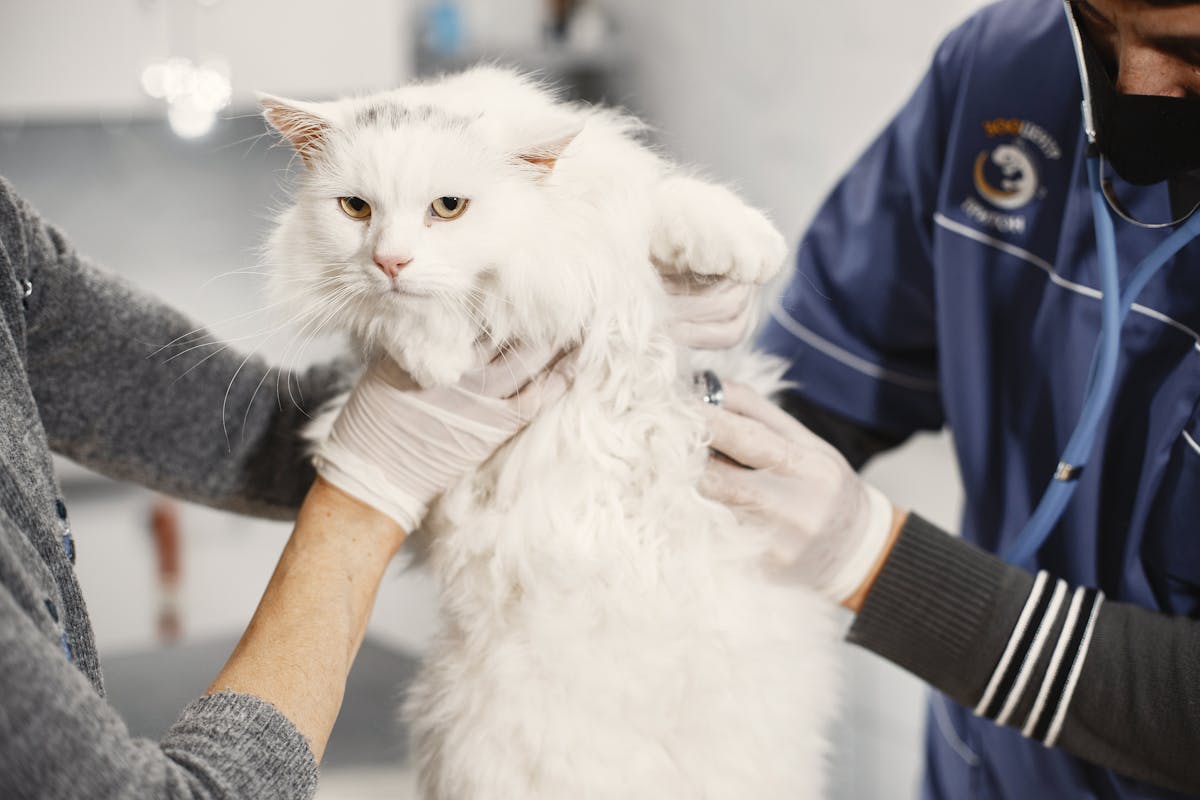
Pexels — Gustavo Fring, Cat at the Veterinarian (free to use)