
Cat Sleeping in the Litter Box: When It’s an Emergency vs Stress, Pain or Illness
Short answer: Sleeping or resting in the litter box is unusual, but it is not a diagnosis. Some cats do it because they feel insecure or want a familiar, protected space; others stay in or near the box because urination is painful, they feel weak, or mobility is difficult. The urgent question is not “Why is my cat sleeping there?” but “Is my cat able to pass urine normally?”
Go to an emergency veterinarian now if:
Your cat repeatedly strains or postures to urinate and produces little or no urine, especially if your cat is male.
Your cat is becoming increasingly distressed, crying while trying to urinate, vomiting, profoundly weak, collapsed, cold, or difficult to rouse.
Your cat cannot urinate normally after a possible urinary obstruction, toxin exposure or severe illness.
Do not wait for a specific number of hours or a particular litter-clump size. Suspected urethral obstruction is a true emergency.
Why urinary blockage has to be ruled out first
Cornell describes urethral obstruction as an absolute emergency. A blocked cat often makes frequent attempts to urinate but passes little or no urine. Male and neutered male cats are at higher risk because their urethra is longer and narrower.
With complete obstruction, urine cannot leave the bladder. Metabolic wastes and potassium can accumulate, kidney function deteriorates and life-threatening heart-rhythm abnormalities can develop. Cornell notes that death may occur in less than 24–48 hours; Merck describes uremia developing by roughly 36–48 hours and death at approximately 72 hours in untreated complete obstruction.
Do not use the timeline as a countdown. A cat suspected of being blocked needs treatment immediately, not when a particular hour is reached. Owners also commonly mistake attempts to urinate for constipation, so repeated unproductive litter-box trips should be treated seriously.
There is no reliable “12-hour urine-clump rule”
The old version of this guide told owners that no clump in 12 hours meant high suspicion for complete obstruction. That is too rigid for home triage. Clump size and frequency depend on litter type, number of cats sharing the box, hydration, diet and whether the owner saw every elimination.
What matters more is the pattern: repeated attempts to urinate, prolonged posturing, distress and little or no urine production. A small amount of urine does not necessarily rule out a developing or partial obstruction. If you are unsure whether a male cat is passing urine normally, seek urgent veterinary assessment.
Do not squeeze or press your cat’s abdomen to “check the bladder.” Bladder assessment belongs to a veterinary examination. Home palpation can be painful and does not safely rule an obstruction in or out.
Other urinary causes that can keep a cat near the box
Feline lower urinary tract disease (FLUTD/LUTD) is an umbrella term, not a single diagnosis. Causes can include feline idiopathic cystitis, urethral plugs, stones and less commonly bacterial infection. Typical lower-urinary signs include painful urination, increased frequency, blood in urine, inappropriate urination and genital licking.
Importantly, bacterial urinary tract infection is not the default explanation in a young or middle-aged cat. Cornell notes that bacteria account for only a small proportion of lower urinary tract disease in younger cats and become more common in older cats.
| What you see | Why it matters | Best next step |
|---|---|---|
| Repeated straining + little/no urine | Possible urethral obstruction | Emergency care now |
| Frequent small urinations, blood, pain | LUTD such as cystitis, stones or infection | Prompt veterinary assessment; urgent if urine output drops |
| Large urine volume + increased drinking | Can occur with CKD, diabetes or other systemic disease | Veterinary exam with blood/urine testing |
| Normal urination but new litter-box resting | May reflect pain, mobility limitation, stress or other illness | Assess the whole cat; persistent/new behavior deserves a vet discussion |
Does litter-box sleeping mean chronic kidney disease?
No. CKD is very common in older cats — Cornell reports it affects up to 40% of cats over age 10 and up to 80% over age 15 — but sleeping in the litter box is not a recognized standalone diagnostic sign.
As CKD progresses, cats may lose the ability to concentrate urine, leading to increased urine volume and increased thirst. Other possible signs include weight loss, poor appetite and weakness. Some cats show few obvious signs early in the disease.
Diagnosis requires the broader clinical picture. Blood measurements such as creatinine, BUN and SDMA can be useful, but they are interpreted alongside hydration, muscle mass, urinalysis, blood pressure and other findings. Cornell explicitly notes that no single test gives a complete picture of kidney function or prognosis.
Another correction: SDMA can rise earlier than creatinine in some cats, but the old “SDMA detects CKD 17 months earlier” promise is not an appropriate universal owner-facing rule. IRIS recommends interpreting SDMA together with the patient and confirming persistent abnormalities rather than diagnosing CKD from one number.
Do not stage CKD from behavior
The old article linked particular behaviors to IRIS stages and suggested that a cat sleeping in the litter box usually meant moderate-to-advanced CKD. That is not how IRIS staging works.
IRIS staging is performed after CKD has been diagnosed and the patient is stable. It uses creatinine and/or SDMA, then substages by proteinuria and blood pressure. A cat’s sleeping location, clump size, coat quality or appetite can prompt investigation, but none assigns an IRIS stage.
Acute kidney injury: toxin exposure changes the urgency
Acute kidney injury is different from chronic kidney disease and can occur suddenly. Merck lists causes including antifreeze, true lilies, some medications such as NSAIDs, infections and impaired blood flow to the kidneys.
If a cat is suddenly lethargic, vomiting, refusing food or behaving abnormally after possible lily, antifreeze or medication exposure, contact a veterinarian or emergency hospital immediately. Do not wait to see whether litter-box behavior changes.
Pain and mobility problems can change litter-box behavior
Arthritis is common in older cats and can make climbing into a normal litter box or walking to distant resources painful. Cornell recommends easy access to litter boxes and low-sided boxes for cats with mobility problems.
That evidence supports looking for stiffness, reduced jumping, difficulty with stairs and grooming changes. It does not prove that “sleeping in the box” specifically means arthritis. The behavior should be interpreted with the rest of the cat’s mobility and health history.
Can stress make a cat sleep in the litter box?
Yes, stress can plausibly contribute. FelineVMA/AAFP resources emphasize that cats seek familiar hiding/resting areas and that intercat tension can lead to resource guarding, avoidance, hiding and changes in normal behavior. Moves, unfamiliar smells, changes in routine and conflict with another pet can all increase distress.
But there is no reliable home rule such as “normal appetite + normal urine = definitely stress.” Medical and behavioral problems can overlap, especially with feline idiopathic cystitis, where stress and urinary disease interact.
More consistent with urinary urgency
Repeated box visits, straining, crying, genital licking, blood or a clear drop in urine output.
More consistent with mobility pain
Stiffness, reduced jumping, trouble entering a high-sided box or avoiding stairs.
More consistent with environmental distress
A recent move/new pet/intercat conflict plus hiding, avoidance or guarding of resources — while urination remains normal.
More consistent with systemic illness
Weight loss, increased thirst, vomiting, appetite loss, marked lethargy or progressive weakness.
What to observe before the veterinary visit
- Whether your cat is actually producing urine during each trip.
- How often they enter the box and whether they strain or vocalize.
- Any blood-tinged urine or sudden change in urine volume.
- Appetite, water intake, vomiting, energy and mobility.
- Current medications and supplements.
- Possible exposure to lilies, antifreeze, human pain medication or other toxins.
- Any recent household change: move, renovation, new pet, new baby or intercat conflict.
- A short video of the behavior, if it can be recorded without delaying emergency care.
In a multi-cat household, it can be hard to know which cat produced which urine clump. If one cat is repeatedly straining or acting ill, do not rely on the presence of urine somewhere in the shared box as proof that that cat is urinating normally.
What not to do at home
- Do not press or squeeze the bladder.
- Do not assume straining is constipation.
- Do not give human pain relievers such as ibuprofen or acetaminophen.
- Do not postpone emergency care because a small amount of urine appeared.
- Do not force large amounts of water or food into a nauseated or distressed cat.
- Do not treat new persistent litter-box behavior as “just stress” before considering medical causes.
What about kittens?
A kitten may occasionally lie or play in the litter box, particularly after a move or while adapting to a new environment. That can be less concerning than the same new behavior in an adult cat, but age does not make urinary or systemic illness impossible.
A kitten that strains, produces little/no urine, has diarrhea, stops eating, vomits, becomes lethargic or seems painful should be examined promptly. There is no evidence-based “7–10 days is safe if it looks like stress” rule.
Frequently Asked Questions
My male cat produced a tiny amount of urine. Can he still be blocked?
Yes. A small amount of urine does not safely rule out a partial or developing obstruction. Repeated straining, painful attempts, frequent box trips or reduced output in a male cat warrant urgent veterinary assessment.
Can I wait until morning if my cat is straining but otherwise alert?
No. Suspected inability to pass urine normally is an emergency even before vomiting, weakness or collapse develops. Cornell classifies urethral obstruction as an absolute emergency.
Does a senior cat sleeping in the box mean CKD has reached Stage 3 or 4?
No. IRIS stage cannot be inferred from behavior. CKD staging uses stable laboratory measurements and substaging for proteinuria and blood pressure after CKD has been diagnosed.
My cat moved into the litter box after we moved house. Could this be stress?
Possibly. Familiar scent and hiding behavior can make the box seem secure in a stressful environment. Monitor urination and overall health closely, provide alternative safe hiding/resting places, and arrange veterinary assessment if the behavior persists or any medical signs appear.
What litter-box change helps an arthritic senior cat?
Low-sided, easily accessible boxes placed close to where the cat spends time can reduce the effort and pain of entering or reaching the box. Multiple accessible boxes may help in multi-level homes.
Sources checked September 20, 2026
- Cornell Feline Health Center — Feline Lower Urinary Tract Disease: urinary signs, male-cat obstruction risk and emergency timing.
- Merck Veterinary Manual — Urethral Obstruction in Small Animals: uremia, hyperkalemia and untreated complete-obstruction timeline.
- Cornell Feline Health Center — Chronic Kidney Disease: prevalence, clinical signs and renal testing.
- International Renal Interest Society — 2026 IRIS Guidelines: CKD diagnosis, staging, SDMA and monitoring framework.
- Merck Veterinary Manual — Noninfectious Urinary Disease in Cats: AKI causes including antifreeze, lilies and medications.
- Cornell — Loving Care for Older Cats: arthritis, access and low-sided litter boxes.
- FelineVMA — Environmental and behavioral assessment: medical rule-out, resource placement and feline distress.
Educational information only. A cat that cannot urinate normally, is repeatedly straining, or is becoming systemically ill needs urgent veterinary care.
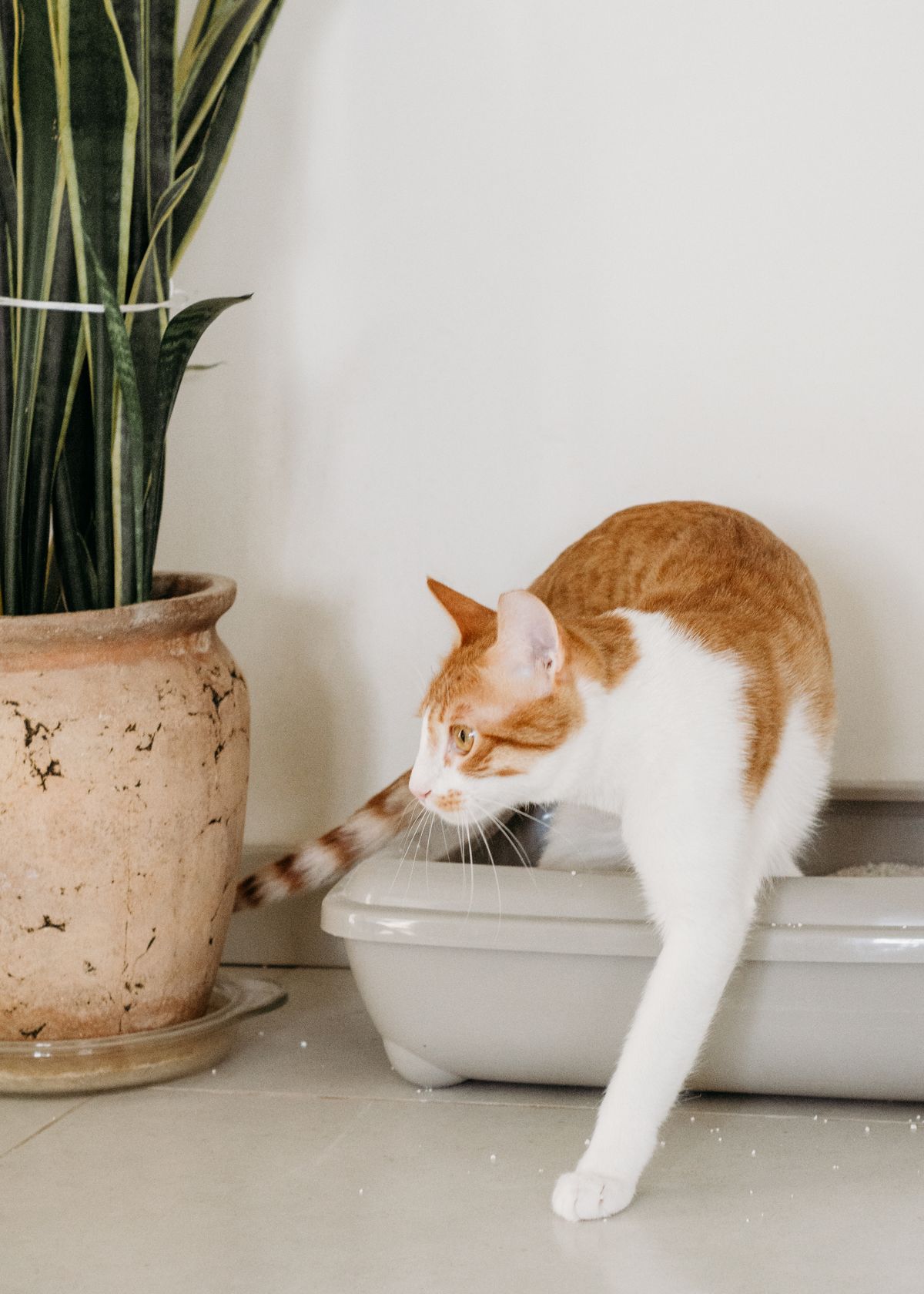
Cover photo: Nadiye Odabaşı / Pexels, cat at a litter box. Pexels marks the image free to use.