
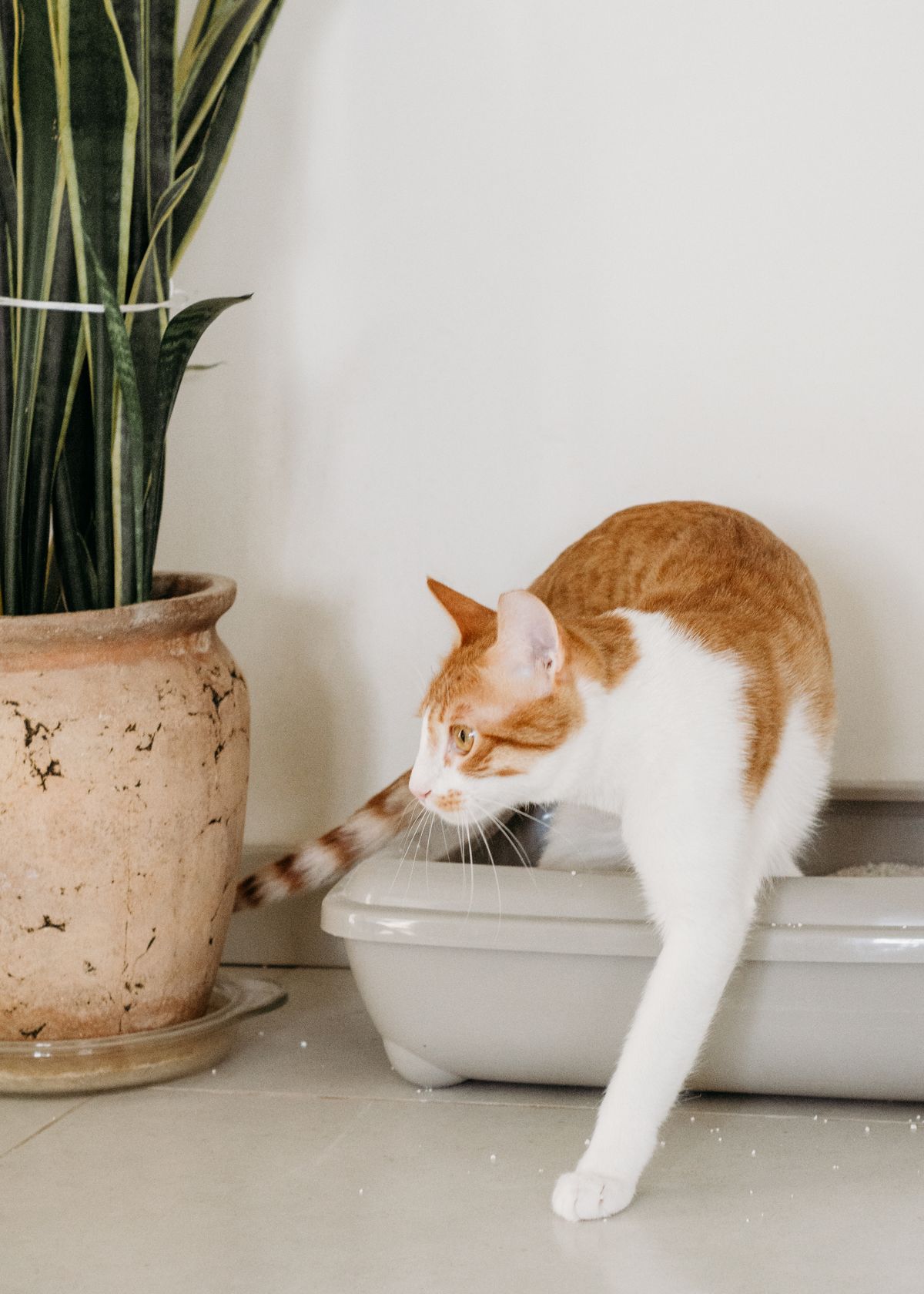
How to Get Rid of Cat Litter Box Smell: Urine Odor & Home Guide (2026)

If your home smells like cat litter, start by identifying where the odor is actually coming from. A litter box that smells because waste is sitting in it is a different problem from urine that has soaked into carpet, upholstery or subfloor. Urine spraying is different again, and a sudden change in urination can be medical. The most effective plan is therefore not “one miracle deodorizer,” but source removal + a cat-friendly litter box setup + surface-specific cleaning + ventilation.
Quick answer: the highest-value steps
For litter box odor: scoop at least daily, provide enough boxes in separate locations, use a litter your cat accepts (often unscented, fine-to-medium and clumping), wash the box with a mild unscented cleaner, and keep the area ventilated.
For urine outside the box: blot fresh urine, then use a urine-specific cleaner compatible with the surface. ASPCA and VCA commonly recommend enzymatic pet-odor cleaners; follow the product label rather than inventing a universal contact time.
For air odor: ventilation helps dilute odor. HEPA filters target particles, not gases; an air cleaner needs activated carbon or another gas-phase sorbent to help with some odor/VOCs.
If your cat suddenly urinates outside the box: do not treat it as a housekeeping problem first. Painful/frequent urination, blood, straining, or little/no urine can signal lower urinary tract disease; inability to pass urine is an emergency.
What this 2026 revision removed: fabricated numerical “effectiveness” scores, DIY peroxide + dish soap + baking-soda formulas, “activated carbon changes color when saturated,” a fixed 4–6 week replacement rule, “baking soda neutralizes alkaline ammonia,” a rigid litter-type star ranking, a fixed percentage claim for twice-daily scooping, a fixed percentage claim for neutering-related odor reduction, and the claim that covered boxes are automatically better for odor control.
Last evidence review: September 1, 2026. Cleaning products differ by chemistry and surface compatibility; always follow the product label and never mix household cleaners.
Step 1: Is the Smell From the Litter Box, an Accident, or Spraying?
Waste is sitting in the box
Sharp ammonia/fecal odor is strongest near the box and improves after scooping. Focus on waste removal, box setup, litter and ventilation.
Carpet, couch, bed or flooring smells
Odor remains even after the box is clean. The urine may have penetrated padding, seams, grout, unfinished wood or subfloor.
Small amounts on vertical surfaces
Marking often occurs on walls, furniture sides or doors with the tail upright/quivering. The behavioral workup differs from ordinary urination.
New accidents + urinary signs
Frequent trips, straining, crying, blood, genital licking or little/no urine need veterinary assessment rather than stronger deodorizer.
This distinction matters for SEO and for real life: “how to get rid of cat litter smell” is usually a litter-box-management query, while “how to get cat pee smell out of carpet” is a surface-cleaning query. Treating both with the same recipe creates poor results.
Why Does Cat Urine Smell So Strong?
Two pathways matter most for household odor. First, urea in urine can be converted by microbial urease into ammonia, producing the familiar sharp smell of aged urine/litter. Second, cat urine contains the sulfur-containing amino acid felinine, which is a precursor of sulfur-containing volatile compounds associated with the characteristic “catty” odor.
Correction from the old article: felinine is not a “cat-specific protein.” It is a sulfur-containing amino acid. Published feline chemistry studies link felinine to volatile sulfur compounds including 3-mercapto-3-methyl-1-butanol (3M3MB), one of the important contributors to cat-urine malodor.
Odor becomes harder to remove when urine penetrates porous materials. Carpet face fibers may look clean while urine remains in the pad or subfloor. That is why surface-only spraying can fail even when the room smells better immediately.
How to Reduce Litter Box Smell at the Source
1. Scoop at least once every day
ASPCA, Cornell and VCA all emphasize frequent waste removal. In multi-cat homes or boxes used heavily, twice-daily scooping may be useful, but there is no evidence-based fixed-percentage odor-removal rule for twice-daily scooping.
2. Use enough boxes — and separate them
A practical starting point is one box per cat plus one extra. Place boxes in different accessible locations rather than side-by-side; feline behavior guidance notes that adjacent boxes may function as one resource from the cat's perspective.
3. Use a box large enough for the cat
FelineVMA owner guidance recommends a box about 1.5 times the cat's length from nose to base of tail. A 2025 controlled preference study also found that cats in that study preferred boxes measuring at least 50 cm and clumping clay litter. Use these as useful guides, not as proof that every cat wants the same setup.
4. Wash with a mild, unscented cleaner
Empty and wash the box often enough to keep it dry and clean. Strong fragrances can create litter-box aversion. ASPCA and Cornell recommend avoiding ammonia-based cleaners around elimination areas.
5. Replace damaged boxes
If a plastic box is deeply scratched, cracked or retains odor despite normal washing, replacement is reasonable. Do not use a universal “replace every 12 months” schedule; wear varies by box and household.
Which Cat Litter Is Best for Odor Control?
There is no scientifically defensible universal ranking such as “activated-carbon litter 5 stars, silica 4 stars, clay 2 stars.” Odor control is only one factor; cat acceptance matters. A litter that controls odor for humans but causes box avoidance is a failure.
| Feature | What the evidence/guidelines suggest | Practical takeaway |
|---|---|---|
| Unscented | ASPCA/Cornell report that many cats prefer unscented litter. | Fragrance is not a substitute for scooping and may reduce acceptance. |
| Fine-to-medium texture | Common feline behavior guidance identifies fine/medium texture as a frequent preference. | If your cat avoids a coarse litter, trial a softer unscented option. |
| Clumping | Clumping litter is commonly preferred and lets caregivers remove urine clumps promptly. | Useful for source removal, but individual preference still matters. |
| Activated-carbon/odor-control additives | Some litter technologies can reduce specific malodor compounds, but products are not interchangeable. | Treat additives as an adjunct, not a replacement for daily cleaning. |
| Depth | Cornell quick guidance suggests roughly 1–2 inches for many cats. | Do not force a universal 3-inch minimum; observe your cat's digging preference. |
Covered vs Uncovered Litter Box: Which Smells Better?
From a human perspective, a lid may temporarily keep some odor from dispersing into the room. From the cat's perspective, that same cover can trap odor inside the box.
A 2013 study of 28 cats found no overall group preference for covered versus uncovered boxes when other factors were controlled and boxes were scooped daily. A minority showed individual preferences in both directions. Cornell nevertheless notes that many cats prefer uncovered boxes and that covers can retain odor.
Best rule: do not choose a covered box solely because it hides smell. Choose the box your cat reliably uses, keep it clean, and make sure the cat does not feel trapped. In multi-cat homes, visibility and escape routes can matter.
How to Remove Cat Urine Smell From Carpet, Couch, Mattress or Floors
1. Blot fresh urine — do not scrub it deeper
Use absorbent towels to remove as much liquid as possible before adding cleaner. Press rather than aggressively rubbing the contamination across a larger area.
2. Use a urine-specific cleaner compatible with the surface
ASPCA and VCA commonly recommend an enzymatic pet-odor cleaner for urine accidents. That is reasonable guidance, but “enzyme cleaner = a fixed high-effectiveness gold standard” is not scientifically established across every product and surface. Product formulation matters.
3. Follow the label's contact time and saturation instructions
There is no universal “keep wet 10 minutes” or “cover 30–60 minutes” rule. Carpet, upholstery, wood and mattresses have different limits. Over-saturating a material can spread contamination or damage the substrate.
4. Treat the depth the urine reached
If urine penetrated carpet padding or subfloor, cleaning only the carpet face may not solve persistent odor. Repeated contamination may require professional carpet/upholstery cleaning or replacement/sealing of heavily affected porous material.
Evidence is more nuanced than marketing: an older veterinary comparison found that several commercial urine-odor products performed differently, while a 2020 chemical/sensory carpet study found that marketed products could improve odor initially yet many did not prevent odor returning after 15 days. Cleaner type alone does not guarantee success.
Vinegar, Baking Soda or Hydrogen Peroxide: Should You Mix a DIY Cat-Urine Cleaner?
Not as a universal recipe. The old article recommended separate vinegar, baking-soda and hydrogen-peroxide methods and even a peroxide + dish soap + baking soda formula. That creates three problems: surface compatibility varies, efficacy is inconsistent, and mixing/stacking cleaners can create safety issues.
- Do not mix household cleaners. CDC warns that bleach mixed with ammonia or other cleaners can release dangerous fumes.
- Avoid ammonia-based cleaners on urine-marked areas; feline behavior sources advise against them, and residual odor may encourage re-soiling.
- Do not assume vinegar is cat-preferred. Cornell advises avoiding vinegar on cat-soiled items because the odor can be irritating/urine-like to cats.
- Hydrogen peroxide can discolor materials. Never use a homemade formula without checking the surface manufacturer's guidance.
- Use one compatible product according to its label instead of layering multiple chemistries.
Do HEPA Filters, Activated Carbon and Ventilation Help With Cat Litter Odor?
Ventilation helps dilute airborne odor, but an air cleaner does not replace source removal. Remove urine/feces first.
Particles, not odor gases
HEPA filtration is designed for particles such as dust and dander. It does not by itself remove most gaseous odor compounds.
Can adsorb some gases/VOCs
EPA recommends gas-phase media such as activated carbon for some gaseous pollutants. Performance depends on the amount/type of sorbent and airflow.
Dilutes indoor concentration
Fresh-air exchange can reduce concentration of airborne odor, provided the litter box remains in a safe, accessible location for the cat.
No fixed “4–6 week carbon replacement” rule. Filters differ. Follow the device manufacturer's replacement indicator/schedule. Ordinary activated carbon generally does not announce saturation by a universal color change.
Why Does Intact-Male Cat Urine Smell Stronger?
Felinine and its sulfur-containing volatile derivatives contribute to characteristic cat-urine odor. Research shows felinine excretion is sex- and hormone-related and is higher in intact males than in castrated males and females.
Neutering can also reduce hormonally driven urine spraying. Cornell notes that neutering may reduce spraying and the pungent odor of intact-male urine.
But there is no reliable universal percentage for how much neutering reduces urine odor. Neutering is a medical/behavioral decision with broader benefits and should not be marketed as a household deodorizing percentage.
When Litter Box Odor or Accidents Need a Veterinary Check
A stronger-smelling box does not diagnose a disease. Dehydration can concentrate urine, diet can affect fecal odor, and intact-male marking has its own chemistry. What matters more is a new change in elimination behavior or urinary signs.
| Sign | Why it matters | Action |
|---|---|---|
| Repeated trips, straining, tiny amounts of urine, crying | Lower urinary tract disease or obstruction | Prompt veterinary assessment. |
| Male cat producing little or no urine | Urethral obstruction can be life-threatening. | Emergency veterinary care. |
| Blood in urine or genital licking | Common lower urinary tract sign. | Veterinary evaluation. |
| Sudden large urine volumes / excessive thirst | Can accompany kidney disease, diabetes or other conditions. | Schedule veterinary assessment. |
| Spraying on vertical surfaces with tail quivering | Often marking rather than bladder emptying. | Rule out medical issues, then address environmental/social triggers. |
A Realistic Odor-Control Routine That Does Not Fight Your Cat
Every day
Scoop urine clumps and feces at least once daily; more often if the box is heavily used. Check for urine over the edge or on nearby surfaces.
As needed based on litter type and use
Top up or replace litter so the box remains dry and clean. Do not force a rigid “dump all litter every Sunday” schedule if the litter system is designed differently; follow the product instructions and your cat's preference.
Regular box wash
Wash with warm water and a mild unscented detergent, rinse and dry fully. Avoid strong perfume and ammonia-based cleaners.
Monthly environment check
Inspect the box for scratches/cracks, wash the litter mat, check nearby walls/floor, review carbon-filter replacement instructions, and verify that each cat can reach a clean box without being blocked by another cat.
The most effective “odor product” is often a better setup: appropriately sized boxes, enough locations, accepted litter and reliable daily waste removal.
Frequently Asked Questions
What is the fastest way to get rid of litter box smell?
Remove the source first: scoop all urine clumps and feces, discard contaminated litter as needed, clean any urine outside the box, and ventilate. Fragrance cannot compensate for waste left in the box.
Is an enzyme cleaner always the best product for cat urine?
Enzymatic pet-odor cleaners are widely recommended by ASPCA/VCA and can work well, but products differ and no single chemistry wins on every surface. Use a urine-specific product compatible with the material and follow its label.
Should I add baking soda to cat litter?
It is not necessary for every box, and the old article's “chemical neutralization” explanation was oversimplified. If you use an odor-control additive, make sure your cat accepts it and follow the litter manufacturer's directions.
Does activated charcoal eliminate litter box smell?
Activated carbon can adsorb some gaseous compounds and may be useful as an adjunct in filters or litter formulations, but it cannot compensate for dirty litter or urine-soaked surfaces.
Is a covered litter box better for odor?
It may contain odor for the human nose, but it can also concentrate odor inside the box. A controlled study found no overall covered/uncovered preference, while feline guidelines emphasize individual preference, cleanliness and escape/visibility.
How many litter boxes do I need?
One per cat plus one extra is a useful starting rule. Put them in separate locations rather than clustering every box together.
How deep should cat litter be?
Many feline behavior guides suggest roughly 1–2 inches as a starting point, but cats vary. The previous “minimum 3 inches for proper clumping” rule was too rigid.
Can I clean cat urine with bleach?
Do not mix bleach with ammonia or other cleaners. For routine urine odor removal, use a surface-compatible pet-urine product rather than improvising chemical mixtures.
Why does cat urine smell come back after the carpet dries?
Urine may remain deeper in the carpet pad or subfloor even after the surface looks clean. Some cleaning products also mask odor temporarily without fully resolving deep contamination.
Does neutering make male cat urine less smelly?
Intact males tend to have higher felinine-related odor chemistry, and neutering can reduce hormonal spraying and pungent intact-male urine odor. There is no evidence-based universal percentage guarantee for odor reduction.
Use Patify to Track Litter Box Changes
Odor change + urination pattern + litter setup
If the smell changes at the same time your cat starts straining, urinating more often or avoiding the box, record the timeline for your veterinarian. The pattern is more useful than the odor alone.
Explore PatifyBottom Line: Remove the Source, Then Fix the Setup
For ordinary litter box smell, daily waste removal and a cat-friendly box setup do more than perfume, powders or a complicated chemistry routine. For urine accidents, clean the depth that urine reached with a compatible urine-specific product. For spraying or sudden accidents, solve the behavioral or medical cause rather than repeatedly deodorizing the same spot.
The goal is not a home that “smells strongly clean.” It is a clean box your cat wants to use, clean surrounding surfaces, and enough ventilation that odor never has a chance to build up.