

Florida Pet Insurance Law 2026: HB 655 Waiting Periods, Free Look & Claim Rules
Florida's Pet Insurance Act took effect January 1, 2026 after House Bill 655 was approved by Governor Ron DeSantis on April 18, 2025. The law created Florida Statutes §627.71545 and added specific consumer rules for pet-insurance disclosures, waiting periods, pre-existing-condition disputes, policy returns, renewal exams and wellness-program sales. Some online summaries overstate what the law guarantees, so this guide follows the 2026 statutory text closely and separates what Florida now requires from what still depends on the individual policy.
HB 655: the verified 2026 essentials
Bill: Florida HB 655 (2025), enacted as Chapter 2025-11.
Governor approval: April 18, 2025.
Legislative votes: House 110–0; Senate 36–0.
Effective date: January 1, 2026.
Main statute: Florida Statutes §627.71545, the “Pet Insurance Act.”
Accident waiting periods: prohibited on a new pet-insurance policy.
Illness/disease/non-accident orthopedic waiting periods: may not exceed 30 days on a new policy.
Renewals: a waiting period may not be applied to renewal of existing coverage, and the insurer may not require a medical exam as a condition of renewal.
Free look: 30 days after receipt of the policy/certificate/rider, provided no claim has been filed.
Pre-existing exclusions: still permitted, but the insurer has the burden of proving the exclusion applies to the condition being claimed.
What HB 655 actually changed
HB 655 passed the Florida House 110–0 on April 3, 2025 and the Senate 36–0 on April 9. It was approved by the Governor on April 18 and became Chapter 2025-11. The act took effect January 1, 2026.
The law does more than create a waiting-period rule. It also standardizes important definitions, requires insurers to disclose exclusions and reimbursement methodology, creates a 30-day return right, regulates the relationship between wellness programs and insurance, requires agent training and gives Florida a pet-insurance-specific regulatory framework.
Calling it “the most comprehensive state pet-insurance law in America” is unnecessary and difficult to prove. What can be said confidently is that Florida joined the group of states with legislation modeled around the consumer-protection concepts in the NAIC Pet Insurance Model Act.
No accident waiting period—but understand what that means
Section 627.71545(9)(b) says a pet insurer may not issue a policy imposing a waiting period for accidents. For a new policy, the insurer therefore cannot make an accident wait 2, 5, 14 or 30 additional days solely because it is an accident.
Example
If a Florida policy becomes effective March 1, 2026, the insurer cannot add an accident-only waiting period that postpones accident coverage until March 15. But whether a particular March 2 claim is payable still depends on the policy's coverage, exclusions, deductible and the facts of the claim.
Illness and orthopedic waits: 30-day maximum on a new policy
The same subsection allows a new policy to impose a waiting period of no more than 30 days after coverage takes effect for illnesses or diseases, or for orthopedic conditions that did not result from an accident.
Florida's statute defines orthopedic conditions broadly to include conditions affecting bones, skeletal muscle, cartilage, tendons, ligaments or joints, including examples such as hip dysplasia, patellar luxation and cranial cruciate ligament rupture.
| Coverage issue | Florida rule in 2026 | Important nuance |
|---|---|---|
| Accident waiting period | Not permitted | Other policy terms and the effective date still apply |
| Illness/disease waiting period on a new policy | Maximum 30 days | The insurer may choose a shorter period or none |
| Non-accident orthopedic waiting period on a new policy | Maximum 30 days | Cannot be a separate 6- or 12-month orthopedic wait |
| Waiting period at renewal | Not permitted | The statute's definition of “waiting period” says it may not be applied to renewals of existing coverage |
For a broader U.S. explanation of waiting periods and claim denials, see Patify's pet-insurance waiting-period and pre-existing-condition guide.
The veterinary-exam waiver: real, but not automatic
If a Florida insurer uses a waiting period, the policy must include a provision allowing that waiting period to be waived after completion of a medical examination by a veterinarian. The insurer may require that exam to take place after purchase of the policy.
Two details are easy to miss. First, the policyholder generally pays for the exam unless the policy says the insurer will pay. Second, the insurer may specify examination requirements and require documentation, as long as those requirements do not unreasonably restrict the policyholder's ability to obtain the waiver.
Florida's definition of a pre-existing condition matters
Section 627.71545 defines a pre-existing condition as a condition for which, before the policy effective date or during an applicable waiting period, one of three things occurred: a veterinarian gave medical advice; the pet received previous treatment; or information from verifiable sources shows that the pet had signs or symptoms directly related to the condition for which the claim is being made.
This means a formal diagnosis is not always necessary for a condition to fall within the statutory definition. Relevant documented signs or symptoms can matter.
The statute also contains an important renewal protection: a condition for which the policy has already afforded coverage is not treated as a pre-existing condition simply because the policy renews.
The insurer bears the burden of proving the pre-existing exclusion
Florida still allows a pet insurer to exclude one or more pre-existing conditions when the exclusion is appropriately disclosed. HB 655 did not ban pre-existing-condition exclusions.
What changed is the evidentiary rule: §627.71545(9)(a) states that the insurer has the burden of proving that the pre-existing-condition exclusion applies to the condition for which the claim is being made.
The burden-of-proof rule strengthens a consumer's position in a dispute, but it does not guarantee that an appeal will succeed. If the record actually shows advice, treatment or directly related signs/symptoms before coverage or during an applicable waiting period, the insurer may still be able to establish the exclusion.
30-day free-look period: the exact rule
Under §627.71545(7)–(8), a pet-insurance applicant or policyholder may examine and return a policy, certificate or rider within 30 days after receipt if no claim has been filed. The consumer does not have to give a reason.
If the document is returned within the statutory period, the insurer must refund the full premium paid within 30 days after receiving the returned policy, certificate or rider. The returned contract is treated as void as if it had never been issued.
The “Insurer Disclosure of Important Policy Provisions” document
Florida now requires each pet insurer to create a separate summary document titled “Insurer Disclosure of Important Policy Provisions.” The insurer must post it through a clear and conspicuous link on the insurer's or program administrator's main webpage and provide a copy when the policy is issued or delivered, in at least 12-point type.
The underlying disclosures include whether the policy excludes chronic, congenital, hereditary or pre-existing conditions; other exclusions; waiting periods; deductibles; coinsurance; annual/lifetime limits; whether claims history, pet age or location can affect coverage or premiums; and whether the underwriting company differs from the brand being marketed.
Before issuing a policy, the insurer also must disclose the basis or formula used to determine claim payments. If it uses a benefit schedule or a usual-and-customary-fee limitation, the statute imposes additional disclosure requirements.
Why this matters
A “90% reimbursement” headline does not tell you everything. The calculation can depend on the deductible, excluded charges, benefit schedule or usual-and-customary limitation.
What to download
Save the policy, declarations page and the Florida Insurer Disclosure of Important Policy Provisions document when you enroll.
What to compare
Compare the marketing quote against the actual reimbursement formula, exclusions, annual/lifetime limits and deductible structure.
Renewals: two protections that should not be confused
Florida's statute contains two clear renewal protections. First, its definition of “waiting period” says that a waiting period may not be applied to renewals of existing coverage. Second, §627.71545(9)(c) says an insurer may not require a medical examination of the covered pet in order for the policyholder to renew the policy.
That does not mean every provision in a newly issued contract simply “resets” at renewal, nor should owners assume a renewed policy receives a new 30-day waiting period. The statutory structure specifically rejects that idea.
It also does not freeze premiums. Florida requires disclosure of whether the insurer reduces coverage or increases premiums based on claims history, the pet's age or the policyholder's geographic location. The statute does not categorically prohibit every age- or location-based premium increase.
Wellness plans are not pet insurance
HB 655 also amended Florida's unfair-insurance-practices statute. A pet-insurance agent may not market a wellness program as pet insurance. If an agent sells a wellness program, participation cannot be a prerequisite to buying pet insurance; wellness costs and terms must be separate and identifiable; the wellness program cannot duplicate insurance coverage; and its advertising cannot be misleading.
Separately, §627.71545 says an applicant's eligibility to purchase pet insurance cannot be based on participation—or nonparticipation—in a separate wellness program.
What HB 655 does not guarantee
| Common assumption | What the law actually says |
|---|---|
| “Every accident is covered from the moment I buy.” | No accident waiting period is allowed, but the policy effective date, exclusions, deductible, limits and claim facts still control. |
| “Pre-existing conditions must now be covered.” | No. They may still be excluded with appropriate disclosure; the insurer bears the burden of proving the exclusion applies. |
| “Illness coverage must wait exactly 30 days.” | No. Thirty days is the maximum permitted waiting period on a new policy; an insurer may use a shorter period or none. |
| “A vet exam automatically eliminates every waiting period.” | The contract must offer a waiver pathway, but the insurer may specify reasonable exam/documentation requirements. |
| “The law freezes my premium.” | No. It requires disclosures about certain premium/coverage changes; it does not create a universal premium freeze. |
| “Renewal starts the waiting periods again.” | No. Waiting periods may not be applied to renewals of existing coverage. |
How to challenge a Florida pet-insurance denial
- Get the denial in writing. Identify the exact policy exclusion, reimbursement provision or pre-existing-condition language used.
- Request the evidence. For a pre-existing denial, ask what records or verifiable information the insurer relies on and how those records relate to the claimed condition.
- Compare the denial with your Florida disclosure document. Check exclusions, waiting periods, reimbursement formula, deductible and limits.
- Use the insurer's appeal process. Include veterinary records and, when useful, a veterinarian's clarification of dates, symptoms and diagnoses.
- Contact Florida DFS Consumer Services if the dispute is unresolved. Florida DFS recommends first giving the insurance company an opportunity to address the issue and keeping detailed records of communications and supporting documents.
The Florida Department of Financial Services, Division of Consumer Services, accepts insurance concerns online and operates the statewide helpline at 1-877-MY-FL-CFO (1-877-693-5236). Insurance assistance is generally available Monday through Friday, 8 a.m.–5 p.m. Eastern.
Florida pet-insurance checklist for 2026
- Confirm the policy's effective date.
- Confirm there is no accident waiting period.
- Confirm any new-policy illness/disease/non-accident orthopedic waiting period is 30 days or less.
- If a waiting period exists, read the veterinary-exam waiver procedure before scheduling the exam.
- Download the “Insurer Disclosure of Important Policy Provisions.”
- Read the statutory definition of “preexisting condition” alongside the policy wording.
- Save the claim-payment formula or benefit-schedule disclosure.
- Check annual/lifetime limits, deductible and coinsurance rather than comparing reimbursement percentage alone.
- Keep renewal notices; a waiting period may not be applied to renewal of existing coverage.
- Keep insurance and wellness-program costs separate when comparing plans.
Frequently asked questions
When did Florida HB 655 take effect?
January 1, 2026. HB 655 was approved by Governor Ron DeSantis on April 18, 2025 and became Chapter 2025-11.
Can Florida pet insurance have an accident waiting period in 2026?
No. Section 627.71545(9)(b) prohibits a pet insurer from issuing a policy that imposes a waiting period for accidents. The policy's effective date and other valid coverage terms still apply.
Can a Florida policy still have a 6-month orthopedic waiting period?
Not on a new policy governed by the 2026 statute. The waiting period for illness, disease or a non-accident orthopedic condition may not exceed 30 days after coverage takes effect.
Does the 30-day waiting-period cap apply again when I renew?
No. Florida's definition of a waiting period says it may not be applied to renewals of existing coverage.
Does Florida force insurers to cover pre-existing conditions?
No. An insurer may exclude one or more pre-existing conditions with appropriate written disclosure. However, the insurer bears the burden of proving that the exclusion applies to the condition for which the claim is being made.
What counts as pre-existing under Florida law?
Before the policy effective date or during an applicable waiting period: veterinary medical advice, previous treatment, or signs/symptoms directly related to the claimed condition shown by verifiable sources can bring a condition within the statutory definition.
How does the 30-day free look work?
If no claim has been filed, you may return the policy, certificate or rider within 30 days after receiving it. The insurer must refund the full premium paid within 30 days after receiving the returned contract, which is then treated as void as if never issued.
Who handles Florida insurance complaints?
The Florida Department of Financial Services' Division of Consumer Services assists with insurance concerns. Its statewide helpline is 1-877-693-5236, and consumers can submit an insurance concern through MyFloridaCFO.com.
Bottom line
Florida HB 655 gives pet owners several concrete protections in 2026: no accident waiting periods, a 30-day cap on new-policy illness and non-accident orthopedic waits, a veterinary-exam waiver pathway, a 30-day no-claim free-look period, standardized disclosures, insurer burden of proof on pre-existing exclusions, no renewal waiting periods, no mandatory renewal exam and clearer separation between insurance and wellness programs.
The strongest way to use the law is not to memorize a list of slogans. Save the Florida disclosure document, read the policy effective date and reimbursement formula, keep veterinary records, and ask the insurer to explain any denial against the actual statutory and contractual language.
Florida Legislature — HB 655 (2025) bill history, votes and effective date
Florida Statutes §626.9541 — Pet wellness-program sales practices
Florida Department of Financial Services — Get Insurance Help
Florida DFS Division of Consumer Services — Contact and helpline
The Florida Bar Journal — Overview of Florida's Pet Insurance Framework (May/June 2026)
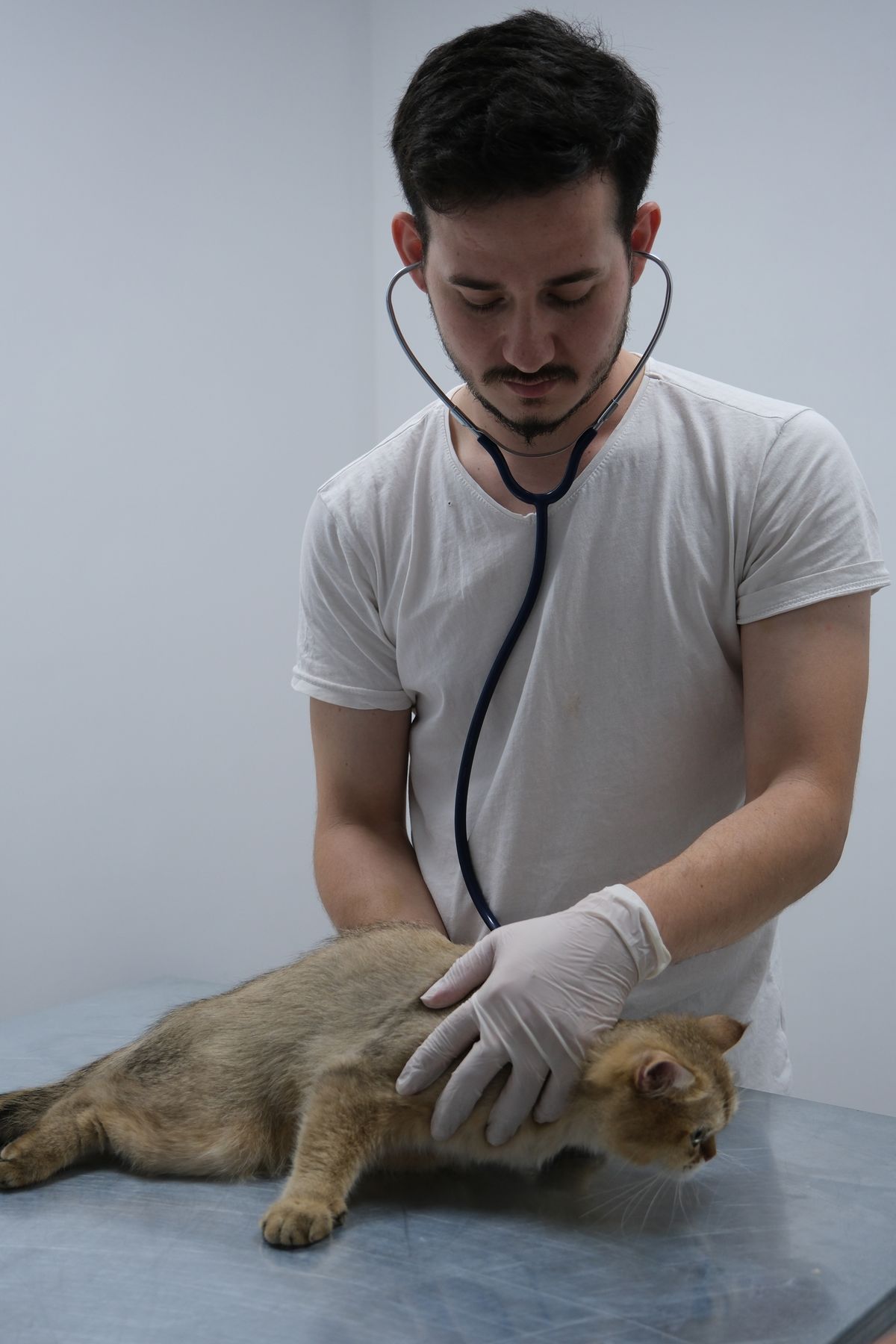
Pexels — Tima Miroshnichenko, pet owner and veterinarian consultation (free to use)