
Georgia Cat Pet Insurance Rules 2026: No SB 264 Pet Law, Claim Rights & Atlanta Buying Guide
Georgia regulates pet insurance through its general insurance framework and the Office of the Commissioner of Insurance and Safety Fire (OCI), but the state did not enact a “Georgia Pet Insurance Consumer Protection Act” through SB 264 in 2025. The real 2025 SB 264 concerns creation of a Georgia Resilience Office under emergency-management law. For cat owners, the durable legal framework is therefore Georgia insurance law: approved insurance products and licensed sellers, the actual policy contract, unfair-claims rules in O.C.G.A. §33-6-34, OCI's consumer-complaint process, and—only in appropriate cases—the separate bad-faith remedy in §33-4-6. This guide explains those rules without inventing pet-specific free-look, appeal or response deadlines.
Georgia pet insurance: the 2026 correction
SB 264 is not a pet-insurance law. Georgia's 2025 SB 264 is an emergency-management bill concerning a Georgia Resilience Office.
Pet insurance is still regulated insurance. OCI Directive 23-EX-4, effective August 1, 2023, expressly recognizes pet insurance sales in Georgia and says insurers may submit pet-insurance products for approval.
No verified Georgia-specific 30-day pet free-look rule: some insurers voluntarily offer a 30-day cancellation/free-look period, but the old article incorrectly attributed a universal pet-specific rule to SB 264.
No verified SB 264 mandatory internal appeal: use the appeal process in your policy/denial letter, but do not claim Georgia created a special pet-insurance appeal statute through SB 264.
No verified 21-day OCI response rule: OCI's current complaint page says it sends the complaint to the insurer/agency and requests a detailed written response; it does not publish the old article's SB-264-specific 21-day requirement.
Claims conduct is regulated: Georgia's general unfair-claims statute can address misrepresentation, inadequate investigation, delayed decisions and inadequate denial explanations.
First correction: what Georgia SB 264 actually is
The Georgia Senate's official 2025 records identify SB 264 as a bill to amend Title 38 emergency-management law and create the Georgia Resilience Office under the Georgia Emergency Management and Homeland Security Agency. It was referred to the Public Safety Committee.
It is not titled the “Pet Insurance Consumer Protection Act,” does not create pet-insurance disclosure rules and does not establish a January 1, 2026 pet-insurance effective date.
How Georgia actually regulates pet insurance
Georgia OCI issued Directive 23-EX-4 on August 1, 2023 specifically addressing pet-insurance sales. It says pet insurance may be sold by agents holding Life, Accident and Sickness, Property and Casualty, or Personal Lines authority, and companies wishing to offer pet insurance can submit their products for approval.
That means Georgia pet insurance is not “unregulated.” It operates within Title 33 and OCI's insurance licensing/product-approval and consumer-protection framework even though Georgia has not enacted the specific 2026 pet-insurance statute described in the old article.
Georgia unfair-claims rules that can matter after a denial
O.C.G.A. §33-6-34 lists conduct that can constitute an unfair claims settlement practice when the enforcement conditions in §33-6-33 are met. These are general insurance rules; they are not limited to a fictional pet-insurance act.
| Georgia rule | What §33-6-34 addresses | Why it may matter in a cat claim |
|---|---|---|
| Misrepresentation | Knowingly misrepresenting relevant facts or policy provisions | If an insurer's denial explanation describes the policy differently from the actual Georgia policy wording |
| Prompt communication | Failing to acknowledge pertinent claim communications with reasonable promptness | If claim or appeal communications are repeatedly ignored |
| Investigation standards | Failing to adopt prompt investigation/settlement procedures or refusing payment without reasonable investigation | If a pre-existing denial is issued without obtaining obviously relevant veterinary records |
| Coverage decision | When the insured asks in writing, failing to affirm or deny coverage within a reasonable time after the investigation is complete | Useful when a completed claim remains unresolved after a written status request |
| Denial explanation | When requested in writing, failing to provide promptly a reasonable and accurate explanation for denial/compromise; claim denials must be written | Useful when the EOB says only “pre-existing” or “excluded” without explaining how the facts relate to the policy |
| Claim forms | Failing to provide forms necessary to file claims within 15 calendar days of a request, with reasonable explanation | Relevant if an insurer's own filing process prevents timely submission |
Georgia bad-faith law is separate—and much more technical
Georgia also has O.C.G.A. §33-4-6. In general terms, where a loss is actually covered, the policyholder makes a valid demand for payment, the insurer refuses to pay within 60 days and a court finds bad faith, the statute can allow additional damages and attorney's fees.
That is not the same as saying “wait 60 days and your denied cat claim becomes bad faith.” Coverage, the timing/form of demand, the insurer's grounds for contesting the claim and litigation procedure all matter.
Common reasons Georgia cat-insurance claims are denied
Pre-existing condition
The insurer believes prior symptoms, diagnosis, treatment or veterinary advice meet the policy's definition. “No prior diagnosis” does not always resolve the issue.
Waiting period
The illness or injury began before the applicable waiting period ended. Georgia does not currently have the special pet-specific waiting-period caps falsely attributed to SB 264.
Excluded service
Wellness care, exam fees, prescription food, elective care, dental services or another item may be excluded or require an add-on.
Deductible / coinsurance / annual limit
A service can be eligible yet produce little or no reimbursement because the deductible, reimbursement percentage or annual cap controls the payment.
Missing medical records
Insurers commonly review prior records before deciding whether a condition is new or pre-existing.
Claim deadline
Submission deadlines vary by policy. Do not use a generic internet deadline; calendar the one in the Georgia contract.
How to challenge a pre-existing-condition denial
A strong appeal asks a narrow question: which exact prior record, date, symptom and policy definition connect the old medical history to the current diagnosis?
- Save the EOB/denial. Record the claim number, service date, amount submitted, amount paid and stated denial reason.
- Read the exact Georgia policy clause. Search for “pre-existing,” “waiting period,” “bilateral,” “related condition,” “dental,” “claim,” or the exclusion cited by the insurer.
- Ask for the factual basis in writing. Request the medical-record entries and dates the insurer relied on.
- Collect the complete veterinary record. Include prior primary-care records, specialist reports, labs/imaging, itemized invoices and proof of payment.
- Ask the veterinarian for a factual medical statement when useful. The vet can explain whether an earlier finding resolved or is medically related to the current diagnosis; the vet should not be asked to interpret insurance law.
- Use the insurer's formal appeal/review channel. Follow the deadline and submission method in the denial letter or policy—not a fictional SB 264 procedure.
- Escalate to Georgia OCI if unresolved. OCI asks consumers to first contact the insurer and then file a consumer complaint if the dispute remains unresolved or the response is unsatisfactory.
For a broader U.S. explanation of waiting periods and pre-existing-condition disputes, see Patify's pet-insurance waiting-period and denial guide.
Georgia OCI complaint process: what the regulator actually says
Georgia OCI's Consumer Services Division is the investigative arm that handles consumer complaints involving insurers, agents and claim handling. OCI tells consumers to contact the insurer first, state the problem, follow the company's dispute procedure and keep detailed records.
If that does not resolve the dispute, the consumer can use OCI's online complaint portal. OCI may review the policy and claim file, send the complaint to the insurer/agency for a detailed written response, determine whether the issue was handled appropriately, and request corrective action when the company has violated law or failed to follow the policy.
- Your contact information
- Exact insurer/underwriter name—not only the marketing brand
- Policy number
- Claim number and date of veterinary service
- Concise description of the dispute
- Policy/declarations page
- Written denial / Explanation of Benefits
- Itemized veterinary invoice and proof of payment
- Relevant medical records
- Your appeal and the insurer's response
- Copies—not originals—of supporting documents
Current OCI Consumer Services contact information: 404-656-2070; toll-free 800-656-2298.
Current Georgia insurer snapshot: compare contracts, not “SB 264 compliance badges”
Every company in the old table was labelled “SB 264 compliant.” Because that pet-insurance law does not exist, those badges have been removed. A more useful comparison is the current published policy structure.
| Example insurer | Current published feature | What a Georgia cat owner should verify |
|---|---|---|
| Spot | Georgia-specific sales page; plans typically use a 14-day waiting period. Spot says a curable pre-existing condition can potentially become eligible after 180 symptom/treatment-free days, subject to policy terms. | Read the Georgia sample policy for waiting period, annual limit, deductible, exam-fee option and exact curable-condition language. |
| Embrace | Current published illness waiting period is 14 days; Embrace distinguishes curable from incurable pre-existing conditions. | Confirm the Georgia schedule page and current pre-existing-condition review/medical-history rules. |
| Trupanion | Current general waiting periods are 5 days for injuries and 30 days for illnesses; Trupanion notes effective dates can vary by location. | Use the Georgia policy/quote rather than assuming every national waiting-period page applies identically. |
| Lemonade | Lemonade currently markets pet insurance in Atlanta; its 2026 pages describe 0-day accident, 14-day illness and 30-day orthopedic waiting periods, subject to the issued policy. | Check the actual Georgia quote/policy, add-ons, annual limit and which symptoms the insurer treats as pre-existing. |
These are September 2026 provider snapshots, not Georgia statutory minimums. Product forms and pricing can change.
What Georgia law does NOT currently guarantee just because you buy pet insurance
No SB 264 30-day free look
An insurer may voluntarily offer a cancellation/free-look period. For example, Embrace currently publishes a 30-day initial-policy cancellation window in many cases. That provider benefit should not be called a Georgia SB 264 right.
No SB 264 waiting-period cap
The current Georgia framework reviewed does not create Florida-style pet-specific maximum waiting periods.
No mandatory “human AI appeal” from SB 264
No such Georgia pet-insurance provision was found because SB 264 is not a pet-insurance act. Challenge an automated denial through the insurer's real review process and general Georgia claims rules.
No automatic coverage for predisposed breeds
A breed predisposition is not automatically a pre-existing condition, but actual prior signs/symptoms and the contract definition can determine coverage.
No universal internal appeal deadline
Use the deadline in the insurer's policy, EOB or appeal instructions.
No guaranteed premium freeze
Premiums and plan terms can change at renewal subject to the applicable contract and Georgia insurance rules.
Cat-specific policy questions worth asking before enrollment
- How does this policy define a pre-existing condition: diagnosis only, or prior signs/symptoms too?
- What waiting period applies to illness and accident for this Georgia policy?
- Are hereditary/congenital conditions covered if not pre-existing?
- How are bilateral conditions handled?
- Is feline tooth resorption/dental illness covered? Are routine dental cleanings excluded?
- Are exam fees covered by the base plan or an add-on?
- Are prescription medications and prescription food covered?
- What is the annual limit and reimbursement percentage?
- Is the deductible annual or per condition?
- What medical records are required before the first claim?
- What is the claim submission deadline?
- What is the formal appeal/reconsideration process after a denial?
Frequently asked questions
Did Georgia pass a Pet Insurance Consumer Protection Act through SB 264?
No. The 2025 Georgia SB 264 identified in official Senate records concerns the Georgia Resilience Office and emergency management. The previous version of this article attached pet-insurance provisions to the wrong bill.
Is pet insurance unregulated in Georgia?
No. Georgia OCI regulates insurance companies and products, and Directive 23-EX-4 specifically addresses pet-insurance sales and product approval in Georgia. What Georgia lacks is the specific SB-264 pet statute described in the old article.
Does Georgia require every pet insurer to give a 30-day free-look period?
No universal pet-specific Georgia requirement was identified in the sources reviewed. Some insurers offer their own free-look/cancellation benefit, so read the issued policy.
Must a Georgia insurer explain why my cat claim was denied?
Georgia §33-6-34 says claim denials must be written and, when the insured requests it in writing, failing to provide promptly a reasonable and accurate explanation of the basis for denial can be an unfair claims settlement practice under the statute's enforcement framework.
Does §33-6-34 let me automatically sue the insurer?
No. §33-6-37 expressly says the unfair-claims article does not itself create or imply a private cause of action. Contract remedies and Georgia's separate bad-faith statute can involve different requirements.
What does Georgia OCI do with an insurance complaint?
OCI can review complaints involving policy/claim handling, request a detailed response from the insurer or agency, determine whether the issue was handled according to the policy and Georgia law, and request corrective action when appropriate.
My cat already has hyperthyroidism. Will a new policy cover it?
Do not expect a new accident-and-illness policy to reimburse an already documented chronic condition if it meets the policy's pre-existing definition. A new plan may still provide value for unrelated future eligible conditions; ask the insurer for the exact Georgia policy wording before buying.
How should I compare Atlanta pet insurance companies?
Use the same deductible, reimbursement percentage and annual limit, then compare pre-existing definitions, waiting periods, dental illness, exam fees, prescription coverage and appeal language. Do not rank companies by fictional “SB 264 compliance.”
Bottom line
Georgia cat owners do have insurance protections, but they come from the real insurance framework—not a nonexistent SB 264 pet-insurance act. The durable process is: read the Georgia policy, document the medical timeline, demand a clear written basis when a claim is denied, use the insurer's real appeal process, and escalate unresolved claim-handling problems to Georgia OCI.
For serious disputes, separate regulatory complaint rights from litigation remedies. Georgia's unfair-claims provisions, OCI oversight and §33-4-6 bad-faith statute serve different functions and should not be collapsed into one “appeal law.”
Georgia OCI — Directive 23-EX-4: Pet Insurance Sales in Georgia
Georgia OCI — File a Consumer Insurance Complaint
O.C.G.A. §33-6-34 — Unfair Claims Settlement Practices
O.C.G.A. §33-6-37 — No Private Cause of Action Created by Article
O.C.G.A. §33-4-6 — Bad-Faith Refusal to Pay Covered Loss
Spot — Current Georgia Pet Insurance Page
Spot — Current Waiting Period / Curable Pre-Existing Explanation
Embrace — Current Waiting Periods
Embrace — Current Pre-Existing Condition Rules
Trupanion — Current Waiting Periods
Lemonade — Current Atlanta Pet Insurance Availability
Lemonade — Current 2026 Waiting Period Guide
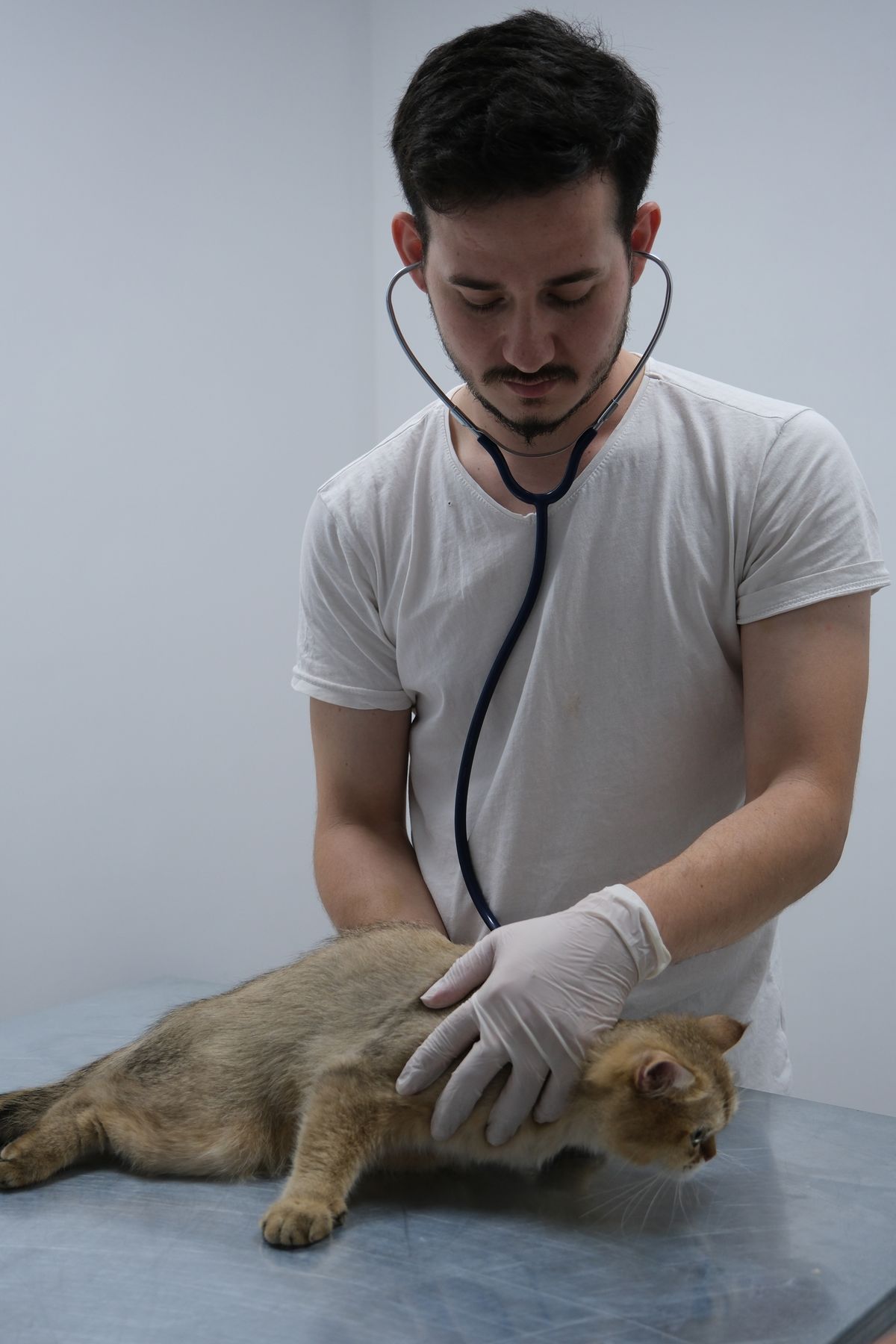
Pexels — Sueda Güzeldere, Veterinarian Examining Cat in Clinic (free to use)