
Last verified: October 3, 2026
How to Lower pH in a Fish Tank: Lower KH First—or Decide You Do Not Need To
Quick answer: do not lower aquarium pH just because a species profile lists a lower “ideal” number. Stable captive fish often tolerate a broader range than wild-water values. If you truly need softer, more acidic water, measure KH first. High KH buffers acids and makes leaves, peat and “pH down” products temporary or unpredictable. The most controllable long-term method is usually to blend RO/DI water with your source water gradually, then use natural acids or buffering substrate only when they fit the species and system.
Patify decision rule: verify the pH → identify the animal’s real requirement → measure KH/GH → test source water → lower mineral/buffer load gradually if needed → only then fine-tune pH.
1. First Ask: Does the Aquarium Actually Need a Lower pH?
Aquarium Co-Op notes that most freshwater community fish can adapt to a broad range and that stability is usually more important than chasing a textbook number. Their general guidance says many freshwater fish do well around pH 6.5–8.0, while certain animals—such as crystal-type Caridina shrimp or some breeding projects—may justify deliberately softer, more acidic water.
Reasons to consider lowering pH include:
- the species has a genuinely narrow soft-water requirement;
- you are breeding a species whose eggs/fry require lower mineral content;
- your source water is far outside the range in which the stock was raised;
- you are building a deliberate blackwater/soft-water system.
Reasons not to lower pH include “the care sheet says 6.8 and my stable tank is 7.4” while healthy captive-bred fish are eating, growing and behaving normally.
2. KH Is the Steering Wheel Behind pH Stability
KH (carbonate hardness/alkalinity in hobby usage) measures carbonate and bicarbonate buffering. Aquarium Co-Op explains that higher KH neutralizes acids and resists pH change; lower KH allows pH to move more easily.
| KH situation | What happens when you add acid/tannins? | What to do |
|---|---|---|
| High KH | pH barely changes or rebounds after a water change | Reduce buffer/mineral load gradually, often with RO/DI blending |
| Moderate KH | Natural acids may lower pH modestly | Change slowly and keep testing |
| Very low KH | pH can move quickly and become unstable | Avoid aggressive acidification; monitor closely |
Aquarium Co-Op gives 4–8 dKH as a common freshwater range but notes that soft-water systems intended for lower pH may run around 0–3 dKH. That low-buffer zone requires more discipline because sudden pH swings become easier.
3. Measure Four Things Before Changing Anything
- Aquarium pH at a consistent time of day.
- KH to estimate buffering capacity.
- GH to understand calcium/magnesium hardness.
- Source-water pH/KH/GH so every water change does not undo your work.
Do not read one pH test and react immediately. Aquarium pH can shift during the day, especially in planted tanks as CO₂ changes. Track a pattern over several days.
Record it: date, tank pH, KH, GH, source-water values, water-change percentage and what material you added. Without a log, “pH keeps bouncing” becomes guesswork.
4. RO/DI Water Is the Most Predictable Way to Reduce High KH
Reverse-osmosis/deionized water contains very little mineral/buffer content. Aquarium Co-Op recommends gradually mixing RO/DI with harder source water when the goal is lower pH, KH and GH.
The key word is gradually. Do not replace a mineralized aquarium with pure RO water in one large change. Instead:
- measure the existing tank and tap-water GH/KH;
- prepare replacement water in a separate container;
- blend source water and RO/DI to a modestly softer target;
- match temperature;
- perform routine partial water changes;
- retest after the system stabilizes;
- adjust the blend in later water changes only if needed.
Species that need minerals—especially shrimp and snails—may require deliberate remineralization. Patify’s shrimp tank setup guide explains why pH, GH and KH cannot be treated as the same parameter.
5. Leaf Litter, Peat and Driftwood: Gentle, but Only When KH Allows It
TFH Magazine emphasizes that dried leaves and peat work best in already-soft water. In hard, strongly buffered tap water, the buffering capacity neutralizes much of the acidifying effect.
Leaf litter
Indian almond, oak and other aquarium-safe dried leaves release humic substances/tannins as they decompose. The pH effect is usually gradual and variable. They also tint water amber/brown and change the visual style of the aquarium.
Peat
Aquarium-safe peat can be placed in filtration or used to precondition water. Its effect varies with product, quantity and starting KH, which is why a universal “cups per gallon” dose is unsafe.
Driftwood
Wood can release tannins and weak organic acids, particularly when new, but it should be chosen as habitat/aquascape material—not treated as a calibrated pH medication.
Natural does not mean unlimited. Add tannin-producing materials conservatively, monitor oxygenation and water chemistry, and remove material if livestock shows distress.
6. Active Buffering Substrate Works Best When the Whole Tank Is Designed Around It
Active aquasoils are commonly used in planted and Caridina shrimp aquariums because they bind carbonate and hold water at a lower pH for a period of time. They make the most sense in systems intentionally built around soft source water.
They are a poor emergency fix for a mature hard-water aquarium. Constantly adding high-KH tap water exhausts the substrate’s buffering capacity and causes chemistry to drift.
If the substrate is doing the pH control, treat water changes as part of the same system: source water, remineralizer, substrate and livestock all have to agree.
7. Why Liquid “pH Down” Can Create a Rebound Cycle
Strong acid products can temporarily lower the pH reading without solving the high KH that caused the high pH. The remaining carbonate buffer then pulls pH back upward, encouraging the keeper to add more acid.
That repeated up-down pattern is often worse for fish than the original stable pH. Never use a universal dose copied from another aquarium; tank KH, product strength, substrate and source water all change the outcome.
For ordinary community aquariums, address the water source and buffering rather than turning the display into a chemical titration experiment.
8. Your Water-Change Water Must Match the Long-Term Plan
If the aquarium is pH 6.6 because you used RO/DI and tannins but every weekly water change uses high-KH pH-8 tap water, the system will repeatedly swing upward.
A stable strategy uses replacement water with similar temperature and a controlled mineral profile. Mix and test it before it enters the tank.
| Goal | Source-water plan | Display-tank tool |
|---|---|---|
| Normal community tank | Use stable tap water if already suitable | Do not chase pH |
| Moderately softer tank | Tap + RO/DI blend | Wood/leaves optional |
| Blackwater-style tank | Soft low-KH source | Leaf litter/peat/wood |
| Bee/Caridina shrimp system | RO/DI + appropriate remineralizer | Active substrate often used |
9. Preventing a pH Crash
As KH becomes very low, the aquarium has less capacity to neutralize acids produced by respiration, decomposition and nitrification. That is why “lower KH” should never become “remove all buffering as fast as possible.”
Warning signs after a chemistry change include rapid breathing, frantic swimming, loss of balance, sudden lethargy or multiple animals behaving abnormally. If a sudden water-chemistry problem is suspected, stop adding acidifying products, test immediately and use properly conditioned replacement water appropriate to the livestock.
If the destination tank is newly established, make sure you are not confusing pH trouble with ammonia/nitrite trouble. Patify’s fishless cycling guide covers that distinction.
Frequently Asked Questions About Lowering Aquarium pH
What is the safest way to lower aquarium pH?
If high KH is holding pH up, gradual RO/DI blending during water changes is usually more controllable than repeatedly dosing acid.
Will driftwood lower pH?
It may lower pH modestly by releasing tannins/organic acids, but the effect is inconsistent and often small in high-KH water.
Do Indian almond leaves lower pH?
They can acidify soft water gradually, but high carbonate buffering can largely neutralize the effect.
Why does my pH go back up after I add pH down?
High KH can buffer the added acid and push pH back toward its previous level.
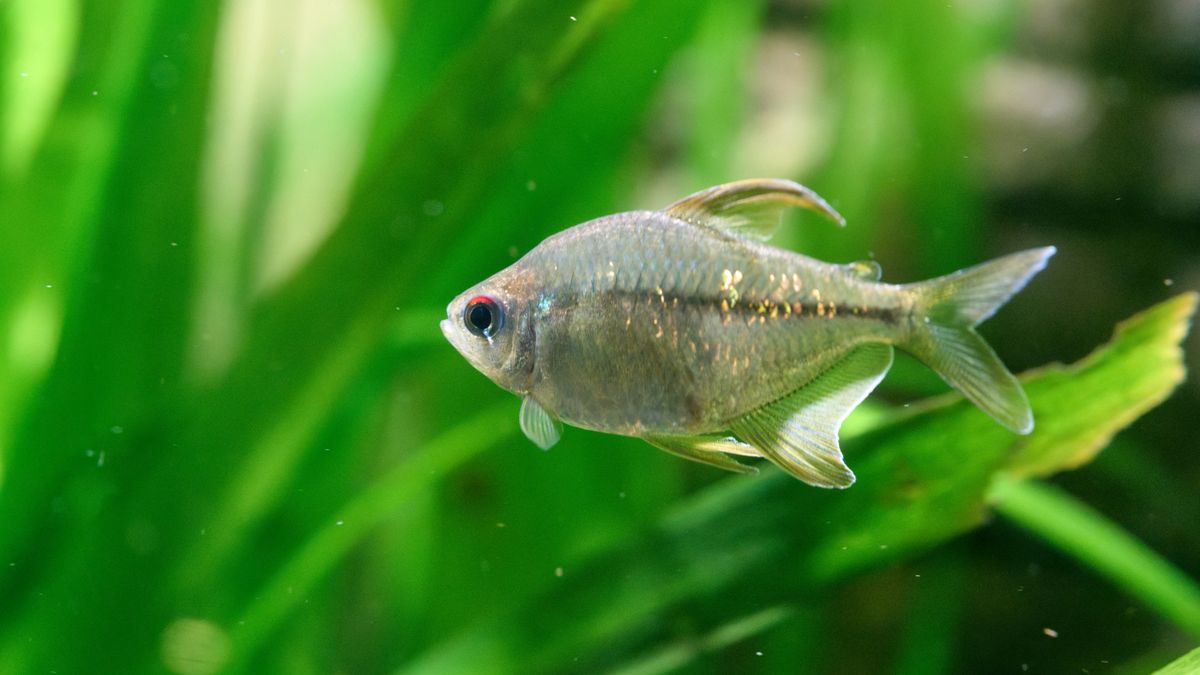
Should I lower pH from 7.6 for neon tetras?
Not automatically. Captive fish often tolerate broader conditions; stability and the water they were raised in matter. Change chemistry only when there is a clear husbandry reason.
Can I use pure RO water in a fish tank?
Not as a universal replacement. Many animals need dissolved minerals. RO/DI is usually blended or remineralized for the species being kept.
Does low KH make pH unstable?
Yes. Lower KH means less buffering capacity, which makes pH easier to change and easier to crash if acids accumulate.
Sources Checked
- Aquarium Co-Op — pH, GH and KH
- Aquarium Co-Op — pH in Your Aquarium
- TFH Magazine — Natural pH Reduction With Leaf Litter and Peat
Sources reviewed October 3, 2026.