
Last verified: October 3, 2026
Tetra Types: Choose by Adult Size, Temperature and Schooling Style
Quick answer: “tetra” is a hobby common name covering many characiform fishes—not one care profile. Ember tetras are tiny 0.8-inch nano fish, cardinal tetras prefer warmer water, black skirts are deeper-bodied and more robust, rummy-nose tetras need larger groups and swimming length, and Congo tetras are 3-inch African fish that need substantially more room.
Patify tetra rule: identify the exact species → check adult size → minimum group → temperature → water chemistry → activity level → tank footprint. Do not buy “six assorted tetras” and assume they form one school.
1. Eight Popular Tetra Types Compared
| Type | Scientific name | Adult size | Temperature | Practical tank/group note |
|---|---|---|---|---|
| Neon tetra | Paracheirodon innesi | ~1.2 in | 70–77°F | School; 24×12-in footprint is a better baseline than tiny cubes |
| Cardinal tetra | Paracheirodon axelrodi | ~1.4–2 in | 73–84°F | Warm-water school; good fit with warm South American communities |
| Ember tetra | Hyphessobrycon amandae | ~0.8 in | 68–82°F | Nano school; ~18×12-in base suggested |
| Black neon tetra | Hyphessobrycon herbertaxelrodi | ~1.5 in | ~72–80°F | Hardy beginner school; at least 6 |
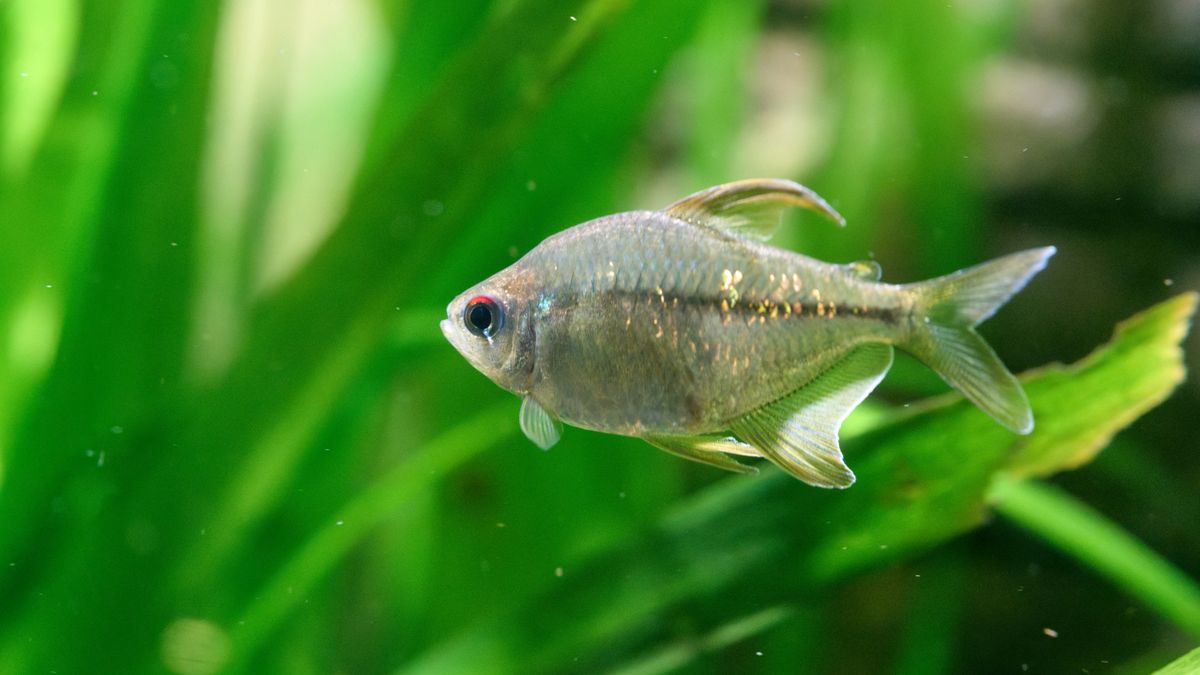
| Pristella / x-ray tetra | Pristella maxillaris | ~2 in | Broad tropical range | Deeper-bodied and adaptable; good general community candidate |
| Rummy-nose / firehead | Often Petitella bleheri / formerly Hemigrammus bleheri in hobby sources | ~2 in | 73–79°F | Keep ~10+; strong swimmer and tight shoaler |
| Black skirt tetra | Gymnocorymbus ternetzi | ~2.4 in | 68–79°F | Deeper body; 20-long class footprint; larger school reduces fin-nipping |
| Congo tetra | Phenacogrammus interruptus | ~3.1 in | 73–82°F | African species; ~48-in tank length / ~30 gal+ class |
The chart is intentionally broad. A tetra’s adult size alone does not determine aquarium size: rummy-nose and Congo tetras are active swimmers, while tiny embers need a proper social group and stable small-fish feeding.
2. Neon Tetra: Cooler Than Its Cardinal Cousin
Paracheirodon innesi is the classic blue-and-red tetra. Seriously Fish lists roughly 70–77°F, pH 4.0–7.5 and an adult standard length near 1.2 inches.
Neons and cardinals are constantly confused. A neon’s red stripe covers mainly the rear half of the body; a cardinal’s red continues much farther forward. Temperature is another practical difference: cardinals are better suited to warmer tanks.
Commercial neon lines can have quality/disease problems, so quarantine and careful stock selection matter.
3. Cardinal Tetra: More Red, Slightly Larger, Warmer Water
Paracheirodon axelrodi reaches around 1.4–2 inches depending on measurement/source. Seriously Fish lists about 73–84°F, while Aquarium Co-Op highlights its use in warm setups with discus, German blue rams and Sterbai-type corys.
Cardinals come from blackwater and clearwater habitats and can tolerate a broader pH range than the extreme wild blackwater number might suggest. Stable clean water still matters.
4. Ember Tetra: The True Nano Option
Hyphessobrycon amandae reaches only about 0.8 inch. Seriously Fish suggests an 18×12-inch base (~11 gallons) and 68–82°F.
Its tiny mouth requires correspondingly small foods. A group looks and behaves better in plant-rich tanks with darker areas and calm community fish.
Patify’s nano fish guide compares embers with other small-school alternatives.
5. Black Neon Tetra: One of the More Forgiving Beginner Tetras
Hyphessobrycon herbertaxelrodi reaches around 1–1.5 inches. Aquarium Co-Op favors it as a robust beginner fish and reports success across pH about 5–8 and roughly 72–80°F in captive care.
Despite the common name, it is not simply a black color morph of the neon tetra—it belongs to a different genus and has its own white/black lateral stripe pattern and red eye marking.
6. Pristella / X-Ray Tetra: Deeper Body and Broad Adaptability
Pristella maxillaris reaches around 2 inches and is called the x-ray tetra because its body is partly translucent. Aquarium Co-Op describes it as adaptable across a broad range of pH, GH and general aquarium conditions.
That deeper body makes it visually and behaviorally different from thread-thin neon/ember forms. It is a useful community fish when the tank is sized for a full school.
7. Rummy-Nose Tetra: One Common Name, Several Look-Alikes
“Rummy-nose tetra” is one of the hobby’s messier labels. Similar fish have historically been sold as Hemigrammus bleheri, H. rhodostomus and Petitella georgiae; modern taxonomic treatments have moved the familiar firehead form into Petitella.
Seriously Fish lists the common firehead/bleheri form around 2 inches, 73–79°F and recommends a group of at least 10, preferably more. These are active, tight-shoaling fish and deserve real horizontal swimming length.
8. Black Skirt Tetra: Robust, but Group Size Affects Fin Behavior
Gymnocorymbus ternetzi reaches around 2.4 inches. Seriously Fish recommends approximately a 30×12-inch base and notes that fin-nipping reputation is reduced when they are kept in a larger shoal, around 12 fish in its guidance.
This is not a 6-fish-afterthought for a tiny aquarium. Give the school enough room to interact with each other rather than redirecting social behavior toward slow long-finned tank mates.
9. Congo Tetra: A Large African Tetra, Not a Nano Characin
Phenacogrammus interruptus is an African characiform reaching around 3.1 inches. Seriously Fish suggests about a 48×12-inch tank base and 73–82°F; Aquarium Co-Op recommends 30 gallons or larger.
Males develop flowing fins and strong iridescence. Keep them with peaceful fish that will not nip those fins and provide substantial open swimming area.
10. “Tetras School” Does Not Mean Different Species Form One Proper School
Most common tetras are social and should be kept with a meaningful group of their own species. Six is a common minimum starting point, but many species look and behave far better in 10–20+ where aquarium space allows.
Mixing two neons, two embers and two pristellas does not create a six-fish tetra school. Each species is under-grouped.
Before stocking a small aquarium, compare the whole social group—not one individual—with Patify’s 10-gallon stocking guide.
Frequently Asked Questions About Tetra Types
How many types of tetra fish are there?
There are many dozens of aquarium-trade species across several characiform lineages. “Tetra” is a common name, not one genus.
What is the smallest common tetra?
Ember tetras are among the smallest widely sold species at roughly 0.8 inch.
What is the difference between neon and cardinal tetras?
Cardinals have red extending much farther along the body, tend to grow slightly larger and generally prefer warmer water.
Are Congo tetras really tetras?
Yes in the aquarium common-name sense, but they are African characiforms and are much larger than typical South American nano tetras.
How many tetras should I keep?
At least six of the same species is a common minimum, but many species benefit from 10 or more when tank size allows.
Which tetra is good for beginners?
Black neon and pristella tetras are often recommended because captive stock is relatively adaptable and robust.
Do all tetras need soft acidic water?
No. Many South American species favor softer water, but captive tolerance varies and some species are quite adaptable. Match the exact species and breeder/source conditions.
Sources Checked
- Aquarium Co-Op — Popular Tetra Types
- Aquarium Co-Op — Cardinal Tetra
- Aquarium Co-Op — Black Neon Tetra
- Seriously Fish — Neon Tetra
- Seriously Fish — Paracheirodon
- Seriously Fish — Ember Tetra
- Seriously Fish — Black Skirt Tetra
- Seriously Fish — Congo Tetra
Sources reviewed October 3, 2026.