

Last verified: October 1, 2026
How to Trim Black Dog Nails: Read the Cut Surface, Not the Outside
Quick answer: because the quick is hidden inside black nails, do not try to guess its location from the outside. Use sharp dog nail clippers or a dog-safe grinder and remove tiny amounts at a time. After each cut, inspect the cross-section. AKC guidance says dark nails develop a lighter/chalky ring and then a small dark center as you approach the quick; PetMD and VCA recommend especially small increments for black nails.
The goal is not to make every nail “as short as possible” in one sitting. The goal is a calm, repeatable trim that stops before the living quick.
Patify black-nail rule: tiny slice → inspect cross-section → reassess dog comfort → repeat only if clearly safe. Never take a large second cut because the first cut looked harmless.
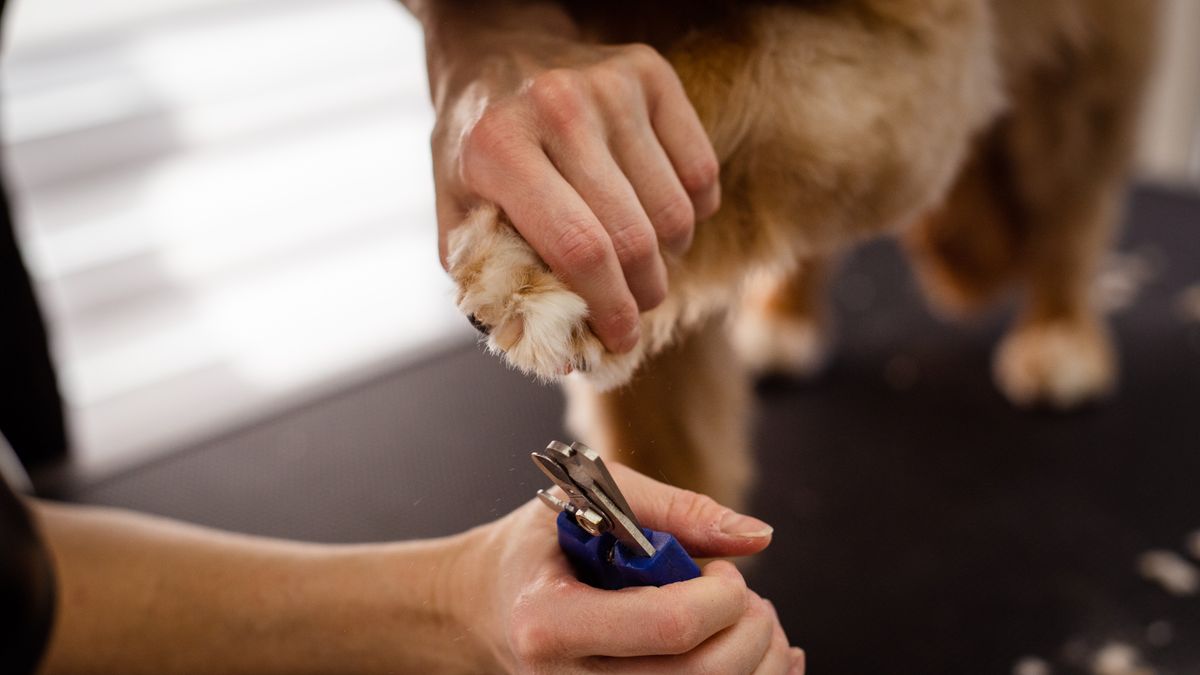
Dog Nail Anatomy: Why Black Nails Are Harder
A dog nail has a hard keratin shell surrounding the quick, living tissue containing blood vessels and nerves. On a pale nail, the pink quick is often visible through the shell. On a black nail, pigment hides it.
That makes the cut surface your best visual information. Black nails are not inherently unsafe to trim; they simply require smaller increments and better lighting.
Black Dog Nail Cross-Section Decoder
| What you see after a tiny cut | Interpretation | Action |
|---|---|---|
| Dry, pale/chalky center | You are still in dead nail material | If needed, take another very small slice |
| Distinct dark/black dot or center | You are getting very close to the quick | Stop that nail |
| Pink/moist tissue or sudden sensitivity | You are at or into living tissue | Stop immediately; manage bleeding if present |
AKC describes watching for a chalky white ring on dark nails and stopping as the central dark dot appears. Another AKC puppy-care guide describes the progression from gray/white center to black and then pink near the quick. Individual nails vary, so treat these as visual stop cues—not permission to chase a perfect textbook picture.
Clippers vs Grinder for Black Nails
| Tool | Advantages | Main risk |
|---|---|---|
| Scissor/plier-style dog clippers | Fast, clean cut; easy to inspect cross-section after each slice | A large cut can reach the quick suddenly |
| Guillotine clipper | Compact and familiar to some owners | Can make it harder to judge cutting angle/amount for some users |
| Dog nail grinder | Removes tiny amounts gradually; useful for black nails; smooths edges | Heat, vibration, hair entanglement and accidental skin contact |
PetMD specifically notes that a grinder can be useful for black nails because it allows gradual removal, but it is not automatically safer if the dog is frightened by the noise or moves suddenly.
Set Up Before You Trim
- bright, direct lighting;
- sharp dog-specific clippers or dog-safe grinder;
- styptic powder/clotting product within reach;
- small treats or another reward;
- non-slip surface;
- good control of long foot hair around a grinder;
- a calm dog—do not start during wrestling-level panic.
Keep the limb in a natural comfortable range. PetMD cautions against lifting the leg far outside normal motion just to get a better angle.
How to Clip Black Dog Nails Step by Step
- Hold one toe gently but securely. Extend the nail without twisting the toe.
- Remove only the pointed tip.
- Inspect the fresh cross-section.
- If it is clearly dry/pale, take another tiny slice only if needed. PetMD/VCA describe increments around 1 mm for black nails as a cautious approach.
- Stop when a dark central dot becomes distinct.
- Reward and move on. You do not need every nail finished in one session.
- Check dewclaws separately.
AKC also advises cutting the tip straight across rather than making a dramatic deep diagonal cut. Different nail shapes vary, so the cross-section is more useful than copying an exact clipper angle from a photo.
How to Grind Black Dog Nails
- Desensitize the dog to the grinder sound away from the paw.
- Secure long hair so it cannot wrap around the rotating tool.
- Support the toe gently.
- Touch the grinder briefly to the nail tip.
- Work in short pulses rather than holding the grinder continuously in one spot.
- Inspect the nail frequently.
- Stop before the central quick-zone cue becomes prominent or the dog becomes sensitive.
Short pulses also reduce heat buildup. If the nail feels warm or the dog repeatedly pulls away, stop and let everything cool.
Dewclaws Need Their Own Check
Dewclaws often do not contact the ground enough to wear down. They can therefore grow long, curve and eventually snag or press toward the skin.
Include every dewclaw in the paw check even if the ground-contact nails stay naturally short from walking.
What to Do if You Cut the Quick
A quicked nail can bleed dramatically because the quick contains vessels. Stay calm.
- Stop trimming.
- Apply styptic powder or another veterinary/pet nail clotting product with direct pressure.
- Keep the dog still enough that the clot can form.
- Prevent immediate running on rough ground.
- If bleeding does not stop with reasonable pressure/styptic use, contact your veterinarian.
Do not punish a dog for reacting after a painful quick injury. That can create long-term nail-trim fear.
Very Long Nails: Do Not Try to Fix Months of Growth in One Cut
When nails remain long, the quick may extend farther toward the tip. AKC notes that regular trimming can allow the quick to recede over time.
For overgrown nails, think in repeated conservative sessions rather than one aggressive trim. If nails curl into the pad, distort the toe, are broken, infected or extremely painful, use veterinary/professional help.
If Your Dog Hates Nail Trims, Train Handling Before Length
A useful cooperative-care ladder is:
- touch shoulder/leg → reward;
- brief paw touch → reward;
- hold paw for one second → reward;
- touch clipper/grinder to paw with tool off → reward;
- turn grinder on at a distance or make clipper sound → reward;
- touch one nail → reward;
- trim one tiny tip → jackpot reward and finish.
AKC explicitly recommends gradual exposure rather than forcing the entire nail trim. If the dog escalates to panic, growling or biting, a qualified groomer, trainer or veterinary team can build a safer handling plan.
Stop DIY Nail Trimming and Get Help When...
- a nail is split into the quick or partly torn off;
- there is swelling, pus, foul odor or major redness around the nail bed;
- the nail curls into/against the pad;
- bleeding will not stop;
- your dog cannot bear weight normally after a nail injury;
- handling triggers serious panic or aggression;
- you cannot confidently interpret the nail cross-section.
A damaged nail sits close to living toe structures and can be very painful. If nail injury causes a limp, Patify’s dog-limping triage guide explains when gait changes need prompt veterinary assessment.
12 Common Black-Nail Trimming Mistakes
- Trying to see the quick through the outside of an opaque nail.
- Taking one large cut.
- Ignoring the fresh cross-section.
- Using dull clippers that crush/split nail.
- Holding the leg in an awkward position.
- Grinding continuously until the nail gets hot.
- Letting long hair wrap into a grinder.
- Forgetting dewclaws.
- Continuing after the dog shows sudden sensitivity.
- Trying to shorten an overgrown quick in one session.
- Starting without styptic powder nearby.
- Forcing a terrified dog through every nail.
Patify Grooming & Paw-Safety Cluster
- If nail damage causes altered gait, use Dog Limping but Not Crying?.
- For a broader at-home grooming workflow that includes foot and nail handling, see Patify’s Goldendoodle grooming guide; the handling principles apply even though coat maintenance is breed-specific.
Frequently Asked Questions About Trimming Black Dog Nails
How do I know where the quick is on a black dog nail?
You usually cannot see it through the outside. Trim tiny amounts and inspect the fresh cross-section; a distinct dark central dot is a stop cue as you approach the quick.
How much should I cut at a time?
For black nails, PetMD/VCA describe very small increments around 1 mm as a cautious approach.
What does the quick look like on a cut black nail?
The cross-section changes as you approach living tissue; AKC describes a chalky/white ring and a central dark dot as useful visual cues.
Should I clip or grind black nails?
Either can work. A grinder provides gradual removal; sharp clippers give a clean cross-section. Choose the tool your dog tolerates and you can control safely.
Can a grinder hit the quick?
Yes. Grinding is gradual, not foolproof.
What if I make the nail bleed?
Stop, apply styptic/clotting product and pressure, and contact your veterinarian if bleeding does not stop.
How often should nails be trimmed?
AKC gives roughly every 3–4 weeks as a common starting range, but growth and surface wear vary by dog.
Will the quick get shorter?
Regular conservative nail maintenance can allow an overgrown quick to recede gradually.
Do dewclaws need trimming?
Often yes, because they may not wear against the ground.
Why does my dog suddenly hate nail trims?
Fear can follow a painful quick injury, restraint, noise or handling discomfort; new pain in the paw/limb should also be considered.
Can I cut a nail that is cracked?
A superficial tip chip may be simple, but a split extending toward living tissue can be very painful and may need veterinary treatment.
When should a professional do the trim?
Use professional help for severe fear/aggression, very overgrown/curling nails, painful damaged nails or whenever you cannot safely identify your stopping point.
Sources Checked for This Guide
- American Kennel Club — How to Trim Your Dog’s Nails at Home
- AKC — Puppy Preventative Care / Black Nail Cross-Section Guidance
- PetMD — How to Trim Dog Nails
- PetMD — How to Stop a Dog’s Nail From Bleeding
- VCA — Nail Trimming Guidance
- Pexels — nail-trimming cover image
- Pexels License
Editorial note: black nails are managed by incremental cutting and cross-section inspection rather than an invented external landmark; grinder/clipping options and bleeding response are presented conservatively, and painful/broken/infected nails are escalated to veterinary care. Sources were reviewed October 1, 2026.