Limited-Ingredient Dog Food: What the Label Really Tells You
A bag of dog food can promise “limited ingredients” in enormous type without explaining what, exactly, has been limited. The recipe might contain one named animal protein, several plant proteins, a long list of nutritional supplements, or ingredients your dog has eaten for years. None of those details automatically makes the food good or bad. They do, however, change what you can reasonably expect from it.
If you're considering limited-ingredient dog food because your dog is itchy, has recurring ear trouble, or seems to have a sensitive stomach, the crucial question isn't how short the ingredient list looks. It's whether you're shopping for an everyday complete diet, trying to avoid a known ingredient, or working with a veterinarian to find out if a food allergy exists. Those are three different jobs, and the same bag won't necessarily do them all.
This guide offers a practical way to inspect a U.S. dog-food label, compare retail formulas with veterinary diets, and prepare for a carefully controlled food trial. It does not recommend a particular brand, claim independent product testing, or diagnose allergies from symptoms.
What does “limited-ingredient dog food” actually mean?
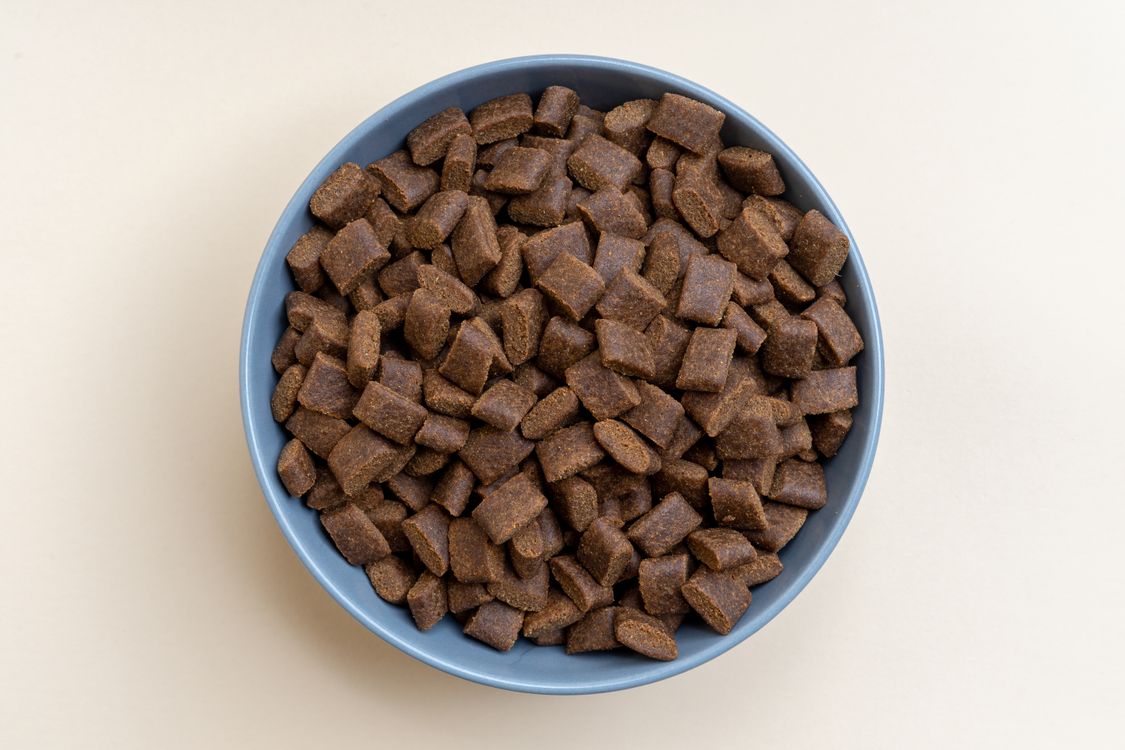
In everyday U.S. retail usage, a limited-ingredient diet (often shortened to LID) is a dog food presented as having a relatively narrow selection of ingredients or a simplified combination of protein and carbohydrate sources. You'll see descriptions such as “single animal protein,” “simple recipe,” or “limited ingredients.” Those phrases can help you recognize the marketer's intended positioning, but they do not all promise the same thing. There is no universal number of ingredients that turns an otherwise ordinary dog food into a medically appropriate allergy trial diet.
The distinction is important because the full formula must supply nutrients, not simply satisfy the front-of-bag slogan. A nutritionally complete diet may need vitamins, minerals, essential fatty acids, or other components even when the central protein and starch choices are deliberately narrow. A longer vitamin-and-mineral section is not automatically evidence that a simplified recipe is fraudulent, just as five headline ingredients do not prove suitability for your individual dog.
Start by reading “limited ingredient” as an invitation to examine the package, not as a diagnosis or a guarantee. The U.S. Food and Drug Administration requires proper animal-food labeling and prohibits misleading information; AAFCO provides widely used model standards and consumer guidance for ingredient statements and nutritional adequacy. Neither organization endorses the specific bag in your hand simply because it carries familiar language. For U.S. label fundamentals, see FDA animal-food labeling guidance and AAFCO's guide to reading labels.
Does “single protein” mean only one protein appears?
Not necessarily. A front label may refer to one featured animal-protein source, but ingredients elsewhere in the recipe can also contribute protein, including certain legumes, grains, or other plant materials. Meanwhile, flavors, fats, broths, treats, and supplements may matter when you're trying to avoid a particular food. Always interpret the full ingredient statement alongside the manufacturer's explanation of what its front-of-bag claim covers. If a dog has a confirmed allergy, ask the veterinary team how thoroughly each potential exposure must be controlled.
For example, a fictional “limited salmon recipe” could list salmon, peas, pea protein, potatoes, oil, and nutritional additives. That is a simplified illustration of how an ingredient list might be structured, not a reviewed product label or a recommendation. Its name tells you what protein is featured; it does not tell you whether the food was manufactured separately from chicken formulas or whether it is appropriate for a diagnostic trial.
Check the complete label, not just the front of the bag
A five-minute label check can prevent a basic mismatch between a food's marketing and your dog's actual needs. The order below deliberately starts with nutrition and life stage before addressing ingredient exclusions. There's little value in choosing a formula with a favorite protein if the package doesn't support feeding it as your dog's sole daily diet.
Step 1: Find the nutritional adequacy statement
Look on the side or back of the package for a statement explaining whether the food is complete and balanced and for which canine life stage. Under commonly used AAFCO labeling language, it may identify formulation to meet the AAFCO Dog Food Nutrient Profiles or substantiation through animal feeding tests. Those are distinct methods; an AAFCO statement isn't a stamp of brand approval. Foods labeled only for intermittent or supplemental feeding generally should not replace a complete everyday diet without specific veterinary direction.
A formula for adult maintenance may not fit a growing puppy, a pregnant or nursing dog, or certain medical situations. “All life stages” is another label category, but it doesn't eliminate the need to check the particular animal's needs. If your dog is still growing, ask specifically about its size and growth requirements rather than assuming any grain-free, limited-ingredient, or novel-protein food will do.
Step 2: Read every ingredient, in order
U.S. ingredient statements generally list ingredients in descending order by weight before processing. That ordering helps identify the major contributors but does not tell you the precise amount of each ingredient, and it cannot prove nutrient quality from a single item at the top. Read past the first protein name. Notice animal-derived ingredients, protein concentrates, flavorings, broths, starches, and ingredients you recognize from your dog's history. Don't automatically treat chemical-sounding names as harmful: many describe necessary nutrients or technically named additives.
If avoidance of a confirmed allergen is the goal, make a written list of names to clarify with your veterinarian and the manufacturer, rather than guessing based on words such as “natural flavor.” The manufacturer may be able to describe the source of a flavor or clarify whether it contains the ingredient of concern. A source that isn't obvious from the consumer label is precisely the kind of uncertainty you should resolve before committing to the product.
Step 3: Check calories, feeding directions, and package format
Find the calorie statement in kilocalories per kilogram and, where applicable, per familiar unit such as a cup or can. Compare how much you would actually feed, not how large the bag looks. Dry and wet foods contain very different moisture levels, so side-by-side percentages on their guaranteed analyses aren't straightforward comparisons of nutrient intake. For general shopping, the adequacy statement and calorie information are usually more actionable than an isolated “high protein” or “few ingredients” slogan.
Record the exact formula name, life-stage statement, calories, package weight, and manufacturer contact. Those details help you and your vet distinguish a tolerability problem from accidental underfeeding, overeating, a formula change, or a product that wasn't intended as a full diet in the first place.
| Label element | Useful question | What it cannot prove |
|---|---|---|
| “Limited ingredients” | Which ingredients or categories were actually limited? | That your dog cannot react to the food |
| “One animal protein” | Does the full recipe include other protein sources or flavors? | That there are no other proteins or cross-contact |
| “Grain-free” | Which starches and plant proteins replace grains? | That it is allergy-safe or inherently superior |
| “Complete and balanced” | For which species and life stage, and by what substantiation method? | That it is the right therapeutic diet for an individual condition |
| “Sensitive skin/stomach” | What claim, evidence, or intended use does the maker describe? | That a food allergy has been diagnosed |
| Hydrolyzed protein | How was the protein processed, and is this a veterinarian-directed diet? | That every dog will tolerate it regardless of its other needs |
Limited-ingredient versus prescription and veterinary therapeutic diets
“Limited ingredient” is commonly a retail description. A veterinary novel-protein or hydrolyzed diet is selected for a medical purpose, often with attention to manufacturing controls, exact ingredients, and your dog's clinical history. The words may overlap—some veterinary foods deliberately restrict ingredients—but the purpose and reliability requirements are different. A store diet might be perfectly reasonable everyday nutrition for an otherwise healthy dog without being dependable enough to investigate a suspected allergy.
In a novel-protein approach, the veterinary team chooses a protein the dog has not previously eaten, based on a carefully gathered diet history. In a hydrolyzed approach, proteins have been broken down to reduce the likelihood that the immune system recognizes them. Some veterinary teams may consider more extensively hydrolyzed or elemental approaches when a conventional novel-protein option is impractical. None is universally appropriate, and the exact nutritional profile still matters.
Medical foods are not necessarily superior for healthy pets, and retail diets are not necessarily inferior for everyday feeding. What changes is whether the product can perform the job you're assigning it. If the task is a controlled allergy investigation, the risk of an unknown protein becomes central. If the task is finding a convenient complete food after a known culprit has been identified, a suitable retail choice might be possible with continued monitoring.
| Food route | Common purpose | Key limitation | Practical next step |
|---|---|---|---|
| Retail limited-ingredient complete diet | Simplify everyday ingredient selection | May not control unlisted protein cross-contact | Review full label and manufacturer answers |
| Veterinary novel-protein therapeutic diet | Investigate suspected food reaction with a carefully selected new protein | “Novel” depends on this dog's food history | Choose and monitor with the veterinarian |
| Veterinary hydrolyzed or elemental diet | Controlled elimination trial when appropriate | Not identical in nutrients or suitability; adherence still essential | Confirm life stage, medical conditions, and plan |
| Homemade elimination diet | Selected diagnostic circumstances | Easy to make nutritionally deficient or inconsistent | Only with individualized veterinary nutrition formulation |
Tufts Cummings School of Veterinary Medicine and VCA both caution that over-the-counter limited-ingredient products can contain undeclared protein materials, making them unreliable as the sole basis of a diagnostic trial. Read the Tufts clinical nutrition explanation and VCA's elimination-challenge overview. Those recommendations are about the credibility of an allergy investigation; they do not establish that every retail bag contains a contaminant.
Does a limited-ingredient diet help with dog food allergies?
It can be useful in some circumstances, but the logic must be specific. Dogs typically react to particular food components, often proteins—not to ingredient count as a concept. Removing unrelated ingredients is not the same as identifying the substance responsible for a reaction. Nor does a simpler recipe prove that itchiness, recurrent ear infections, vomiting, or soft stool came from food in the first place.
Symptoms are clues, not a home diagnosis
Chronic itching, repeated ear or skin problems, and recurring gastrointestinal trouble can prompt a conversation about adverse food reactions. They can also reflect environmental allergies, parasites, infections, digestive disease, or other problems requiring very different care. Tufts notes that true food allergies are less common than food marketing often implies. A dog that scratches after a diet change has not therefore “proved” a chicken, corn, or grain allergy.
Keep a short symptom history that includes seasonality, flea prevention, medications, prior ear and skin treatments, bowel changes, all foods and treats, and whether symptoms occur on multiple diets. A veterinarian can use that record to decide what to investigate first. If your dog is acutely unwell—such as repeated vomiting, severe weakness, difficulty breathing, facial swelling, or signs of dehydration—seek prompt veterinary advice rather than using a new diet as a test.
Food allergy versus food intolerance
An immune-mediated food allergy is not the same as a dog having trouble tolerating a diet's fat level, digestibility, fiber content, amount fed, or a sudden change in food. These possibilities can produce overlapping complaints. Tufts' clinical nutrition team emphasizes that “sensitive stomach” has no single universal nutritional definition. A retail food that improves stool may be useful for that dog without establishing that the previous diet contained an allergen.
This matters because the right response to occasional digestive upset differs from a formal investigation of persistent allergy-like symptoms. If a dog simply needs a complete food that is easy to measure and consistently tolerated, you can use label comparisons and your veterinary team's guidance. If a dog needs an allergy diagnosis, insist on a structured process that can rule competing explanations in or out.
Plan a veterinarian-guided elimination-and-challenge food trial
A true elimination-and-challenge trial is more demanding than switching brands and watching what happens for a weekend. Your veterinarian first decides whether food allergy is a plausible explanation, selects the appropriate diet, and sets a duration based on symptoms and health history. The goal is to reduce dietary variables so that any improvement—and any return of symptoms during a supervised challenge—can be interpreted meaningfully.
Before the trial: create a complete exposure inventory
List every kibble, canned food, topper, dental chew, training treat, table scrap, supplement, pill pocket, flavored toothpaste, and flavored medication your dog consumes. Include ingredients from earlier diets if you know them, especially when the proposed plan relies on a previously untried protein. Don't stop prescribed medication on your own. Ask the veterinary team which medications or flavored products can continue and how any unavoidable exposures will be handled.
Next, document baseline symptoms before the food change. For skin complaints, note itch locations, licking episodes, recurrent ear problems, and any veterinary diagnoses. For gastrointestinal complaints, record appetite, stools, vomiting, and weight as directed. Consistency matters more than using a sophisticated scoring app; a short dated record can still reveal whether changes coincide with environmental exposure, treatment, or diet.
During elimination: consistency is the experiment
Follow the exact food and instructions your veterinarian selects. Veterinary sources commonly describe at least eight weeks for many canine food-allergy elimination trials, with timelines varying by type of problem and clinical plan. Tufts notes that specialists often use longer trials for skin symptoms than for digestive symptoms. Treat these as background explanations, not permission to shorten a plan. Your vet determines duration for your dog's situation, and symptoms that worsen deserve reassessment rather than simply waiting out a clock.
Food-trial slipups are frequently mundane: a roommate offering a biscuit, a dog stealing the other pet's kibble, peanut-butter medication treats, or a chew that seemed unrelated to mealtime. Every mouthful can affect the interpretation. Make a household agreement about who feeds the dog, use measured portions of the permitted diet as rewards when approved, and prevent access to other pets' dishes or dropped food. If an accidental exposure occurs, report it. Do not silently erase the event from the timeline or assume the entire trial must be restarted without guidance.
After improvement: ask about the challenge phase
Symptoms improving on a different food do not by themselves prove an allergy; other variables may have changed at the same time. Confirmation ordinarily involves a veterinarian-directed return to the previous food or controlled ingredient challenges while watching for recurrence. Your vet will tell you when and how to proceed. Do not independently challenge a dog that has had a severe reaction or that is medically unstable.
If signs recur with challenge and settle again on the trial diet, the evidence becomes more persuasive. Once an offending ingredient has been identified, future feeding decisions can be more targeted. The aim isn't to keep adding foods to a forbidden list forever; it's to identify what genuinely needs avoiding while maintaining balanced nutrition and an enjoyable daily routine.
| Record | What to include | Why it matters |
|---|---|---|
| Prior foods | Formula names, label photos, approximate dates, occasional meals | Helps evaluate whether a protein is truly novel |
| Everything eaten by mouth | Treats, toppers, dental products, supplements, flavored medicines | Identifies exposures that can disrupt interpretation |
| Symptoms | Dates, skin/ears, stool, vomiting, photos if advised | Separates trends from isolated observations |
| Other treatments | Flea control, medications, recent infection treatment | Reveals changes unrelated to the diet |
| Household setup | Other pets' food, family feeding habits, boarding plans | Shows where accidental food access may occur |
Cross-contact: why a short label is not an allergen-free promise
Cross-contact means material from one food may carry into another during sourcing, storage, transport, or production. A manufacturer can accurately intend to make a limited-ingredient formula while still using equipment that also processes different proteins. Whether a particular brand takes steps to segregate lines, validate cleaning, or test lots isn't something you can reliably infer from the front label alone.
Veterinary nutrition guidance describes studies in which some over-the-counter foods marketed for sensitivity or restricted ingredients contained detectable proteins not listed as ingredients. The studies do not mean every brand, lot, or recipe is contaminated; neither do they tell you that every detected trace will cause a clinical reaction. They do establish a reason not to treat an ordinary retail label as the same level of exposure control intended for a diagnostic food trial.
For everyday feeding, the appropriate level of scrutiny depends on your purpose. A healthy dog on a simplified formula may not need specialized manufacturing claims. A dog with a well-established food reaction might. A dog in the middle of diagnosis needs a diet whose reliability meets the veterinary plan. When uncertainty matters, obtain a manufacturer's current response about the specific formula, including where it is made and how ingredient changeovers are handled. Avoid general assurances that “our products are safe” when your question is about a particular allergen.
Is “made without chicken” the same as “no chicken could be present”?
No. The first is typically a formulation claim; the second would require a much stronger statement about possible unintended presence. Neither wording should be expanded beyond what the company actually says. If the package advertises “chicken-free,” inspect flavor and protein sources and ask whether the company can document its approach to avoiding chicken material. That question has a narrower and more useful answer than asking whether the whole brand is “hypoallergenic.”
It is also important not to assume a dog with a reaction to one meat is necessarily allergic to every related animal protein. Cross-reactions and individual histories can be complex. The veterinary team should decide whether choosing another meat, hydrolyzed food, or a more specialized approach is sensible. For an overview of an emerging ingredient class, Patify's black soldier fly protein guide is related reading; insect protein is not automatically a validated diagnostic food trial for your dog.
Which food route makes sense for your dog?
The most useful buying decision begins with a realistic description of the problem you're trying to solve. A dog whose owner enjoys comparing concise ingredient lists is not in the same situation as a dog with recurring infected ears or a dog on an elimination trial. Use these scenarios as discussion starters, not a clinical decision tree that replaces an exam.
| Your situation | Best first decision | What not to assume |
|---|---|---|
| Healthy adult dog; you prefer a simpler formula | Choose a complete, life-stage-appropriate food from a manufacturer that can answer basic nutrition questions | Fewer ingredients are inherently more nutritious |
| Dog has recurring itch, ear problems or GI symptoms | Book a vet assessment and gather a diet and treatment history | Every symptom is caused by food |
| Vet suspects a food allergy | Discuss a controlled novel-protein or hydrolyzed elimination trial | An OTC limited-ingredient bag is an equivalent diagnostic test |
| Specific food reaction has been confirmed | Ask which exact ingredient must be avoided and whether a retail formula is reliable enough | A “free-from” label proves zero cross-contact |
| Puppy or dog with another diagnosed illness | Verify life-stage and medical nutrient requirements with the vet | A diet marketed for allergies suits every patient |
If your dog is perfectly healthy
You do not have to create a suspected allergy in order to justify a food purchase. It is reasonable to value a clearly explained ingredient list, consistent availability, and a manufacturer that answers questions. Keep the bigger nutritional picture in view: adequacy for life stage, body condition, calorie intake, and how well the dog does on the diet. A simplified label alone does not demonstrate better health outcomes than a well-formulated conventional diet.
If symptoms persist despite changing foods
Repeatedly cycling through chicken-free, grain-free, salmon, duck, and beef formulas can complicate your dog's food history while leaving the underlying problem untouched. A veterinary examination may identify a non-food cause or show that a structured trial is warranted. Ask what outcome would actually confirm or rule out a food reaction. An answer such as “we'll see whether he seems better” is incomplete unless you also agree on the duration, other treatments, and the plan for reassessment.
Seven questions to ask a dog-food manufacturer
Before buying a limited-ingredient formula for a specific reason, send the company a focused request. A credible answer may include limitations; that is more informative than a confident marketing sentence with no supporting detail. You can paste the questions below into a customer-support message and keep the reply with your product record.
- Which ingredients does your “limited ingredient” claim exclude or restrict in this exact formula?
- Are there any animal-derived flavorings, broths, fats, or protein-containing ingredients not obvious from the front label?
- What life stage does the nutritional adequacy statement support, and how was nutritional adequacy substantiated?
- Who formulates the recipe and what relevant nutrition qualifications or quality-review processes are involved?
- Where is this formula made, and what production-line or cleaning controls address cross-contact with other proteins?
- Can you provide current calorie, typical nutrient, and lot-traceability information for this specific recipe?
- If the formula or suppliers change, how are purchasers informed, and who can answer a veterinary nutrition question?
These questions are a screening method, not an unofficial product certification. A company declining to release proprietary details may still be able to provide useful, specific information. Conversely, a brand providing an attractive PDF isn't proof that every batch is appropriate for medical diagnosis. If your veterinarian needs certain exposure controls, share the manufacturer's exact answer with them before altering a food-trial plan.
The World Small Animal Veterinary Association's nutrition resources provide a broader framework for assessing food selection and manufacturer information. They focus attention on who makes and evaluates the product, not on assuming particular buzzwords establish quality.
How to compare cost without being misled by bag price
Specialty foods sometimes come in smaller packages or have different calorie densities, so comparing two shelf prices can be misleading. First find each formula's calorie content and the daily amount recommended for your dog. Convert the amount to consistent units, then calculate how long a package would last. If your vet has set a specific calorie target or therapeutic feeding plan, use that target rather than inventing one from a generic online chart.
Here is a hypothetical math exercise, not a 2026 retailer price survey: suppose Food A is $52 for an 8-pound bag and the dog would eat 0.45 pounds per day, while Food B is $68 for a 12-pound bag and the dog would eat 0.52 pounds per day. Food A lasts about 17.8 days, so its estimated daily food cost is $52 ÷ 17.8, or approximately $2.92. Food B lasts about 23.1 days, giving about $2.94 per day. The larger, pricier bag isn't meaningfully more expensive per day in that scenario. These invented values demonstrate the method only; they are not actual product specifications.
For a more standardized comparison, divide the cost of a package by its total kilocalories, then multiply by the dog's veterinarian-recommended daily calories. You can calculate total package calories by multiplying the food's stated kcal/kg by the bag weight in kilograms. For example, if a fictional 4-kg bag reports 3,500 kcal/kg, it contains 14,000 kcal. The price-per-1,000-kcal measure lets you compare differently sized bags. It still cannot tell you which food is medically appropriate.
Additional costs may include delivery, wet food storage, a household needing two separate diets, or the transition from retail to veterinary therapeutic food. During a diagnostic trial, cost matters but so does interpretability: switching to a less-controlled product midway can erase the value of the time and money already spent. Discuss affordability with the veterinarian early so the selected plan is realistic for the entire trial.
Switching foods and monitoring everyday tolerance
For a healthy dog changing everyday foods, gradual mixing is often used to help owners monitor stool and appetite, but there is no single schedule that fits every animal. Ask your veterinarian about the appropriate approach if your dog has digestive disease, a suspected allergy, or a medically directed elimination trial. In a strict diagnostic trial, the rules for introducing and maintaining the selected diet should come from the team supervising it, not from an ordinary bag-transition diagram.
Before opening a new package, photograph the complete label and lot information. Measure servings consistently and store the food according to its instructions. Record the start date and any change in stool, vomiting, scratching, ear symptoms, weight, or appetite. Don't interpret one softer stool as proof of an allergy, and don't assume a period of improvement proves that an ingredient has been eliminated successfully.
Continue monitoring overall body condition, not just whether the ingredient list looks clean. A dog who is losing too much weight, refusing food, vomiting repeatedly, or otherwise becoming ill needs veterinary advice. Diet plans should respond to the animal in front of you; internet rankings cannot substitute for an examination or an individualized nutrition assessment.
Five shortcuts that can send you toward the wrong food
“Limited ingredient” means hypoallergenic
No retail phrase guarantees that an individual dog's immune system will not react. The relevant question is which specific food components the dog reacts to, if any, and whether the diet reliably excludes them. Tufts explicitly warns that no diet is universally hypoallergenic, and a food with a new or unusual protein is not automatically safe for every animal.
Grain-free and limited-ingredient are interchangeable
They answer different questions. A formula may exclude grains but use many different animal and plant proteins; another may focus on a small set of ingredients yet include rice or another grain. Removing grains without evidence of a grain-related problem does not diagnose a food allergy. Our separate grain-free guide is intended to explain grain labeling and heart-health questions; connect the two guides once that earlier article is verified as live.
A blood, hair, or saliva kit is a shortcut to the correct diet
Commercial food-sensitivity tests may look precise, but veterinary nutrition sources caution that these methods have not demonstrated reliable diagnostic accuracy for canine food allergy. Spending money on a long exclusion list based on such a test can restrict diet choices unnecessarily. A veterinarian-directed elimination-and-challenge trial remains the accepted diagnostic approach for suspected food allergy.
A novel protein is automatically a premium protein
Novelty simply means unfamiliar to this dog. It does not imply greater digestibility, higher nutrient quality, or better manufacturing oversight. If a dog has previously eaten duck treats, duck may not be novel for that dog even if the main food has always been chicken. The same logic applies to protein ingredients marketed as unusually sustainable or exotic.
Fewer ingredients always means better nutrition
A recipe must meet a dog's nutrient needs in appropriate amounts and ratios. Vitamins, minerals, fats, and other components may be essential parts of a sound formulation. Deleting them to shorten the packaging copy would not be an advantage. Start with nutritional adequacy and life stage; treat ingredient simplicity as one feature to evaluate afterward.
Common questions about limited-ingredient dog food
Is limited-ingredient food good for all dogs?
Not automatically. A complete and balanced limited-ingredient product may suit many healthy dogs when it meets their life-stage needs and is well tolerated. It may be a poor fit for an individual dog with medical conditions, specific nutritional requirements, or an allergy investigation that demands stronger ingredient controls. There is no need to avoid ordinary, nutritionally sound diets solely because their ingredient lists are longer.
Does my dog need a prescription for limited-ingredient food?
Retail limited-ingredient diets are sold without a veterinary prescription. Veterinary therapeutic diets may require veterinary authorization or oversight depending on the product and retailer. More importantly, a diet should be chosen for the task: retail simplification is not interchangeable with a medically supervised diagnostic trial, even when both packages use similar-sounding terms.
Can a dog be allergic to chicken but eat chicken fat?
Allergic responses usually relate to proteins, while highly purified fats may contain little residual protein. However, you cannot determine the residual protein content of a specific ingredient from its name alone. If a dog has a confirmed reaction to chicken, ask the veterinarian and manufacturer whether the exact ingredient and product meet the required avoidance plan. Do not treat a broad online statement as permission to test it yourself.
Should I try a retail limited-ingredient diet before calling the vet?
For an otherwise healthy dog, selecting a complete food based on preference and tolerance is a normal purchasing decision. If you are changing foods specifically because of ongoing itching, ear infections, vomiting, diarrhea, or weight loss, an examination is more useful than repeated unsupervised experiments. For suspected allergy, the vet can help you avoid exposing the dog to many new proteins before a properly designed trial.
How soon will an allergy diet tell me whether food is responsible?
There is no reliable overnight answer. Veterinary guidance describes controlled elimination periods that may run for several weeks, often longer for skin symptoms. Improvement alone also cannot confirm which ingredient caused the problem; a supervised challenge helps establish the relationship. Your veterinarian should set timing and reassess if symptoms worsen or the plan becomes impractical.
Is a limited-ingredient diet the same as a hydrolyzed diet?
No. A retail limited-ingredient formula generally simplifies the declared ingredient mix. A hydrolyzed therapeutic diet uses a processing approach intended to reduce recognition of protein fragments by the immune system, within a specific veterinary framework. One can be appropriate for everyday shopping, the other for a diagnostic or therapeutic purpose. Both still require checking nutritional adequacy and individual suitability.
Sources, methods, and editorial limits
Source review: October 15, 2026. The regulatory label explanation in this guide draws on the U.S. FDA and AAFCO. The food-allergy and elimination-trial discussion draws on Tufts Cummings School of Veterinary Medicine and VCA's veterinary educational materials. WSAVA provides a general nutrition and manufacturer-evaluation framework. These sources are used for different jobs: a labeling rule cannot diagnose an allergy, and a veterinary discussion is not an endorsement of a particular retail brand.
- FDA — Animal Food Labeling and Pet Food Claims
- AAFCO — Reading Labels
- AAFCO — What's in the Ingredients List?
- Tufts — Eliminating Mistakes in Elimination Diet Trials
- Tufts — What Every Pet Owner Should Know About Food Allergies
- Tufts — Figuring Out Food Sensitivities
- VCA — Implementing an Elimination-Challenge Diet Trial in Dogs
- WSAVA — Global Nutrition Guidelines
Editorial transparency: Patify did not conduct an animal feeding trial, laboratory ingredient assay, product purchase, manufacturing audit, price survey, or individual veterinary exam for this article. The two price examples are transparently hypothetical arithmetic, not quotations. No veterinarian has reviewed or endorsed this specific article. For a dog with persistent symptoms, an established disease, or possible allergy, use this guide to prepare questions for the dog's own veterinarian—not to self-diagnose or replace prescribed care.
Bottom line: A limited-ingredient dog food is worth evaluating by its full formula, nutritional adequacy, manufacturing questions, and the problem you're trying to solve. It is not automatically grain-free, not automatically hypoallergenic, and not a substitute for a veterinary diagnostic diet. Pick the right process first; then pick the food that can actually support it.