Low-Fat Dog Food: How to Compare Fat, Calories, and the Right Diet for Your Dog
The most useful number on a low-fat dog food package may not be the big percentage on its front. To compare formulas fairly, you need to know how much fat the food delivers for the calories your dog eats—and whether the goal is weight management, digestive tolerance, or care for a diagnosed medical condition. Those are three different decisions. This guide gives you a practical label-reading method, worked calculations, and a shortlist of questions to bring to your veterinarian. It does not rate untested brands or prescribe a treatment diet.
Quick answer: Look for a complete-and-balanced formula suitable for your dog's life stage. Check the guaranteed analysis, including any maximum crude-fat value supporting a low-fat claim, and the calorie statement. For a meaningful comparison, ask the manufacturer for typical fat in grams per 1,000 kcal; if your dog has pancreatitis or another disease requiring fat restriction, ask your veterinarian what target and formulation your particular dog needs. A weight-control food is not automatically appropriate for a dog with pancreatic disease, and a medical low-fat diet is not automatically necessary for a healthy dog who needs to lose weight.
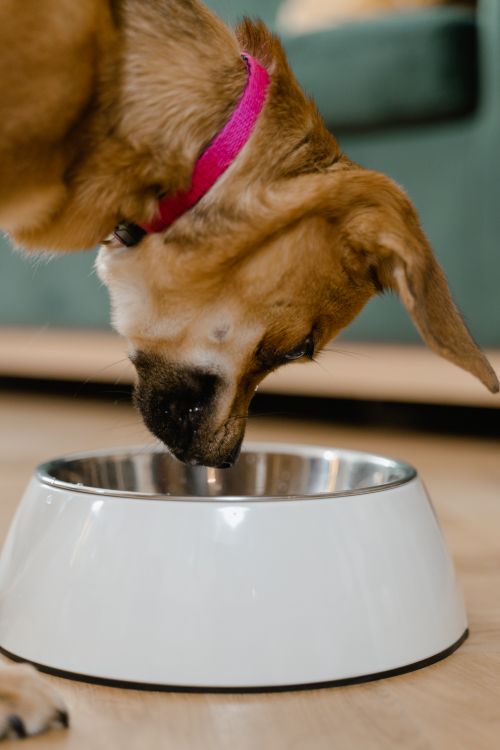
First, identify the actual problem you are trying to solve
A dog who gains weight on generous portions and a dog recovering from pancreatitis may both be shown bags marketed as low fat. The resemblance is superficial. One owner may need a manageable daily calorie allowance and a diet that preserves nutrition during weight loss. The other may need a medically specified level of fat per unit of energy, close monitoring, and a controlled recovery plan. A third dog may have intermittent loose stool, in which case fat is only one variable among digestibility, ingredient tolerance, parasites, medications, and chronic disease.
Before opening a shopping tab, write down the question in ordinary language. Is the dog's body condition above the ideal assessed at a veterinary visit? Has a clinician diagnosed pancreatitis, hypertriglyceridemia, or another condition? Are you trying to prevent a recurrence after a specific episode? Or did someone recommend low fat because the dog's stomach seemed sensitive? Each answer changes which products should even be considered. In particular, a history of vomiting is not a diagnosis of pancreatic disease, and an owner should not try to resolve repeated vomiting by selecting a new bag of kibble alone.
| Your situation | Primary decision | Information to bring to the vet | Avoid assuming |
|---|---|---|---|
| Dog is overweight but otherwise stable | Daily energy intake, body condition, nutritional adequacy | Current diet, weighed portions, treats, weight history | Lowest crude-fat percentage means best weight-loss diet |
| Diagnosed or suspected pancreatitis | Veterinary assessment and, when indicated, prescribed fat restriction | Symptoms, lab/imaging findings, all foods and medications | Any store-brand “light” food is therapeutic |
| High blood triglycerides | Diagnosis, fasting blood work as instructed, disease-specific feeding plan | Recent diet, timing of meals, clinical history | Diet alone explains every abnormal blood result |
| Recurring soft stool or dietary intolerance | Medical evaluation and appropriate food trial | Stool timeline, changes, diet and treat log | Fat is necessarily the cause |
For a practical rule, do not convert an unspecific symptom into a self-directed medical diet. If your dog currently has repeated vomiting, marked abdominal pain, a swollen abdomen, severe lethargy, collapse, or cannot retain water, seek prompt veterinary care rather than comparing food labels. These signs can signal significant illness and are not reliably distinguished at home. A lower-fat formula is a feeding decision; it is not emergency treatment.
What “low-fat” actually means on US dog food labels
In the United States, pet food labeling follows rules implemented by state regulators, with model standards developed by the Association of American Feed Control Officials (AAFCO). AAFCO's consumer label guide distinguishes a product claiming “lean” or “low-fat” from one claiming “less” or “reduced-fat.” The first type must satisfy a prescribed limit for fat content and include an upper fat guarantee. The second compares its fat level with a named reference product and must provide relevant comparative information. Simply saying that a food is lower in fat than some other formula does not tell you whether it meets your dog's needs.
Here is a detail buyers frequently miss: standard pet-food guaranteed analysis usually lists minimum crude fat, not the average fat content of each batch. The label may read “Crude Fat (min.) 7%.” That establishes a floor, not a ceiling. A producer making a regulated low-fat claim must also include the corresponding maximum fat guarantee. Check whether you have read the right line before calculating or showing the number to your veterinary team. If the package or product page is ambiguous, ask the manufacturer for its current label and typical nutrient analysis in writing.
The word crude names the analytical method; it does not mean that the ingredient is poor quality or untreated. Also remember that the percentage is ordinarily stated as fed, meaning the food with its moisture included. Two formulas can have very different water content, so an 8% fat dry kibble and a 5% fat wet food are not automatically comparable. They may also have different calorie densities, making fat per serving an additional puzzle.
Low-fat is not the same as low-calorie
Fat is energy dense, and reducing fat can help formulate foods with fewer calories. But commercial formulas vary in other nutrients, moisture and fiber, and the feeding amount matters. A wet food may have fewer calories per ounce mostly because it contains more water. A dry food could provide a lower calorie intake only if the quantity actually fed is managed. A dog can gain weight on a lower-fat food if daily calories still exceed needs, while a carefully portioned ordinary diet may be appropriate for some weight-management cases. AAFCO treats “light/lite/low-calorie” descriptions separately from lean/low-fat claims.
Low-fat is not the same as grain-free or sensitive-stomach
Grain-free describes an ingredient category; it cannot establish that the finished food has less fat. “Sensitive stomach” is a broad positioning phrase rather than a diagnostic category. Foods marketed as easily digestible may have different fat and fiber profiles, and some medically formulated gastrointestinal diets are specifically low fat while others are not. This is why selecting purely by the front label can steer the owner toward a mismatched product. Ask which measurable characteristic supports the claim and which veterinary problem, if any, the formulation is intended to address.
Three numbers you need before comparing two formulas
1. Crude fat and whether the number is minimum, maximum, or typical
Minimum guaranteed fat is the least the label promises under its labeling convention. Maximum guaranteed fat, when present, is an upper limit. A manufacturer's typical or average nutrient value describes the food's usual composition and is usually more useful for apples-to-apples calculations—but it still is not a guarantee for every serving. These figures are not interchangeable. If the brand cannot supply a typical or analyzed fat figure, note that gap instead of quietly turning a minimum guarantee into an exact measurement.
2. Moisture, expressed in the same set of figures
Water dilutes nutrient percentages. This affects canned, fresh, semi-moist and dry foods in different ways. “Dry matter” removes the estimated water portion so you can compare fat concentration in the remaining solids. For rough educational calculations you can use a stated typical moisture percentage. The labeled maximum moisture is useful for a conservative label reading, but it is still a maximum; it does not establish the actual water content in an individual batch. When accuracy is important, obtain the company's typical analysis instead.
3. Metabolizable energy, ideally kcal per kilogram
Calories are the common denominator for what a dog actually consumes. US pet food labels generally give energy as kilocalories per kilogram and a familiar household unit, such as per cup or per can. For comparing fat across wet and dry foods, kcal/kg is particularly convenient. For planning a day's portions, kcal/cup or kcal/can and the gram weight of the actual portion also matter. If a package gives only a serving count in cups, measuring the food by weight can reduce the variability introduced by different kibble shapes and measuring habits.
When two manufacturers quote nutrients on different bases—one as-fed, another dry matter, a third as grams per 1,000 kcal—do not compare the printed values directly. Convert them to the same basis or request matching disclosures. Tufts' Petfoodology team specifically warns that guaranteed-analysis percentages across food types can mislead and recommends typical nutrient figures on an energy basis when evaluating fat. The extra email to the company may save you from choosing the wrong product for a reason that looked convincing on a shelf tag.
How to calculate dry-matter fat and grams per 1,000 kcal
These calculations are useful for asking better questions; they are not medical prescribing formulas. Start only after identifying what type of fat and moisture figures you have. In the examples below, both are fictional typical values supplied for teaching, not the minimum and maximum guarantees you might see on a real bag. No brand or commercial product is represented. If you have only guaranteed minimum crude fat and maximum moisture, your output is a label-based approximation with important limitations, not the diet's actual fat concentration.
Calculation A: fat on a dry-matter basis
Dry-matter fat (%) = [fat as fed (%) ÷ (100 − moisture (%))] × 100. Suppose a dry food's typical fat is 8% and its typical moisture is 10%. Its dry matter is 90%, so the arithmetic is 8 ÷ 90 × 100 = 8.9% fat on a dry-matter basis when rounded to one decimal place. This makes the figure easier to compare with a canned food after its water has been excluded. It does not say how much fat the dog eats at its actual calorie allowance.
Calculation B: grams of fat per 1,000 kcal
Grams fat per 1,000 kcal = [fat as-fed (%) × 10,000] ÷ kcal/kg. The factor works because a food with 8% fat contains 80 grams of fat in one kilogram, and we are scaling that amount to 1,000 kilocalories. At 3,600 kcal/kg, the example gives 80 ÷ 3,600 × 1,000 = 22.2 g/1,000 kcal. A veterinarian can compare this unit with the values supplied by a manufacturer for other formulas, regardless of their moisture level.
Calculation C: a hypothetical day's fat intake
For an illustration—not a feeding recommendation—suppose the veterinarian has already determined a daily energy allowance of 600 kcal for one dog and the selected food provides 22.2 grams of fat per 1,000 kcal. The food would supply 22.2 × 600 ÷ 1,000 = 13.3 grams of fat per day, before treats and other food. The calculation does not determine whether 600 kcal is an appropriate allowance or whether 22.2 g/1,000 kcal is suitable for a particular medical diagnosis. Those decisions require the dog's weight, body condition, medical record and veterinary assessment.
Keep the rounding transparent. Calculated examples can be displayed to one decimal place, but decimal precision does not transform estimated inputs into laboratory results. For a pet receiving a medically restricted diet, a manufacturer's actual typical fat on an energy basis and its clinical nutrition information are stronger inputs than an owner-derived number from rough front-panel percentages. Do not try to solve a discrepancy by making assumptions about ingredient lists or by using the fat value from an unrelated flavor in the same product line.
A worked comparison: dry, canned, and an in-between formula
Imagine you are comparing three fictional adult-maintenance dog foods. Each example has a made-up typical analysis and calorie statement specifically to demonstrate the math. None is a real product, none was purchased or laboratory-tested by Patify, and the table cannot establish the medical suitability of any formula. Their estimated calories are deliberately different to show why looking at one fat percentage can lead you astray.
| Fictional food | Typical fat, as fed | Typical moisture | Energy | Fat, dry matter | Fat / 1,000 kcal |
|---|---|---|---|---|---|
| A: dry kibble | 8% | 10% | 3,600 kcal/kg | 8.9% | 22.2 g |
| B: canned recipe | 5% | 75% | 1,250 kcal/kg | 20.0% | 40.0 g |
| C: moist recipe | 3.5% | 78% | 1,100 kcal/kg | 15.9% | 31.8 g |
At first glance, the canned recipe B seems leaner than the kibble A because 5 is less than 8. Yet B provides 40 grams of fat per 1,000 kcal, compared with A's approximately 22 grams. B's fat is also 20% of its dry matter, compared with 8.9% for A. The wet food is not necessarily “bad,” and its moisture can be desirable for some animals; it simply provides more fat for an equal calorie intake in this invented comparison. The medical question is therefore more specific than “Is canned food better?”
The most instructive comparison may be B versus C. They are both moist, and C's as-fed percentage is smaller, but you still need to account for its energy density. The calculations show C at about 31.8 g/1,000 kcal, lower than B but higher than A. If these were real labels showing only minimum fat percentages, drawing this precise ranking would be unsafe because a minimum guarantee does not disclose the actual amount. That is why asking for typical nutrient data is not a bureaucratic detail—it can change the conclusion.
How to request usable numbers from a manufacturer
You can send a concise, specific request: “I am comparing adult dog foods on a fat-per-calorie basis. For your exact product and recipe, could you provide the typical or average total fat in grams per 1,000 kcal, the typical moisture value, metabolizable energy in kcal/kg, and the current nutritional adequacy statement? Please identify whether these are typical analyses or guaranteed bounds and the date/version of the formula.” This avoids the usual customer-service response that simply reproduces the label's minimum crude fat. Save the reply with the bag's lot and flavor name for later reference.
If you receive only a figure expressed as percentage of calories from fat, clarify whether it is based on a metabolizable-energy calculation and request the underlying grams/1,000 kcal if the veterinarian uses that metric. Conversions across fat calories, dry-matter percentage, and grams per energy can be made with adequate data, but inventing missing digestibility or energy assumptions defeats the point of careful comparison. When two products cannot be evaluated to the same standard, it is reasonable to record “insufficient data” rather than force an untrustworthy winner.
Weight-management food versus a therapeutic low-fat diet
Weight control addresses energy balance and the nutritional demands of losing weight. A successful plan usually starts with a veterinary assessment of body condition, a target weight range appropriate for the individual animal, a daily calorie plan, measured meals and follow-up adjustments. A weight-management formula may be designed to offer a different combination of fiber, protein, calories and fat so that a dog can eat a reasonable volume while receiving adequate essential nutrients. It should not be judged solely on whether its fat percentage looks lower than another bag.
A therapeutic gastrointestinal low-fat diet, by contrast, is designed for a particular clinical nutrition purpose. A dog with recurrent pancreatitis may need a tighter fat restriction, specific digestibility characteristics and careful choice of treats. Tufts' veterinary nutrition team explains that some dogs require veterinary therapeutic diets because ordinary pet-store diets are not low enough in fat for their needs. VCA similarly advises that a veterinary low-fat therapeutic formula is often the initial nutritional option for canine pancreatitis, while later adjustments depend on the patient's recovery and history. Those statements do not establish that every dog with every digestive complaint needs a prescription product.
| Decision point | Ordinary weight-management diet | Veterinary therapeutic low-fat plan |
|---|---|---|
| Central goal | Appropriate calories and nutrient supply while weight changes | Fat restriction and other diet characteristics chosen for a documented illness |
| Main number to monitor | Actual daily kcal, body condition, weight trend | Clinician-specified nutrient target, often fat per 1,000 kcal, plus intake and clinical response |
| Evidence to collect | Weight log, measured food and all treats | Medical diagnosis, blood work as instructed, food analysis, symptoms and medications |
| Can owners substitute freely? | Not ideal; changes should still preserve nutrition | No; a substitute needs veterinary confirmation |
| What success looks like | Healthy, sustainable change in body condition | Clinical stability and nutrition consistent with treatment goals |
There are situations where the two objectives overlap. A dog with pancreatic illness can also be overweight, and controlling excess weight may be useful, but this does not erase the need to meet medical dietary requirements. Conversely, healthy and highly active dogs may need adequate fat intake to meet energy needs without oversized meals. Restricting fat unnecessarily can create practical or nutritional problems. Feeding should be chosen for the dog's current condition rather than a general belief that less fat is always safer.
For pancreatitis, treat the fat target as a veterinary decision
Pancreatitis is inflammation of the pancreas and can be serious. Signs reported in dogs include loss of appetite, vomiting, abdominal pain, diarrhea, weakness and dehydration, although some dogs show less distinctive changes. These signs overlap with other digestive and systemic diseases. A veterinarian may combine the physical examination and history with laboratory testing and imaging; there is no reliable home test based on whether a dog seems uncomfortable after a rich meal. A dog with repeated vomiting, significant abdominal pain, collapse, or persistent inability to eat or drink needs timely medical attention.
The professional Merck Veterinary Manual discusses low-fat feeding as an important component in managing canine pancreatitis and describes fat exposure on an energy basis rather than by vague front-package claims. This does not mean owners should extract a number from a professional manual and prescribe a diet without evaluation. Acute illness, other diseases, the dog's intake, and the intended duration of the feeding plan can all matter. An individual target, if needed, should be set by the treating team and checked against the manufacturer's appropriate nutrient analysis.
Acute episode, recovery, or recurrent disease?
These are not interchangeable stages. During acute illness, clinical stabilization, hydration, nausea control and pain management take precedence; instructions about food depend on the dog's condition and veterinary assessment. During recovery, a clinician may choose a gastrointestinal or therapeutic low-fat diet and monitor tolerance. For some recovered dogs a long-term therapeutic diet may not be required; others with recurrent episodes or particular risk factors need ongoing management. Tufts and VCA both emphasize that the right longer-term approach depends on the history and whether episodes recur, rather than on a universal lifelong rule.
A common mistake is to decide that one missed meal proves the new food “caused pancreatitis,” or that a lower-fat food will cure it. Diet can matter, but multiple medical conditions and triggers can contribute, and not every episode is attributable to a single meal. The goal of a nutrition conversation is to match a specific plan to the dog's medical situation, not assign blame to a food based only on its marketing or timing. Likewise, food should never be used as a substitute for evaluation when symptoms are worsening.
What to ask at the veterinary appointment
Ask what diagnosis has been established and whether the recommended diet is temporary or long term. Request the desired fat specification in an unambiguous unit, such as grams of fat per 1,000 kcal, if that metric is appropriate to the case. Ask whether a retail food can meet that requirement or whether a therapeutic formula is necessary. Confirm the feeding amount based on your dog's energy needs, whether all treats and medications have been reviewed, what symptoms should prompt a call, and how follow-up will be arranged. If a manufacturer offers only a guaranteed minimum fat value, ask whether the clinic can obtain a more clinically useful analysis.
Do not fast a sick dog or administer home remedies based on old internet advice. Current medical care frequently emphasizes timely nutritional support when appropriate, with feeding adapted by the clinical team to the severity of vomiting and illness. Old instructions to “rest the pancreas” through prolonged food withdrawal can be inappropriate when applied without examination. If the dog is already on a veterinary diet, obtain approval before replacing it with a supermarket “light” option, home-cooked chicken and rice, or treats described as natural.
Other reasons a veterinarian might recommend less fat
High triglycerides and metabolic disorders
Elevated blood triglycerides can accompany certain underlying conditions and, in some dogs, contribute to pancreatic risk. A veterinarian interprets results in the context of sample timing, medications, breed history and possible concurrent illness. Nutrition may be part of care, but choosing food by a crude-fat minimum alone cannot establish that it meets the treatment goals. Some dogs need changes in more than one part of their management; a follow-up test may be needed to assess whether the plan is working.
Chronic digestive complaints without a pancreatic diagnosis
A dog who repeatedly has loose stool after richer meals may tolerate a different diet, but a persistent symptom warrants a medical history and sometimes diagnostic workup rather than endless trial and error. Fiber, total calories, digestibility, specific ingredients and concurrent disease can all influence stool quality. Tufts explains that seemingly similar “sensitive” foods are not standardized to the same clinical purpose. Treat a low-fat recommendation as a question to investigate, not an automatic explanation of every digestive problem.
Food allergies, intolerance, and ingredient claims
A food can be low in fat yet still contain an ingredient a particular dog cannot tolerate, and it can be limited-ingredient while remaining high in fat. The number of ingredients and the percentage of fat answer different questions. If food allergy is suspected, a veterinarian may recommend an appropriate controlled diet trial rather than switching among unrelated marketing categories. A diet with an unusual protein should not be presumed hypoallergenic or suitable for pancreatic management. A product's ingredient novelty does not tell you its fat grams per unit of energy.
Life stage, athletic demands, and essential fats
Puppies, pregnant or nursing dogs, and high-performance working dogs have nutritional priorities that may make generic adult weight-control foods inappropriate. Fat supplies energy and essential fatty acids; a diet should not strip it away at the expense of balanced nutrition. Tufts notes that both too little and too much fat can have consequences, and higher-fat diets have a legitimate place for some animals with increased energy demands. The complete-and-balanced statement needs to suit the dog's life stage, and medically complex situations can require a veterinarian or board-certified veterinary nutrition specialist.
A practical low-fat dog food buying checklist
Instead of presenting an invented list of “best” products, use this decision framework for the exact formula you are considering. It works in a pet store, on a retailer's website or during an exchange with the manufacturer. Collect the original label and the manufacturer's current detailed nutrition data for each candidate. Compare foods with the same intended life stage and food category, and record uncertainties rather than guessing. Brands frequently sell multiple formulas with similar names; a package, flavor, or recipe revision can make an older review's figures obsolete.
| Check | Where to find the answer | What it tells you | Stop and ask if… |
|---|---|---|---|
| 1. Intended species and life stage | Adequacy statement | Whether diet is suitable as an everyday dog food | Product is a topper or adult-only food for a puppy |
| 2. True fat data | Manufacturer's typical analysis | Useful fat amount rather than a label floor | Only “minimum crude fat” is published |
| 3. Maximum fat guarantee | Guaranteed analysis on low-fat product | Required boundary for claimed low-fat category | The claimed low-fat label lacks an intelligible maximum |
| 4. Energy density | Calorie statement | kcal/kg and per cup/can for portion calculations | Only servings without calories are shown |
| 5. Fat per 1,000 kcal | Manufacturer or calculated from typical data | Comparison across wet and dry formats | Units or ingredients differ from the requested exact recipe |
| 6. Clinical suitability | Veterinarian and manufacturer | Whether this fits a diagnosed condition | Retail claims are used as medical proof |
| 7. Quality and formulation process | Company nutrition team and data | Who formulates and checks the diet | Answers rely solely on endorsements |
| 8. Cost per day | Current price, calories, recommended plan | Expense at your dog's actual needs | Only bag or can price is compared |
One written question set can reveal a lot
Ask the manufacturer who formulates the recipe and their qualifications, whether it is complete and balanced for the intended life stage, how the diet's nutritional adequacy is substantiated, and what quality controls govern manufacturing. Request typical fat per 1,000 kcal, energy per kilogram, typical moisture, and any available finished-product analysis. For a therapeutic diet, ask the clinician whether those measurements meet the prescribed goals. The World Small Animal Veterinary Association's nutrition-selection tool supplies a useful framework for these inquiries; transparent answers are more informative than testimonials or elaborate descriptions of individual ingredients.
Compare cost by energy delivered, not package sticker
Suppose a hypothetical bag contains 4 kg of food at 3,500 kcal/kg and costs $40. The bag contains 14,000 kcal, so its purchase cost is about $2.86 per 1,000 kcal. A second fictional option could cost $30 for a package containing 8,000 kcal, or $3.75 per 1,000 kcal. That makes the second more expensive per unit of energy even though its shelf price is lower. These numbers are arithmetic examples, not observed store prices, current offers or product recommendations. The daily cost still depends on the veterinarian-approved calorie allocation, waste, treats, subscription terms and product availability.
For a dog with medical needs, price should be considered only after checking suitability. Cutting costs by substituting a cheaper diet that fails the required formulation can defeat the purpose of treatment. On the other hand, asking for exact nutrient data may identify clinically suitable alternatives that have different packaging or supply channels. Keep a copy of any company response alongside your food log; that becomes especially useful when recipes are reformulated or an online product page is incomplete.
Treats, toppers, chews, and the “invisible” dietary fat
A dog's main food may fit a lower-fat plan while its extra snacks do not. Fat can arrive through cheese, meat trimmings, rich chews, cooking oils, skin-on meat, peanut butter, table leftovers, flavored supplements and training treats. The size of a treat does not reveal its fat contribution. One rich snack can matter to a dog whose veterinarian is trying to control total daily fat exposure, even if the bag of kibble has a modest figure on the nutrition panel.
For dogs without a condition imposing stricter limits, veterinary nutrition guidance commonly suggests keeping treats and extras to a small minority of daily calories—often around ten percent—so that most energy comes from complete-and-balanced food. That broad convention is not a permission slip for a dog on a medically restricted diet. For pancreatitis, the fat content and suitability of the treats need separate consideration; a calorically small treat can still be rich in fat. Ask the veterinary team which snacks are compatible with the treatment plan and whether portions of the prescribed food can serve as rewards.
Make the food log boringly precise: brand, exact product, approximate quantity and timing for everything the dog swallows, including treats offered by family members. Include training rewards, dental chews, medicines administered with food and samples given during visits. This is not about blame; it is a way to explain why a dog may respond differently than predicted by the main formula's nutrient sheet. If your dog has an acute digestive problem rather than stable routine feeding, prioritize clinical advice. Our separate dog diarrhea and emergency-sign guide discusses symptom recognition, but it is not a substitute for individual veterinary assessment.
Changing food safely and measuring what actually happens
When a veterinarian recommends a nonurgent change for a stable dog, a gradual transition over several days is often easier on the digestive system than replacing every meal immediately. VCA discusses a roughly seven-to-ten-day transition for many feeding changes, but a medical diagnosis or an ongoing illness can alter the plan. Follow the instructions from the clinician who knows your dog, especially if the change accompanies discharge from a hospital or a recovery diet. Do not force a generic timetable onto a dog that is vomiting, dehydrated or refusing food.
Build a simple observation log
Record the exact product and lot, how much food is actually eaten by weight, approximate kcal, treats and supplements, and symptoms such as vomiting, stool consistency, appetite or discomfort. For a weight-management plan, include weight checks on a veterinary-approved schedule and any body condition assessment. For a medically restricted diet, record the signs the treating team specifically asks you to watch and how to reach the clinic if they appear. When a dog dislikes a new food, that is useful information; leaving the dog without adequate nutrition until it accepts the product is not a safe strategy.
A food diary can help separate the effect of a planned change from unrelated events, but it is not a diagnostic test. A better stool one week does not prove that the fat level was solely responsible, just as one loose stool does not establish that a new formula is harmful. Changes in medications, parasites, treats, meal size, storage or stress could be relevant. If a dog continues losing weight unintentionally, refuses food, develops repeated vomiting or has worsening pain, contact a veterinarian promptly rather than collecting more days of data.
What to review at follow-up
Bring the original feeding goal, the actual intake log, the manufacturer nutrient analysis and any test results the clinic requested. Confirm whether the diet is working, whether the intended fat target is still appropriate and whether other conditions have emerged. For weight reduction, revisit total calorie intake and body condition rather than obsessing over one nutrient percentage. For recurrent pancreatic disease, discuss clinical response and the need for any continued restriction. A good plan has an explicit reason for starting, a way of checking progress, and a pathway for changing course if the dog is not doing well.
Seven low-fat label mistakes that can derail the comparison
Mistake 1: Ranking products by minimum crude fat. Minimum does not mean actual, average or maximum. Obtain typical values and, where applicable, the upper fat guarantee for a low-fat claim. Mistake 2: Comparing wet and dry percentages directly. Water shifts the percentages. Compare dry matter when discussing solids and grams per 1,000 kcal when discussing dietary fat per unit of energy. These measures answer related but different questions.
Mistake 3: Treating “light” as a prescription for pancreatitis. Lower calorie intake can help with weight management, but it does not prove the precise fat restriction or digestibility needed for a medical case. Mistake 4: Assuming the fewest ingredients means the least fat. Ingredient lists do not disclose analyzed macronutrient content. Fat can be present in named proteins, oils and other components. The product needs to be evaluated as a finished formula.
Mistake 5: Ignoring energy density. Two foods with similar dry-matter fat may deliver different fat amounts per calorie. Even a genuinely lower-fat food can be overfed if the daily portion is not aligned with the dog's needs. Mistake 6: Forgetting treats. Small extras can complicate a therapeutic diet, and calorie-only limits may not be sufficient when the veterinarian has asked for substantial fat restriction.
Mistake 7: Assuming a current review describes the current recipe. Manufacturers can change formulations. Older label screenshots and online charts may refer to a different flavor, life stage or production period. Check the precise product and obtain the relevant analysis again if the packaging changes. Good comparisons are repeatable; they can tell you which data were used, where the data came from and what the data cannot establish.
Three realistic decisions—and what an informed next step looks like
Scenario A: An adult dog needs to lose weight but has no known pancreatic illness
Start by confirming body condition and target intake with the veterinarian. Compare complete-and-balanced adult formulas on calorie density, serving practicality, nutrition and formulation quality, not simply a lower guaranteed crude-fat minimum. Choose a consistent way to measure portions and include treats in the daily budget. If you switch formulas, discuss a gradual transition and plan objective follow-up. A commercial low-fat diet might be useful, but its label is only one piece of a weight-management strategy.
Scenario B: A dog was discharged after pancreatitis
Do not replace discharge instructions with shopping advice from an article. Ask whether the prescribed diet is temporary, which exact fat measurement matters, what amount to feed, which extras are allowed and what signs require immediate contact. Obtain the manufacturer's typical fat on an energy basis for any proposed substitute and let the treating team evaluate it. If the dog refuses food, vomits again or seems painful, contact the clinic. The priority is coordinated recovery and clinical stability, not finding a bag with the smallest number on its front.
Scenario C: A dog has occasional soft stool and the owner suspects rich meals
Log symptoms and all food—including weekend leftovers—rather than making several diet changes at once. Ask the veterinarian whether a low-fat or otherwise digestible formula is a reasonable trial and whether testing is needed. Obtain comparable nutrient data so the proposed food actually differs in the attribute you are testing. Observe response without assuming that every improvement proves the diagnosis. Continued diarrhea, blood in stool, loss of appetite or concerning weakness should move the conversation from shopping to medical assessment.
Frequently asked questions about low-fat dog food
What percentage of fat counts as low-fat dog food?
It depends on the applicable claim and the basis of the measurement. AAFCO's model labeling standards differentiate “lean/low-fat” from “less/reduced-fat,” and low-fat claims require a maximum crude-fat guarantee. A percentage taken from a minimum crude-fat line cannot establish actual dietary fat. For a dog with a medical condition, ask the veterinarian for the appropriate target and unit and ask the manufacturer for typical fat per 1,000 kcal. Avoid adopting a one-size-fits-all percentage from a retailer list.
Is low-fat dog food automatically better for an overweight dog?
No. Weight management depends heavily on total energy intake, nutritional adequacy, body condition and monitoring. A lower-fat formula can make sense in a structured plan, but energy density and portion size still determine what is fed. Some dogs need a specialized weight-management diet rather than an arbitrary recipe marketed as lean. Discuss the specific plan if your dog has another medical problem, is still growing, or is losing weight unexpectedly.
Can wet food be lower in fat than dry kibble?
Yes, some wet foods may be lower in fat on an appropriate comparable basis, but you cannot know from the as-fed crude-fat percentage alone. Wet food contains substantially more water in many cases. Compare typical nutrient data as dry matter and, for the clinical feeding question, grams of fat per 1,000 kcal. Our fictional worked example deliberately shows why the canned recipe with the lower printed fat percentage may deliver more fat per calorie than the dry option.
Can I give homemade chicken and rice instead of therapeutic low-fat dog food?
Do not treat a simple homemade mixture as a nutritionally complete long-term replacement for a veterinary diet. Even an ingredient combination that sounds mild may not have the required balance of essential nutrients or the precise fat content a particular diagnosis demands. For short-term feeding during illness, follow your veterinarian's explicit instructions. For prolonged home-prepared diets, ask about referral to a qualified veterinary nutrition specialist who can formulate and monitor an appropriate recipe.
Does a low-fat food prevent pancreatitis?
No diet can guarantee prevention. In dogs with relevant risk factors or prior pancreatitis, reducing fat exposure may be part of veterinary prevention and management, but causes are multifactorial and not every episode results from a single fatty meal. Healthy dogs do not universally need therapeutic fat restriction. A veterinarian can assess risk factors, suggest monitoring and determine whether the benefits of a particular diet justify using it long term.
Do I need to buy an expensive “prescription” formula?
Not every dog seeking weight control or a diet change needs a therapeutic product. Some dogs with conditions such as recurrent pancreatitis may need the composition and oversight of a veterinary therapeutic diet, especially when ordinary store foods are not sufficiently low in fat for the case. The relevant question is whether a candidate product meets the goals specified by your clinician. Price, availability and preference matter after suitability is established, not before.
How many grams of fat should my dog eat per day?
There is no safe universal number that can be given without knowing the dog, the food and the clinical goal. An illustrative calculation requires both a professionally appropriate calorie allowance and the food's typical grams of fat per 1,000 kcal; then fat grams per day equal the daily kcal multiplied by fat grams per 1,000 kcal and divided by 1,000. That is only arithmetic. Whether the resulting intake is appropriate is a veterinary decision, especially for puppies, sick dogs or dogs on medically restricted diets.
Sources, methodology, and editorial limits
This guide was prepared for US pet owners using publicly available pet-food labeling standards and veterinary nutrition resources. Primary references include AAFCO's explanation of US pet food labels and fat claims, Tufts' nutrient comparison math, and Tufts' advice on comparing average fat per calorie. The nutrition-selection questions draw on the WSAVA Global Nutrition Toolkit. These publications inform a method, not an endorsement of individual commercial brands.
The medical distinctions draw on Tufts' veterinary nutrition discussion of canine pancreatitis, VCA's nutrition and pancreatic disease overview, Merck Veterinary Manual's professional pancreatitis reference, and Tufts' discussion of fat's nutritional roles. Tufts and VCA are educational veterinary sources, Merck addresses veterinary professionals, AAFCO describes labeling standards, and WSAVA provides a general manufacturer-screening framework. None can diagnose your dog from this page.
Our method: All example product figures and dollar amounts above are explicitly fictional arithmetic inputs. Patify did not purchase a product, independently measure food composition, audit a manufacturing plant, perform a feeding trial, collect original clinical data, or compare live retail prices for this article. No veterinary professional has reviewed or approved this specific manuscript. We intentionally avoided declaring a universal medical fat target or naming a “best brand” without comparable formula-level evidence. Research reviewed October 15, 2026; check each manufacturer and your veterinarian for changes before making a health-related decision.
Bottom line: A well-chosen low-fat dog food is the one that matches a clearly stated goal and can be evaluated using reliable, comparable nutrition data. Start with the reason for changing food; compare fat per unit of energy rather than only as-fed percentages; confirm life-stage adequacy and the manufacturer's quality information; and let your veterinarian define any medical restriction. The smartest outcome may be a less confusing label, a better question for your clinic, or deciding not to change an otherwise appropriate diet at all.