
Massachusetts Cat Telemedicine 2026: Boston VCPR Rules, Online Vet Options & Prescription Limits
Massachusetts allows veterinary telemedicine, but the current rule is more restrictive than many national telehealth ads imply. The Board of Registration in Veterinary Medicine's current telemedicine policy allows telemedicine when appropriate only after a veterinarian-client-patient relationship (VCPR) has first been established. Under the current Massachusetts VCPR definition, the veterinarian or veterinary practice must have sufficient knowledge of the animal through a timely examination or medically appropriate premises visit. Bills that would have expressly allowed a VCPR to be established by synchronous video did not become law in the 2025–2026 session. For Boston cat owners, that makes virtual care especially useful for triage, education and follow-up with an existing veterinary practice—but prescription access should never be assumed from a platform's national marketing page.
Massachusetts telemedicine: the current 2026 reality
No 2025 E‑VCPR expansion: Massachusetts Board Policy 22‑01 was adopted in 2022 and still says telemedicine is appropriate only after a VCPR is first established.
Current VCPR: Massachusetts regulation requires sufficient knowledge based on a timely examination of the animal by the veterinarian/practice or medically appropriate premises visits. Video-only establishment is not part of the current rule.
Legislation to watch: H.355 and S.3082 proposed allowing synchronous video to establish a VCPR, but both were moved into study orders in 2026 and did not become law.
Gabapentin: Massachusetts pharmacies report dispensed gabapentin to the PMP because it is a Schedule VI drug of concern. That does not support the old claim that every veterinarian who writes gabapentin must personally “report the prescription” or be specially enrolled in MassPMP for the telehealth visit.
Chewy: Massachusetts currently has Chewy's free vet-tech chat, but Chewy's licensed-veterinarian video visits are presently limited to CA, IN, NJ, NY, OH, PA and VA—not Massachusetts.
Evergreen platform rule: choose the care type first, then confirm Massachusetts legal eligibility and prescription capability before paying.
What Massachusetts law and Board policy actually require
The Board's current Policy Guideline 22‑01 says telemedicine may be used when appropriate only after a VCPR has been established. The guideline points to Massachusetts' VCPR definition and says the veterinarian must have assumed clinical responsibility, possess enough knowledge to make at least a preliminary diagnosis, and be available for follow-up or have emergency/continuing-care arrangements.
Massachusetts' current 256 CMR 2.01 defines sufficient knowledge by the veterinarian or veterinary practice being acquainted with the patient's care through a timely examination of the animal or medically appropriate and timely visits to the premises where the animal is kept.
Did Massachusetts expand video VCPRs in 2025?
No enacted 2025 expansion matching the old article's description was identified. In fact, Massachusetts lawmakers considered proposals during the 2025–2026 session that would have changed current law in exactly that direction.
H.355 proposed allowing sufficient knowledge for a VCPR to be obtained through an in-person exam, synchronous audio-video exam or premises visit. Its House history shows that on February 17, 2026 it accompanied a study order, H.5081.
A later Senate proposal, S.3082, also addressed animal telehealth and video VCPR establishment. On July 16, 2026 it accompanied a study order, S.3177. Neither proposal became law as of September 7, 2026.
What can a Massachusetts cat owner use telehealth for today?
| Virtual care use | 2026 Massachusetts fit | Practical limit |
|---|---|---|
| General education / non-diagnostic guidance | Useful | Can help with behavior, nutrition, preventive questions and next-step planning without pretending a diagnosis has been made. |
| Urgency / triage decision support | Useful | A virtual professional may help decide whether the cat needs emergency, urgent or routine in-person care; it cannot stabilize an emergency. |
| Follow-up with your established veterinary practice | Strongest clinical use | Best fit when a valid Massachusetts VCPR already exists and the veterinarian decides remote reassessment is medically appropriate. |
| New diagnosis from a marketplace video visit | Do not assume | Current Board policy requires an existing VCPR; video-only VCPR legislation did not pass. |
| New prescription from a national telehealth platform | State/VCPR dependent | National “prescriptions available” marketing does not override Massachusetts VCPR rules. Confirm eligibility before booking for medication. |
| Bloodwork, urinalysis, X-rays, ultrasound, oxygen, catheterization, surgery | In-person required | These require hands-on examination, diagnostics or treatment. |
Gabapentin and MassPMP: what is actually reported?
Gabapentin is a Massachusetts Schedule VI medication designated as a drug of concern for PMP reporting. The Massachusetts Department of Public Health's current pharmacy-reporting page says registered pharmacies must submit dispensing information for Schedule II–V drugs and gabapentin to the PMP.
The official dispenser guide even includes technical instructions for prescriptions written by veterinarians who may not have a DEA number or NPI. That is evidence that pharmacies can report veterinarian-written gabapentin prescriptions; it does not establish the old article's claim that the veterinarian personally has to submit every gabapentin prescription to MassPMP.
For the clinical differences between gabapentin, fluoxetine and Bonqat, see Patify's 2026 cat anxiety medication guide.
Current online-vet snapshot for Massachusetts — checked September 7, 2026
This is deliberately a dated snapshot. Prices, state availability and prescription functions change. The evergreen part is the Massachusetts VCPR rule above.
| Service | Current posted price / structure | Massachusetts use | Prescription takeaway |
|---|---|---|---|
| Vetster | $102 single appointment; Vetster Plus $120/year with 4 virtual vet appointments + unlimited vet-tech chat | National platform available across U.S.; useful for virtual professional access | Vetster says prescriptions are available where legally permitted. In Massachusetts, do not assume a new marketplace video visit can establish the VCPR required for prescribing. |
| Dutch | Current annual plan displayed at $132/year ($11/month equivalent), with unlimited calls/messages for up to 5 pets; medication extra | Licensed-vet virtual-care model available nationally | Dutch says prescriptions are available in many states. Massachusetts VCPR requirements still control; verify prescription eligibility for your cat before subscribing primarily for medication. |
| whiskerDocs | $39.99 call; $39.99 chat; $4.99 email; $129.99/year unlimited | 24/7/365 decision support and triage | whiskerDocs says telemedicine/prescribing may be offered where state rules permit. For Massachusetts, treat prescription capability as case- and VCPR-dependent. |
| Chewy free vet-tech chat | Free with Chewy account; 6 a.m.–midnight ET | Available in Massachusetts | No diagnosis, prescription or diet authorization through the free chat. |
| Chewy licensed-vet video | $49.99 where offered | Not currently offered in Massachusetts | Current veterinarian video states are CA, IN, NJ, NY, OH, PA and VA. |
Vetster: useful access, but the old $30–$90 prescription comparison is outdated
Vetster's current May 2026 pricing page lists a flat $102 appointment. Vetster Plus is $120 per year and includes four virtual veterinarian appointments, unlimited live chat with a veterinary technician and discounts after included visits are used.
Vetster also advertises prescriptions through VetsterRx where permitted. For a Massachusetts owner, that national feature should be read together with the Massachusetts Board rule: if the encounter does not satisfy the state's VCPR requirements, the platform's national prescription feature does not create legal prescription authority.
Dutch: subscription care, not an automatic Massachusetts refill service
Dutch currently advertises an annual plan at $132, equivalent to $11 per month when billed annually, with unlimited veterinarian calls/messages and coverage for up to five pets. Medications are purchased separately.
Dutch's current help materials say its U.S.-licensed veterinarians can prescribe in many states. Massachusetts remains a state where the VCPR analysis matters. Owners who are considering Dutch primarily for methimazole, fluoxetine, gabapentin or another prescription should verify Massachusetts eligibility before buying a membership.
whiskerDocs: current pricing is not $12.99/month
whiskerDocs currently lists $39.99 for a phone call, $39.99 for chat, $4.99 for email and $129.99/year for unlimited support. The service operates 24/7/365.
Its strongest Massachusetts use is decision support: understanding symptoms, deciding whether the cat needs emergency care and preparing questions/records for the regular veterinarian. Current whiskerDocs materials say prescribing can be available where state rules permit, so Massachusetts prescription access should be confirmed case by case.
Chewy: Massachusetts gets free vet-tech chat, not licensed-vet video
Chewy's free vet-tech chat is currently available in Massachusetts from 6 a.m. to midnight Eastern. It is designed for general questions and does not diagnose or prescribe.
Chewy's licensed-veterinarian virtual visits cost $49.99 where available, but the current provider page lists only California, Indiana, New Jersey, New York, Ohio, Pennsylvania and Virginia. Massachusetts is not on that video-visit list.
Do not promise a $200–$500 Boston savings
The old article built a large comparison table around assumed Boston clinic fees, Angell emergency charges and “avoided” visits. That is too brittle and can subtly encourage an owner to think an emergency visit is unnecessary because a telehealth subscription is cheaper.
The more defensible value proposition is:
Travel/time
Some questions and established-patient follow-ups can be handled without transporting a stressed cat across Boston.
Triage
Virtual guidance can help an owner understand whether symptoms sound emergency, urgent or suitable for routine follow-up.
Continuity
An established veterinary practice may use telemedicine for selected follow-ups when the veterinarian decides hands-on examination is not currently necessary.
Limit
If the cat needs an exam, laboratory testing, imaging or emergency treatment, the virtual interaction is an additional step—not a substitute for the in-person bill.
When a Massachusetts cat should bypass routine telehealth
Cornell's emergency service identifies difficulty breathing, collapse, abnormal gum colour, trauma, excessive bleeding, difficulty urinating, toxic ingestion and seizure/tremor activity among conditions that require emergency evaluation.
For cats specifically, urethral obstruction is an absolute emergency. A cat repeatedly straining to urinate while producing little or no urine needs immediate veterinary treatment. Cornell also notes that sustained anorexia can seriously affect a mature cat in as little as 24 hours.
Best telemedicine use case in Massachusetts: your existing veterinary practice
Because Massachusetts' current framework ties telemedicine to an already-established VCPR, the most straightforward prescription-capable telemedicine relationship is often the clinic or veterinary practice that has already examined your cat.
Ask your regular veterinarian:
- Do you offer video/phone follow-up for established patients?
- Which problems can be reassessed remotely?
- How recent must the last in-person exam be for this medication or condition?
- Can photo/video wound checks be done remotely?
- Can stable chronic-condition follow-ups be virtual between required blood/urine tests?
- What symptoms automatically require an in-person visit?
- How do after-hours messages and emergencies work?
For a nationwide explanation of teletriage versus prescription-capable telemedicine, see Patify's U.S. cat telemedicine comparison.
Frequently asked questions
Can a Massachusetts veterinarian establish a VCPR with my cat entirely over video in 2026?
Not under the current Board policy/regulatory framework reviewed for this update. The current VCPR definition relies on a timely examination by the veterinarian/practice or appropriate premises visits. Bills H.355 and S.3082 proposed adding synchronous video, but neither became law.
Was there a Massachusetts veterinary telehealth expansion in 2025?
No enacted expansion matching the old article's description was identified. The current Board telemedicine guideline is Policy 22‑01, adopted in March 2022.
Can Vetster prescribe medication to a Massachusetts cat?
Do not assume so from Vetster's national prescription marketing. Vetster says prescriptions are available where permitted, but Massachusetts currently requires a valid VCPR established under state rules. Confirm eligibility before paying if medication is the purpose of the visit.
Does every Massachusetts veterinarian have to personally report gabapentin prescriptions to MassPMP?
The old article overstated this. Massachusetts' current PMP reporting guidance specifically requires pharmacies to report dispensed gabapentin. The official dispenser guide includes veterinarian-written prescriptions, including cases where the veterinarian lacks a DEA/NPI, but that is not the same as a rule requiring every veterinarian to personally submit the prescription record.
Is Chewy licensed-vet video available in Massachusetts?
No, not on the current service list checked September 7, 2026. Massachusetts residents can use Chewy's free vet-tech chat, but veterinarian video visits are currently offered only in CA, IN, NJ, NY, OH, PA and VA.
Can telemedicine replace my cat's annual physical exam?
No. A virtual visit cannot perform palpation, auscultation, oral examination, blood-pressure measurement, bloodwork, urinalysis or imaging. It works best as a complement to hands-on veterinary care.
Bottom line
Massachusetts cat telemedicine is useful, but its strongest 2026 role is triage, education and follow-up within a valid VCPR—not video-first prescription shopping. The state has considered legislation that would expand video VCPR establishment, but those proposals did not become law in the current session.
For an evergreen strategy, ask three questions in order: Does this cat need hands-on care? Does a valid Massachusetts VCPR already exist? Does the specific platform/clinician confirm that the requested service is legally available? Platform prices will change; those questions remain useful.
Massachusetts 256 CMR 2.01 — Current VCPR Definition
Massachusetts General Court — H.355 Animal Telehealth Status
Massachusetts General Court — S.3082 Animal Telehealth Status
Massachusetts DPH — PMP Pharmacy Reporting and Gabapentin
Massachusetts PMP — Data Submission Guide for Dispensers
Vetster — Current 2026 Pricing
Dutch — Current Membership Plan
whiskerDocs — Current Pricing and 24/7 Service
Chewy — Current Free Chat and Video-State Availability
Cornell — Emergency and Critical Care
Cornell Feline Health Center — Urethral Obstruction
Cornell Feline Health Center — Anorexia
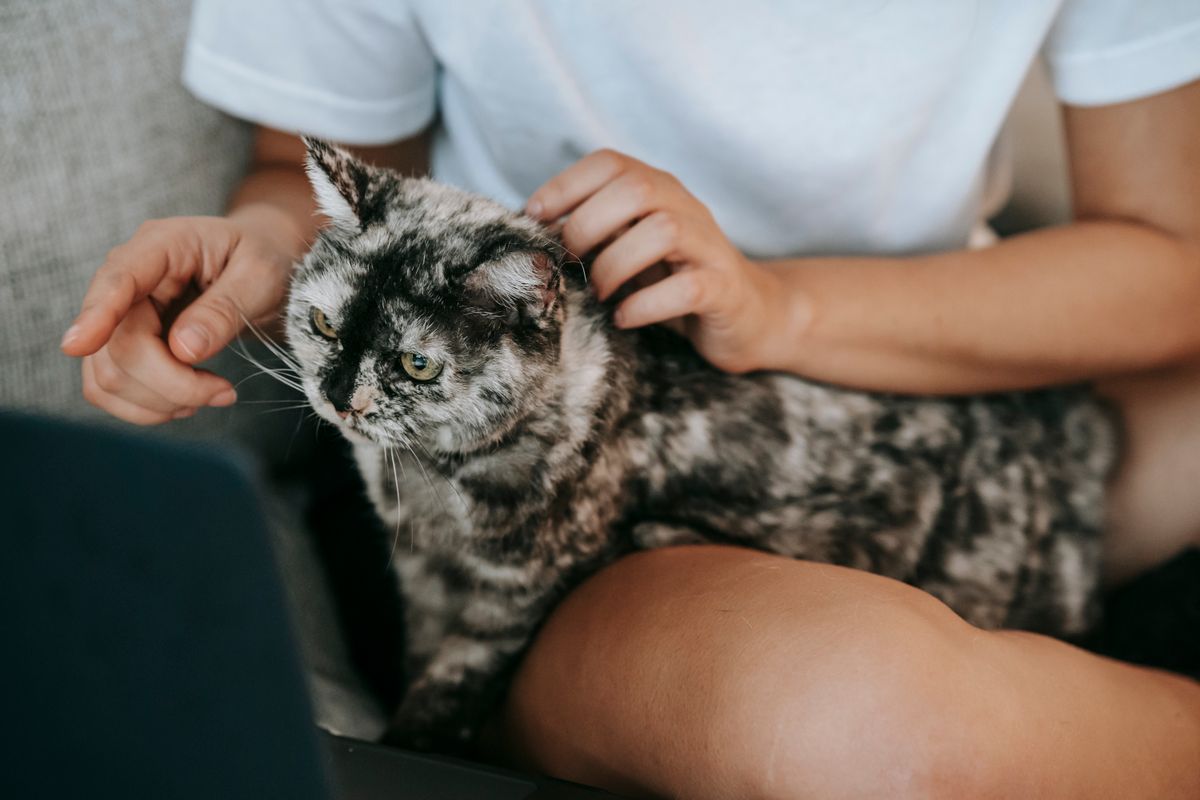
Pexels — Sam Lion, Cat With Owner Using Laptop (free to use)