Last updated: September 13, 2026 · Reading time: approx. 12 minutes
Peanut Butter, Xylitol and “Birch Sugar”: A Dog-Safe Label Guide

Pet toxicology & food-label safety · Evidence checked against current FDA, MSD Veterinary Manual, ASPCA and veterinary poison-control guidance.
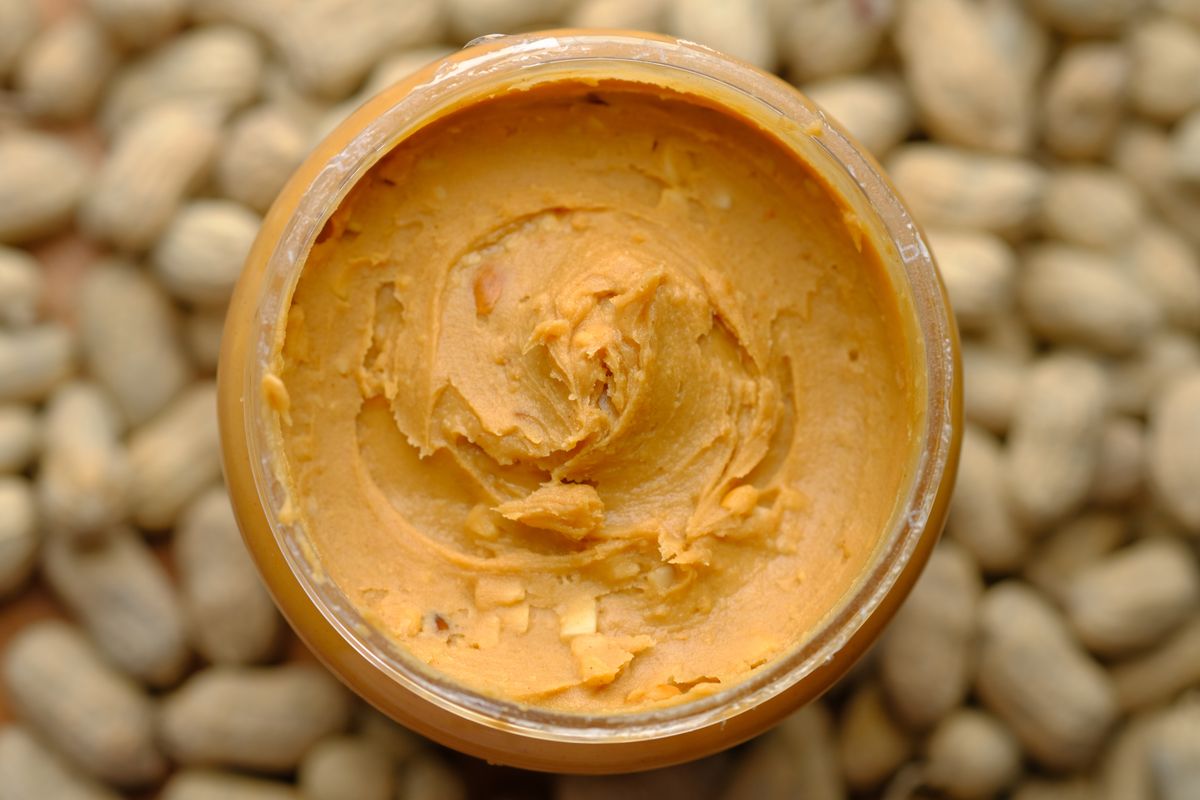
Peanut butter can be a useful dog treat or pill carrier, but some peanut and nut butters contain xylitol, a sweetener that can cause profound hypoglycemia and, at higher exposures, severe liver injury in dogs. FDA warns that xylitol may also be known as birch sugar, wood sugar or birch bark extract. What the evidence does not show is a coordinated hidden “rebrand” campaign. The durable safety habit is simpler: read the current ingredient list every time.
The label rule in 60 seconds
Xylitol listed? Do not give the product to a dog.
Birch sugar / wood sugar / birch bark extract? FDA warns these may refer to xylitol; avoid until clarified.
“Sugar-free” or “reduced sugar”? Inspect the ingredients. Those phrases do not prove xylitol is present.
Brand used safely before? Recheck the current jar because formulations and flavors can change.
Dog already ate it? Call a veterinarian, emergency animal hospital or animal poison-control service immediately if xylitol is present or the ingredient is uncertain.
Is “birch sugar” really xylitol?
FDA currently tells dog owners that xylitol may also be known as birch sugar, wood sugar and birch bark extract. Those are therefore meaningful warning terms when you are choosing a product that might be fed to a dog.
The careful wording is “may also be known as,” not “companies are secretly changing the name to fool dog owners.” The old article converted a genuine labeling problem into an intent claim that the sources do not establish.
What label claims are useful — and which are not?
| Label wording | What it means | Dog-safety action |
|---|---|---|
| Xylitol | Confirmed xylitol | Do not give to a dog. |
| Birch sugar / wood sugar / birch bark extract | FDA-listed alternate terminology | Avoid for dog use unless clarified. |
| Sugar-free / sugarless | Could contain xylitol or another sweetener | Read the full ingredient list. |
| Reduced sugar / no added sugar | Does not identify the replacement sweetener | Read the full ingredient list. |
| Natural / all-natural | Not a xylitol-safety guarantee | Ignore marketing language; inspect ingredients. |
| Peanuts only / peanuts + salt | No xylitol if that is truly the complete current ingredient list | Use modest portions because peanut butter is calorie-dense. |
Why the permanent “safe vs dangerous brands” list was removed
The old version named individual peanut-butter brands as permanently safe or dangerous. That is fragile advice: formulas, flavors and product lines change, and one company can sell multiple products with different sweeteners.
FDA's durable guidance is category-based: some peanut and nut butters may contain xylitol. For dog use, the current jar's complete ingredient list is more reliable than a historical internet list.
Does “sugar-free” automatically mean xylitol?
No. Xylitol is one possible sweetener, not the only one. MSD Veterinary Manual specifically advises checking the ingredient list of sugar-free products to determine whether xylitol is actually present.
That is why the old article's “most sugar-free products use xylitol” framing was removed. Sugar-free is a useful screening clue, not an ingredient diagnosis.
Where else can xylitol show up?
Gum, mints & candy
Classic exposure sources; concentration varies widely between products.
Nut butters & baked goods
FDA specifically includes some peanut/nut butters and sugar-free baked goods.
Dental products
Toothpaste, mouthwash and oral rinses may contain xylitol.
Medicines & supplements
Cough syrups, liquid medicines, chewable vitamins, gummies and sleep aids deserve label checks.
Nasal sprays
FDA includes some nasal-spray medicines among possible sources.
Cosmetics & personal care
MSD and poison-control sources describe xylitol in some cosmetics, deodorants and other non-food products.
For that separate exposure pattern, see Patify's xylitol in deodorant, lotion and skincare guide.
The 0.1 g/kg and 0.5 g/kg numbers: what they really mean
MSD Veterinary Manual associates xylitol doses above approximately 100 mg/kg (0.1 g/kg) with hypoglycemia in dogs. Some dogs ingesting more than about 500 mg/kg (0.5 g/kg) may develop severe hepatic insufficiency or failure.
| Approximate exposure | Veterinary meaning | What it does not mean |
|---|---|---|
| >0.1 g/kg | Associated with hypoglycemia risk | Not a guaranteed lethal dose |
| >0.5 g/kg | Raises concern for severe liver injury/failure in some dogs | Does not mean every dog develops liver failure |
| Unknown dose | Needs case-specific triage | Do not declare it safe because the dog looks normal |
The old article converted those weight-based thresholds into fixed gram amounts for one dog and wrote them as if they guaranteed an outcome. That is too deterministic. These values are veterinary risk thresholds, not a home “safe vs fatal” calculator.
How quickly can xylitol poisoning start?
FDA warns that xylitol poisoning can start within about 20 minutes. MSD gives a broader clinical picture: hypoglycemia can appear within about 30 minutes but may be delayed for 12–18 hours when the product slows absorption.
Clinical signs of liver injury can appear later — commonly 24–48 hours or more after ingestion — even though liver-enzyme changes may be measurable earlier.
Symptoms to watch for
| Possible early/hypoglycemia signs | Possible liver-injury signs | Action |
|---|---|---|
| Vomiting, weakness, lethargy | Persistent vomiting or marked lethargy | Call after known ingestion |
| Wobbling / ataxia | Jaundice | Urgent veterinary evaluation |
| Tremors or seizures | Abnormal bleeding / coagulopathy | Emergency |
| Collapse or coma | Severe liver insufficiency | Emergency |
If your dog ate peanut butter containing xylitol
1. Call immediately
Contact your veterinarian, emergency animal hospital or an animal poison-control service. Do not wait for weakness or seizures.
2. Keep the jar
Bring the package or photograph the ingredient list, brand/flavor, net weight and remaining amount. Xylitol concentration may not be printed.
3. Estimate the exposure
Note your dog's current weight, when the ingestion happened and approximately how much product is missing. Do not infer a xylitol percentage from ingredient order alone.
4. Do not induce vomiting on your own
MSD says emesis should ideally be attempted only under veterinary supervision and in dogs that remain clinically normal because hypoglycemia can develop rapidly.
5. Go directly to emergency care for neurologic signs
Weakness, wobbling, tremors, seizures, collapse or severe lethargy require urgent transport.
What the veterinarian may do
MSD describes treatment according to dose and clinical status: supervised GI decontamination in selected clinically normal dogs, serial blood-glucose monitoring, IV dextrose when needed, liver-enzyme monitoring and treatment of hepatic insufficiency or coagulopathy if it develops.
Activated charcoal is not recommended because it does not appreciably bind xylitol. Hepatoprotective therapy may be considered after higher exposures, although MSD notes that its efficacy in minimizing liver injury is not firmly established.
What about the “6,100+ ASPCA calls” statistic?
ASPCA did publish that its Animal Poison Control Center hotline had fielded more than 6,100 calls in response to xylitol ingestion in 2021. That is a real historical statistic.
The old article turned this into a standing annual rate and said the number continued to rise every year. That conclusion is not established by the cited 2021 source. In an evergreen article, the number belongs in dated context rather than as a permanent annual claim.
A five-second peanut-butter label check
- Read the ingredient list, not only the front of the jar.
- If you see xylitol, do not give it to your dog.
- If you see birch sugar, wood sugar or birch bark extract, treat it as a xylitol warning.
- If the product says sugar-free, reduced sugar or no added sugar, inspect the actual sweetener rather than assuming safe or dangerous.
- If the sweetener is unclear, choose a simpler product instead of gambling on a dog treat or pill carrier.
Current evidence check — September 13, 2026
| Old framing | Status | Evergreen replacement |
|---|---|---|
| Manufacturers are secretly “rebranding” xylitol | Intent not established | FDA says xylitol may also be known as birch sugar, wood sugar or birch bark extract. |
| Permanent safe/dangerous peanut-butter brand list | Ages badly | Read the current formulation every time. |
| Most sugar-free products use xylitol | Overgeneralized | Sugar-free is a cue to inspect the ingredient list. |
| A calculated gram amount guarantees hypoglycemia | Too deterministic | ~0.1 g/kg is an approximate hypoglycemia-risk threshold. |
| A calculated gram amount guarantees liver failure | Too deterministic | ~0.5 g/kg raises concern for severe liver injury in some dogs. |
| 6,100+ ASPCA calls every year | Historical figure misgeneralized | ASPCA documented more than 6,100 xylitol-ingestion calls in 2021. |
| Cross-toxin “times more toxic than chocolate” comparison | Not clinically useful | Use xylitol-specific dose-response and clinical guidance. |
Frequently asked questions
Is birch sugar exactly xylitol?
Does “sugar alcohol” mean xylitol?
Is single-ingredient peanut butter safer?
My dog ate xylitol peanut butter but looks normal. Can I watch at home?
Should I make my dog vomit?
Do I need to check a brand I've used before?
Bottom line
The real danger is serious enough without a secret-rebrand story. Xylitol is highly toxic to dogs, some peanut and nut butters can contain it, and FDA warns that labels may use terms such as birch sugar or wood sugar.
For an evergreen rule, forget permanent brand lists: read the current ingredient list every time, choose simple xylitol-free peanut butter for dog use, and contact veterinary help immediately after known or suspected xylitol ingestion.
This article provides general pet-safety information and does not replace veterinary or poison-control advice. Xylitol concentrations vary widely between products and may not be disclosed on consumer labels.