
Last updated: September 13, 2026 · Reading time: approx. 11 minutes
Xylitol (Birch Sugar) and Dogs: Peanut Butter Warning, Toxic Doses and What to Do

Pet safety & toxicology · Evidence checked against current FDA, MSD Veterinary Manual, ASPCA Animal Poison Control Center and peer-reviewed veterinary toxicology literature.
Xylitol poisoning in dogs is a genuine emergency, but some online warnings mix accurate toxicology with exaggerated label claims. The U.S. FDA currently warns that xylitol may also be known as birch sugar, wood sugar or birch bark extract. The important action is not to assume manufacturers are secretly “rebranding” xylitol: read the current ingredient list, keep xylitol-containing products away from dogs, and treat a suspected ingestion as time-sensitive.
The critical facts
Dogs are uniquely sensitive: xylitol can trigger a rapid insulin release and profound hypoglycemia.
~0.1 g/kg is a risk threshold, not a lethal dose: doses above about 100 mg/kg have been associated with hypoglycemia.
~0.5 g/kg raises liver concern: some dogs ingesting more than about 500 mg/kg develop severe liver injury or failure.
Symptoms are not always immediate: hypoglycemia can begin within about 20–30 minutes but may be delayed 12–18 hours depending on the product.
Liver injury is usually later: clinical signs may not appear until 24–48 hours after ingestion.
If your dog may have eaten xylitol: act now
1. Call a veterinarian or poison-control service immediately
Do this even if your dog still looks normal. Early triage matters because blood sugar can fall before obvious symptoms develop.
2. Keep the package
Bring or photograph the ingredient list, product name, package size and remaining amount. The xylitol concentration often varies dramatically between products.
3. Do not induce vomiting on your own
MSD Veterinary Manual says emesis should ideally be attempted only under veterinary supervision and only in dogs that remain clinically normal.
4. Do not improvise with honey or corn syrup unless instructed
Oral sugar is not a substitute for veterinary dextrose and monitoring. A weak, seizing or poorly responsive dog can aspirate material placed in the mouth.
5. If weakness, wobbling, tremors, seizure, collapse or marked lethargy appears, go directly to emergency care
Call ahead if possible, but do not wait for a poison-center calculation before transporting an unstable dog.
“Birch sugar” and xylitol: what the FDA actually says
The FDA's current pet-safety material says xylitol might also go by other names, including wood sugar, birch sugar and birch bark extract. That is a useful label-reading warning.
What the FDA warning does not establish is the viral claim that manufacturers recently began a coordinated effort to “hide” xylitol from dog owners or that a new year-specific labeling loophole suddenly appeared. The old crisis-style framing has therefore been removed.
Can peanut butter contain xylitol?
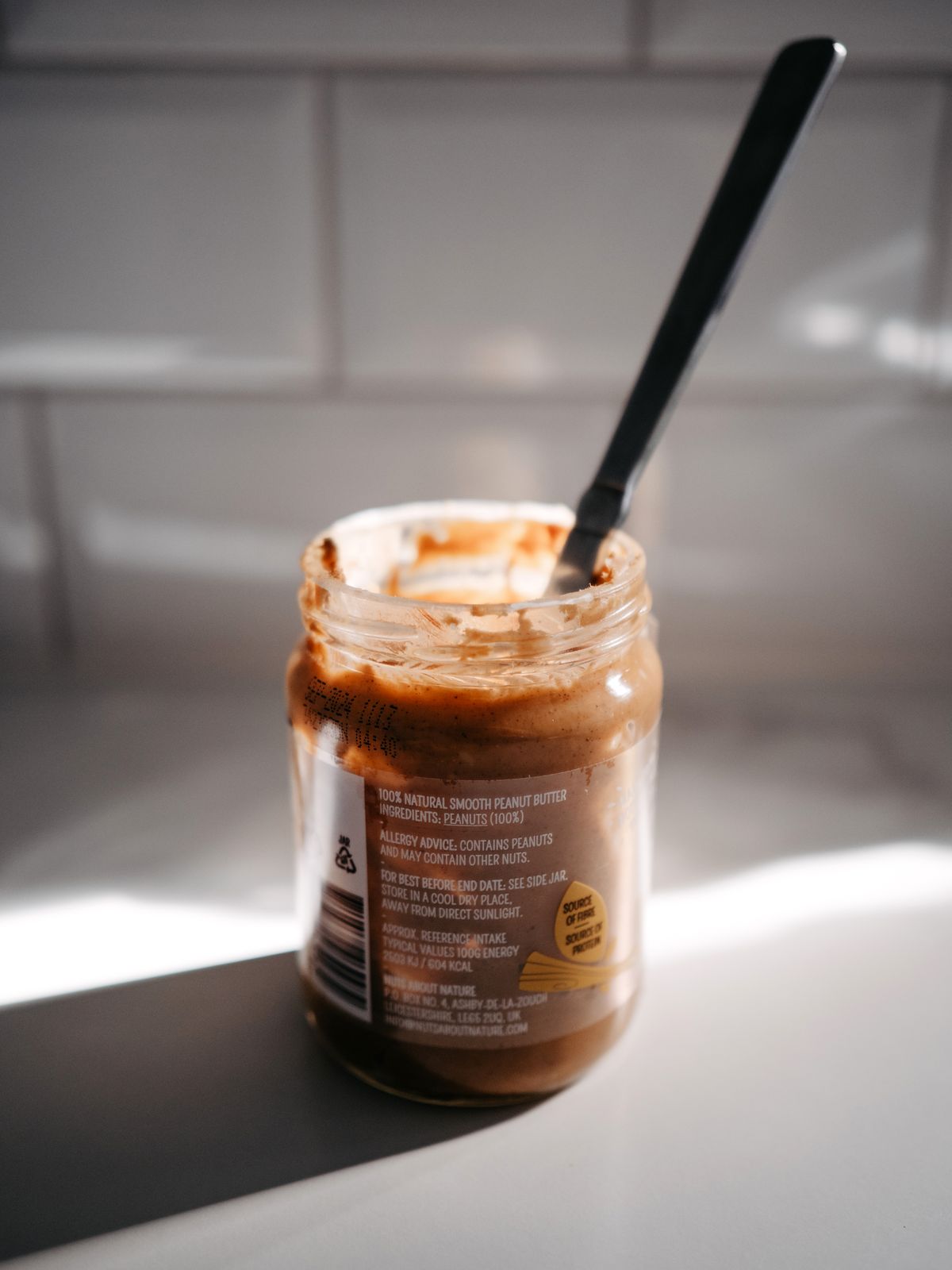
Yes. FDA, ASPCA and MSD Veterinary Manual all include some peanut or nut butters among products that may contain xylitol. That does not mean most peanut butter contains it, and it does not justify a permanent internet “safe brand / dangerous brand” list because formulas can change.
Peanut & nut butters
Check the ingredient list every time, especially products marketed as sugar-free, reduced-sugar or specialty diet foods.
Gum, candy & mints
Sugarless gum remains one of the classic dog exposures because xylitol content can be high and multiple pieces may be swallowed quickly.
Supplements & medicines
Chewable vitamins, gummies, liquid medicines and other formulations may contain xylitol as an inactive ingredient or sweetener.
Dental products
Toothpaste, mouth rinses and other human dental products may contain xylitol and should stay out of a dog's reach.
The 0.1 g/kg and 0.5 g/kg numbers: what they really mean
| Approximate xylitol exposure | Veterinary interpretation | What it does NOT mean |
|---|---|---|
| >100 mg/kg (~0.1 g/kg) | Associated with risk of hypoglycemia in dogs | Not a guaranteed lethal dose |
| >500 mg/kg (~0.5 g/kg) | Some dogs may develop severe liver injury or failure | Not every dog at this dose develops liver failure |
| Unknown dose | Needs professional triage because product concentration varies | Do not assume “one bite” is automatically safe |
These thresholds come from veterinary toxicology, but individual response varies. MSD notes that not every dog develops the same pattern, and liver injury can occur with or without preceding hypoglycemia.
How fast do symptoms start?
FDA warns that xylitol poisoning can begin very quickly. MSD Veterinary Manual gives the more complete picture: hypoglycemia can develop within about 30 minutes, but in products that slow absorption it may be delayed for 12–18 hours.
That matters because a normal-looking dog shortly after exposure is not automatically out of danger.
Liver failure does not usually happen “within 30 minutes”
The old article blurred rapid hypoglycemia with liver failure. They are not the same timeline.
MSD reports that liver-enzyme increases can become detectable within roughly 4–12 hours, while clinical signs of liver injury may not become apparent until 24–48 hours or later. ASPCA similarly notes that liver-related symptoms can be delayed for days.
Symptoms of xylitol poisoning in dogs
| Hypoglycemia / early toxicity | Possible liver injury | Emergency severity |
|---|---|---|
| Vomiting | Persistent vomiting or marked lethargy | Call immediately after known exposure |
| Weakness or decreased activity | Yellowing of skin/eyes (icterus) | Urgent / emergency evaluation |
| Wobbling / loss of coordination | Abnormal bleeding or bruising | Emergency |
| Tremors or seizures | Coagulopathy / liver failure | Emergency |
| Collapse or coma | Severe systemic illness | Emergency |
Why a label-first strategy beats a brand blacklist
A brand list ages badly. Products are reformulated, package sizes change, and even different flavors within the same brand can use different sweeteners. ASPCA specifically notes that xylitol content can vary widely between products.
Read the ingredient list before sharing human food
Do not assume “natural,” “keto,” “low sugar” or “no added sugar” means dog-safe.
Check medicines and supplements too
Do not limit your search to food. Liquid medicines, gummies, vitamins and oral-care products are important exposure sources.
Recheck products you have used before
A historically safe formulation can change. Treat the current package as the source of truth.
Use plain peanut butter only after checking ingredients
For a dog treat or pill, choose a product whose current ingredient list does not contain xylitol or an FDA-listed alternate name for it.
Current FDA terminology check — September 13, 2026
| Term | Current FDA pet-warning context | How Patify uses it |
|---|---|---|
| Xylitol | Confirmed toxic sweetener for dogs | Primary term |
| Birch sugar | FDA says xylitol may also be known by this name | Warning synonym, not evidence of a new 2026 labeling crisis |
| Wood sugar | FDA also lists this name | Warning synonym |
| Birch bark extract | Included in FDA's pet-safety warning as another name xylitol may go by | Treat ambiguous labeling cautiously and verify rather than assuming a product is safe |
Should you rub honey or corn syrup on the gums?
Not as a routine owner-directed step. The old article recommended doing this while driving to the emergency hospital. That is too broad.
Dogs with neurologic impairment can aspirate material placed in the mouth, and oral sugar does not replace the controlled IV dextrose and monitoring used in veterinary treatment. If a veterinarian or poison specialist gives you a specific instruction for your dog, follow that advice; otherwise prioritize rapid professional care.
What the veterinarian may do
Treatment depends on the estimated dose and the dog's condition. MSD describes veterinary management that can include supervised GI decontamination in selected clinically normal patients, serial blood-glucose monitoring, IV dextrose when needed, liver-enzyme monitoring and treatment of liver insufficiency or coagulopathy if it develops.
Activated charcoal is not considered useful for xylitol because it does not bind it appreciably.
Emergency contacts — verified September 2026
Frequently asked questions
Is 0.1 g/kg of xylitol lethal to a dog?
Does 0.5 g/kg always cause liver failure?
My dog looks fine 30 minutes later. Are we safe?
Is birch sugar really xylitol?
Can I use peanut butter to give my dog medicine?
Should I make my dog vomit?
Bottom line
The real warning is serious enough without a “secret rebranding” story. Xylitol can cause profound hypoglycemia in dogs and, at higher exposures, severe liver injury. FDA says consumers may encounter the ingredient under terms such as birch sugar or wood sugar, and it can appear in some peanut/nut butters as well as many non-food products.
The durable safety rule is simple: read the current label, do not feed a dog any product containing xylitol, keep high-risk products out of reach, and call a veterinarian or poison-control service immediately after suspected ingestion rather than waiting for symptoms.
This article provides general emergency information and does not replace veterinary or poison-control advice. Xylitol concentration varies widely by product, and the correct response depends on the dog's weight, estimated dose, product and clinical condition.