

Last verified: October 2, 2026
Rat Food: Build the Diet Around a Complete Rat Pellet, Not a Seed Buffet
Quick answer: for most healthy adult pet rats, the most defensible starting point is a nutritionally complete rat-specific pelleted/block food as the base, with measured vegetables and small amounts of other foods for variety and enrichment. Mixed seed/nut diets make selective feeding easy and can push calories up while micronutrient balance goes down.
Patify rat-diet rule: think complete base → controlled fresh foods → tiny energy-dense treats → fresh water → weekly weight/body-condition trend. Do not build the menu from isolated internet superfoods or one universal gram target.
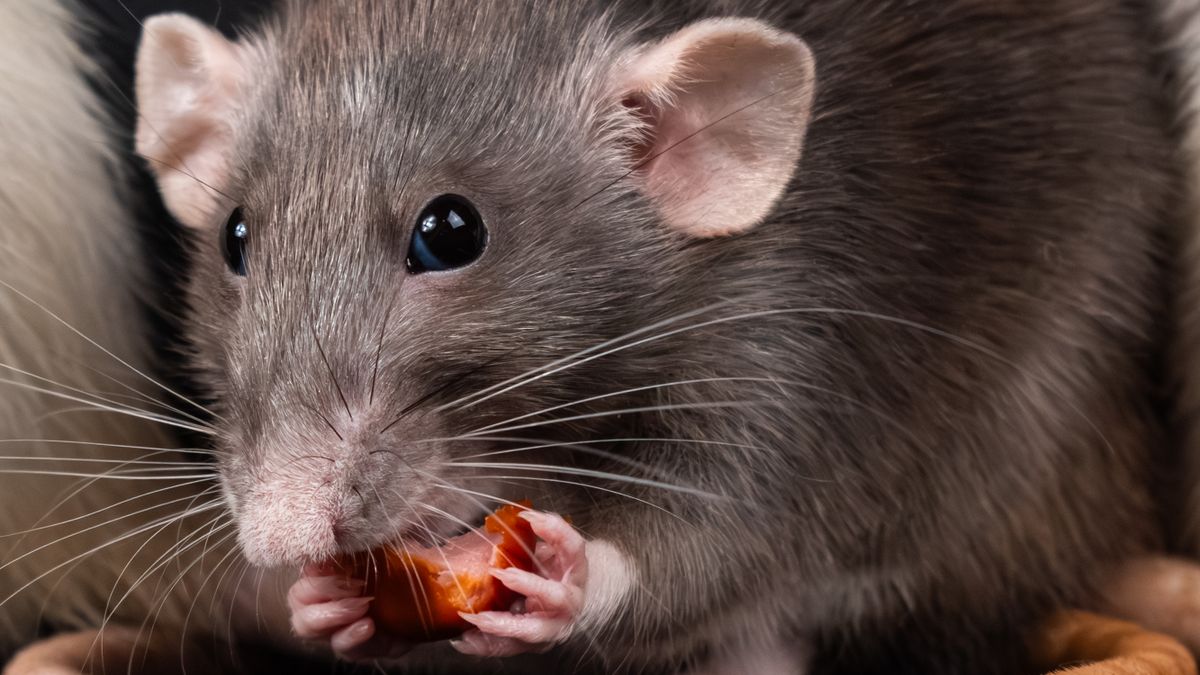
A Practical Rat-Food Framework
| Diet layer | Role | Good examples | Main mistake |
|---|---|---|---|
| Complete base | Provides balanced protein, fat, carbohydrate, vitamins and minerals | Rat-specific complete pellet/block | Using colorful seed mix as the staple |
| Fresh plant foods | Variety, fiber, water, enrichment | Leafy greens, broccoli, bell pepper, carrot, squash | Letting extras displace the complete diet |
| Fruit | Palatable variety | Small measured pieces of suitable fruit | Large daily sugary portions |
| Omnivore extras | Occasional variety, not required if base is complete | Small amount of cooked egg or plain cooked grain | Adding protein because “rats need meat every day” |
| Training treats | Behavioral reinforcement | Tiny pieces taken from daily allowance | Untracked nuts/seeds/high-fat snacks |
| Water | Continuous hydration | Clean reliable bottle(s), checked daily | Assuming a bottle is flowing without checking |
1. Choose a Complete Rat-Specific Base Diet
Merck describes rats as omnivores and recommends formulated rodent diets as the nutritional foundation. VCA likewise recommends a high-quality nutritionally balanced rodent chow, with species-specific pellets preferred for rats. RSPCA specifically advises using commercial food made for rats rather than rabbit, guinea-pig, hamster or other herbivore pellets.
The reason is simple: a rat can eat an impressive variety of foods without that mixture being nutritionally complete. A formulated block makes it harder to select only the tastiest high-fat components.
Why mixed seed bags are a weak staple
Merck warns that mixtures containing pellets plus seeds encourage rats to pick out the seeds and leave the balanced components. VCA similarly discourages seed-and-nut-heavy diets because they are energy dense and easy to select preferentially.
A few seeds or nuts can still be useful as training rewards or foraging items. The problem is using them as the nutritional base.
2. Fresh Foods: Variety Without Replacing the Complete Diet
VCA offers a useful conservative framework: the great majority of intake should remain nutritionally complete pellets, with vegetables/fruit making up a small minority. RSPCA likewise recommends small amounts of fruits, vegetables, cooked egg, grains and seeds as part of—not on top of—daily food allowance.
Vegetables
- leafy greens;
- broccoli or cauliflower in small amounts;
- bell pepper;
- carrot;
- squash/pumpkin;
- peas or green beans as measured variety.
Wash produce and remove uneaten fresh food before it spoils. Introduce new foods gradually; sudden large changes can upset intake and stool consistency.
Fruit
Fruit is best treated as a smaller, less frequent portion because it is easy to turn a “healthy food” into excess calories. Use tiny pieces rather than a bowl of fruit beside the normal ration.
Egg, grains and other omnivore foods
RSPCA includes small amounts of cooked egg and grains as possible variety foods. A healthy rat eating a complete diet does not need daily meat, egg or protein powder. Growth, pregnancy, lactation and illness change nutritional needs and should be handled with an appropriate formulation or exotics-veterinary plan rather than improvised protein loading.
3. Treats: Count Them Because Rats Will Not
VCA recommends that treats remain a small part of the total diet and places seeds/nuts, pasta, unsalted popcorn and whole-grain crackers in the occasional-treat category. RSPCA also warns against high-fat and sugary foods.
| Treat | Why rats like it | Why to keep it small |
|---|---|---|
| Sunflower seed | High palatability; easy to hold | Energy dense |
| Peanut/nut fragment | Fat and texture | Easy calorie excess |
| Cooked pasta/grain | Starch; easy reward | Can displace complete food |
| Fruit piece | Sweet/wet | Sugar and calories add quickly |
For training, cut rewards absurdly small. The rat cares about the number and timing of reinforcers more than whether each piece is human-snack sized.
4. Foods to Avoid: Separate Conservative Guidance From Proven Toxic Doses
Rat toxicology is not as standardized for household foods as dog/cat poison lists. RSPCA takes a conservative approach and advises avoiding onion, citrus fruits, walnuts, rhubarb, grapes, raisins and chocolate, as well as limiting sugary/high-fat foods.
Patify follows that conservative avoid list for a general-owner guide, but we do not label every item as having a universal, experimentally established lethal dose in pet rats. Evidence quality and dose-response data differ by food.
Also avoid spoiled/moldy food, alcohol-containing foods/drinks, highly caffeinated products and anything contaminated with cleaners, pesticides or medications. If a rat eats a questionable substance and develops weakness, tremors, breathing difficulty, repeated diarrhea, collapse or a major behavior change, contact an exotics veterinarian or poison service rather than waiting for a food list to settle the diagnosis.
5. How Much Rat Food Should You Feed?
There is no responsible single gram number for every pet rat. Body size, sex, age, reproductive status, activity, product energy density, health and whether multiple rats share food all change the answer.
Current sources also differ in feeding style. VCA’s owner guidance says fresh complete food should be available, while Merck’s professional rodent-nutrition material warns that some laboratory rodent diets are relatively high in fat/low in fiber and can cause obesity when offered ad libitum. RSPCA suggests twice-daily feeding and adjusting quantity so rats finish the allowance while maintaining healthy weight.
Practical resolution: follow the complete food manufacturer’s starting directions, measure what you offer, track body weight and condition, and adjust with an exotics veterinarian if weight trends up or down. Do not turn “free choice” or “twice daily” into a universal law independent of the food and rat.
6. How to Read a Rat-Food Label
- Species/intent: look for a product formulated as a complete food for rats or appropriate omnivorous rodents—not a rabbit/guinea-pig pellet.
- Complete diet claim: the product should be intended to supply the staple ration, not merely treats or a complementary seed mix.
- Uniform pieces: blocks/pellets reduce selective feeding compared with muesli-style mixes.
- Life stage: check whether the formulation is intended for adult maintenance, growth or reproduction.
- Feeding directions: use the manufacturer’s amount as a starting estimate, not a substitute for monitoring the rat.
- Energy-dense extras: if the daily ration contains many nuts/seeds/fatty inclusions, “premium” marketing does not automatically mean nutritionally better.
Do not choose rat food solely from the crude-protein number. A complete diet is a package of amino acids, fat, fiber, vitamins, minerals, energy density and ingredient quality.
7. Young, Pregnant, Senior or Sick Rats Need a Different Decision Process
Growing rats
Growth changes energy and nutrient requirements. Use a formulation intended for the life stage rather than diluting a balanced juvenile diet with large volumes of fruit/vegetables.
Pregnancy and lactation
Reproduction raises nutritional demands. Merck notes that formulated laboratory rodent diets are designed to be nutritionally balanced for early life and reproduction, but the appropriate commercial food and quantity still depend on energy density and the individual.
Older or overweight rats
Obesity risk becomes a major management issue. Merck specifically warns that unrestricted access to some high-energy laboratory rodent diets can drive obesity. The fix is not starvation—it is measured complete nutrition plus activity and veterinary assessment.
Sick rats
Do not “treat” sudden weight loss or appetite loss by improvising a high-calorie home diet for days. Dental disease, respiratory illness, tumors, kidney disease and other conditions can change eating. A rat that stops eating, cannot chew normally, loses weight rapidly or becomes weak needs an exotics-veterinary assessment.
8. Foraging Enrichment Without Doubling Calories
RSPCA encourages foraging because rats naturally search, carry and manipulate food. The trick is to make the same daily ration harder to find instead of adding a second ration as enrichment.
- scatter part of the measured pellets through clean bedding;
- hide pellets in cardboard tubes or plain paper parcels;
- place a few vegetable pieces in different cage levels;
- reserve tiny seeds for training and hide-and-seek;
- offer a cooled cooked egg occasionally as a supervised problem-solving item, as RSPCA suggests, while accounting for its calories.
Do not scatter wet food where it can disappear into bedding and spoil.
9. Track the Rat, Not Just the Bowl
RSPCA recommends regular weighing. A simple weekly trend is more useful than guessing whether a rat “looks chunky” under loose skin and fur.
| Track | What you want to see | Why it matters |
|---|---|---|
| Body weight | Stable trend appropriate to life stage | Detects gradual obesity or hidden illness |
| Body condition | Neither prominent bones nor excessive fat pads | Weight alone cannot distinguish frame/lean tissue/fat |
| Pellet intake | Complete food actually eaten | Prevents treats from quietly replacing the staple |
| Fresh-food leftovers | Removed before spoilage | Reduces hygiene risk |
| Water bottle flow | Reliable every day | A full blocked bottle is still no water |
| Chewing/eating behavior | Normal manipulation and appetite | Changes can flag dental or systemic disease |
Frequently Asked Questions About Rat Food
What is the best food for pet rats?
A nutritionally complete rat-specific pellet/block is the strongest default base, supplemented with measured fresh foods and small treats.
Can rats live on seeds and nuts?
They can eat them, but seed/nut mixes are poor staple diets because rats can selectively eat the highest-fat pieces and leave balanced pellets.
Can pet rats eat vegetables every day?
Yes, suitable washed vegetables can be offered in measured portions. Keep the complete diet as the nutritional base.
Can rats eat fruit?
Small amounts can be used for variety, but fruit is easy to overfeed because of its palatability and sugar.
Do rats need meat or eggs?
Rats are omnivores, but a complete commercial diet already supplies required protein. Small amounts of cooked egg can be variety food; daily animal protein is not automatically necessary.
How often should I feed my rats?
Sources differ between continuous access and measured/twice-daily feeding. Use the product directions as a starting point and adjust to weight/body condition with veterinary guidance.
Can rats eat chocolate?
RSPCA advises avoiding chocolate. For a general pet guide, the safest choice is not to use it as a treat.
Can rats eat citrus?
RSPCA includes citrus on its conservative avoid list. Rather than treating internet arguments about sex-specific citrus toxicology as permission to experiment, choose another fruit.
Do pet rats need vitamin supplements?
VCA states that rats eating an appropriate complete pelleted diet generally do not need extra vitamins unless a veterinarian identifies a specific need.
Why is my rat suddenly eating less?
Sudden appetite reduction can reflect dental disease, pain, respiratory illness or other medical problems. Check weight and seek exotics-veterinary care if the change persists or comes with other signs.
Sources Checked
- Merck Veterinary Manual — Mice and Rats as Pets
- Merck Veterinary Manual — Nutrition in Rodents and Lagomorphs
- VCA Animal Hospitals — Feeding Rodents
- RSPCA — What to Feed Pet Rats
- RSPCA — Rat Health and Weight Monitoring
Sources reviewed October 2, 2026.