

Last verified: October 2, 2026
Rat Cage Setup: Build for Airflow, Movement and Easy Cleaning
Quick answer: choose a large, tall wire-sided cage with a solid floor, then divide it into sleeping, foraging, climbing, toilet and open-movement zones. As a practical welfare benchmark, Blue Cross recommends at least 90 × 60 × 120 cm (35 × 24 × 47 in) of actual living space for two to five rats. RSPCA Australia notes that science has not established one evidence-based “optimal” companion-rat cage size, so larger usable space is still preferable.
Patify setup rule: do not judge a cage by the number of shelves. Judge it by ventilation + usable floor volume + fall safety + social resources + cleaning access.
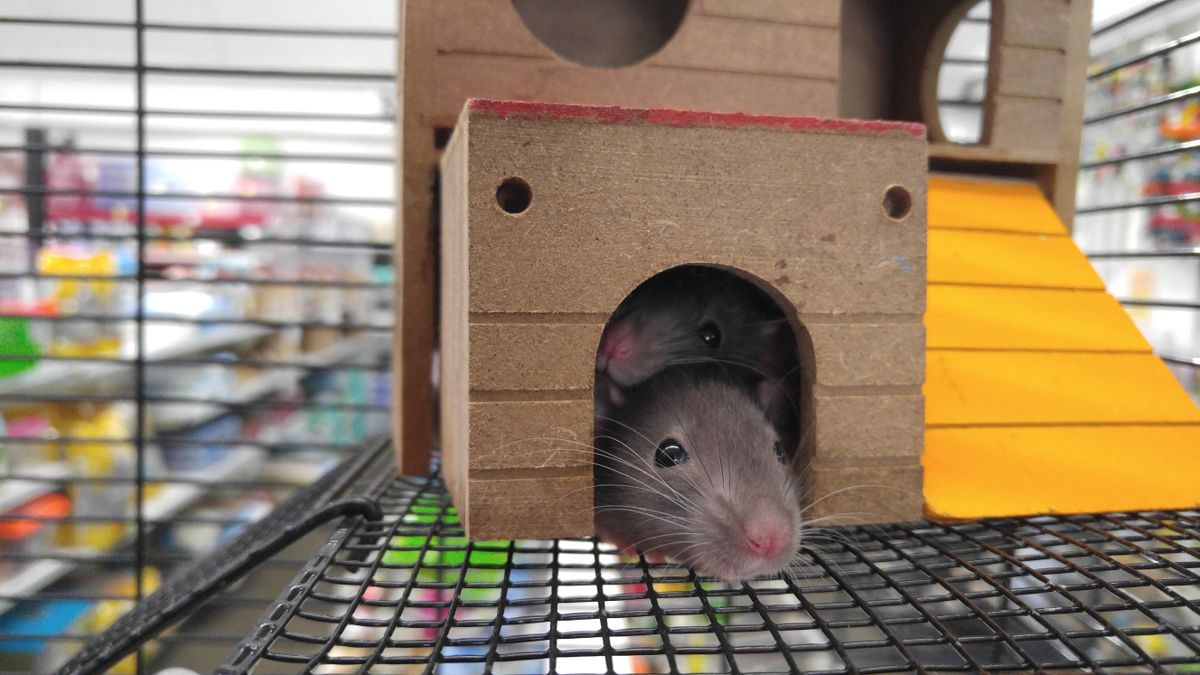
1. Start With the Cage Shell: Wire Sides, Solid Floor
Merck and RSPCA both emphasize ventilation. Rats urinate frequently, and ammonia can accumulate in poorly ventilated housing. Aquariums and mostly solid-sided tanks are therefore poor permanent homes even when they have a mesh lid.
A powder-coated or stainless wire cage with a waterproof solid base is easier to ventilate and clean. Avoid exposed wire floors: Merck warns they can trap feet and contribute to leg injuries.
Do not turn a glass aquarium into a “rat terrarium.” Deep bedding does not compensate for poor lateral airflow.
2. Size: Use a Welfare Benchmark, Not a Cage Calculator as Gospel
Blue Cross currently recommends a cage at least 90 cm long × 60 cm deep × 120 cm high for two to five rats, excluding the stand. RSPCA Australia is more cautious scientifically: it says there is no evidence-based companion-rat optimum and recommends as much space and complexity as owners can responsibly provide.
| Check | Useful benchmark | Why |
|---|---|---|
| Living dimensions | ≥90 × 60 × 120 cm for 2–5 rats (Blue Cross) | Allows horizontal movement plus meaningful vertical layout |
| Adult bar spacing | ≤2.5 cm / 1 in (RSPCA Australia) | Head-through gaps become escape routes |
| Juvenile/small rat spacing | Smaller than adult spacing; Lafeber suggests ~1/2 in for babies | Young rats can pass through surprising gaps |
| Wire shelf openings | If wire is used, Merck recommends no wider than 1/2 × 1/2 in | Reduces hind-foot entrapment |
More animals require more resources and usable area. “Volume per rat” calculators can help flag obviously tiny cages, but they cannot measure ventilation, resource competition or a dangerous fall path.
3. Build Five Functional Zones
| Zone | What goes there | Design test |
|---|---|---|
| Sleep / retreat | Multiple hides, enclosed hammocks, nesting material | Can one rat rest away from another? |
| Forage | Scatter-fed pellets, paper parcels, food puzzles | Does feeding require searching/manipulation? |
| Climb / travel | Ropes, branches, ladders, ledges, hammocks | Are there several routes between levels? |
| Toilet | Litter tray in the preferred corner | Can soiled material be removed without dismantling the cage? |
| Open movement | Uncluttered platform/floor volume | Can rats stretch, wrestle, rear and turn without hitting décor? |
RSPCA explicitly warns that enrichment should not take over the entire cage. A cage can be “full of stuff” yet poor for movement.
4. Make Height Useful Without Creating a Fall Shaft
Tall cages suit rats because they climb, but an unobstructed multi-foot drop is not enrichment. Use overlapping shelves, hammocks, cargo-style nets or broad bridges to break major vertical falls.
For young mobile rats, routes can be challenging. For heavy adults, seniors or rats with hind-limb weakness, lower the difficulty: more ramps, wide shelves, shorter transfers and dense fall-catching hammocks.
Fall test: look straight down from every high perch. If a startled rat could fall from that point to the hard base without contacting a shelf or hammock, add a catch layer.
5. Flooring and Bedding: Dry, Absorbent, Low-Dust
Merck recommends absorbent bedding and identifies recycled paper products as safe/easy to clean. Its current guidance discourages cedar, pine and other aromatic wood shavings because oils can irritate sensitive rat respiratory tracts.
RSPCA Australia emphasizes daily checks for wet/soiled bedding. Whatever product you use should be low-dust, absorbent and comfortable to manipulate. Deep loose bedding on at least one level also supports digging and food searching.
Fleece can cover shelves, but it is not magic: if urine remains trapped beneath it, ammonia still becomes a husbandry problem.
6. Duplicate the Resources Rats Compete Over
Rats are social, but social does not mean they should be forced to share one bottleneck. For a group, provide:
- multiple sleeping places;
- more than one elevated/resting option;
- at least two water access points for larger groups or whenever bottle failure would be dangerous;
- feeding/foraging opportunities spread across the enclosure;
- several routes up and down the cage.
Check water bottles every day for flow. A bottle can look full and still be blocked.
For the nutrition side of the setup, use Patify’s pet-rat food guide; for coat/ear/marking terminology, see fancy rat varieties.
7. Enrichment Should Rotate, Not Become Permanent Wallpaper
Merck notes that rats use climbing/exercise devices and that novelty matters. Useful cage enrichment includes cardboard tunnels, paper nesting material, ropes, branches, hammocks, chew-safe manipulable objects and food puzzles.
If you use a wheel, Merck recommends a smooth interior rather than perforated running surface and gives about 12–14 inches as an appropriate rat wheel diameter. Many adult rats ignore wheels; the enclosure still needs movement routes without one.
Rotate some items instead of replacing the whole scent map at once. Rats benefit from novelty, but total weekly redesign can remove familiar safe locations.
8. Cleaning: Remove Ammonia Without Sterilizing the Social Scent Map
Sources give different fixed cleaning schedules because cage size, rat number, bedding depth and toilet habits differ. Use a contamination-based plan:
- Daily: check water, remove spoiled fresh food, remove obvious wet/soiled bedding, wipe heavily soiled hard surfaces.
- Several times weekly as needed: refresh litter trays and high-urine zones.
- Regular full clean: Merck recommends hot water/pet-safe disinfectant at least weekly and bedding changes at least twice weekly in its general owner guidance; deep-bedding systems may be managed differently if ammonia remains controlled.
If you can smell ammonia at rat level, the cage is already overdue for husbandry changes. Improve ventilation, absorbency, toilet placement and cleaning frequency rather than masking odor with fragrance.
9. Where to Put the Cage
RSPCA UK gives an ideal household temperature around 19–23°C (66–73°F); Merck's broader pet-rat range is 18–26°C (64–79°F). Keep the cage away from direct sun, strong drafts, heaters, air-conditioning blasts, smoke, air fresheners and cooking fumes.
Rats are social and usually benefit from a room where household life happens, while still receiving a predictable dark/quiet period. Remember that they are especially active at night.
10. Senior or Mobility-Limited Rat Setup
A cage that worked at six months may become unsafe at two years. Watch for missed jumps, hind-end weakness, slipping and reluctance to climb.
- lower food/water and favorite beds;
- add broad shallow ramps;
- increase solid intermediate shelves;
- place hammocks below transitions;
- use low-entry litter trays;
- keep all essentials accessible without climbing.
Sudden weakness, weight loss, noisy/rapid breathing or major mobility change needs a rat-experienced veterinarian rather than an enclosure redesign alone.
Frequently Asked Questions About Rat Cage Setup
What size cage do two rats need?
Blue Cross recommends at least 90 × 60 × 120 cm for two to five rats. RSPCA Australia notes that no evidence-based optimum has been established, so larger usable space is preferable.
Can rats live in a glass aquarium?
Not as a suitable permanent home. Merck and RSPCA warn that mostly solid-sided enclosures have poor ventilation and allow ammonia buildup.
What bar spacing is safe?
RSPCA Australia recommends no larger than 2.5 cm for adults, with smaller spacing for juveniles. Lafeber uses about 1/2 inch as a baby-rat reference.
Do rats need multiple levels?
Vertical complexity is valuable, but shelves should not replace floor movement or create long fall shafts.
Is wire flooring safe?
Solid flooring is preferred. Wire mesh can trap feet/legs and contribute to injury.
How often should a rat cage be cleaned?
Spot-check every day and clean according to contamination. Merck's general owner guidance calls for at least weekly cage cleaning and frequent bedding changes, but the real endpoint is dry, low-ammonia housing.
Should the cage be in a bedroom?
It can be, but rats are active at night. The room must also avoid temperature extremes, drafts, fumes and direct sunlight.
Sources Checked
- RSPCA — Creating a Good Home for Rats
- RSPCA Australia — Rat Housing
- Blue Cross — Caring for Your Pet Rat
- Merck Veterinary Manual — Providing a Home for a Rat
- Merck Veterinary Manual — Mice and Rats as Pets
Sources reviewed October 2, 2026.