

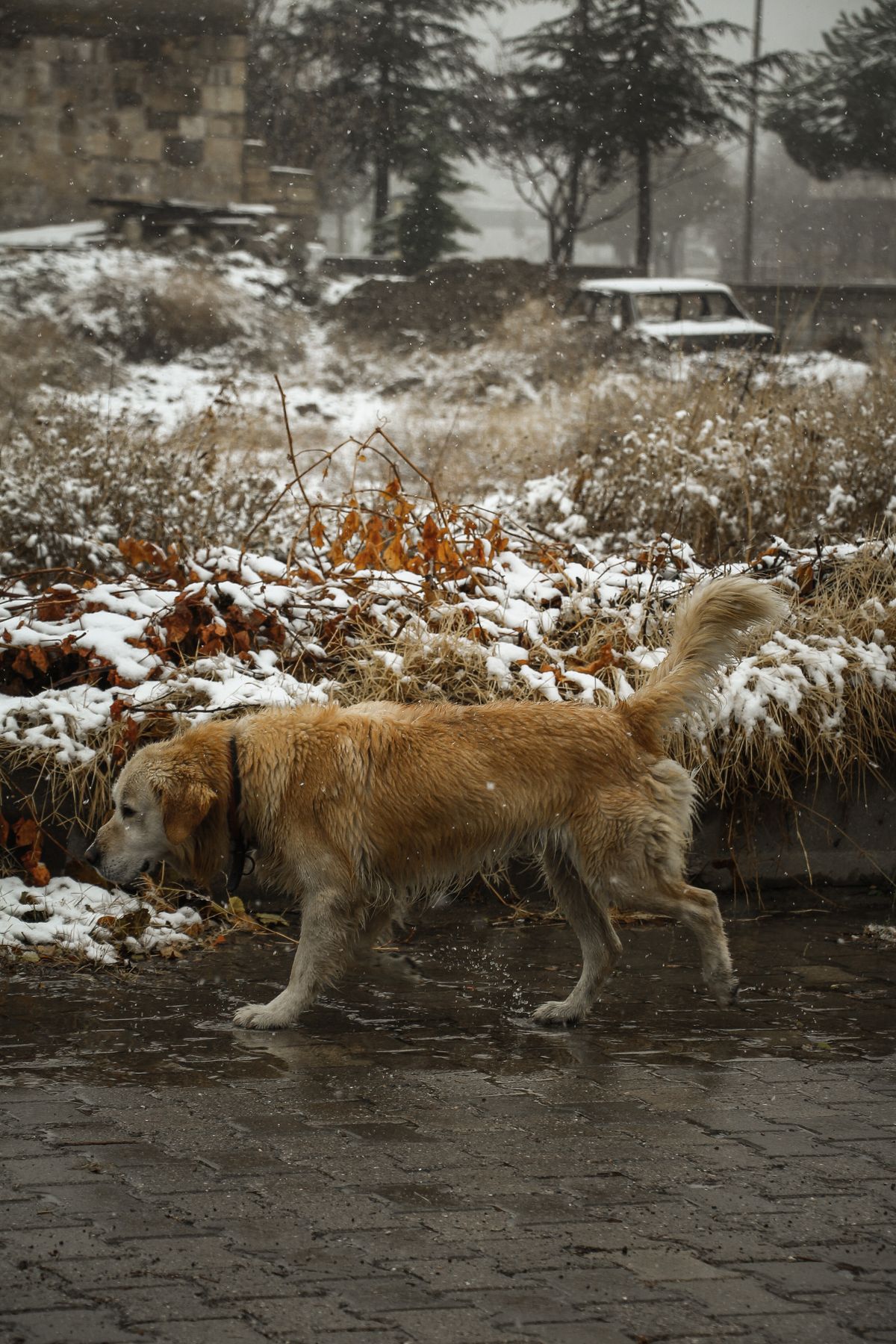
Road Salt & Ice Melt and Dogs in Canada: Paw Irritation, Poisoning Signs & What to Do
Short answer: A few licks from paws after an ordinary salted walk usually cause, at most, mild drooling or stomach upset. The bigger risks are repeated exposure, eating salt-contaminated snow or slush, or getting into an ice-melt bag or container. Road salt can also dry and irritate paw pads. After winter walks, wipe or rinse paws before your dog grooms them; if your dog swallowed more than a casual lick, is repeatedly vomiting, seems weak or unsteady, trembles, has a seizure, or may have eaten directly from a de-icer container, contact a veterinarian or veterinary poison service promptly.
🚨 Suspected significant ingestion? Do not use salt, hydrogen peroxide, or another home remedy to make your dog vomit unless a veterinarian or veterinary toxicology professional specifically directs you. Save the product bag or photograph the ingredient label. In Canada, Pet Poison Helpline is available 24/7 at (855) 764-7661; a consultation fee applies.
Why Road Salt Is a Real Canadian Winter Exposure
Environment and Climate Change Canada says roughly 5 million tonnes of road salts are spread on Canadian roads in a typical year. In the federal Road Salts Code reporting data for winter 2023–24, participating organizations reported about 3.94 million tonnes of solid road salt, including 1.68 million tonnes in Ontario. Those figures do not represent every private or public use, but they show how routine salt exposure is during Canadian winters.
For dogs, the common scenario is not usually eating a pile of salt. ASPCA Poison Control reports that its most frequent ice-melt concern is pets licking their feet after walking through treated areas. ASPCApro notes that a couple of licks of a paw or treated ground generally do not cause serious problems; mild drooling, vomiting or diarrhea are more typical. The concern rises when a dog eats a larger amount directly, repeatedly consumes salty snow or slush, or has underlying disease that makes electrolyte disturbances harder to tolerate.
What Is in Road Salt and Ice Melt?
“Ice melt” is a category, not one chemical. Labels may list sodium chloride, calcium chloride, magnesium chloride, potassium chloride, urea or other ingredients. Risk depends on the actual ingredient, concentration, amount swallowed and the dog’s health.
| Ingredient | Typical concern | What a larger ingestion can do |
|---|---|---|
| Sodium chloride rock salt / road salt | Paw drying and irritation; mild GI upset after small ingestion | Salt toxicosis / hypernatremia, with weakness, ataxia, tremors or seizures |
| Calcium chloride | More locally irritating to skin, mouth and GI tract | Large ingestion can cause painful oral and gastric ulceration |
| Magnesium chloride | GI irritation | Very large ingestions can cause electrolyte problems; risk may be greater with kidney disease |
| Potassium chloride | GI irritant | Large exposure may produce significant GI irritation; sustained hyperkalemia is more likely when renal excretion is impaired |
| Urea-based melt | ASPCApro describes urea as the least stomach-irritating of common ice-melt ingredients | Not non-toxic: larger ingestion can still cause salivation, GI signs, weakness or tremors |
| Calcium magnesium acetate (CMA) | Often marketed as a less corrosive alternative | Still should not be treated as edible or completely risk-free |
⚠️ Read the label instead of relying on “pet-safe.” Pet Poison Helpline emphasizes that all ice melts have some potential to cause harm. “Pet-friendly” generally means lower irritation or lower toxicity when used correctly—not that a dog can safely eat the product.
How Much Salt Is Dangerous to a Dog?
For sodium chloride itself, Merck Veterinary Manual reports that dogs can develop clinical signs after roughly 2–3 g/kg, while the acute oral lethal dose is about 4 g/kg. Pet Poison Helpline gives the same approximate 4 g/kg lethal-dose reference.
Those figures are toxicology reference points, not a home calculation for deciding whether treatment is necessary. Commercial ice melts vary widely in ingredient and concentration, owners rarely know exactly how much was swallowed, and access to fresh water and the dog’s health affect risk. If your dog ate directly from a bag, bucket or concentrated pile, call before waiting for symptoms.
💡 Salt toxicosis is also different from antifreeze poisoning. If a winter product label lists ethylene glycol, or your dog licked automotive antifreeze, treat that as a separate emergency. See Patify’s dog antifreeze emergency guide.
Signs of Ice Melt or Salt Poisoning in Dogs
| Exposure pattern | Possible signs | Recommended response |
|---|---|---|
| Brief paw licking after a normal walk | Mild drooling, one episode of vomiting, loose stool—or no signs | Clean paws, stop further licking and observe. Call if symptoms persist or worsen. |
| More than a casual lick / repeated salty-snow ingestion | Repeated vomiting or diarrhea, marked thirst, lethargy, dehydration | Call a veterinarian or veterinary poison service for case-specific advice. |
| Large or concentrated sodium-chloride ingestion | Weakness, disorientation, stumbling, tremors, seizures, collapse | Emergency veterinary care. |
| Large calcium-chloride ingestion | Drooling, oral pain, reluctance to eat/drink, vomiting; oral or GI ulceration may occur | Prompt veterinary assessment. |
| Paw injury | Redness, licking, limping, cracked pads; severe injury may cause open or discoloured tissue | Rinse the paw. Seek veterinary care for significant pain, bleeding, an open wound, discoloration or persistent limping. |
The Best Post-Walk Paw Routine
The most useful prevention step is simple: remove salt and de-icer residue before your dog has time to lick it off. The Canadian Veterinary Medical Association recommends carefully washing feet and considering booties or other protection during winter.
1. Check
Look between the toes and around the pads for salt crystals, packed snow, ice balls, redness, cracks or tenderness.
2. Wipe or rinse
Use a damp cloth or lukewarm water to remove road-salt and ice-melt residue. Pay attention to the spaces between toes.
3. Dry
Pat the paws dry, including between the toes. This also gives you another chance to notice irritation or injury.
4. Prevent the next exposure
Booties can create the most direct barrier. A dog-specific paw wax or balm can also reduce contact when your dog will not tolerate boots.
✅ For an ordinary winter walk, you do not need an elaborate “detox” protocol. A thorough wipe or lukewarm-water rinse is usually the practical goal. Avoid automatically scrubbing healthy paws with dish soap after every walk; repeated detergent use can dry the skin. If you believe your dog stepped in a concentrated corrosive chemical, rinse thoroughly and contact your veterinarian for advice.
What About Cracked or Sore Paw Pads?
Road salt, ice, low humidity and cold surfaces can all contribute to winter paw irritation. VCA notes that de-icing agents can irritate paw skin, while CVMA specifically warns that road salt trapped between the toes can cause inflammation.
Call your veterinarian if you see:
- Bleeding that does not stop promptly
- A deep crack or exposed tissue
- Blistering or unusual white, grey, dark or otherwise discoloured tissue
- Marked swelling or obvious pain
- Your dog repeatedly refuses to bear weight on the paw
- Discharge, bad odour or another sign of infection
- Irritation that continues despite removing salt exposure
For mild dryness without an open wound, a dog-specific paw balm may help protect pads. Avoid using products simply because they are labelled “natural”; choose something intended for dogs and keep the container out of reach.
Should I Use “Pet-Safe” Ice Melt at Home?
No de-icer should be treated as completely harmless. ASPCApro notes that products whose primary ingredient is urea tend to be less irritating to the stomach than common chloride salts. Pet Poison Helpline, however, stresses that even urea products can cause problems when enough is ingested.
Lower-exposure driveway strategy
- Shovel promptly so you need less chemical de-icer.
- Use sand or another suitable abrasive for traction where melting is not essential.
- If you use an ice melt, follow the label and use the minimum effective amount.
- Do not let dogs investigate or eat fresh granules.
- Store bags and buckets behind a closed door or in another inaccessible area.
- Clean your dog’s paws after walking through treated areas—even when a product says “pet-friendly.”
What Not to Do After Ice-Melt Ingestion
Do not use salt to make your dog vomit
Pet Poison Helpline specifically warns that salt itself can cause poisoning and should never be used as an emetic.
Do not automatically induce vomiting
The correct response depends on the ingredient and the dog’s condition. Irritating products such as calcium chloride may change the risk-benefit calculation. Call a veterinarian or veterinary poison service first.
Do not force large amounts of water into a symptomatic dog
Serious hypernatremia must be corrected carefully. Merck notes that overly rapid changes in water and sodium balance can worsen neurologic injury. Keep normal fresh water available unless a veterinary professional gives different instructions, but do not syringe or force water into a weak, vomiting or neurologically abnormal dog.
Do not throw away the package
The ingredient list and product concentration can materially change toxicology advice. Photograph the front and back label or take the container with you.
When Is It an Emergency?
🚨 Seek urgent veterinary help if your dog has tremors, seizures, severe weakness, disorientation or difficulty walking; repeatedly vomits; collapses; has significant oral pain; swallowed an unknown or substantial amount; ate directly from an ice-melt container; or has kidney/heart disease and consumed a meaningful amount of a de-icer. ASPCApro specifically recommends immediate veterinary evaluation for more than a casual lick, more than mild vomiting, or any neurological signs.
Canada Poison Help for Dogs
Pet Poison Helpline: (855) 764-7661. The service states that it is available 24/7 throughout Canada, the United States and the Caribbean. A consultation fee applies. You can also call your veterinarian or nearest veterinary emergency hospital.
ASPCA Poison Control is another 24/7 veterinary toxicology service at (888) 426-4435; a consultation fee may apply. Availability and billing can vary by caller location, so Canadian owners may find Pet Poison Helpline’s explicit Canada coverage the simplest first poison-specific resource.
Frequently Asked Questions
My dog licked its paws after walking on a salted sidewalk. Is that an emergency?
Usually not if it was only a couple of licks and your dog remains well. ASPCApro says small paw-lick exposures generally do not cause serious problems, although mild drooling, vomiting or diarrhea can occur. Clean the paws so exposure does not continue and call if symptoms are more than mild or do not settle.
My dog ate salty snow. What should I do?
Move your dog away from the contaminated snow and prevent more ingestion. A small amount may only cause stomach upset, but repeated consumption can deliver much more sodium than paw licking. If you cannot estimate the amount, your dog repeatedly vomits, seems unusually thirsty, weak or unsteady, or has neurologic signs, contact a veterinarian or poison service promptly.
Is calcium chloride safer than road salt for dogs?
Not necessarily. Calcium chloride does not produce the same classic sodium toxicosis as sodium chloride, but ASPCApro and Pet Poison Helpline describe calcium salts as important irritants. Large calcium-chloride ingestions can cause painful oral and stomach ulceration.
Is magnesium chloride “pet-safe”?
It may be less locally irritating than some calcium-salt formulations, but it is not harmless. Pet Poison Helpline notes that ingestion can cause GI upset and very large exposures can cause hypermagnesemia, particularly when renal function is impaired.
Should I wash my dog’s paws after every salted winter walk?
It is a useful routine when your route has visible salt or de-icer. CVMA recommends carefully washing feet, while ASPCApro suggests wiping with a damp cloth. A quick wipe or lukewarm-water rinse is enough for most ordinary walks.
Are dog boots worth using in Canadian winters?
Yes, if your dog tolerates them. They reduce direct contact with road salt and de-icing chemicals and also help limit snow and ice accumulation between the toes. Fit matters: boots should stay on without rubbing or restricting the paw.
How much road salt is toxic to dogs?
Merck reports clinical signs of sodium-chloride toxicosis around 2–3 g/kg and an acute oral lethal dose around 4 g/kg in dogs. Do not try to reverse-calculate a “safe amount” from those numbers: actual ice-melt mixtures vary and swallowed amounts are often uncertain. A direct bag/container ingestion warrants professional advice.

Pet Records · Symptom Log · Emergency Support
Keep your dog’s important information together and find the next step faster when winter problems happen.
Download PatifyEducational information only. A veterinarian or veterinary toxicologist should assess significant or symptomatic de-icer ingestion.
Patify — A home for every paw. #PatifyFamily 🍁
#RoadSalt #IceMelt #DogWinterSafety #DogPaws #CanadaDogs #Patify