Last updated: September 11, 2026 · Reading time: approx. 11 minutes
Are Texas Bluebonnets Toxic to Dogs? Photoshoot Safety, Symptoms and What to Do

Pet toxicology & Texas outdoor safety · Reviewed against Pet Poison Helpline, Texas A&M veterinary guidance, Texas public-land rules and lupine toxicology references.
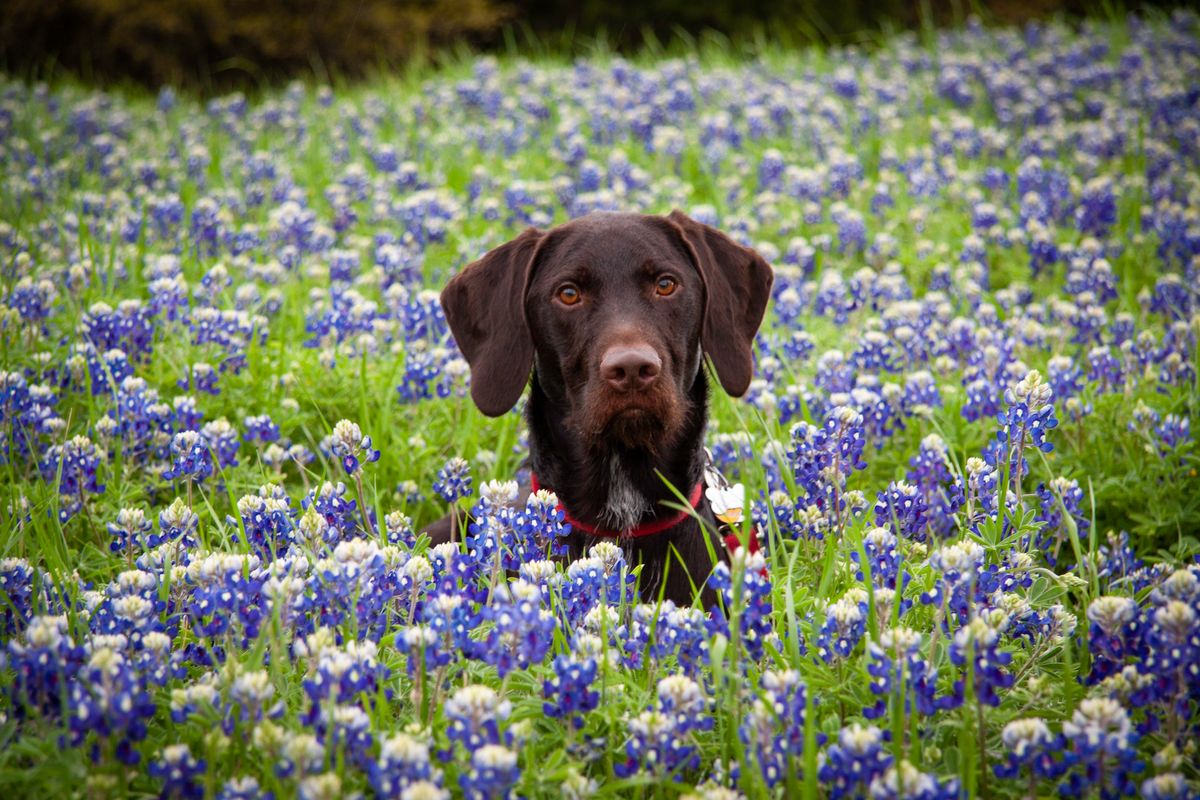
Bluebonnet season creates a very specific Texas question: can your dog safely sit in the flowers for a photo? The useful distinction is being near bluebonnets versus eating them. Bluebonnets are lupines and contain toxic alkaloids, so chewing or swallowing the plant should be prevented. Current Pet Poison Helpline guidance says dogs and cats may develop mild gastrointestinal upset after bluebonnet ingestion; the dramatic neurologic syndromes often quoted online are much better documented in grazing livestock and other substantial lupine exposures.
The practical answer
Do not let your dog eat bluebonnets. They are not an edible photo prop.
A supervised photo without ingestion is a different exposure. There is no evidence-based time cutoff that makes a session automatically safe.
Typical pet guidance is more moderate than many viral posts suggest: Pet Poison Helpline currently lists mild gastrointestinal upset for dogs and cats after bluebonnet ingestion.
Large or uncertain ingestion deserves professional advice: especially if seed pods were eaten or symptoms develop.
What is actually toxic in a bluebonnet?
Texas bluebonnets belong to the genus Lupinus. Lupines contain alkaloids, including compounds such as anagyrine, lupinine, sparteine and hydroxylupanine in various species. The exact alkaloid profile and concentration can differ by species, plant stage and plant part.
That variability is why a clean dog-specific toxic dose for Texas bluebonnets is not available. Livestock toxicology sources consistently flag seeds and seed pods as important high-alkaloid parts of lupines, but livestock data should not be converted into invented canine dose thresholds.
Why online symptom lists can be misleading
Pet Poison Helpline's current bluebonnet page says the alkaloids can produce neurologic and reproductive effects in grazing livestock, while dogs and cats may develop mild gastrointestinal upset. Its separate lupine guidance also focuses severe seed- and pod-associated toxicity largely on livestock.
Some veterinary websites describe incoordination, tremors, seizures, agitation or collapse after bluebonnet exposure in pets. Those are serious signs and should never be ignored, but current poison-center guidance does not support telling every dog owner that a small bluebonnet bite is likely to cause that severe syndrome.
Is a bluebonnet photoshoot safe for a dog?
There is no controlled study that assigns a universal safe duration. Risk depends much more on behavior than the clock. A leashed dog that sits beside flowers and does not chew them has a fundamentally different exposure from a dog allowed to graze through a field.
| Situation | How to think about it | Best action |
|---|---|---|
| Dog sits or stands near flowers without chewing | No ingestion identified | Keep the session supervised and prevent mouthing. |
| Dog repeatedly noses, licks or mouths plants | Ingestion may occur | Move out of dense flowers or end the session. |
| Dog chews leaves or flowers | Known ingestion | Stop access; contact your vet or poison service if amount is uncertain or symptoms appear. |
| Dog eats seed pods or an unknown quantity | Higher concern because lupine seeds/pods are important toxin sources | Contact a veterinarian or pet poison service promptly. |
| Dog develops neurologic, collapse or breathing signs | Emergency | Seek emergency veterinary care immediately. |
A safer Texas spring photo checklist
1. Keep the dog under direct control
Use a regular leash and stay close enough to interrupt chewing immediately.
2. Do not use flowers as treats or props
Do not encourage the dog to hold stems or flowers in its mouth, and do not hide food in vegetation for a pose.
3. Watch the individual dog, not an age rule
Puppies and habitual plant-eaters may mouth vegetation more, but there is no evidence-based puppy-age cutoff. If your dog will not stop chewing plants, choose a path or field edge instead.
4. Avoid roadside danger
Texas DPS warns wildflower visitors about traffic, unsafe parking, trespass and natural hazards such as snakes and fire ants. Pick a lawful, low-traffic location.
5. Respect flowers and land
Do not trample a patch for a photo. Get permission on private property; Texas state parks prohibit picking or removing plant life.
If your dog ate a bluebonnet: what to do
- Move the dog away from the plants.
- Note what was eaten: flower, leaf, stem, pod or seeds if you can tell.
- Estimate amount and timing. A photo of the plant or remaining material can help.
- Remove loose plant pieces from the mouth if your dog allows this safely.
- Do not give home remedies or induce vomiting unless a veterinarian or poison specialist specifically instructs you to.
- Call your veterinarian or a pet poison service if more than a trivial amount may have been eaten, the amount is unknown, seed material was consumed, or symptoms appear.
What symptoms should you watch for?
GI signs
Vomiting, diarrhea, drooling or reduced appetite are plausible pet signs after ingestion.
Neurologic signs
Wobbling, tremors, severe agitation, marked weakness, collapse or seizures require urgent veterinary care.
Breathing problems
Any breathing difficulty is an emergency regardless of the estimated amount eaten.
Unknown ingestion
If you did not see how much was eaten, professional triage is safer than guessing from internet dose tables.
Do not wait on a drooling timer
The old article gave a fixed window for drooling to resolve after brief contact. That is too specific. Drooling can reflect oral irritation, nausea, another plant, a foreign body or an unrelated problem.
If drooling is persistent or heavy, or occurs with vomiting, abnormal behavior, weakness, tremors, breathing difficulty or known ingestion, call a veterinarian rather than waiting for a timer.
Do seed pods deserve extra caution?
Yes, with careful wording. Lupine toxicology literature identifies seeds and seed pods as important alkaloid sources, particularly in grazing animals. That supports treating seed or pod ingestion more seriously than simple proximity to flowers.
It does not support a dog-specific rule such as “one pod is toxic.” Plant chemistry, amount eaten and individual susceptibility vary, so poison-center or veterinary triage is the appropriate next step.
Is touching or walking through bluebonnets poisonous?
Bluebonnet toxicity guidance is centered on ingestion. Simply walking past the plants or sitting beside them is not the same exposure as swallowing plant material. There is no reason to portray ordinary fur or paw contact as systemic poisoning.
If plant material is stuck around the mouth or paws, remove it before grooming. Routine cleanup is fine, but a “detox rinse” is not a substitute for veterinary advice after ingestion.
Other spring hazards in Texas wildflower fields
Texas DPS specifically reminds wildflower visitors to watch for snakes, fire ants, traffic, unsafe roadside stopping and trespassing.
Texas Parks and Wildlife also asks visitors to avoid trampling wildflowers. A photo is not worth damaging a patch, blocking a roadway or placing a dog in uncontrolled vegetation.
Is it illegal to pick bluebonnets in Texas?
No blanket Texas state law makes picking a bluebonnet illegal. The Texas Legislative Reference Library and Texas DPS both confirm that the popular blanket ban is a myth.
Other laws still matter: trespass, damage to government property, parking and road-safety rules can apply. Texas state-park rules prohibit picking, cutting or removing plant life without authorization.
Current evidence check — September 2026
| Old framing | Status | Evergreen replacement |
|---|---|---|
| Severe neurologic poisoning presented as the typical dog outcome | Overstated | Current Pet Poison Helpline guidance says mild GI upset may occur in dogs and cats; severe lupine syndromes are better documented in livestock. |
| Fixed “safe photoshoot duration” | Not evidence based | Risk is driven mainly by ingestion behavior, not a stopwatch. |
| Seed/pod ingestion deserves extra caution | Supported with nuance | Lupine toxicology identifies seed material as an important alkaloid source, especially in livestock. |
| Fixed puppy-age ban | Unsupported | Judge mouthing behavior, supervision and individual risk instead. |
| Fixed drooling-resolution window | Unsupported | Persistent/severe drooling, known ingestion or additional signs warrants professional advice. |
Frequently asked questions
Are Texas bluebonnets poisonous to dogs?
Can my dog sit in bluebonnets for a photo?
My dog ate a bluebonnet flower. What should I do?
Are seed pods more dangerous?
Should I make my dog vomit?
Is it illegal to pick bluebonnets?
Bottom line
Texas bluebonnets are not dog treats, but they also should not be turned into a panic headline. The most defensible message is: prevent ingestion, use extra caution around seed material, supervise photo sessions, and get professional advice when the amount eaten is uncertain or symptoms appear.
A dog quietly posing beside bluebonnets is a different situation from a dog grazing through a field. Build your spring-photo plan around control, no chewing, safe parking, respect for public or private land and awareness of other Texas field hazards.
This article provides general pet-safety information and is not a substitute for veterinary or poison-control advice. Plant chemistry, amount eaten and individual susceptibility vary. Seek veterinary care promptly for significant symptoms.