Last updated: September 10, 2026 · Reading time: approx. 11 minutes
Winter Dangers for Cats in German Apartments: Heating, Plants, Windows and Home Safety

Evidence-checked against veterinary, poison-control and German animal-welfare sources.
Winter changes an apartment in small ways that matter to an indoor cat. The heating runs for longer, windows are opened differently, seasonal plants and decorations appear, electrical cords multiply and cats spend more time close to warm surfaces. Most of these risks are easy to manage once you know which ones are genuine emergencies and which ones are commonly exaggerated.
Quick answer: the winter risks worth prioritising
Emergency: exposure to true lilies in the Lilium or Hemerocallis genera, breathing problems after chewing an electrical cord, or being trapped in a tilted window.
High prevention priority: tinsel and string, open flames, unsecured tilted windows, accessible electrical cables and unstable Christmas trees.
Usually lower urgency: dry heated air or poinsettia exposure. These can still cause problems, but they should not be described as equivalent to a lily poisoning emergency.
1. Dry heated air: useful to monitor, but do not blame every symptom on humidity
Heating can lower relative humidity indoors, especially during cold weather. Germany's Umweltbundesamt uses 40–60% relative humidity as a general reference for occupied rooms and mould prevention. That is a useful household target, but it is not a cat-specific medical threshold and there is no good reason to claim that a cat becomes unhealthy the moment a hygrometer falls below 40%.
Very dry air may contribute to dry eyes, nasal irritation or general discomfort. What it does not prove is that central heating has caused a viral infection. Persistent sneezing, eye or nasal discharge, reduced appetite, lethargy, coughing, open-mouth breathing or laboured breathing deserves veterinary assessment rather than a home diagnosis of “dry air”.
2. True lilies are the plant emergency cat owners should know
For cats, the most important seasonal plant warning is not the poinsettia. It is exposure to true lilies and daylilies in the genera Lilium and Hemerocallis. Leaves, petals and pollen can be dangerous, and contaminated vase water is also a concern. Small exposures can lead to acute kidney injury.
Plant common names are confusing. A plant with “lily” in its English name is not automatically a true Lilium or Hemerocallis species, while other non-lily plants can still be toxic for different reasons. When in doubt, photograph the whole plant, flowers, leaves and label so the species can be identified accurately.
3. Christmas plants: separate severe hazards from overstated ones
| Plant | Typical concern for cats | What to do |
|---|---|---|
| True lilies / daylilies Lilium, Hemerocallis |
Emergency-level kidney risk | Keep out of cat homes. Treat suspected exposure as urgent even before symptoms appear. |
| Poinsettia Euphorbia pulcherrima |
Usually mild irritation | Sap may cause drooling, vomiting, diarrhoea, skin or eye irritation. Seek veterinary advice if signs are severe or persistent. |
| Holly Ilex species |
Gastrointestinal irritation | Keep berries and leaves inaccessible. Contact a vet if a meaningful amount is eaten or signs develop. |
| Mistletoe | Toxicity varies by species and amount | Avoid access and get veterinary advice after ingestion rather than relying on internet dose estimates. |
| Amaryllis | GI and neurologic/cardiovascular signs possible; bulb is more concentrated | Keep plant and bulb out of reach. Contact a veterinarian after significant ingestion. |
| Christmas cactus Schlumbergera |
Generally considered non-toxic | Still discourage chewing because plant material can cause minor stomach upset. |
4. Kippfenster: a particularly important German-apartment hazard
German-style tilted windows (Kippfenster) are a real cat-safety issue. A cat trying to climb through the V-shaped opening can slide downward and become trapped around the abdomen or pelvis. The compression can impair circulation and damage muscles, nerves and internal tissues. Severe cases are veterinary emergencies.
Safest option
Keep a tilted window closed in any room the cat can enter unless the opening is protected by a purpose-built Kippfenster guard.
If a cat becomes trapped
Free the cat as safely as possible and seek veterinary care promptly, even if it appears better immediately afterwards.
Also check balconies
Use secure cat-proof netting or another appropriate barrier where a fall or escape is possible.
5. Tinsel, string and Christmas-tree decorations
Tinsel, ribbon, yarn and similar long flexible objects are attractive to many cats. If swallowed, they can behave as a linear foreign body: part of the material may become anchored while the intestine bunches around it. This can become life-threatening and may require surgery.
Choose shatter-resistant ornaments for lower branches, anchor the tree securely and keep fragile decorations above the cat's normal reach. Tree water should be covered so the cat cannot drink from it, particularly if anything has been added to the reservoir.
6. Candles and electrical cords
Open candles create an obvious burn and house-fire risk for an animal that can jump onto tables and shelves without warning. LED candles are the simplest substitute. If you use a real flame, keep it inaccessible and never leave the cat alone in the room with it.
Holiday lighting adds another hazard: electrical cords. A cat that chews a live cable can suffer burns in the mouth and potentially serious electrical injury. Unplug damaged lights, route cables through protective covers where practical and replace strings with cracked insulation.
If your cat chews a live cable and then develops oral burns, coughing, weakness or any breathing difficulty, seek urgent veterinary care. For a more detailed electrical-cord emergency guide, see Patify's cat and Christmas lights safety guide.
7. Radiators and heaters: warmth is normal; unsafe heat sources are the issue
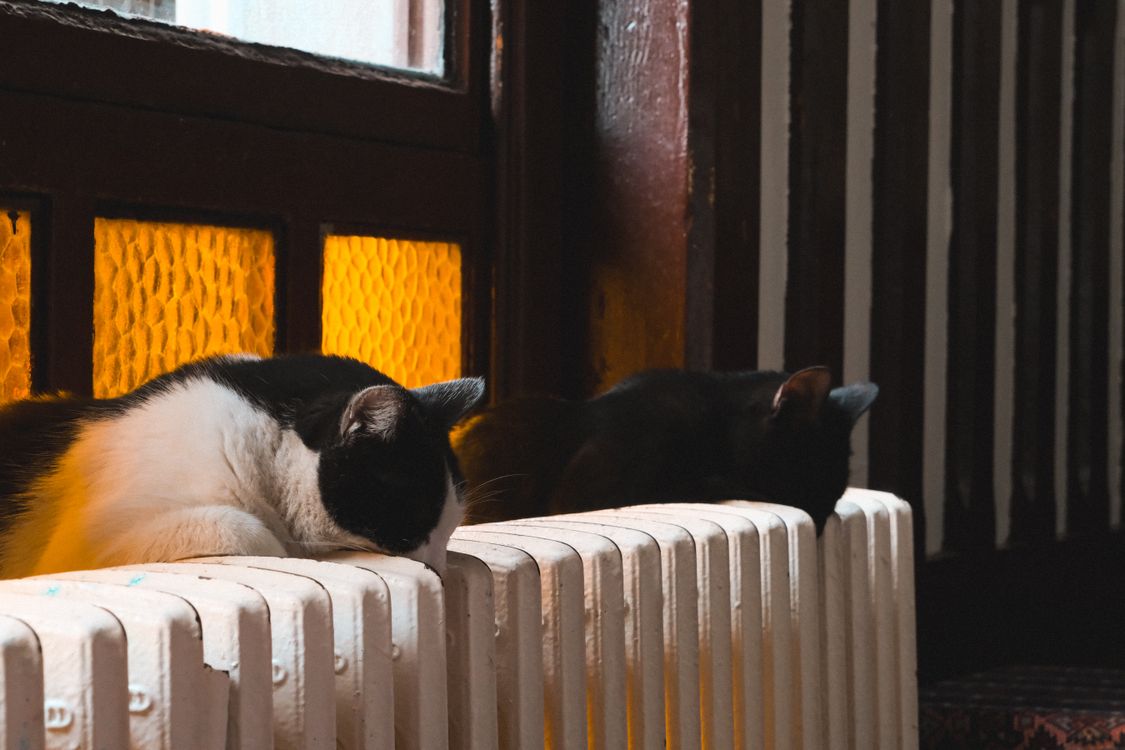
Cats naturally seek warm resting places, and lying near a normal household radiator is not automatically dangerous. The actual surface temperature of a heating system varies widely, so a fixed “safe” or “dangerous” temperature for every German apartment is misleading.
Focus instead on access and escape: your cat should be able to move away freely, should not be forced into contact with exposed very hot metal, and should not be able to touch the heating element of a portable electric heater. A stable bed or hammock positioned near — rather than against — a very hot surface gives the cat a warm alternative.
8. Hydration still matters in winter
Cats obtain water both by drinking and from food. Wet foods contain much more water than dry diets, so the amount you see a cat drink from a bowl can vary substantially with diet. A healthy-looking cat that eats mostly wet food may naturally visit the water bowl less often than a cat eating dry food.
Provide clean fresh water in accessible locations. Multiple bowls can help in multi-cat households, and some cats prefer fountains. Adding wet food or water to food may also increase total water intake when appropriate.
When to contact a veterinarian urgently
- Known or suspected exposure to a true Lilium or Hemerocallis lily.
- A cat trapped in a tilted window, even if it seems normal after being freed.
- Breathing difficulty, collapse or significant burns after chewing an electrical cable.
- Swallowed tinsel, string or ribbon, especially with vomiting, abdominal pain or loss of appetite.
- Repeated straining to urinate with little or no urine.
- Any sudden severe neurological signs, collapse, persistent vomiting or marked lethargy after plant or chemical exposure.
For poisoning or another acute problem in Germany, contact your regular veterinarian, the nearest veterinary clinic or the local tierärztlicher Notdienst. Because phone numbers, opening hours and emergency-service arrangements can change, this guide intentionally does not hard-code a single national number.
Frequently Asked Questions
Does central heating make cats sick in winter?
What indoor humidity is reasonable in a German apartment with a cat?
What should I do if my cat is exposed to a true lily?
Are poinsettias deadly to cats?
Are tilted windows safe for cats?
Make the apartment safer before winter routines settle in
A useful winter safety check takes only a few minutes: identify every plant, secure tilted windows, remove tinsel and loose string, inspect electrical cords, stabilise the Christmas tree, move open flames out of reach and make sure fresh water is easy to access. These measures are inexpensive and remain relevant every winter, regardless of the year.

More practical pet-safety guides from Patify
Explore pet-focused guides, community features and resources for everyday care and emergencies.
Explore PatifyMedical information is educational and does not replace examination or treatment by a veterinarian.