

🦜💬 Can Lineolated Parakeets Talk? Realistic Training, No Fixed Timeline
Yes, some Lineolated Parakeets — Linnies, or Bolborhynchus lineola — can mimic human speech and household sounds. But there is no reliable evidence that every Linnie will talk, that a bird should say its first word within 3–6 months, or that a certain vocabulary size is normal. Speech is an individual bonus, not a species guarantee.
📌 This guide separates what is known from what is repeated online. You will find a realistic description of the Linnie voice, an evidence-aware training routine, what research on Grey parrots can teach us — and what it cannot prove about Linnies — plus welfare guidance on social housing and answers to the most common “why isn't my bird talking?” questions.
📋 Quick Answer: Can Linnies Actually Talk?
Yes — some can mimic speech
Lafeber describes Lineolated Parakeets as capable of mimicking human speech and sounds. World Parrot Trust describes the species' natural calls as soft but far-carrying ascending notes, flock choruses and nasal chattering while feeding. That supports a real vocal-learning capacity, but it does not establish a guaranteed word count, a predictable first-word age or a fixed training timeline.
🎵 What Does a Lineolated Parakeet Sound Like?
🔉 Generally softer than many parrots
Lafeber characterises Linnies as relatively quiet companion parrots with soft chatter rather than the more piercing calls associated with many larger species.
🗣️ Speech can be subtle
When an individual mimics words, the voice may be small, squeaky or murmured. Do not expect the projection or clarity of an Amazon or an African Grey.
🌿 Natural calls still matter
World Parrot Trust notes soft ascending calls, flock chorus and nasal chatter. Normal Linnie communication is much broader than human-word mimicry.
🚫 “Quiet” does not mean silent
Individual birds can still call loudly, especially during contact calling, alarm or excitement. Apartment-friendly is not the same as noise-free.
⏱️ How Long Does It Take a Linnie to Talk?
There is no trustworthy Linnie-specific answer such as “3–6 months.” Some birds may imitate quickly, some later, and some never produce recognisable words. A useful training plan should measure engagement and gradual imitation rather than force the bird into a calendar.
| Common claim | What the evidence supports |
|---|---|
| “First word in 3–6 months” | No controlled Linnie-specific evidence establishes this as a typical range. |
| “The learning window closes after 12 months” | Parrots are well known for extended/lifelong vocal learning; age alone is not a reliable cut-off. |
| “A good Linnie should know dozens of words” | Some individuals may develop larger repertoires, but there is no validated normal word-count target for the species. |
| “No speech after a year means training failed” | False. Individual variation is substantial, and human-word mimicry is not a welfare requirement. |
♂️♀️ Do Male Linnies Talk Better Than Females?
Both male and female parrots can learn vocalisations, but there is not good Linnie-specific evidence showing that one sex is consistently the better human-speech mimic. A 2022 survey covering 877 companion parrots found strong species differences in mimicry repertoire, but no overall effects of sex, age or parrot-parrot social interaction across the sample.
⚠️ That survey is not a Lineolated-Parakeet-only experiment, so it should not be turned into the opposite overclaim either. The safe conclusion is simply: do not choose a male or female Linnie based on a promise that one sex will talk more.
🤝 Does a Second Bird Make Talking Harder?
The common advice “keep one parrot alone if you want it to talk” is not a sound welfare rule. Parrots are highly social animals. German federal parrot-husbandry guidance states that parrots generally live in pairs or groups and should normally be kept accordingly in human care, with exceptions for individual welfare circumstances.
Speech research also does not justify a simple “second bird ruins training” rule. In one Grey-parrot experiment, the presence of a conspecific actually enhanced learning compared with a single-human-trainer condition. A broad companion-parrot survey likewise found no overall parrot-parrot social-interaction effect on mimicry repertoire.
Do not isolate a social bird to maximise human speech. Human-word mimicry is optional enrichment; social welfare is not. If you keep compatible birds together, you can still offer individual positive-reinforcement sessions without making speech the reason for social deprivation.
🧠 What Parrot Speech Research Can Actually Tell Us
Most controlled research on human-word learning in parrots comes from African Grey parrots, not Linnies. Irene Pepperberg's work shows that live social interaction, shared attention, meaningful context and responsive tutoring can matter for acquiring referential vocal labels.
Important limitation: The famous Model/Rival method was developed and tested primarily with Grey parrots. It is reasonable to borrow broad principles — social engagement, context and immediate feedback — but it is not scientifically accurate to present Model/Rival as a proven Lineolated-Parakeet protocol.
Grey-parrot research also found that videotaped instruction did not produce referential labels under the tested conditions, whereas live interactive tutoring did. That makes recordings a possible background tool, not a substitute for responsive interaction.
⭐ A Welfare-Friendly Linnie Speech-Training Routine
Look for normal eating, exploration, relaxed body language and willingness to interact. A newly arrived or frightened bird needs security before formal training.
Say “hello” when you approach, the bird's name during positive attention, or a cue such as “step up” during the actual behaviour. Context is more meaningful than endless detached repetition.
There is no evidence-based universal “10–15 minutes twice a day” prescription for Linnies. A few focused minutes can be enough. Stop before the bird becomes avoidant, restless or tired.
Use praise, attention or a tiny appropriate favourite treat when the bird attempts a target sound or participates calmly. There is no evidence-based reason to ban food rewards for the first two weeks.
Short, predictable repetitions attached to daily routines give the sound a consistent social context without turning the bird's day into constant drilling.
If the bird begins approximating a sound, reinforce it. If not, keep the interaction enjoyable. Do not withhold companionship, food or enrichment to make speech more likely.
🌅 Is Morning or Evening the “Best” Training Time?
Linnies and other parrots can show daily rhythms in calling and activity, but there is no Linnie-specific evidence that dawn or dusk speech sessions are significantly more effective than training at other times. The better rule is simpler: train when your bird is awake, calm, interested and not busy eating, bathing, sleeping or avoiding interaction.
🎁 What Rewards Work?
🥜 Tiny food rewards
Use very small pieces of a favourite appropriate food so reinforcement is immediate without unbalancing the diet.
😊 Social praise
Some birds value warm voice, attention or brief interaction more than food in a particular moment.
🎯 Access to something wanted
For referential learning, the meaningful reward can be the object or activity associated with the label.
🚫 Avoid punishment
Do not shout, scare, ignore basic needs or use isolation when the bird does not imitate. Speech training should remain optional enrichment.
📸 About the Images in This Guide
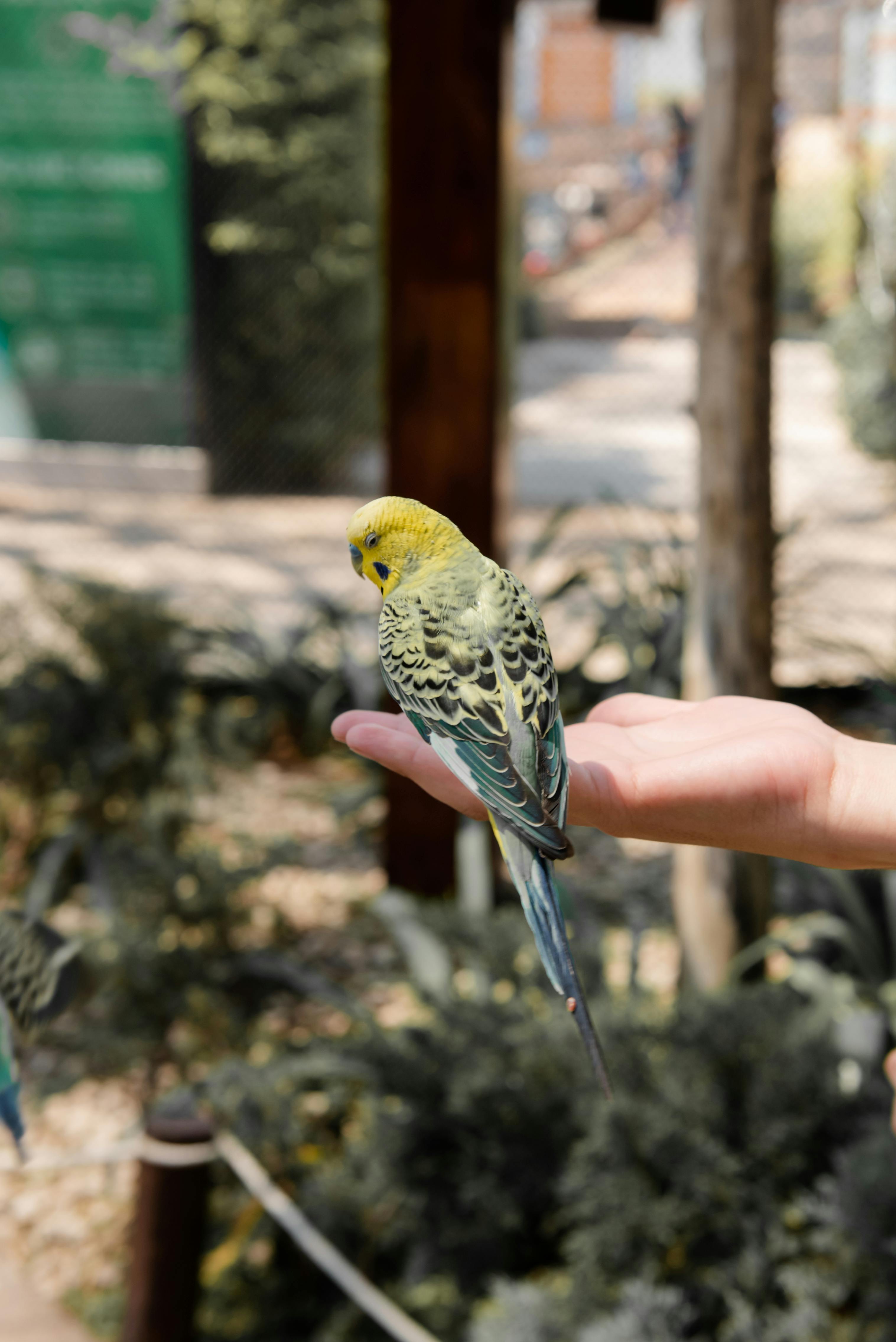
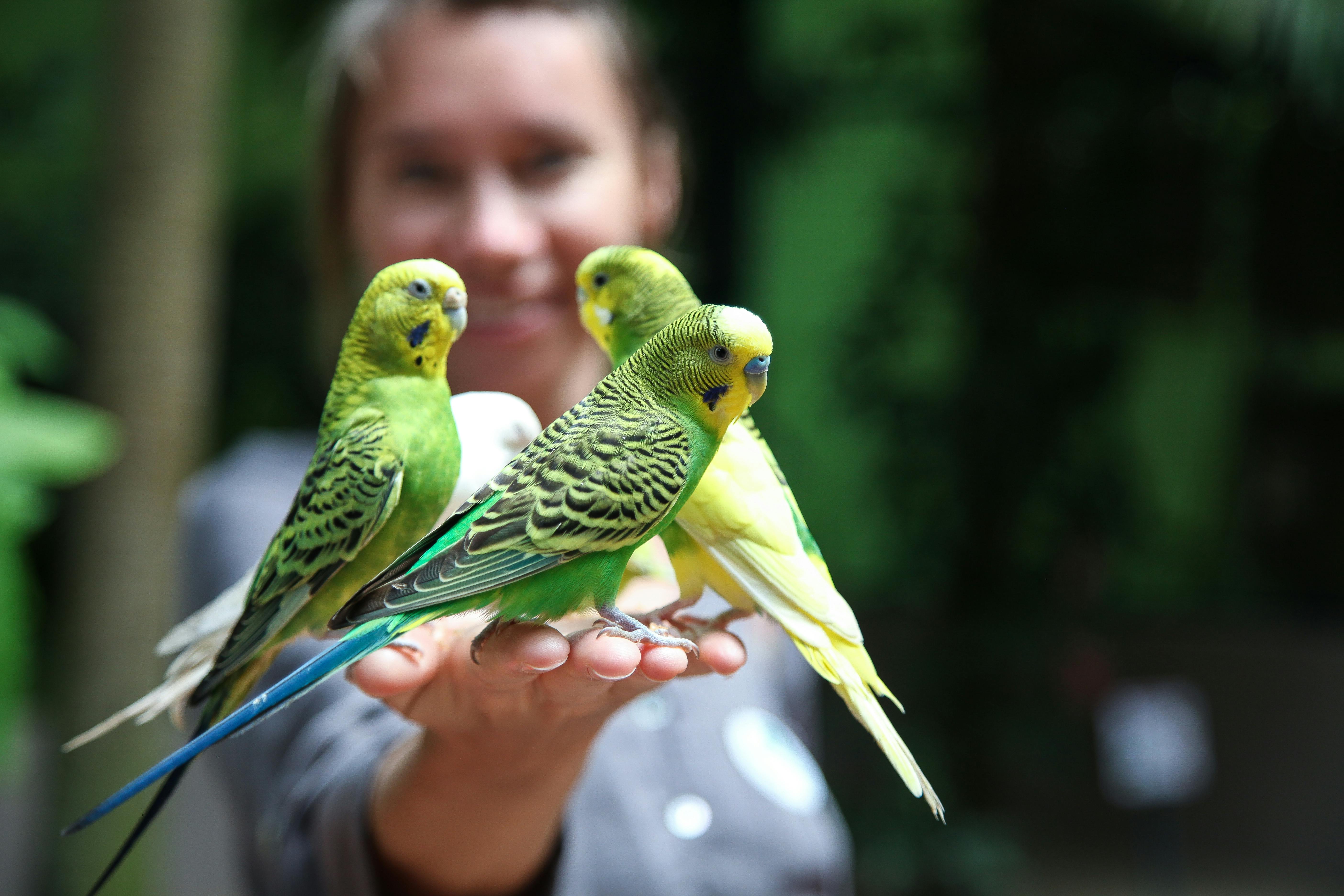
We did not find a Pexels image that could be reliably verified as Bolborhynchus lineola. Rather than label another species as a Linnie, the article uses clearly disclosed symbolic small-parakeet images.
❓ Frequently Asked Questions
Can every Lineolated Parakeet learn to talk?
No. The species is capable of human-speech mimicry, but individual birds vary widely. A healthy, well-socialised bird may never say a recognisable word.
How many words can a Linnie learn?
There is no scientifically established normal vocabulary size for Lineolated Parakeets. Avoid using anecdotal “dozens of words” examples as a benchmark for your bird.
How long until the first word?
There is no reliable species-specific timeline. “3–6 months” should be treated as anecdote, not a developmental standard.
Do males talk better than females?
There is not enough Linnie-specific evidence to make that promise. Both sexes can vocalise and mimic; individual variation matters more than a marketing claim about sex.
Should I keep one Linnie alone so it bonds to me and talks?
No. Do not use social isolation as a speech-training strategy. Parrot social needs should be met first; speech is optional enrichment.
Can I use the Pepperberg Model/Rival method?
You can borrow its broad ideas — live social modeling, context and responsive reinforcement — but the experimental evidence comes mainly from African Grey parrots, not Linnies.
Are recordings useful?
They can provide extra sound exposure, but live responsive interaction is the stronger evidence-based model from Grey-parrot research. Do not leave repetitive recordings playing for long periods as a substitute for social contact.
My Linnie suddenly became much louder or stopped vocalising. Is that a training issue?
Not necessarily. Sudden changes in vocal behaviour can reflect environment, stress or health. See Patify's parrot screaming guide. Abnormal fluid or foam from the mouth is a different urgent problem; see the parrot foaming-at-mouth emergency guide.
🔬 Sources Used for This September 2026 Update
- Lafeber – Lineolated Parakeet species profile
- World Parrot Trust – Barred / Lineolated Parakeet
- Benedict et al. – Survey of vocal mimicry in companion parrots
- Pepperberg & McLaughlin – Joint attention and vocal learning in Grey parrots
- Pepperberg et al. – Social tutors and vocal learning in Grey parrots
- Pepperberg – Review of the Model/Rival technique
- German Federal Ministry – Parrot social-housing guidance
📱 Track Training and Health Notes With Patify

Training attempts, new sounds and health observations in one place
Record which cues you are using, what your bird responds to and any changes in normal vocal behaviour. A simple history is often more useful than chasing a rigid “first word by month X” target.
DOWNLOAD PATIFY FREE🎯 Bottom Line
Lineolated Parakeets can mimic human speech, but no ethical training plan should promise a word count or deadline. Use live, positive, contextual interaction; respect social needs; reward participation; and treat speech as optional enrichment. A Linnie that never says a human word can still be a completely normal, socially engaged companion parrot.