
Cat Anxiety Medication 2026: Gabapentin vs Fluoxetine, Bonqat & State Rules
Gabapentin and fluoxetine can both appear in feline behavior plans, but they are not interchangeable and neither should be chosen from a symptom list alone. The evidence for gabapentin is strongest for reducing fear and stress around transportation and veterinary handling, while fluoxetine is an extra-label SSRI with evidence for selected chronic behavior problems such as urine marking. Bonqat (pregabalin oral solution) is FDA-approved specifically for acute anxiety and fear associated with transportation and veterinary visits in cats. This guide explains the evidence, important safety limits, and the 2026 U.S. regulatory changes that make static “seven controlled states” lists unreliable.
Quick answer
Vet-visit or travel fear: ask your veterinarian about a pre-visit medication plan. Gabapentin is commonly used extra-label and has controlled-trial evidence; Bonqat is FDA-approved for this specific feline indication.
Persistent urine marking or another chronic behavior problem: the first step is medical and behavioral diagnosis. Fluoxetine may be considered extra-label for selected cases, but environmental and behavior modification remain part of treatment.
Aggression, overgrooming or house-soiling: do not assume “anxiety.” Pain, urinary disease, dermatologic disease, conflict between cats and other medical causes can look similar.
Dosing: published studies and product labels describe regimens, but this article does not turn them into one-size-fits-all instructions. Kidney function, age, other medications, body size and the exact product formulation can change what is safe.
Gabapentin for cats: where the evidence is strongest
Gabapentin
Gabapentin is FDA-approved for several human indications, not as a feline anxiety drug. Veterinarians may nevertheless use approved human drugs extra-label in animals when federal extra-label-use requirements are met.
A randomized placebo-controlled crossover study in 20 client-owned cats tested a single 100 mg capsule given 90 minutes before transport and found lower owner-rated stress and better examination compliance compared with placebo. That study is evidence for a pre-visit strategy; it is not proof that 100 mg is the correct dose for every cat. A later controlled study also found that pre-appointment gabapentin can alter gait and postural reactions, reinforcing that sedation/ataxia can affect the examination.
Gabapentin is also used in veterinary medicine for pain and other indications. It is therefore misleading to say that it should “never” be used continuously; long-term use may be appropriate for some cats under veterinary supervision. For anxiety specifically, the strongest feline evidence is around acute/pre-visit use.
Fluoxetine for cats: useful in selected chronic behavior cases, but extra-label
Fluoxetine
Fluoxetine is a selective serotonin reuptake inhibitor. Human fluoxetine products can be prescribed extra-label to cats by a veterinarian. Reconcile also contains fluoxetine, but its FDA animal-drug approval is for canine separation anxiety; it is not an FDA-approved feline anxiety product.
The clearest feline clinical evidence is for urine marking. In a double-blind placebo-controlled study, cats receiving fluoxetine plus environmental management showed significantly greater reduction in urine marking than placebo by the later weeks of an eight-week treatment phase. This supports fluoxetine as one possible tool for appropriately diagnosed urine-marking cases, not as a universal treatment for every cat that urinates outside the litter box.
Response to an SSRI develops over weeks rather than hours. Appetite reduction, gastrointestinal signs, lethargy, agitation or other behavioral changes can occur. Owners should contact the prescribing veterinarian if food intake drops meaningfully, adverse effects appear, or behavior worsens. Do not change the dose or stop a long-term behavioral medication without discussing the plan with the prescriber.
Bonqat (pregabalin): the FDA-approved option for transport and veterinary-visit fear
In November 2023, FDA approved Bonqat (pregabalin oral solution) for alleviating acute anxiety and fear associated with transportation and veterinary visits in cats. FDA described it as the first approved animal drug containing pregabalin. The label uses a weight-based regimen administered before the stressor and permits use on two consecutive days when prescribed according to the label.
In the field study summarized by FDA, a little over half of treated cats had a good-to-excellent response during both transport and the veterinary visit compared with about one-third receiving placebo. Reported adverse reactions included mild sedation, ataxia and lethargy.
Pregabalin is a federal Schedule V controlled substance, so Bonqat carries controlled-substance handling requirements in addition to being prescription-only. That is a different regulatory situation from gabapentin, which DEA does not currently control federally.
Gabapentin vs fluoxetine vs Bonqat: practical comparison
| Medication | U.S. feline regulatory status | Evidence / approved use | Time horizon | Main cautions |
|---|---|---|---|---|
| Gabapentin | Extra-label in cats; not federally controlled; some states add scheduling/reporting rules | Controlled feline studies support reduced stress around transport/veterinary examination | Situational/pre-visit use is the best-studied anxiety application | Sedation, ataxia; renal function and other drugs may affect the plan |
| Fluoxetine | Extra-label in cats; not federally controlled | Evidence supports selected chronic behavior problems, including feline urine marking | Weeks, not hours | Appetite/GI/behavioral effects; medical causes and environment must be addressed |
| Bonqat (pregabalin) | FDA-approved feline drug; federal Schedule V | Approved for acute anxiety/fear associated with transportation and veterinary visits | Pre-event, label-directed | Sedation, ataxia, lethargy; controlled-substance handling |
Important correction: human gabapentin liquid and xylitol
Many human gabapentin oral solutions list xylitol as an inactive ingredient. That fact is real and can be verified in current DailyMed labels. But the common internet warning that “xylitol is toxic to cats” copies a well-established dog toxicity problem into the wrong species.
Merck Veterinary Manual states that cats appear resistant to xylitol toxicosis; an experimental study cited by Merck did not produce hypoglycemia or hepatotoxicity in cats even at high tested exposures. Pet Poison Helpline likewise says cats are not expected to have the same xylitol concern as dogs and reports no established feline cases in its summary.
2026 U.S. gabapentin law: the old “7 Schedule V states” list is outdated
DEA's 2026 drug information sheet states that gabapentin is not controlled under the federal Controlled Substances Act. States can impose additional rules, and those rules have changed enough that old veterinary articles are now misleading.
| Jurisdiction | Verified status relevant to veterinary gabapentin (Sep. 6, 2026) | Why it matters |
|---|---|---|
| Alabama | Gabapentin listed in state Schedule V | State controlled-substance rules apply. |
| Kentucky | Gabapentin designated Schedule V | Kentucky controlled-substance and KASPER-related requirements may apply. |
| North Dakota | Gabapentin listed in Schedule V | Controlled-substance rules apply. |
| Tennessee | Gabapentin is Schedule V; state CSMD guidance says it must be reported | Prescribing/dispensing follows Tennessee Schedule V requirements. |
| Virginia | Gabapentin listed in Schedule V | Virginia controlled-substance rules apply. |
| West Virginia | Gabapentin listed in Schedule V | West Virginia controlled-substance rules apply. |
| Michigan | Removed from Schedule V effective May 28, 2024 | Michigan's 2026 MAPS dispenser guide says gabapentin should no longer be reported to MAPS. |
| Utah | State scheduled gabapentin, but licensed veterinarians are exempt from the controlled-substance chapter for veterinary gabapentin | The 2026 Utah Code preserves a veterinary exemption. |
| North Carolina | Not a controlled substance, but veterinary direct dispensations must be reported to CSRS from March 1, 2025 | Reporting burden can exist even without Schedule V status. |
This is intentionally not presented as a permanent 50-state map. Pharmacy-board, veterinary-board and PDMP rules can change faster than evergreen health content. If a refill or clinic policy suddenly changes, check the current state board or monitoring-program rule rather than relying on a 2024/2025 blog list.
What these state rules mean for a cat owner
Your refill takes longer than before
The clinic may be complying with new state reporting, e-prescribing, controlled-substance or inventory rules. Ask what changed rather than assuming the veterinarian “stopped using” gabapentin.
The clinic sends the prescription to an outside pharmacy
That can be an operational choice, especially in jurisdictions with dispensing-reporting obligations. It does not mean the medication itself is inappropriate.
You are traveling across state lines
Do not assume a refill written or dispensed under one state's rules can be handled identically in another. Contact the prescribing clinic/pharmacy before travel.
You are about to run out
Contact the prescriber before the final doses are gone. Do not substitute another household member's medication or change the schedule to “stretch” it without instructions.
Can gabapentin and fluoxetine be used together?
Veterinarians may use a long-term behavioral medication and a separate pre-event medication in the same cat when clinically appropriate. But the rationale is not as simple as “gabapentin does not act on serotonin, therefore there is no interaction.” Any combination can change sedation, coordination, appetite or other adverse-effect risk depending on the cat and the other drugs involved.
If a cat already takes fluoxetine or another psychoactive medication, tell the veterinarian before adding gabapentin, pregabalin, trazodone, a benzodiazepine, an antihistamine or any supplement marketed for calming. The prescriber should decide whether the combination and timing are appropriate.
Behavior problems medication cannot diagnose
- Urine outside the litter box: rule out lower urinary tract disease, pain, kidney disease, diabetes and litter-box/environment problems before labeling it anxiety.
- Urine spraying: distinguish marking from inappropriate elimination; social conflict and outdoor-cat triggers may matter.
- Overgrooming: parasites, allergies, pain and skin disease can mimic compulsive grooming.
- Aggression: identify pain, fear, redirected aggression, resource conflict and medical disease before choosing medication.
- Carrier/vet panic: combine medication when needed with carrier acclimation and low-stress handling rather than relying on sedation alone.
For the non-drug side of carrier stress, see Patify's cat carrier motion-sickness vs panic and desensitization guide. For remote follow-up options and prescription-law limits, see the 2026 U.S. cat telemedicine guide.
Questions to ask before starting a cat anxiety medication
- What diagnosis or behavior pattern are we treating?
- Which medical causes have been ruled out?
- Is this medication FDA-approved for this feline indication, or is it extra-label?
- What response should I expect, and over what time frame?
- Which adverse effects mean “monitor” versus “call today”?
- Does kidney, liver or neurologic disease change the plan?
- Could any current medication or supplement interact or add sedation?
- What behavioral/environmental changes should happen at the same time?
- If this is a pre-visit drug, will it affect examination or test interpretation?
- Does my state impose controlled-substance or PDMP rules that change refill timing?
Frequently asked questions
Is gabapentin FDA-approved for cat anxiety?
No. Gabapentin use for feline situational fear/anxiety is extra-label, although controlled feline studies support pre-visit use. FDA-approved human gabapentin products can be used extra-label in animals when a veterinarian determines that use is appropriate under federal rules.
What medication is FDA-approved for fear during cat transport and veterinary visits?
Bonqat (pregabalin oral solution) is FDA-approved for acute anxiety and fear associated with transportation and veterinary visits in cats. It is prescription-only and federally Schedule V.
Is fluoxetine FDA-approved for cats?
No. Fluoxetine use in cats is extra-label. Reconcile is an FDA-approved veterinary fluoxetine product, but its approved indication is canine separation anxiety, not feline anxiety.
How fast does fluoxetine work in cats?
It is not an immediate calming medication. Behavioral effects develop over weeks, and published feline urine-marking studies evaluated treatment over multi-week periods. The prescribing veterinarian should set the reassessment timeline.
Is gabapentin a controlled substance federally?
No. DEA states that gabapentin is not controlled under the federal Controlled Substances Act. Several states regulate it separately, and some non-scheduling states impose prescription-monitoring reporting.
Is gabapentin still Schedule V in Michigan?
No. Michigan's 2026 MAPS dispenser guide says gabapentin was removed from Schedule V effective May 28, 2024 and should no longer be reported to MAPS.
Does human liquid gabapentin contain xylitol?
Some current U.S. oral-solution labels do list xylitol. However, the well-known severe xylitol toxicity applies primarily to dogs; Merck says cats appear resistant. The reason not to improvise with a human liquid is broader: formulation, concentration, inactive ingredients and dose must be checked for the individual cat.
Can I give my cat my own gabapentin capsule?
No. A human prescription was dispensed for a different patient and may be the wrong strength or formulation. Use only medication specifically prescribed or approved for your cat.
Bottom line
The safest way to compare gabapentin and fluoxetine is not “fast drug vs slow drug.” Gabapentin has useful evidence for situational/pre-visit stress; fluoxetine can be part of treatment for selected chronic behavior disorders; Bonqat is the FDA-approved feline option for acute transport/veterinary-visit fear. The correct choice still depends on diagnosis, medical history, concurrent medications, behavioral management and—especially for gabapentin—current state pharmacy rules.
This article is educational and does not provide an individualized dosing plan. For medication selection, dose, formulation, tapering, refill or adverse-effect questions, use the veterinarian who has evaluated your cat.
FDA — Fluoxetine and gabapentin/trazodone extra-label/compounding context
DEA — Gabapentin Drug & Chemical Information (2026)
Peer-reviewed feline gabapentin pre-visit randomized trial abstract
Peer-reviewed study — gabapentin effects on feline neurologic examination
Peer-reviewed review — feline urine spraying and fluoxetine evidence
DailyMed — current human gabapentin oral solution ingredients
Merck Veterinary Manual — species differences in xylitol toxicity
Alabama — current controlled-substance list
Kentucky — Schedule V designation for gabapentin
North Dakota Century Code — Schedule V
Tennessee Department of Health — gabapentin Schedule V / CSMD
Virginia Code — Schedule V
West Virginia Code — Schedule V
Michigan MAPS — 2026 dispenser guide; gabapentin removal
Utah Code — 2026 veterinary gabapentin exemption
North Carolina DHHS — veterinary gabapentin reporting FAQ
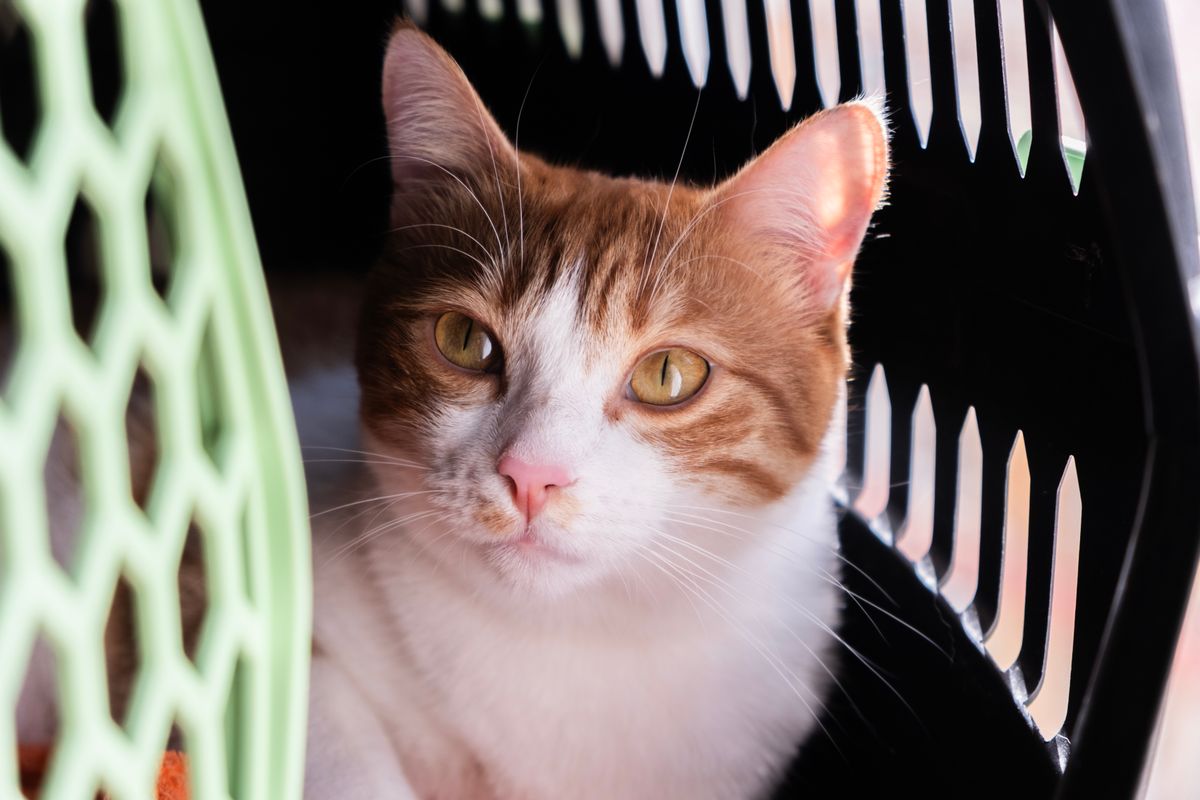
Pexels — Batuhan Küçükdemir, cat resting in a carrier (free to use)