
Last updated: September 24, 2026
Quick answer: cats are more likely to be playing when the interaction is reciprocal, relatively quiet, includes wrestling or pouncing without sustained distress, and both cats repeatedly choose to re-engage. A real conflict is more concerning when you see persistent vocalization, one-way chasing, cornering, stiff defensive/offensive body language, blocked escape, or one cat trying to end the interaction while the other keeps pursuing. There is also a genuine middle category: play can become unbalanced or briefly tense without turning into a full fight.
Do not judge from one dramatic move. Wrestling, chasing, biting and bunny-kicking can occur in play. The most useful question is whether both cats are participating by choice and taking turns, or whether one cat is trying to escape while the other keeps applying pressure.
Play, Intermediate, or Conflict: A Three-Zone Model Is More Accurate
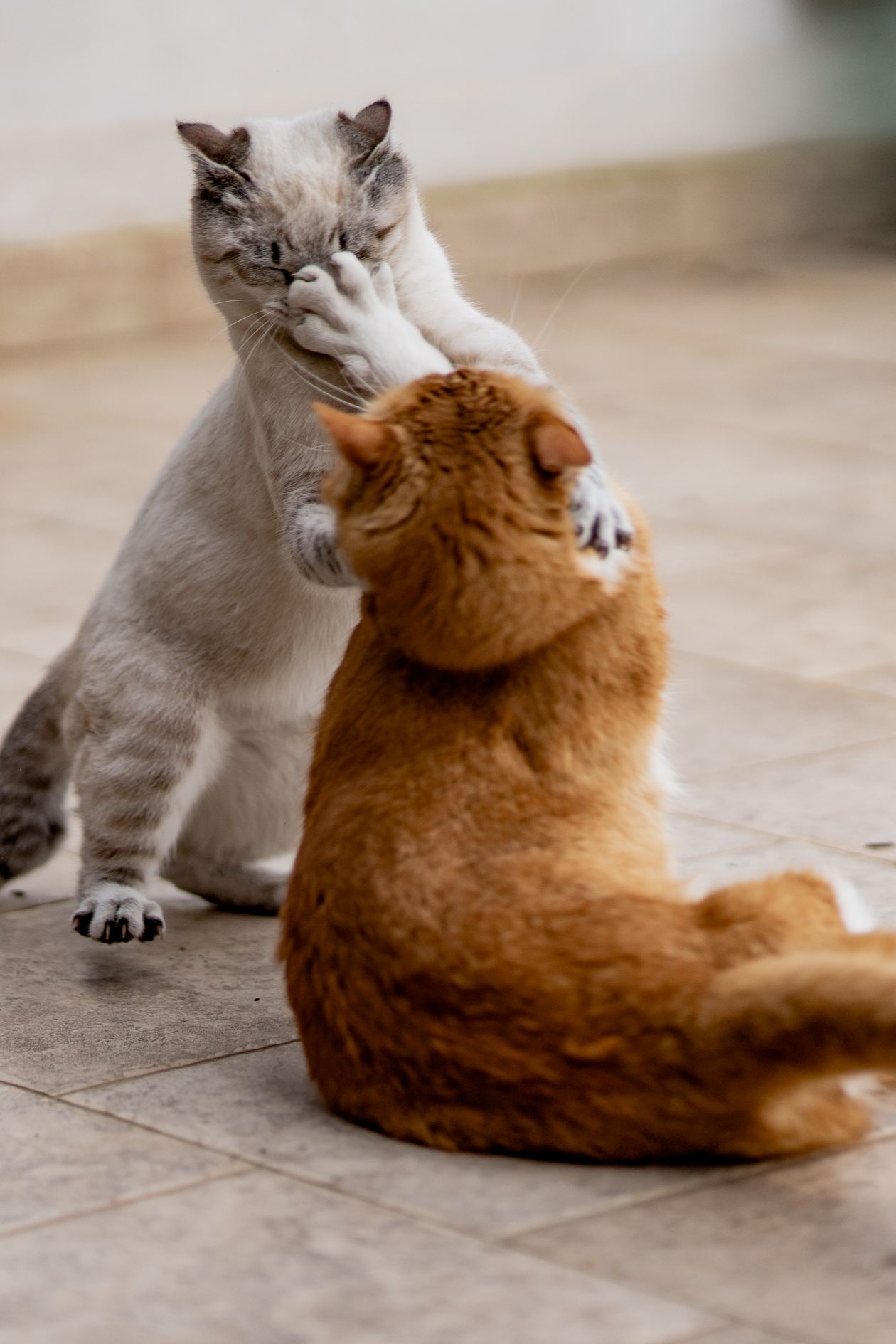
A common mistake is forcing every interaction into only two boxes: “play” or “fight.” A 2023 Scientific Reports study analyzed 105 unique dyadic interactions involving 210 domestic cats and compared behavioral coding with expert classifications. The researchers identified three meaningful interaction types: playful, intermediate, and agonistic.
Reciprocal wrestling was most closely associated with playful interactions. Vocalization and chasing were more strongly associated with agonistic interactions. The intermediate group combined elements of both and was overall closer to playful interaction than to full agonism.
| Zone | What you may see | What it means for the owner |
|---|---|---|
| Green: mutual play | Reciprocal wrestling, role changes, quiet or minimal vocalization, both return to play | Usually observe rather than interrupt |
| Yellow: intermediate | Playful elements plus more chasing/vocalization, one cat periodically tries to stop, roles become less balanced | Watch closely; give an easy exit and consider redirecting before escalation |
| Red: conflict | Persistent hissing/growling/yowling, one-way pursuit, cornering, hard staring, defensive/offensive posture, fear/avoidance afterward | Safely separate and address the relationship/environment |
This model matters because a yellow-zone interaction does not automatically mean the cats “hate each other.” The study authors note that one cat can decide play is over while the other still wants to continue, producing a short-term disagreement that may or may not escalate.
Seven Signs to Tell Whether Cats Are Playing or Fighting
| Clue | More consistent with play | More concerning for conflict |
|---|---|---|
| 1. Reciprocity | Both cats initiate; who chases, pins or wrestles can change | One cat repeatedly pursues, corners or overwhelms the other |
| 2. Vocalization | Often relatively quiet; brief sounds can occur | Repeated growling, hissing, snarling, yowling or screaming |
| 3. Wrestling | Close-contact wrestling can be mutual and sustained | Do not judge wrestling alone; look for fear, vocalization and lack of reciprocity |
| 4. Chasing | Short and reciprocal; roles may reverse | One cat repeatedly flees while the same cat pursues |
| 5. Choice to disengage | A cat can pause/leave and the other allows it; either may choose to restart | Exit is blocked or pursuit continues after the other clearly tries to stop |
| 6. Body tension | Movement tends to stay loose and fluid between bursts | Stiff posture, arched body, piloerection, flattened ears, defensive crouching or fixed stare |
| 7. Afterward | Both return to normal routines; may remain near each other | One hides, avoids rooms/resources, watches doorways or remains fearful afterward |
No single row is a diagnosis. The scientific study specifically cautions against using wrestling by itself as proof of play, because similar motor patterns can appear in more complicated interactions.
What Mutual Cat Play Usually Looks Like
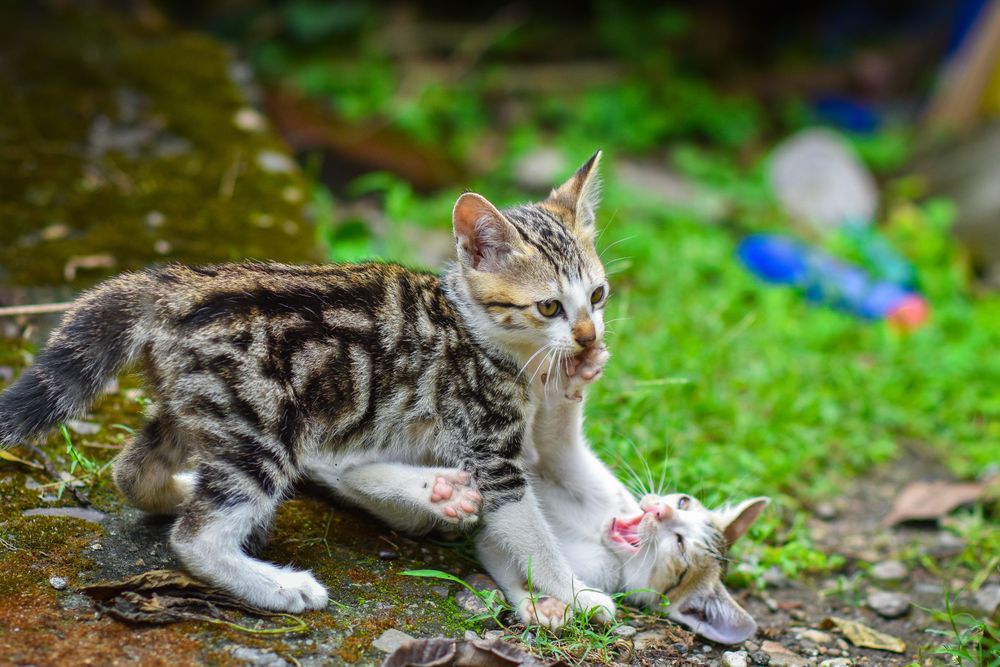
FelineVMA's 2024 Intercat Tension Guidelines note that chasing, wrestling and mouthing can appear in both play and conflict. The context has to tell you which one you are seeing.
Role reversal is one of the strongest practical clues
During mutual play, the cat on top may later be underneath. The chaser may become the chased cat. Either individual can initiate a new bout. The 2023 study discusses reciprocity and role reversal as characteristics that move an interaction closer to true mutual social play.
Close wrestling is not automatically aggression
Owners are often alarmed by hind-leg kicking, grabbing around the neck, rolling and mouthing. In the scientific sample, frequent/long wrestling was characteristic of the playful cluster. True agonistic interactions can actually involve less prolonged direct physical contact than rough social play.
Play is often quieter
Extensive vocalization was one of the strongest clues associated with agonistic interactions in the 2023 study. That does not mean one squeak ends the analysis. It means sustained hissing, growling and yowling should shift your interpretation when combined with one-way pressure and defensive body language.
When Play Becomes One-Sided or Tense
Real households frequently produce the yellow zone.
Imagine two young cats wrestling. After a minute, Cat A walks away. Cat B follows, pounces again, and Cat A hisses. If Cat B pauses and the interaction ends, this may have been play that briefly exceeded one cat's tolerance. If Cat B continues chasing while Cat A repeatedly flees, hides or defends itself, the interaction is no longer comfortably mutual.
Ask “who wants this to continue?” If both repeatedly return, role-switch and remain relaxed, play is more likely. If one repeatedly tries to leave and the other repeatedly prevents disengagement, treat that imbalance seriously.
The 2024 AAFP/FelineVMA guidelines explicitly describe cases in which a younger, high-play-drive cat wants more social play than a socially mature cat. The mismatch can create predatory-style chasing or tension even when the younger cat's original motivation was playful.
Do not punish the “annoying” cat
Punishment can add fear/arousal to an already unstable interaction. Instead, increase appropriate individual play, create distance before escalation and make sure the other cat has routes to elevated or hidden safe spaces.
Signs the Interaction Is More Than Play
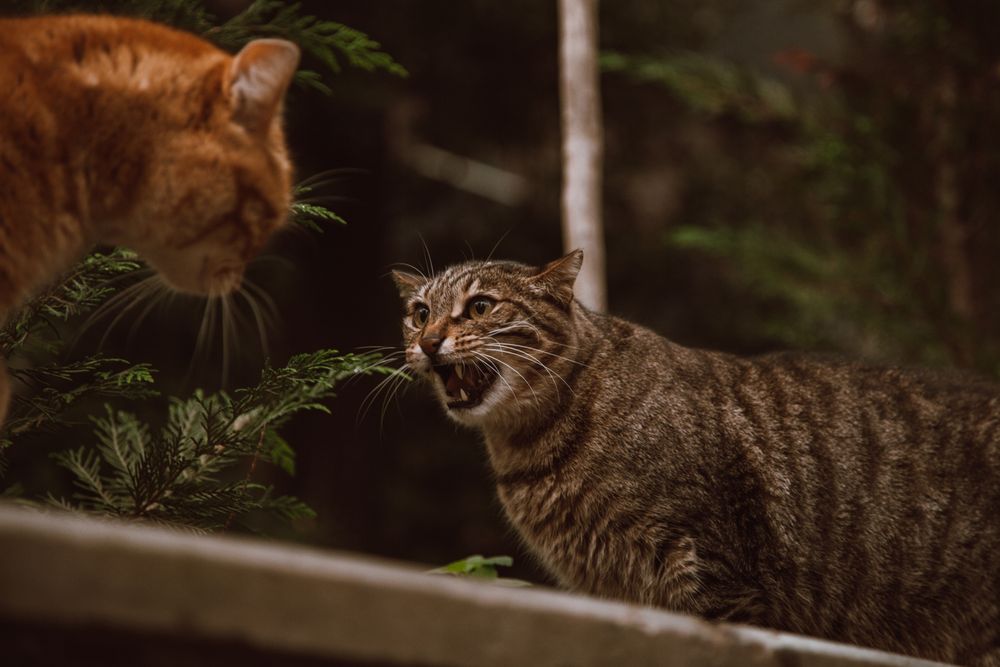
Conflict is more likely when multiple signs cluster together:
- one cat is consistently the pursuer and the other consistently flees;
- one cat corners or blocks the other's escape route;
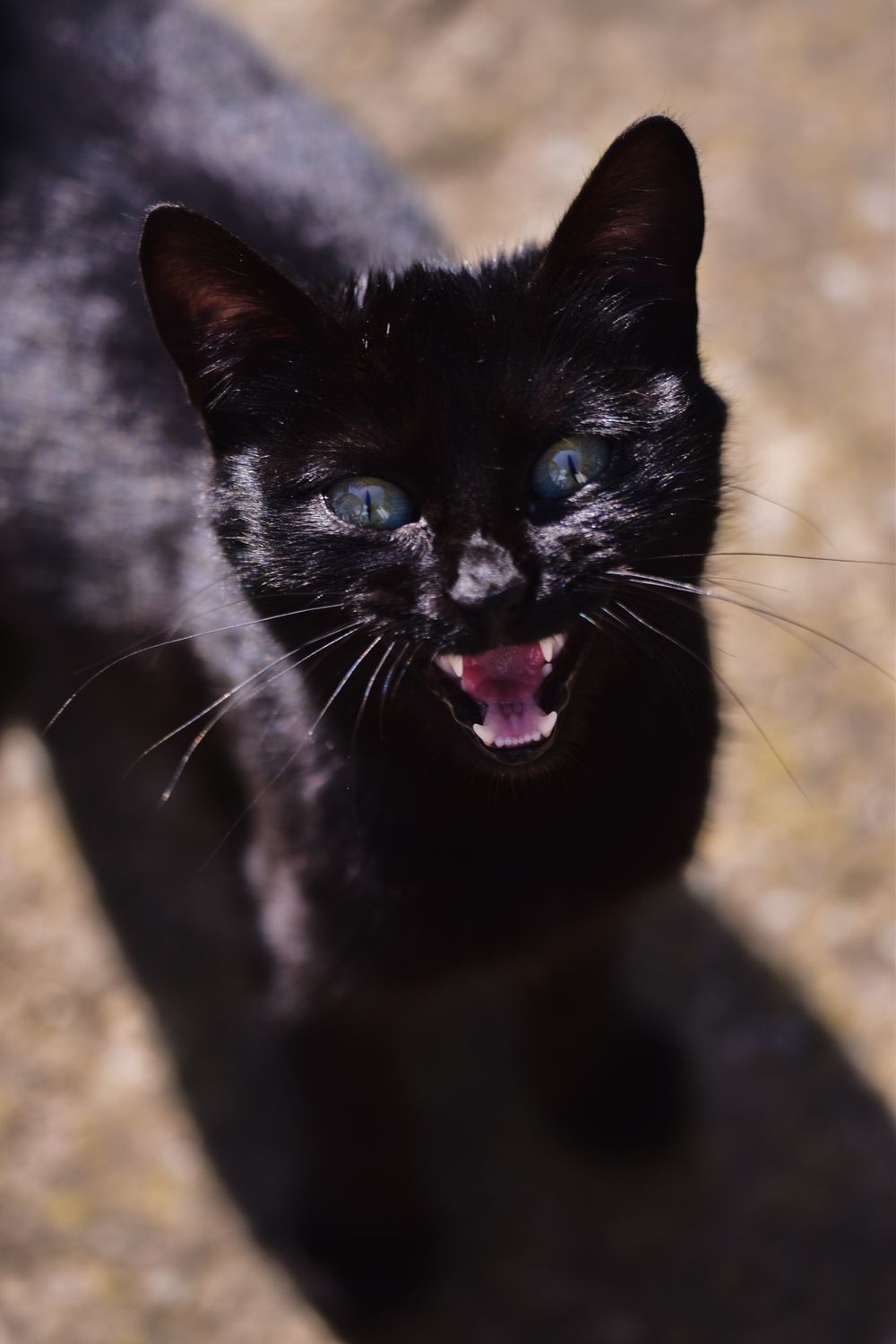
- there is repeated hissing, growling, yowling or screaming;
- one cat crouches defensively with flattened ears or tries to make itself inaccessible;
- the cats hold prolonged fixed stares;
- fur is raised and the body is markedly stiff or arched;
- one cat guards food, litter, doorways, beds or access routes;
- the interaction ends with hiding, avoidance or long-lasting fear;
- there are punctures, bleeding, torn claws or other injuries.
Do Not Stop Watching When the “Fight” Ends
The relationship between the cats outside the dramatic interaction often tells you more than the five seconds that went viral on your phone.
The 2023 study notes that cats in the same social group often show affiliative behaviors such as:
- sleeping in close physical contact;
- rubbing against one another;
- allogrooming;
- friendly tail-up approaches;
- freely sharing space without blocking one another.
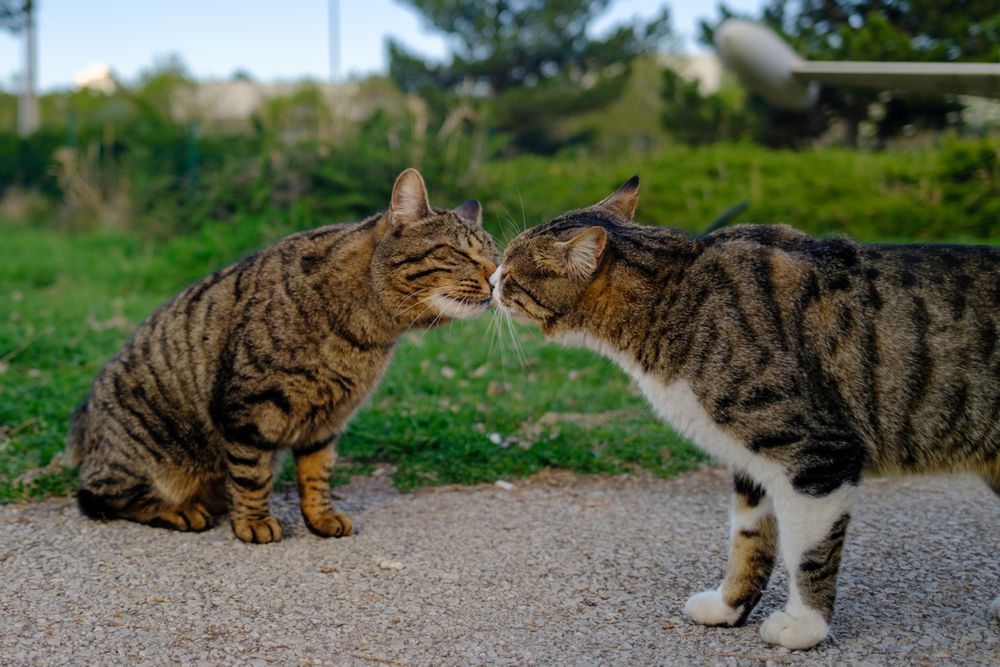
But proximity alone is not proof of friendship. Cats may tolerate the same room without belonging to the same social group. The FelineVMA guidelines emphasize subtle signs of tension such as staring, resource blocking and avoidance.
The 60-Second Observation Form
If you are unsure, record the interaction from a safe distance and answer these seven questions after watching it once in real time and once on video.
| Question | Yes | No / concerning |
|---|---|---|
| Do both cats initiate interaction? | Supports mutuality | One-sided pressure possible |
| Do chasing/wrestling roles switch? | Supports play | Repeated same-direction pursuit is concerning |
| Can either cat leave? | Choice remains available | Blocking/cornering increases concern |
| Is the interaction mostly quiet? | Supports play | Repeated hiss/growl/yowl shifts toward conflict |
| Does the reluctant cat choose to return? | Strong evidence of continued participation | Hiding/avoidance suggests it wanted the bout to end |
| Do bodies loosen between bursts? | Supports play | Persistent stiffness/fear posture is concerning |
| Are both normal afterward? | Supports a tolerable interaction | Fear, resource avoidance or hiding suggests tension |
Do not turn this into a score where “four yeses = definitely play.” It is an observation framework. A single severe event—injury, trapping, sustained screaming or a cat unable to escape—can override several reassuring features.
How to Separate Cats Safely if It Is a Real Fight
Do not place your hands between actively fighting cats. A highly aroused cat can redirect aggression toward a person or another pet.
Veterinary behavior guidance from VCA recommends creating safe separation and allowing arousal to come down before attempting reintroduction. Depending on the situation, a large blanket, piece of cardboard or another broad visual/physical barrier can protect you while you guide cats apart.
- Keep your hands and face away from the cats.
- Use a barrier or create an escape path if you can do so safely.
- Move the cats into separate rooms with water, litter, resting areas and hiding options.
- Do not immediately “make them work it out.”
- Check each cat for wounds once calm enough to handle safely.
- Seek veterinary care for bite wounds, punctures, lameness, eye injury or other trauma.
After a serious event, some cats need hours or longer before they are ready even to see each other again. VCA warns that bringing cats back together too soon can prolong the problem.
Subtle Intercat Tension Can Exist Without a Visible Fight
The 2024 AAFP Intercat Tension Guidelines were created partly because household conflict is frequently missed when owners look only for dramatic fights.
Watch for:
- prolonged staring at the other cat;
- one cat blocking a doorway, hallway or stairs;
- guarding access to food, water, litter boxes or resting locations;
- one cat waiting until the other leaves before entering a room;
- hiding or spending much more time in a restricted part of the home;
- stalking without mutual play;
- urine marking or litter-box changes associated with social stress;
- overgrooming, reduced play, disturbed sleep or appetite changes;
- little or no affiliative behavior between the cats.
FelineVMA's client guidance specifically lists resource blocking, avoidance, refusal to enter rooms, one-way chasing and changes in normal behavior as possible tension signs.
If one cat repeatedly scratches or waits at a closed door during separation, do not automatically label it “wants to play.” Patify's cat scratching at doors guide explains how learned attention, frustration and distress can produce similar-looking behavior.
What if Cats Who Used to Get Along Suddenly Start Fighting?
A sudden change deserves more attention than a long-standing rough play style.
Possible contributors include:
- pain or illness changing one cat's tolerance;
- one cat returning from the veterinarian smelling unfamiliar;
- a frightening event that became associated with the other cat;
- seeing an outdoor cat through a window and redirecting arousal;
- a new animal/person/resource change in the home;
- competition around food, litter or resting sites;
- maturation and changes in social/play drive.
VCA recommends veterinary examination when household cats develop aggression because medical conditions can contribute to fear or aggression. A sudden personality change should not be treated as a purely social problem until pain and disease have been considered.
What to Do After Repeated Conflict
If this is not an isolated disagreement, move from “watch and hope” to a structured plan.
1. Separate resources
FelineVMA recommends multiple, separated resources: food, water, litter boxes, resting locations, hiding places and elevated safe spaces. Cats should be able to reach essentials without passing the other cat.
2. Give high-play-drive cats another outlet
A younger cat that constantly ambushes an older cat may need more individual interactive/object play rather than more opportunities to practice chasing the housemate.
3. Stop forced proximity
Do not hold cats near one another, carry one cat up to the other or lock them together “until they settle it.” Forced exposure can make negative associations stronger.
4. Reintroduce gradually after serious conflict
After repeated or intense fighting, a controlled reintroduction is safer than simply reopening a door. The 2024 FelineVMA guidelines provide a stepwise introduction/reintroduction process using separation, environmental resources and gradual exposure.
5. Get veterinary/behavior help early
Seek professional help when there are injuries, persistent fear, urine marking/house soiling linked to tension, blocked resources, a major sudden relationship change or repeated failed attempts at reintroduction. A board-certified veterinary behaviorist is appropriate for difficult cases.
Frequently Asked Questions
Do cats hiss when they are playing?
They can, especially when one cat has had enough, but repeated vocalization shifts the interpretation toward tension. The 2023 study found vocalization strongly associated with agonistic interactions.
Is wrestling between cats normal?
Yes. Reciprocal wrestling was closely associated with playful interactions in the research. Do not judge wrestling alone; check reciprocity, vocalization, chasing and whether both cats choose to continue.
What is the biggest sign cats are playing?
No single sign is definitive, but mutual participation is especially useful: both cats initiate, roles reverse and either cat can disengage without being persistently pursued.
Is chasing always fighting?
No. Chasing can be part of social play when it is reciprocal. Repeated one-way chasing in which the same cat flees or hides is more concerning.
Why do my cats play and then suddenly hiss?
One cat may have reached its tolerance limit while the other still wants to play. That is the “intermediate” zone described in feline behavior research. Give the cat that wants to stop an easy exit.
Should I let cats fight it out?
No. Serious conflict can cause injury and reinforce fear/aggressive responses. Safely separate the cats and reintroduce gradually if needed.
Should I spray fighting cats with water?
Punishment is not a relationship treatment and can add fear. Prioritize safe physical separation, barriers and reducing the underlying source of tension.
Can cats still be friends if they occasionally fight?
Yes. The 2023 study notes that an occasional agonistic encounter does not necessarily define the long-term relationship. Look at the broader pattern: friendly approaches, close resting, rubbing/grooming, mutual play and unrestricted access to resources.
Bottom Line: Watch Reciprocity, Choice and Recovery
When two cats look like they are fighting, do not freeze the interaction at its most dramatic moment. Watch the sequence.
- Reciprocal + quiet + role-switching + both return → more consistent with play.
- Mixed signals + one cat periodically wants out → intermediate; monitor and interrupt before escalation.
- One-way pursuit + vocalization + blocking + fear/avoidance → more consistent with conflict.
The best clue is not whether the cats wrestle. It is whether both cats still have a choice in the interaction.