

Last updated: September 24, 2026
Quick answer: approach calmly, let the cat see and smell you, then place one hand under the chest just behind the front legs and the other under the hindquarters. Lift smoothly, bring the cat close to your body, and keep the back legs and bottom supported so the cat is not dangling. If the cat stiffens, lashes the tail, flattens the ears, growls, hisses or starts struggling, put them down gently rather than tightening your grip.
The goal is not “can I physically hold this cat?” The better question is: “Can I lift this cat without creating fear, pain or a fight?” Feline-friendly handling guidance favors minimal restraint and adapting to the cat's current emotional state.

Before You Lift: Ask With Body Language First
Not every friendly cat enjoys being picked up. A cat can like cheek rubs, sleep beside you and still dislike losing contact with the ground. FelineVMA client guidance recommends letting cats approach and watching for signs that they want an interaction to end.
Before reaching under the cat:
- approach from the side or front rather than suddenly from behind;
- move slowly and speak normally;
- offer a hand or finger for the cat to investigate if the cat is comfortable with you;
- give a brief cheek/chin stroke if the cat solicits contact;
- look at the whole body before lifting.
More comfortable signs
- loose body
- approaches voluntarily
- rubs against you
- neutral or forward ears
- tail held neutrally or socially
- remains near after petting
Pause the pickup
- body suddenly becomes rigid
- ears rotate back or flatten
- pupils enlarge in context
- tail starts lashing
- cat crouches or retreats
- growling, hissing or swatting
Feline-friendly veterinary guidance emphasizes responding to the cat's current emotional state rather than forcing a preset handling technique. At home, the same principle makes ordinary handling safer.
How to Pick Up a Cat: Step by Step
Step 1: Position yourself beside the cat
Stand or kneel close enough that you do not have to reach and pull the cat toward you. If the cat is on a high shelf, unstable surface or narrow ledge, encourage them onto a safer surface before lifting.
Step 2: Support the chest
Slide one hand under the chest immediately behind the front legs. This hand supports the front of the body; it should not squeeze the rib cage.
Step 3: Support the hindquarters
Place your other hand or forearm under the rear legs and bottom. Cats Protection specifically recommends supporting the chest with one hand and the hind legs with the other.
Step 4: Lift both ends together
Rise smoothly rather than lifting the front half first and letting the hindquarters swing. Keep the cat roughly level and supported.
Step 5: Bring the cat close to your torso
Once lifted, bring the cat against your body so they feel physically supported. FelineVMA client guidance advises keeping cats close rather than allowing them to dangle in the air.
Two points of support + body contact is the key. One hand supports the chest; the other supports the hindquarters; your torso creates a third secure surface.
How to Hold and Carry a Cat Once They Are Off the Ground
A secure hold should feel supportive rather than restrictive. The rear half of the cat should have somewhere to rest. Keep enough control to prevent a fall, but do not squeeze harder every time the cat moves.
A practical home carry position is:
- cat's side or back lightly against your torso;
- one forearm/hand supporting the chest;
- the other arm supporting the hindquarters;
- head free enough to orient normally;
- no legs hanging unsupported beneath the body.
Some cats prefer being held upright against the chest; others tolerate only a short horizontal carry. There is no reason to force a favorite social-media pose if the cat is secure and comfortable in another supported position.
Should you hold a cat like a baby?
Not as a default technique. Some cats voluntarily relax belly-up in a trusted person's arms, but many cats feel vulnerable on their back. If your cat does not actively enjoy that position, use the upright supported hold instead.
How to Put a Cat Down Safely
Putting the cat down is part of the handling skill. Do not wait until the cat launches from your arms.
- move toward a stable floor, sofa or other safe surface;
- lower your whole body rather than dropping your arms;
- let the cat's rear and/or all four feet make contact with the surface;
- release your support gradually;
- allow the cat to walk away.
If the cat starts wriggling, Cats Protection advises gently placing them on the floor and letting them go. A cat who learns that struggling is unnecessary because you release them early may be easier to handle next time.
Ways Not to Pick Up a Cat
| Technique | Why to avoid it |
|---|---|
| Lifting by the scruff | FelineVMA client guidance says never lift a cat by the scruff; forceful scruffing can be painful, intimidating and provoke defensive behavior. |
| Pulling up by the front legs/armpits | Leaves the body weight unsupported and can be uncomfortable or painful. |
| One hand under the belly only | Does not securely support the front and rear of the body. |
| Letting hind legs dangle | Reduces physical security and gives a struggling cat leverage to twist or kick. |
| Holding tighter when the cat panics | Can escalate fear and increase scratch/bite risk unless immediate safety requires temporary restraint. |
| Chasing a cat to pick them up | Turns handling into a threat and teaches avoidance. |
| Pulling a hiding cat out by a limb | High risk of fear, injury and defensive aggression. |
The FelineVMA's Cat Friendly Practice guidance describes a “less is more” approach: cats generally respond better to minimal restraint, while forceful restraint and immediate scruffing can be highly intimidating and provoke defensive aggression.
Signs Your Cat Wants to Be Put Down
Do not judge consent only by whether the cat has bitten yet. Earlier signs matter.
- body becomes noticeably tense;
- tail flicking becomes fast or forceful;
- ears turn sideways/back or flatten;
- head repeatedly turns toward your hand or arm;
- cat tries to push away with the feet;
- rapid scanning or attempts to locate an escape route;
- growling, hissing, yowling or sharp vocalization;
- wriggling or twisting intensifies;
- swatting or biting.
FelineVMA client education notes that tense body posture, dilated pupils, ears going back, hissing or vocalizing can indicate distress or that the interaction should stop.
Release before the bite. Respecting small “I'm done” signals prevents the cat from needing bigger signals later.
What if My Cat Hates Being Picked Up?
First, ask whether being picked up is actually necessary. You do not need to turn every cat into a cuddly carry cat. The realistic goal may simply be calm handling for emergencies, nail checks, carrier transfers or veterinary care.
A low-pressure training plan
- Touch the chest briefly → reward.
- Touch the hindquarters briefly → reward.
- Place both hands in pickup position without lifting → reward.
- Shift a tiny amount of body weight upward → reward and release.
- Lift one inch for one second → put down → reward.
- Gradually add height, then duration.
Only change one variable at a time. If the cat begins avoiding you when your hands approach, the previous step was already too difficult.
Positive reinforcement has long been supported in feline behavior guidance, while cat-friendly handling emphasizes reducing fear and respecting the individual cat's limits.
How Children Should Hold a Cat
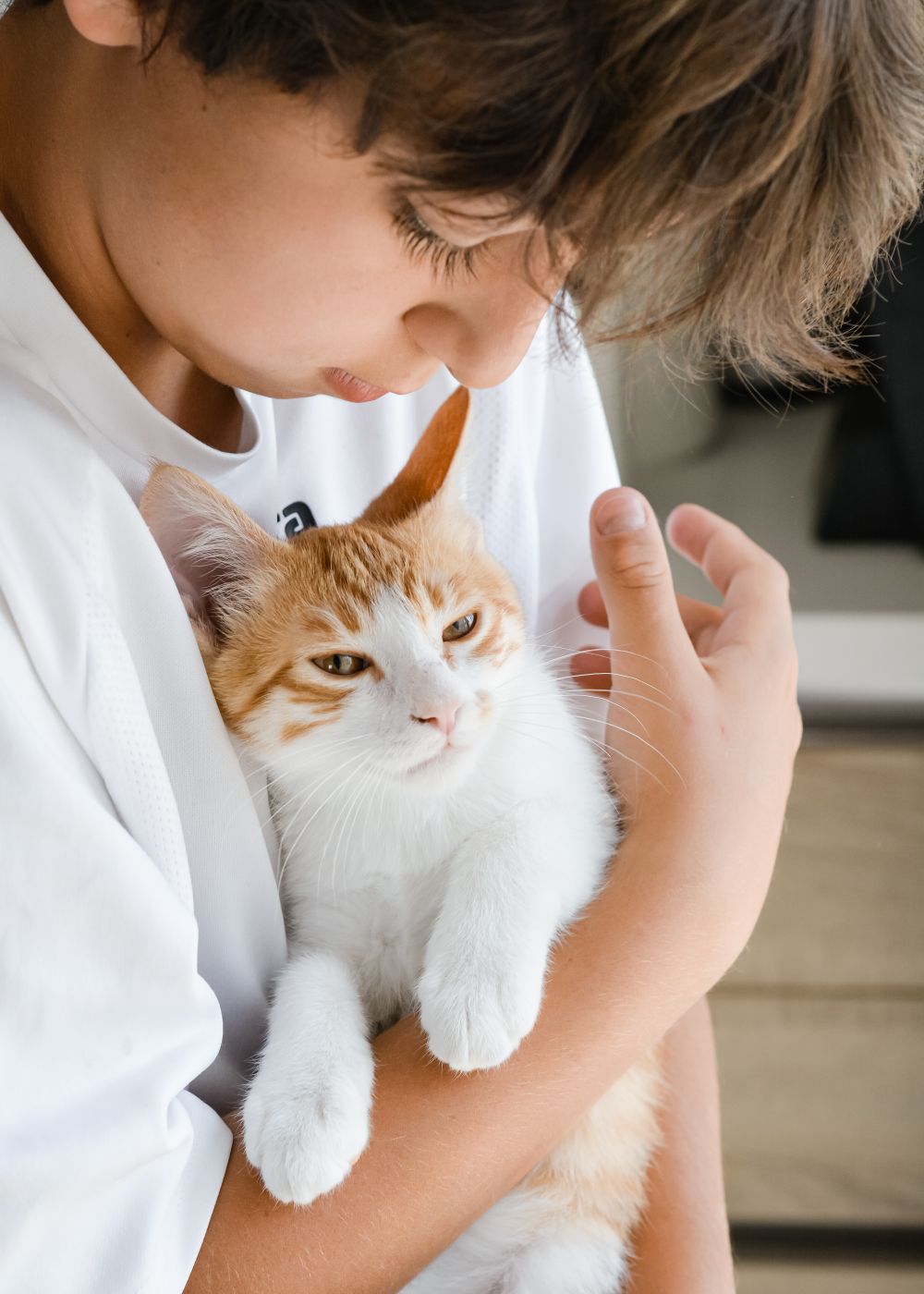
Cats Protection recommends teaching children the same core technique: one hand supports the chest, the other supports the hind legs, the cat is held securely to the body, and the cat is gently placed on the floor if they wriggle or struggle.
Safer first lessons
- have the child sit on the floor before holding the cat;
- an adult should supervise the interaction;
- choose a calm cat who already approaches the child voluntarily;
- keep holds very short;
- teach “put the cat down when the cat asks” as part of the skill;
- do not allow carrying by the front legs, neck or belly;
- do not let a child chase or pull a hiding cat out.
Petting a sitting cat is often a better first interaction than carrying. The ability to leave is part of what makes the interaction feel safer for the cat.
Senior, Painful, Pregnant or Very Large Cats Need More Support
Handling technique should change with the individual cat.
Senior or arthritic cats
Move more slowly, support a larger area of the body, and avoid forcing flexion through stiff hips, spine or shoulders. If a cat who previously enjoyed being picked up suddenly resists, vocalizes or becomes aggressive, consider pain or illness rather than assuming a behavior problem.
Very large cats
Use more forearm support under the rear body rather than relying on your hand alone. If you cannot lift the cat smoothly without the hindquarters dropping, use a carrier, step, ramp or second person when appropriate.
Pregnant cats
Avoid pressure on the abdomen. If handling is necessary, support the body broadly and gently rather than gripping the belly.
Any sudden change in tolerance for touch or lifting deserves attention, especially when paired with limping, hiding, appetite change, altered jumping or other signs of pain.
How to Move an Injured Cat
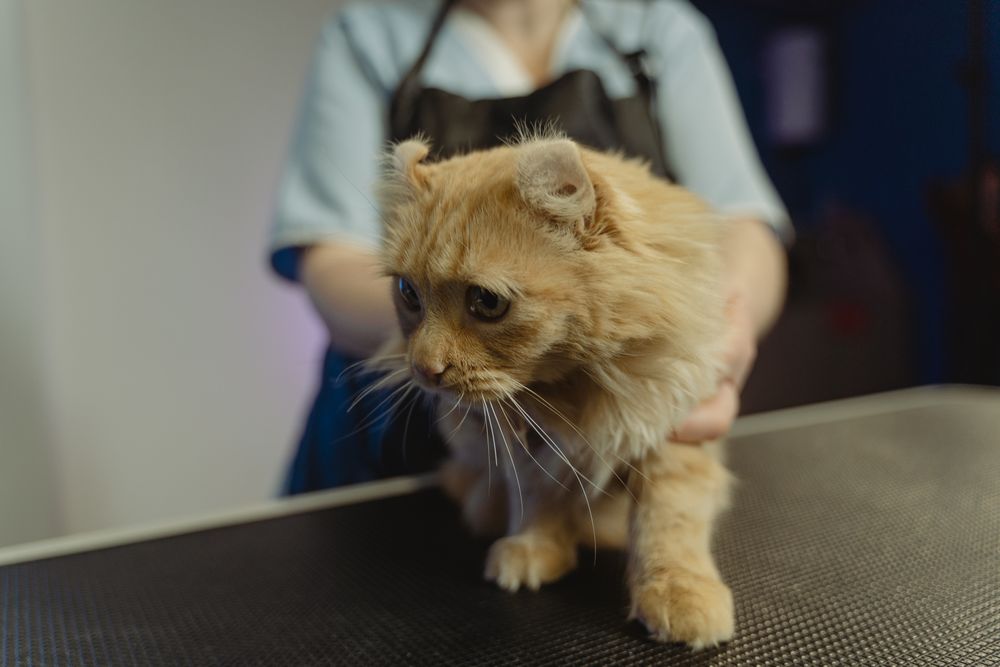
An injured cat is a different handling situation. Pain, shock and fear can make a normally gentle cat bite or scratch. VCA first-aid guidance recommends caution, a suitable carrier or sturdy box, and—when possible—removing the top of a carrier rather than pushing an injured cat through a small door.
Blue Cross advises placing one hand at the front of the chest and the other behind the hind legs/supporting the bottom when lifting is necessary, while avoiding pressure on injured areas. For multiple injuries, a thick towel may help move the cat with less direct pressure.
Do not improvise repeated examinations at home. If trauma, severe pain, breathing difficulty, collapse, inability to urinate, suspected poisoning or another emergency is present, contact a veterinary clinic and transport the cat as safely as possible.
Picking Up a Cat for the Carrier
If the only time you grab your cat is immediately before a stressful car trip, the pickup itself can become a predictor of trouble. Keep the carrier available as a familiar object and train voluntary entry outside appointment days.
FelineVMA's 2025 transport position recommends acclimating and training cats to the carrier and minimizing distress during transport.
For a routine carrier transfer
- prepare the carrier before touching the cat;
- close doors/windows so the cat cannot bolt through the house;
- pick the cat up with normal chest + hindquarter support;
- keep the carry short;
- place the cat into an easily accessible carrier without wrestling through a narrow opening where possible.
If your cat drools or vomits in the carrier/car, Patify's cat carrier vomiting and panic guide explains why motion sickness and fear require different management.
Frequently Asked Questions
What is the proper way to pick up a cat?
Support the chest with one hand and the hindquarters with the other, lift smoothly, and hold the cat close to your body so the legs and bottom are not dangling.
Is it okay to pick a cat up by the scruff?
No for routine home handling. FelineVMA guidance advises never lifting a cat by the scruff and recommends minimal, respectful restraint instead.
Can I pick up a cat under the front legs?
Do not lift the entire body weight by the front legs/armpits. The rear body must also be supported.
Why does my cat bite when I pick them up?
Possible reasons include fear, dislike of restraint, overstimulation, past handling experiences or pain. If this is a new change, especially with other signs of discomfort, schedule a veterinary exam.
Why does my cat like petting but hate being held?
Those are different interactions. Being picked up removes control over distance and movement. A cat can enjoy touch while preferring all four feet on a surface.
Should I hold a struggling cat tighter?
Usually no. If there is no immediate danger, lower the cat to a safe surface before the struggle escalates. Tightening restraint can increase fear and scratch/bite risk.
How do I teach a kitten to be held?
Use very short positive sessions: touch, support, lift briefly, put the kitten down before struggling, and reward calm handling. Never use long restraint as “practice.”
Can children carry cats?
Only when the child is developmentally capable, the cat is comfortable, and an adult supervises. Sitting on the floor and holding for a few seconds is safer than walking around with the cat during early practice.
Bottom Line: Support the Body and Respect the Exit
The safest everyday cat pickup has four parts:
- check that the cat is comfortable with contact;
- support the chest;
- support the hindquarters;
- keep the cat close and put them down before struggling escalates.
A technically correct grip is not enough if the cat is frightened. Good handling combines physical support with timing, body-language awareness and the willingness to stop.