

Last verified: September 29, 2026
What Should a Cockatiel Eat? Start With the Diet Structure, Not a Giant Food List
Quick answer: a cockatiel should not live on loose seed alone. The safest general pattern is a nutritionally complete formulated bird food as the dietary foundation, with controlled amounts of seed and fresh vegetables/greens, smaller amounts of fruit, and fresh water available every day. The exact pellet-to-seed ratio is not identical across veterinary sources, so this guide does not pretend there is one universal percentage that fits every healthy cockatiel.
That disagreement is important. VCA currently recommends pellets at roughly 75–80% of the diet, while the Merck Veterinary Manual’s 2026 guidance for small parrots including cockatiels describes roughly 40–50% pellets, 30–40% seed mix, 10–15% vegetables and 5–10% fruit. The Association of Avian Veterinarians (AAV) also cautions against a pellet-only approach in small parrots and describes free-choice pellets with some meal-fed seed. The shared message is stronger than the disagreement: avoid seed-only feeding, use a nutritionally balanced staple, control selective eating, offer safe fresh foods, and monitor the bird actually eating—not just the bowl you filled.
Patify feeding rule: measure success by what the cockatiel consumes and how body weight/condition respond, not by what percentage of “healthy food” you poured into a mixed bowl.
The Cockatiel Diet Framework: Four Jobs, Not One “Magic Food”
A good cockatiel diet has four jobs:
| Diet job | What fills it | Why it matters |
|---|---|---|
| Nutritional foundation | Species-appropriate complete formulated food | Reduces selective feeding and provides consistent vitamins/minerals/protein |
| Fresh plant variety | Vegetables, leafy greens, limited fruit | Texture, moisture, micronutrients, dietary variety |
| Behavioral value | Measured seed, millet or other high-value foods | Training, foraging, reinforcement and species-typical seed handling |
| Hydration | Fresh clean water | Essential physiologic need; must remain continuously available |
Merck explains why seed-only and “buffet” diets cause trouble: companion birds often choose the most palatable seeds/nuts and leave the nutritionally complete food behind. VCA makes the same point specifically for cockatiels—commercial seed mixes are typically high in fat/carbohydrate and incomplete in multiple nutrients when used as the entire diet.
Why Veterinary Sources Give Different Cockatiel Diet Percentages
This is one of the most useful things to understand before copying a feeding chart.
| Source | Current published framework | How Patify uses it |
|---|---|---|
| VCA — Cockatiels: Feeding | Pellets ideally ~75–80%; fruits/vegetables/greens no more than ~20–25%; seeds only a very small part | Shows a strongly pellet-centered clinical approach |
| Merck Veterinary Manual — pet-bird management | For small birds such as cockatiels: ~40–50% pellets, 30–40% seed mix, 10–15% vegetables, 5–10% fruit | Shows a more mixed small-parrot framework |
| AAV — Basic Care for Companion Birds | For small parrot species including cockatiels, free-choice pellets plus meal-fed seed; conversion with avian-vet help | Supports avoiding both seed-only feeding and simplistic pellet-only dogma |
These are not identical prescriptions. Rather than hiding the disagreement, use the common ground:
- do not feed loose seed as the entire diet;
- include a nutritionally complete formulated staple;
- control high-fat seed rather than allowing selective unlimited eating;
- offer safe vegetables/greens and limited fruit;
- monitor actual intake and body weight during diet changes;
- individualize the ratio with an avian veterinarian when obesity, kidney disease, liver disease, reproductive problems, illness or unusual body condition are present.
This is why Patify does not publish one “perfect cockatiel bowl percentage” as settled science.
Pellets and Complete Formulated Diets: The Nutritional Anchor
Pellets are designed so the bird cannot simply select one favorite seed and discard the rest. Merck’s owner guidance describes formulated diets as mixtures of grains, seeds, vegetables, fruits/proteins and added nutrients processed so each bite is more nutritionally consistent.
What to look for
- labeled for cockatiels/small parrots or otherwise appropriate species/size;
- complete/balanced formulated diet rather than a treat blend;
- fresh package with intact storage instructions;
- pellet size your bird can comfortably manipulate;
- no reliance on visually attractive seed/nut pieces that encourage selective eating.
Does every balanced food have to be a pellet?
No. Some commercially formulated foods use intact or hulled ingredients but are nutritionally balanced as a complete ration. Lafeber, for example, has published cockatiel research comparing a fortified whole-seed formulated diet with pellets. The important distinction is complete formulated diet versus ordinary loose seed mix, not merely whether the food is cylindrical.
Do pellet-fed cockatiels need vitamin supplements?
Usually not without a specific reason. VCA says birds eating a diet that is roughly 75–80% pellets generally do not need routine supplements, while Merck warns that excessive supplementation can itself cause problems. Supplements belong with veterinary guidance, especially for egg-laying birds or documented deficiencies.
Can Cockatiels Eat Seeds? Yes—Seed Is Not the Enemy
Wild cockatiels naturally eat grass seeds and other plant foods. The problem is not that a millet seed is inherently “bad”; it is using a selective, energy-dense commercial seed mix as the entire nutritional system.
Why seed-only diets are risky
VCA notes that commercial seed diets can be deficient or imbalanced in nutrients including vitamins and minerals. Merck’s nutritional-disease guidance links seed-heavy diets with common problems such as vitamin A deficiency and excessive fat intake.
Good uses for controlled seed
- part of a veterinarian-approved small-parrot diet;
- high-value training rewards;
- foraging exercises;
- transition bridge for a lifelong seed-eater;
- small measured treat portions.
Millet spray
Millet is highly reinforcing for many cockatiels, which makes it useful for training or introducing new experiences. That same palatability makes unlimited millet a poor way to encourage dietary variety.
The mixed-bowl illusion
If a bowl is “50% pellets and 50% seed,” the bird’s actual diet is not necessarily 50/50. A cockatiel may eat nearly every seed and discard most pellets. The ratio in the container is not the ratio inside the bird.
Vegetables and Greens for Cockatiels
VCA recommends daily fresh produce as part of a balanced cockatiel diet, while Merck’s small-parrot framework gives vegetables a meaningful but secondary role. Focus on variety and nutrient density rather than feeding a bowl dominated by watery lettuce.
| Useful options | How to offer | Why useful |
|---|---|---|
| Broccoli | Small florets, raw or lightly cooked/cooled | Texture plus carotenoid/micronutrient variety |
| Carrot | Grated, finely chopped or thin strips | Beta-carotene-rich option |
| Sweet potato | Cooked plain, cooled, small amount | Beta-carotene-rich starch/vegetable |
| Dark leafy greens | Washed; clipped, chopped or whole leaf depending preference | Variety and micronutrients |
| Bell pepper | Washed, small pieces | Color/texture variety |
| Squash | Plain, appropriately sized pieces | Useful vegetable rotation |
| Green beans | Raw or cooked plain; cool before feeding | Different texture |
Offer foods in different forms before declaring that your cockatiel “hates vegetables.” Lafeber’s cockatiel guidance suggests trying raw, cooked, steamed, grated, riced, chopped or larger pieces because texture and presentation change acceptance.
What about iceberg lettuce and celery?
VCA notes that pale, high-water vegetables such as iceberg/head lettuce and celery provide relatively little nutrition compared with darker, more nutrient-dense produce. They are not automatically poison; they simply should not crowd out better choices.
Fruit: Safe Options, Smaller Role
Fruit can be offered, but both VCA and Merck place it below the formulated staple and vegetables in dietary importance. VCA specifically notes that fruit contains substantial water and natural sugar and should be limited.
Examples commonly used in bird diets
- berries;
- melon;
- papaya;
- small pieces of banana;
- apple flesh with seeds removed;
- pear flesh with seeds/core removed;
- small citrus pieces if tolerated.
Fruit is not a vitamin supplement and does not need to occupy a large portion of the bowl. Use it for variety rather than building the diet around sweetness.
Can Cockatiels Eat Human Food?
Some plain human foods can be offered in very small quantities. VCA notes that cockatiels can occasionally eat small portions of wholesome foods such as cooked egg and certain plain cooked foods, while processed salty/sugary snacks are inappropriate.
Reasonable occasional additions
- plain cooked egg;
- plain cooked brown rice or other simple grains;
- plain cooked legumes in small amounts if properly prepared;
- small pieces of unsalted whole-grain foods;
- bird-safe vegetables prepared without oil, salt, sauce or seasoning.
“Human food” becomes problematic when the bird receives the processed version: chips, cookies, salted crackers, buttery leftovers, sauces or fried foods.
Foods Cockatiels Should Not Eat
| Avoid | Why |
|---|---|
| Avocado | Merck lists cockatiels among bird species susceptible to avocado poisoning; potentially severe cardiac/respiratory effects |
| Chocolate / cocoa | Veterinary bird guidance lists chocolate as unsafe/toxic |
| Caffeine | Do not offer coffee, tea, energy drinks or caffeinated soda |
| Alcohol | Toxic; no safe recreational amount |
| Onion | VCA lists onion as potentially toxic to birds |
| Apple seeds | VCA advises removing them before offering apple flesh |
| Highly salted foods | AAV advises avoiding highly salted foods |
| Moldy / spoiled food | Foodborne illness and fungal toxin risk |
Suspected toxic-food exposure: contact an avian/exotics veterinarian or animal poison service rather than waiting for symptoms. Do not induce vomiting in a bird unless specifically instructed by a veterinary professional.
Water and Food Hygiene Are Part of Nutrition
VCA recommends fresh clean water at all times and daily cleaning of dishes. Fresh food spoils quickly, especially in warm environments.
Daily routine
- replace drinking water at least daily and sooner if contaminated;
- wash bowls thoroughly rather than simply topping them up;
- remove wet/fresh produce after a short period rather than leaving it all day;
- discard food contaminated with droppings;
- store seed and formulated foods dry, cool and according to the manufacturer’s directions;
- discard moldy or rancid-smelling feed.
AAV advises removing cooked foods promptly because of foodborne-illness risk. VCA likewise says fresh fruits/vegetables should not remain in the cage for more than a couple of hours, especially in warm conditions.
How to Switch a Seed-Eating Cockatiel Without Accidentally Starving It
This is the most important practical section in the guide. Cockatiels do not automatically recognize a new pellet as food, and a bowl that looks full can hide a bird that is eating almost nothing.
Do not abruptly remove the familiar food
Merck states that conversion should be gradual and warns against pushing a bird onto pellets too quickly. VCA similarly says seed should be withdrawn only when you are confident the bird is eating the replacement food.
Use a monitored transition
- Get a baseline weight. Use a gram scale appropriate for birds, ideally at the same time of day.
- Record what the bird currently eats. Not what you offer—what disappears and what becomes hulls/waste.
- Introduce the complete food visibly. Separate bowl or structured presentation can make intake easier to assess than one mixed bowl.
- Use morning appetite carefully. VCA suggests offering pellets first when the bird is hungry, then other foods later, without allowing prolonged fasting.
- Use social modeling. Cockatiels are flock eaters; pretending to eat safe food or allowing them to observe another healthy bird eating it can help.
- Change texture. Crush or moisten pellets as directed by the product/veterinarian, or coat a small amount of accepted moist food.
- Continue measured familiar seed. Reduce it only as confirmed intake of the new staple rises.
- Track weight and droppings. Reduced fecal output can signal inadequate intake.
When to stop the DIY conversion and call a vet
Merck advises contacting a veterinarian if a bird loses more than 10% of body weight during conversion. Also call sooner if the bird becomes lethargic, fluffed for long periods, weak, sits low/on the cage floor, has markedly reduced droppings or otherwise appears ill.
Do not start a major diet conversion in an underweight or sick bird without veterinary supervision. Merck explicitly limits its home conversion protocols to birds that are not underweight or ill.
Track the Cockatiel, Not Just the Menu
Nutrition management works better when you have objective feedback.
| What to track | Useful observation | Why |
|---|---|---|
| Body weight | Gram weight on the same scale/time pattern | Detects meaningful trend during conversion or illness |
| Droppings | Number/volume and major new changes | Reduced output can mean reduced intake |
| Actual food eaten | Pellets consumed vs crushed/discarded; seed hulls | Prevents the “full bowl” illusion |
| Body condition | Keel/pectoral muscle assessment by avian vet | Weight alone cannot distinguish muscle from excess fat |
| Behavior | Normal activity, perching, vocalization, appetite | Changes may indicate illness rather than food preference |
If your cockatiel suddenly becomes weak, cannot perch normally or develops breathing changes, use Patify’s parrot emergency guide and seek avian/exotics veterinary care rather than trying to solve the problem with a new food.
Turn Part of the Diet Into Foraging
Merck and AAV emphasize enrichment and appropriate feeding behavior as part of companion-bird management. A cockatiel does not need every calorie delivered in one open bowl.
Low-risk foraging ideas
- scatter a measured portion of complete dry food across a clean foraging tray;
- place a few pellets inside plain paper cups or folded bird-safe paper;
- clip washed leafy greens to the cage side;
- use a bird-safe commercial foraging toy;
- reserve part of the measured seed allowance for training or searching.
Start easy. A foraging puzzle that prevents a bird from obtaining necessary food is not enrichment.
If your bird’s eating or screaming behavior has changed dramatically at the same time, Patify’s parrot screaming guide explains why health, environment, learned reinforcement and social needs should be separated before calling the problem “boredom.”
Egg-Laying, Young, Sick and Overweight Cockatiels Need Individual Plans
Egg-laying hens
VCA notes that egg-laying can create special calcium and nutritional requirements. Do not automatically add calcium powder or high-dose vitamins to every female bird; excessive supplementation can also be harmful. Repeated laying, weakness, straining or suspected egg binding requires avian veterinary attention.
Young birds
Hand-reared or recently weaned birds should not be forced through abrupt diet changes based on an adult chart. Confirm that the bird is independently consuming adequate food and maintaining weight.
Sick or underweight birds
Do not prioritize “perfect macro percentages” over getting an ill bird medically assessed and stabilized. Merck explicitly advises against starting routine diet conversion protocols in sick or underweight birds.
Overweight birds
Merck identifies high-fat seed/nut-heavy diets and sedentary lifestyles as contributors to obesity and fatty-liver disease in companion birds. Weight reduction should be planned with an avian veterinarian; do not simply starve the seed ration away.
A Practical Cockatiel Feeding Day—Without Pretending It Is a Prescription
Use this as a workflow, not a gram-by-gram ration:
Morning
- fresh water;
- measured complete formulated staple available;
- small fresh vegetable/green offering;
- brief observation that the bird is actually eating.
Midday / enrichment
- part of the normal ration delivered through easy foraging;
- fresh food removed before spoilage;
- water checked for food/dropping contamination.
Training / social time
- use tiny measured seed/millet pieces or part of the normal food as rewards;
- do not add an unlimited treat ration on top of normal calories.
Evening
- confirm normal intake and droppings;
- remove perishable leftovers;
- clean bowls as needed;
- during conversion, provide the veterinarian-approved amount/timing of familiar seed rather than gambling that hunger will force pellet intake.
The exact percentages and quantities should reflect the complete product you use, your cockatiel’s weight/body condition, health, activity and your avian veterinarian’s preferred small-parrot feeding framework.
12 Common Cockatiel Feeding Mistakes
- Feeding only seed because cockatiels naturally eat seeds.
- Mixing seed and pellets and assuming the bird eats them in the offered ratio.
- Removing familiar seed abruptly before confirming pellet intake.
- Using fruit as the largest fresh-food category.
- Giving unlimited millet because it is “natural.”
- Adding vitamins routinely to an already complete formulated diet.
- Putting powdered vitamins on intact seed hulls.
- Adding supplements to water without veterinary direction.
- Offering grit/gravel. VCA says cockatiels do not need it and overconsumption can cause obstruction.
- Leaving wet/cooked food in the cage for hours.
- Ignoring weight during a diet conversion.
- Following one internet percentage as if veterinary sources never disagree.
Frequently Asked Questions About Cockatiel Food
What is the best food for a cockatiel?
A nutritionally complete formulated small-parrot/cockatiel food should be the foundation, with controlled seed and safe fresh vegetables/greens plus smaller amounts of fruit. Exact ratios differ among veterinary sources and should be individualized when health problems are present.
Can cockatiels live on seed?
Seed-only diets are not recommended. VCA and Merck both describe nutritional deficiencies and excessive fat intake as major problems with seed-dominated companion-bird diets.
How much pellet should a cockatiel eat?
There is no single percentage used by every authoritative source. VCA recommends about 75–80% pellets; Merck’s 2026 small-parrot framework uses about 40–50% pellets plus 30–40% controlled seed. Ask an avian veterinarian which framework fits your bird and food product.
Can cockatiels eat vegetables every day?
Yes, safe washed vegetables and greens can be offered regularly as part of a balanced diet. They should complement rather than displace the complete nutritional foundation.
What vegetables are good for cockatiels?
Useful options include broccoli, carrot, dark leafy greens, bell pepper, squash, green beans and plain cooked sweet potato, rotated for variety.
Can cockatiels eat fruit?
Yes in limited amounts. Fruit contains natural sugars and should generally be a smaller fresh-food category than vegetables/greens.
Can cockatiels eat apple?
Apple flesh can be offered in small pieces, but VCA advises removing the seeds.
Can cockatiels eat avocado?
No. Merck specifically lists cockatiels among birds susceptible to avocado poisoning.
Can cockatiels eat chocolate?
No. Veterinary companion-bird guidance lists chocolate as unsafe.
Can cockatiels eat millet?
Yes, but millet is highly palatable and works best as a controlled diet component, training reward or foraging food rather than an unlimited dietary foundation.
Do cockatiels need grit?
No. VCA says cockatiels hull seeds and do not require grit; overconsumption can cause gastrointestinal obstruction.
Should I put vitamins in my cockatiel’s water?
Not routinely. Merck notes that water supplements can alter taste/intake and may degrade, while a bird eating a complete formulated diet usually does not need indiscriminate supplementation.
How do I get my cockatiel to eat pellets?
Transition gradually, offer the new food in multiple presentations, use social/flock feeding cues, monitor gram weight and droppings, and reduce familiar seed only after confirming adequate intake of the replacement diet.
My cockatiel stopped eating during a diet switch. What should I do?
Restore safe access to food the bird will consume and contact an avian veterinarian. A cockatiel should not be allowed to starve in an attempt to force a diet conversion.
How much weight loss during conversion is concerning?
Merck advises calling the veterinarian if a bird loses more than 10% of body weight during conversion; illness signs or sharply reduced food/dropping output justify contacting a veterinarian sooner.
Sources Checked for This Guide
- VCA Animal Hospitals — Cockatiels: Feeding: seed limitations, pellet-centered diet, produce, toxic foods, water, supplements, grit and conversion.
- Merck Veterinary Manual — Management of Pet Birds: 2026 small-parrot diet framework and monitored pellet conversion.
- Merck Veterinary Manual — Feeding a Pet Bird: formulated diets, fresh foods and food hygiene.
- Merck Veterinary Manual — Nutritional Diseases of Pet Birds: vitamin A deficiency, obesity and seed-heavy diet risks.
- Merck Veterinary Manual — Food Hazards: avocado toxicity including susceptibility in cockatiels.
- Association of Avian Veterinarians — Basic Care for Companion Birds: small-parrot pellet/seed nuance, toxic foods, fresh-food hygiene and veterinary-supported conversion.
- Lafeber — Cockatiel Nutritional Equivalency Report: clinical comparison of formulated whole-seed and pelleted diets.
- Lafeber Pet Birds — Cockatiels and Fresh Foods: presentation variety for greens/vegetables.
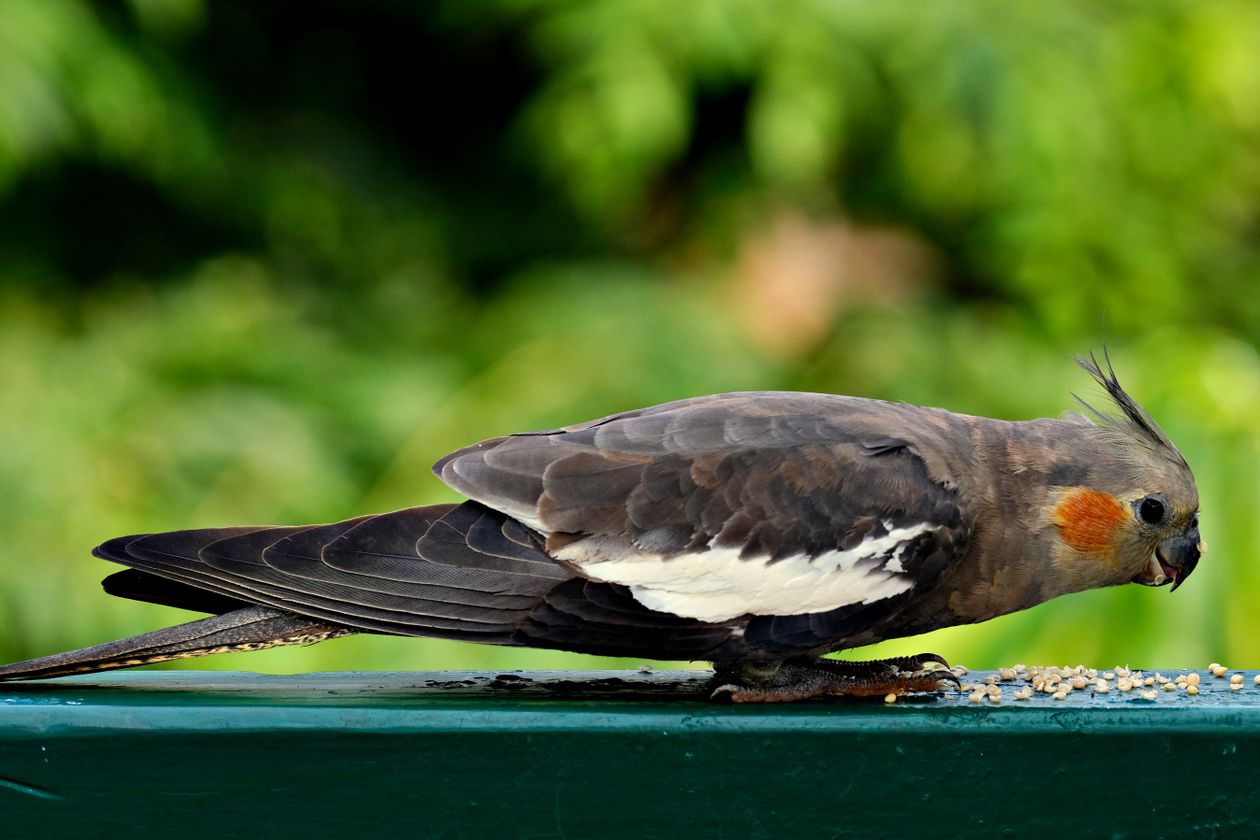
- Pexels — cockatiel eating seed cover image
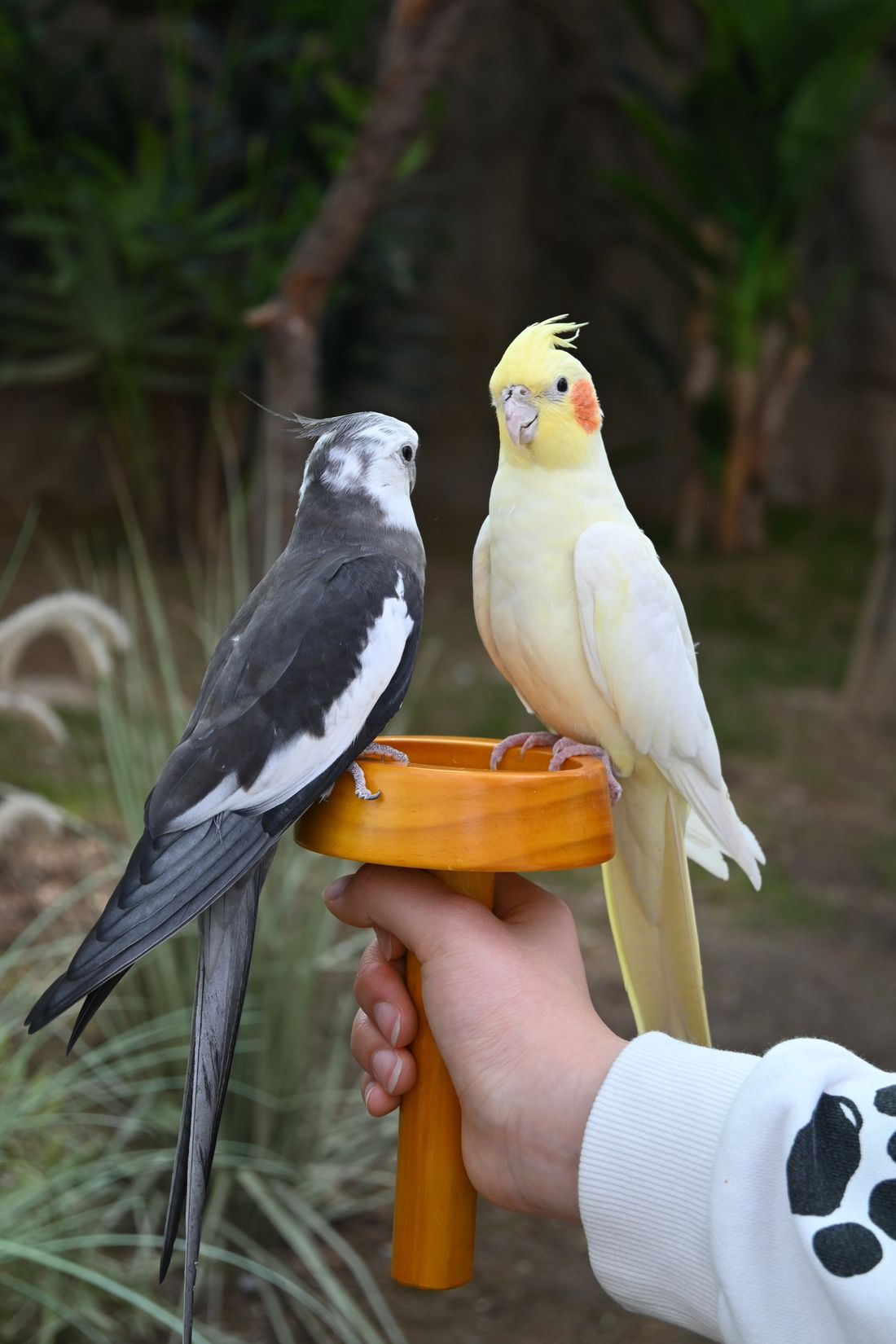
- Pexels — two cockatiels at feeder support image
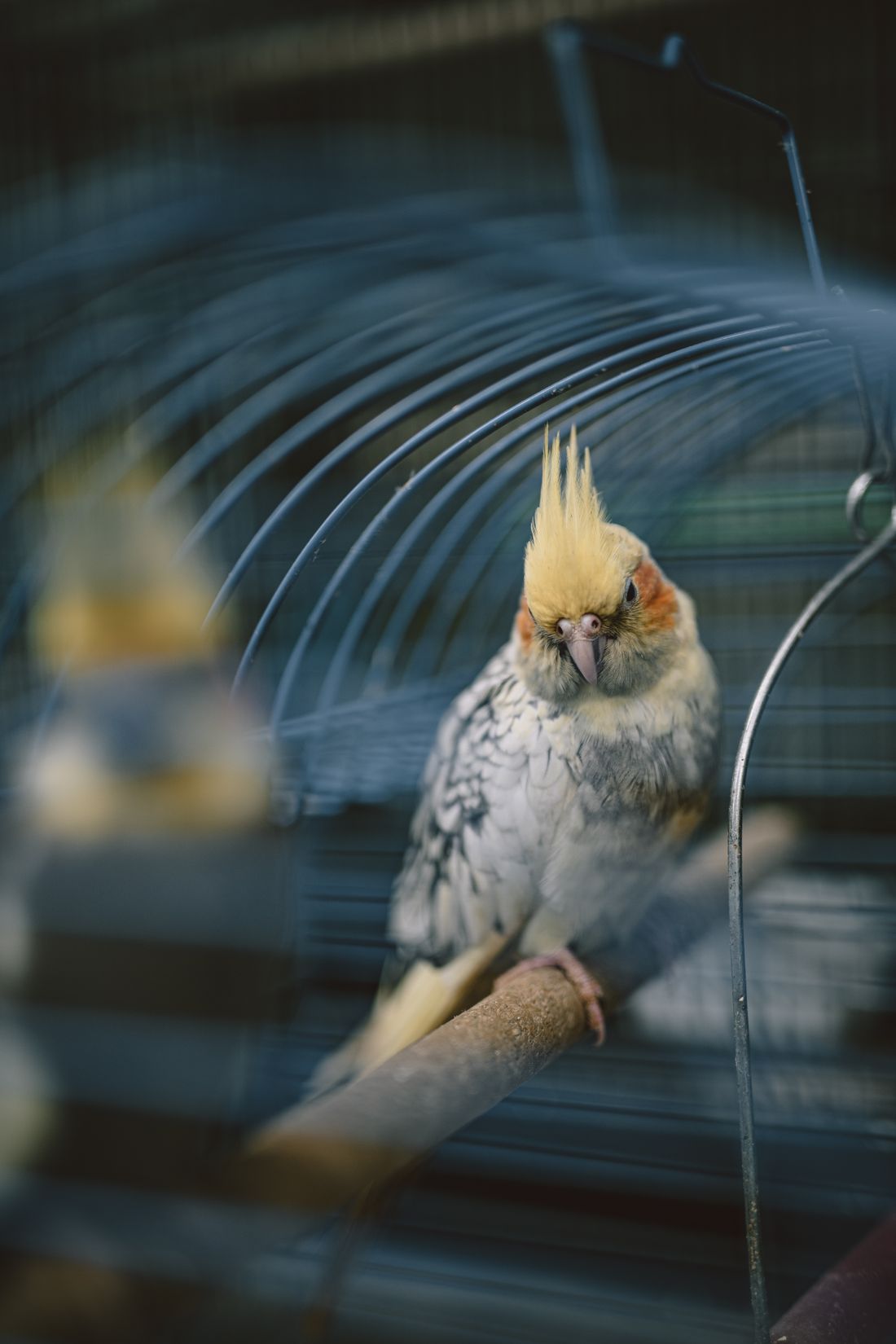
- Pexels — cockatiel cage support image
- Pexels License
Editorial note: this guide deliberately shows the current percentage differences among VCA, Merck and AAV rather than inventing a universal cockatiel ration; individual diet planning belongs with an avian veterinarian when health, body condition or reproduction changes nutritional needs. Sources were reviewed September 29, 2026.