

Last verified: September 29, 2026
Cockatoo vs Cockatiel: They Are Relatives, Not Smaller and Larger Versions of the Same Pet
Quick answer: a cockatiel is actually a member of the cockatoo family, Cacatuidae, but keeping a cockatiel is usually a very different household commitment from keeping one of the larger companion cockatoos. Cockatiels average about 80–95 g (2.8–3.5 oz) and 32 cm (12.5 in) in VCA’s husbandry guide, are vocal but relatively quiet compared with cockatoos, and are commonly described as suitable first companion birds. Larger pet cockatoos can weigh hundreds of grams, may live for several decades, require much stronger housing, can be extremely loud, and often demand intensive social and enrichment management.
The phrase “cockatoo vs cockatiel” also hides an important problem: cockatiel is one species; “cockatoo” is a diverse family/group containing multiple species with very different sizes and temperaments. A Goffin’s cockatoo is not the same management project as a Moluccan or umbrella cockatoo. This guide therefore compares a cockatiel with the typical range of companion cockatoos and flags the places where species-level research is mandatory.
Patify comparison rule: do not choose by appearance or cuddling videos. Compare the daily noise, physical space, destructive capacity, social dependence, lifespan and household tolerance you can realistically support for decades.
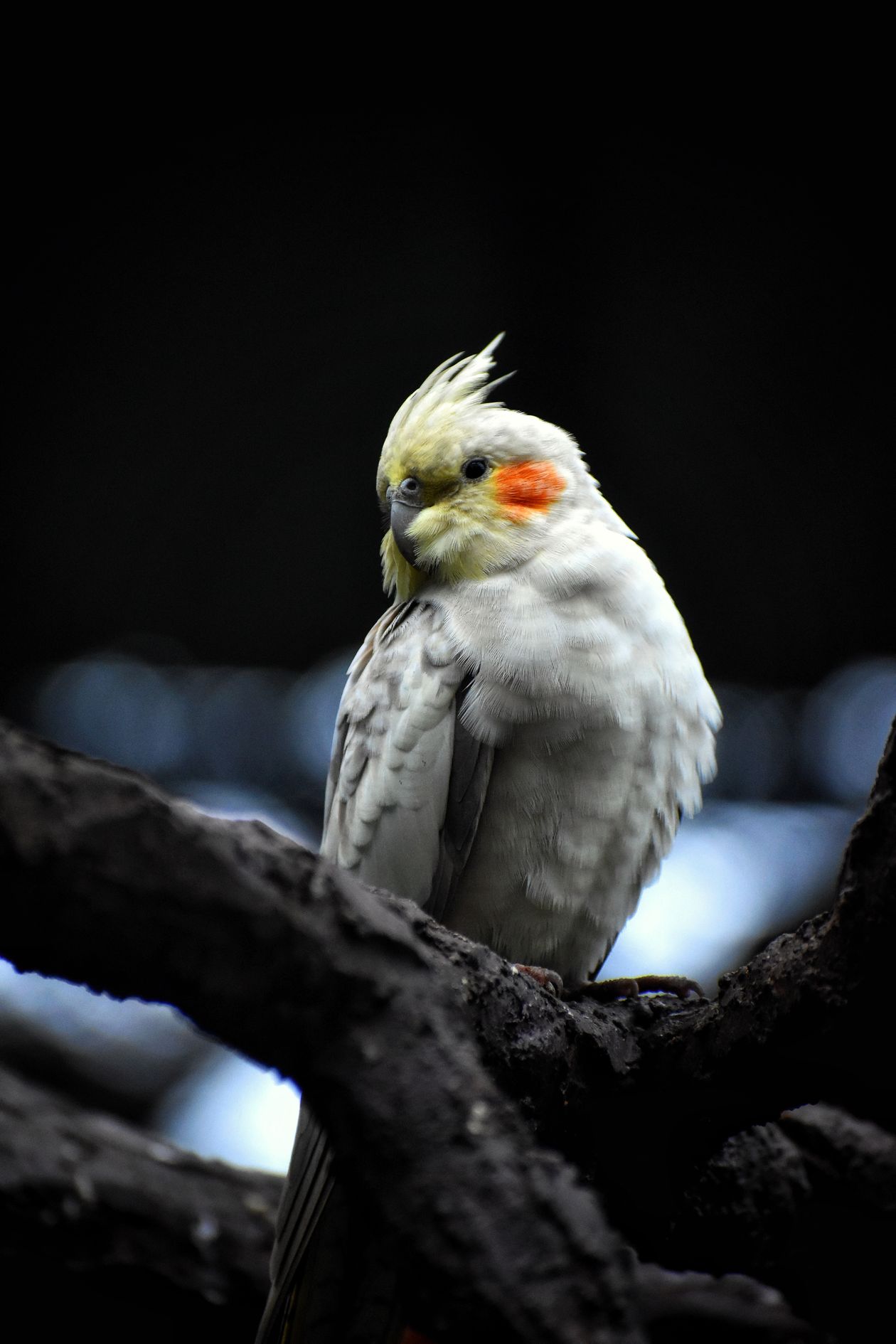
Is a Cockatiel a Cockatoo?
Yes in the taxonomic sense. Lafeber’s avian reference places the cockatiel (Nymphicus hollandicus) in the cockatoo family Cacatuidae and describes it as the smallest member of that family. Cockatiels share several visible cockatoo-family traits:
- a movable erectile crest;
- powder-down feathers that create fine feather dust;
- strong social behavior;
- a hooked parrot beak;
- Australian ancestry;
- expressive crest/body postures.
That does not mean a cockatiel is simply a miniature umbrella cockatoo. Evolution, body size, ecology and species-specific behavior produce very different practical care demands.
Why the name confuses people
In everyday pet language, “cockatoo” usually means one of the larger companion species—umbrella, Moluccan, sulphur-crested, Goffin’s, galah and others—while “cockatiel” is treated as its own pet category. Both usages are understandable. This article keeps the common-pet distinction while explaining the family relationship accurately.
Cockatoo vs Cockatiel: Quick Comparison
| Factor | Cockatiel | Larger companion cockatoos |
|---|---|---|
| Taxonomy | One species in family Cacatuidae | Multiple species in family Cacatuidae |
| Typical size | VCA: ~80–95 g; ~32 cm | VCA broad range: ~300–900 g; ~31–70 cm depending species |
| Noise | Vocal, whistles/calls; relatively quiet vs larger cockatoos | Can be extremely loud; species and individual variation substantial |
| Housing | Substantial flight/activity space, but smaller hardware | Large, strong, securely welded housing often required |
| Chewing power | Chews wood, paper, household objects | Can destroy substantial wood/plastic and weak cage hardware |
| Social demand | Social and interactive; can live as a single bird with appropriate attention | Often exceptionally social and demanding; poor independence can become a major problem |
| Powder dust | Yes | Yes; many cockatoos produce large amounts of powder dust |
| Speech | Excellent whistling; limited speech ability | Can mimic words, but many are valued more for social behavior than speech |
| Lifespan | VCA: commonly 10–14 years, maximum reported 24 | VCA: commonly 25–45 years; larger species can potentially live much longer |
| Beginner fit | VCA describes cockatiels as an excellent first bird | Merck describes cockatoos as unsuitable for inexperienced owners |
These are care-scale comparisons, not personality guarantees. A particular cockatiel can be loud or difficult, and an individual cockatoo can be behaviorally stable and well trained. Species and individual history matter.
The Biggest Comparison Error: Treating “Cockatoo” as One Species
“Which is bigger, a cockatoo or a cockatiel?” sounds simple until you notice how wide the cockatoo group is. VCA gives a broad pet-cockatoo size range of roughly 300–900 g and 31–70 cm, depending on species. Lafeber similarly describes cockatoos as medium-to-large parrots.
That means a responsible decision has two levels:
- Cockatiel vs cockatoo-family commitment: is your household even suited to the larger noise, space and lifespan category?
- Exact cockatoo species: if yes, compare Goffin’s, umbrella, Moluccan, galah or another species separately.
A Goffin’s may be described as quieter relative to other cockatoos, yet Lafeber explicitly warns that “quieter cockatoo” does not mean quiet. Moluccans and umbrellas can be extraordinarily loud and demanding. Do not buy a smaller cockatoo species believing it automatically behaves like a cockatiel.
Size: The Difference Is More Than Body Length
VCA lists an average cockatiel at 80–95 g. Its cockatoo overview spans roughly 300–900 g, depending on species. The practical difference appears everywhere:
- larger perches must support more weight;
- cage hardware must resist a stronger beak;
- travel carriers are larger and heavier;
- food volume and chew-toy replacement increase;
- a bite or household chewing incident can cause more physical damage;
- safe out-of-cage bird-proofing has to withstand a much more powerful animal.
Avoid internet “bite force PSI” charts. Reliable clinical sources do not provide one universal cockatoo bite-force number, and species/body mechanics vary. The useful fact is simpler: a large cockatoo has a substantially larger and more powerful beak than a cockatiel, so management errors have different consequences.
Noise: Cockatiel Is Quieter, Not Silent
Merck’s current pet-bird guide describes cockatiels as vocal but relatively quiet compared with macaws or cockatoos. The same guide calls cockatoos very loud when they scream and says they are not for inexperienced owners.
Cockatiel sound profile
- whistling;
- contact calls;
- flock calling when separated;
- short bursts of louder calling;
- individual learned sounds/words.
Cockatoo sound profile
Species differ, but Lafeber describes cockatoos as vocal communicators and notes that they can be extremely loud, particularly when seeking attention or at predictable high-arousal periods. An umbrella or Moluccan scream is not simply “a louder cockatiel whistle.”
Apartment test
If shared-wall noise is a major constraint, a cockatiel is generally the lower-risk fit of these two categories—but no parrot is silent. A large cockatoo should not be chosen with the assumption that training can guarantee quiet.
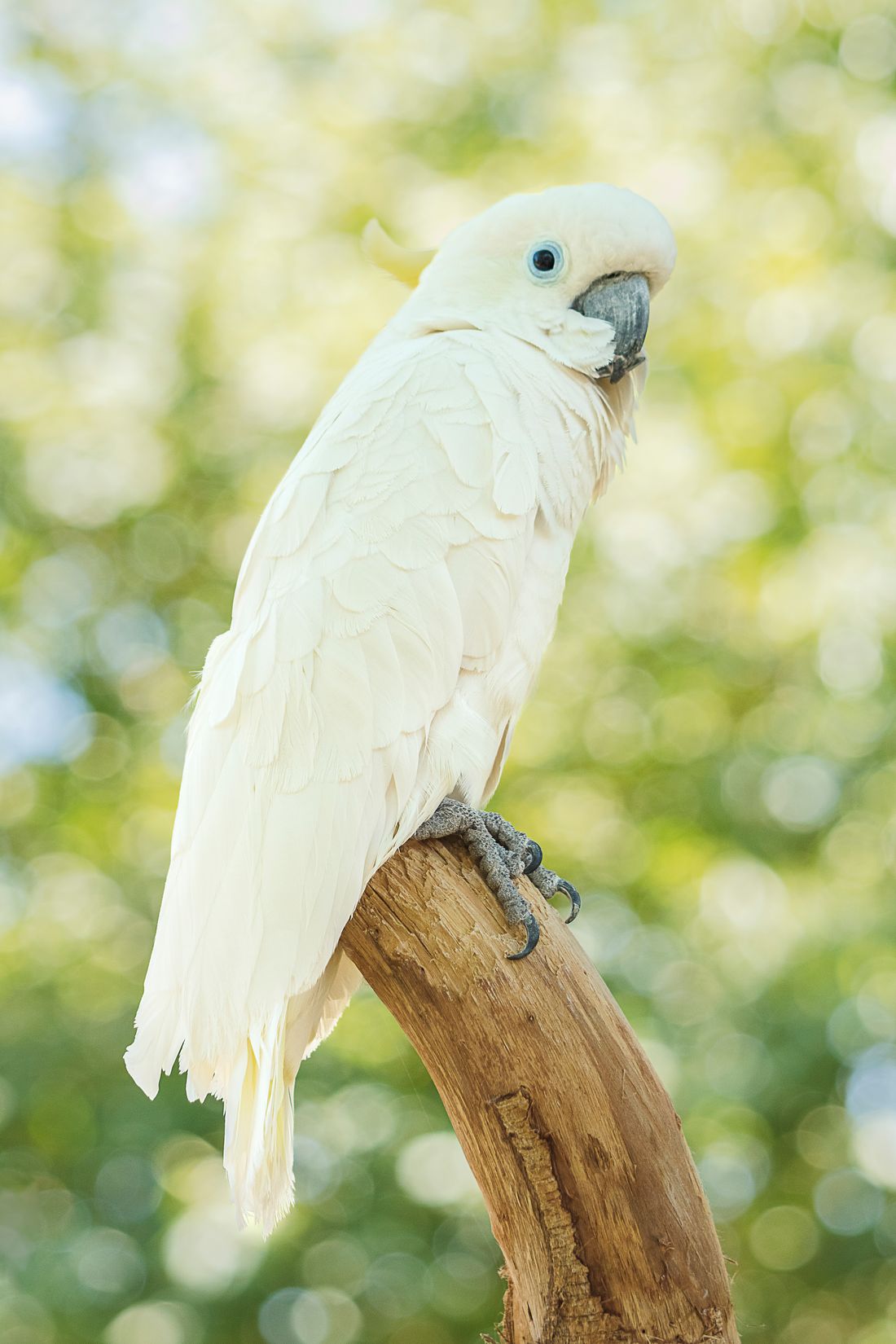
Housing and Space: A Bigger Cage Is Only the Beginning
VCA lists a minimum cockatiel cage around 2 × 2 × 3 ft (60 × 60 × 90 cm) per bird in its general husbandry sheet, while also emphasizing daily activity and play. Treat that as a minimum reference, not permission to keep a flight-capable bird sedentary.
For large cockatoos, LafeberVet calls for tall, roomy, strong, securely welded cages with adequate locks. Exact dimensions and bar spacing must match the species; a generic “cockatoo cage” number is misleading because Goffin’s and Moluccan cockatoos differ substantially.
Space audit before choosing a large cockatoo
- Where does the main enclosure physically fit?
- Can doors and feeding stations be secured against manipulation?
- Where will the bird exercise outside the cage?
- Which furniture/walls/electronics are within beak reach?
- Can you clean powder and shredded material around the cage?
- Can the bird have a quiet sleep location?
- Can you transport the enclosure or bird during an emergency/move?
The correct question is not “Can I fit a cage?” It is “Can I fit the bird’s whole daily environment?”
Chewing and Destruction: Same Instinct, Different Scale
Cockatiels chew paper, cardboard, untreated bird-safe wood and household objects if given access. VCA explicitly recommends safe chew materials as enrichment.
Lafeber says cockatoos need a steady supply of items to chew and destroy and require robust cages partly because they can damage weaker structures. Large cockatoos can turn furniture, trim, doors, remote controls and cage fixtures into expensive enrichment if the environment is not managed.
Do not solve chewing by removing everything chewable
Chewing is normal parrot behavior. The goal is to redirect it into appropriate destructible enrichment while protecting unsafe household materials. Merck’s 2026 welfare guidance emphasizes foraging and environmental enrichment for psittacines rather than barren housing.
Powder Down: Both Birds Are Dusty
This is one of the clearest family similarities. Lafeber notes that cockatiels and cockatoos both produce powder down. LafeberVet specifically describes the large amounts of powder dust produced by many cockatoos.
Before adoption, test the household reality
- visit homes/rescues with the species if possible;
- notice how quickly surfaces collect fine feather powder;
- plan frequent cleaning around cage and electronics;
- keep smoke, aerosols and other respiratory irritants away from birds;
- if someone in the household has significant respiratory disease or bird-related sensitivity, discuss exposure with their medical professional before adoption.
Do not choose a cockatiel assuming “small bird = no dust.” The difference is scale, not absence.
Lifespan: This May Be the Most Important Difference
VCA lists cockatiels at an average 10–14 years, with a reported maximum around 24 years. Merck’s owner guide gives “up to 20 years” as a broad pet estimate.
VCA lists cockatoos around 25–45 years, with larger species potentially reaching 70–80 years. Merck gives a broad 25–50-year category for pet cockatoos.
These are not guarantees—actual lifespan depends on species, genetics, nutrition, veterinary care, accidents and husbandry—but the planning difference is enormous.
A cockatoo plan needs answers for:
- housing changes and moves;
- relationship/family changes;
- retirement and aging of the owner;
- long-term avian veterinary access;
- financial care during illness;
- a written backup caregiver/estate plan.
A young adult adopting a large cockatoo may be making a commitment that extends through multiple decades of their own life.
Talking vs Whistling: Neither Should Be Chosen as a Voice Assistant
VCA describes cockatiels as excellent whistlers with limited speech ability; males often imitate sounds more readily than females. Cockatoos can learn words and phrases, but Lafeber notes that many are not considered top talking parrots.
| Communication | Cockatiel | Cockatoo |
|---|---|---|
| Whistling | Often a major strength | Possible, species/individual dependent |
| Words | Some individuals learn words/phrases | Some learn useful vocabularies, but not guaranteed |
| Contact calling | Yes | Yes |
| Scream intensity | Lower relative scale | Can be extreme |
| Reason to choose | Do not choose solely for speech | Do not choose solely for speech |
If vocal behavior suddenly changes after adoption, Patify’s parrot screaming guide separates normal contact calling from health, fear, reproductive and learned-attention causes.
Diet: Similar Principles, Different Portion Scale
Both cockatiels and larger cockatoos need nutritionally balanced diets rather than unrestricted seed-only feeding. The exact diet framework depends on species, product, body condition and health.
For cockatiels specifically, Patify’s cockatiel food guide compares current VCA, Merck and AAV feeding frameworks instead of inventing one universal pellet percentage.
With a large cockatoo, do not simply multiply a cockatiel ration by body weight. Species-specific energy needs, obesity risk, activity and food format matter. Use an avian veterinarian to evaluate the individual bird.
Cost: Compare the System, Not the Purchase Price
A U.S.-wide fixed annual dollar figure would be misleading because adoption fees, bird price, veterinary fees, cage brands and food costs vary enormously. The useful comparison is where the expenses scale.
| Expense | Cockatiel | Larger cockatoo |
|---|---|---|
| Primary enclosure | Substantial but smaller/lighter | Large, heavy-duty, secure construction |
| Carrier / stands | Smaller equipment | Larger reinforced equipment |
| Food volume | Lower | Higher, species dependent |
| Chew/enrichment replacement | Ongoing | Often much heavier destructive turnover |
| Home repair risk | Real but smaller-scale | Potentially substantial |
| Veterinary care | Avian vet required | Avian vet required; decades-long commitment increases lifetime exposure |
| Backup/boarding logistics | Specialized | More difficult because size/noise/handling |
The expensive bird is not necessarily the bird with the higher purchase price. Lifetime infrastructure and behavior management matter more.
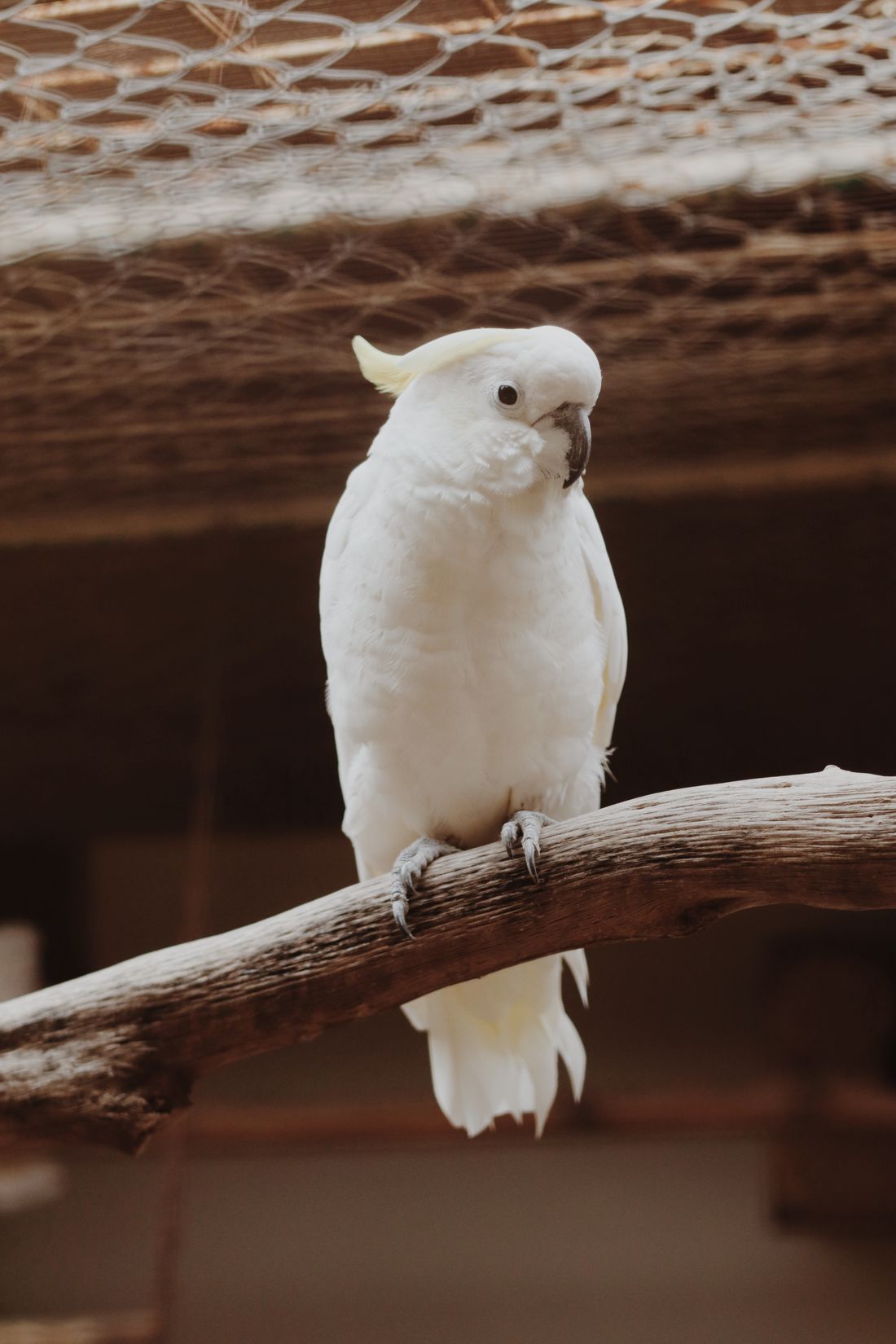
Cockatiel or Cockatoo? Use a Household Fit Test
This is not a “which bird is better?” score. It identifies which constraints become critical.
| Your situation | What it means |
|---|---|
| Shared walls / noise-sensitive household | Cockatiel is generally the more realistic of these two, but test tolerance for normal bird calls first |
| First parrot | VCA specifically describes cockatiels as an excellent first bird; Merck cautions that cockatoos are not for inexperienced owners |
| You want a bird that can entertain itself for parts of the day | Independence training matters for both; many cockatoos make this a particularly demanding management goal |
| You travel frequently | Both need qualified care; large cockatoo boarding/caregiver logistics are harder |
| You hate dust | Neither is dust-free; both are powder-down birds |
| You rent or expect frequent moves | Large cockatoo cage size/noise/property damage can make housing significantly harder |
| You want decades-long companionship | Both are long commitments; large cockatoos can extend across much more of a human lifetime |
| You have delicate furniture / cannot bird-proof a room | Large cockatoo destructive capacity deserves serious reconsideration |
| You primarily want a talking bird | Neither species group should be chosen on guaranteed speech |
Before adopting either
- Spend time around adult birds, not only babies.
- Listen to full-volume calls in person.
- Handle cage cleaning and feather dust in a real environment.
- Price an avian-vet exam in your area.
- Identify an emergency avian/exotics clinic.
- Measure the real cage/play-space footprint.
- Plan daily enrichment and independent activity.
- Have a backup caregiver who is comfortable with parrots.
10 Cockatoo vs Cockatiel Myths
- “Cockatiels are not cockatoos.” Taxonomically, they are in the cockatoo family.
- “A cockatiel is just a mini cockatoo.” Same family does not mean identical management.
- “Small cockatoos are apartment birds.” Even smaller cockatoo species can scream loudly.
- “Cockatoos are better because they cuddle more.” Intense dependency and mate-like bonding can create serious problems.
- “Cockatiels are quiet.” They are relatively quieter, not silent.
- “Cockatiels do not make feather dust.” They are powder-down birds too.
- “A large cockatoo only needs a proportionally bigger cockatiel cage.” Hardware strength and destruction resistance also change.
- “Both should eat mostly seed because they are parrots.” Seed-only feeding is not an adequate companion-bird diet.
- “A baby cockatoo’s cuddly personality predicts adulthood.” maturity and reproductive behavior can change interaction patterns.
- “If I can afford the bird, I can afford ownership.” Lifetime housing, enrichment, veterinary care and repair/boarding logistics matter.
Frequently Asked Questions About Cockatoos and Cockatiels
Is a cockatiel a type of cockatoo?
Yes. Cockatiels belong to the cockatoo family Cacatuidae and are described by Lafeber as the smallest member of that family.
What is the main difference between a cockatiel and a cockatoo?
In pet-care terms, scale: larger cockatoo species generally require much stronger/larger housing, can produce far greater noise and destruction, and commonly represent a longer and more socially demanding commitment.
Which is bigger, a cockatoo or cockatiel?
Most companion cockatoos are much heavier than cockatiels. VCA lists cockatiels around 80–95 g, while its broad cockatoo range is about 300–900 g depending on species.
Which is louder?
Larger cockatoos generally have the much greater noise potential. Merck describes cockatiels as relatively quiet compared with cockatoos, while cockatoos can be very loud when screaming.
Are cockatiels good apartment birds?
They can be a more realistic apartment parrot than a large cockatoo, but they still call, whistle and may flock-call loudly. Building acoustics and neighbor tolerance matter.
Are cockatoos good for beginners?
Merck’s current pet-bird guide says cockatoos are not for inexperienced owners. Their noise, social intensity, destructive behavior, lifespan and housing make them advanced companion birds.
Are cockatiels good for beginners?
VCA describes cockatiels as excellent first birds, but they still require specialized avian care, social interaction, enrichment and a long-term commitment.
Do cockatiels and cockatoos both make dust?
Yes. Both are powder-down birds. Many larger cockatoos produce especially conspicuous amounts of feather powder.
Which lives longer?
Large cockatoos generally have the longer potential lifespan. VCA lists cockatiels at about 10–14 years on average and cockatoos around 25–45 years, with some larger cockatoos potentially living much longer.
Which talks better?
Neither is a guaranteed talking bird. Cockatiels are often strong whistlers with limited speech; cockatoos may learn words and phrases but are not typically chosen primarily for advanced talking ability.
Can a cockatiel and cockatoo live in the same cage?
No general guide should recommend that. The size and beak-power difference creates serious injury risk. Housing compatibility between individual parrots should be managed conservatively with separate secure enclosures and professional guidance where needed.
Can they be in the same room?
Potentially with appropriate separate housing, quarantine/veterinary considerations for new birds and carefully managed introductions. Never assume family relationship makes them compatible.
Which bird needs more attention?
Both are social, but many larger cockatoos are exceptionally demanding of interaction. The goal should include teaching independent play and foraging rather than providing constant physical attention.
Are cockatoos more affectionate?
Some individuals are intensely tactile, but “affectionate” is not a guaranteed species trait and extreme cuddling can contribute to mate-like bonding and hormonal behavior. Choose for husbandry fit, not social-media cuddling.
Should I get a cockatiel before a cockatoo?
A cockatiel can teach you basic parrot husbandry, but it should never be acquired merely as practice for a larger bird. Adopt a cockatiel only if you want to care for that cockatiel for its own full lifespan.
Sources Checked for This Guide
- Lafeber — Cockatiels Are Cockatoos, Too: Cacatuidae relationship, crest and powder-down similarities.
- VCA Animal Hospitals — Cockatiels: General Information: size, weight, lifespan, husbandry, vocal ability and first-bird context.
- VCA Animal Hospitals — Cockatoos: General Information: broad cockatoo size and lifespan ranges and husbandry.
- Merck Veterinary Manual — Choosing a Pet Bird: cockatiel vs cockatoo noise, lifespan and experience-level comparison.
- Merck Veterinary Manual — Behavior of Pet Birds: social needs, enrichment and abnormal behavior risk.
- Merck Veterinary Manual — Welfare of Exotic and Nontraditional Pets: psittacine space, social interaction and foraging/enrichment welfare.
- Merck Veterinary Manual — Reproductive Disorders of Pet Birds: intense cockatoo owner bonding and mate-like behavior context.
- Lafeber — Cockatoo Care & Personality: social intensity, cage strength, chewing, noise and species diversity.
- LafeberVet — Basic Information Sheet: Cockatoo: strong housing, powder dust, social behavior and foraging.
- Pexels — cockatiel cover image
- Pexels — white cockatoo support image
- Pexels — indoor cockatoo support image
- Pexels License
Editorial note: this comparison treats “cockatoo” as a multi-species range rather than a single standardized pet profile and avoids fixed daily-attention hours, bite-force claims or universal cage dimensions where species-level variation makes those numbers misleading; sources were reviewed September 29, 2026.
Social Needs: “Cuddly” Can Become the Hardest Part of Cockatoo Care
Cockatiels are social parrots and need daily interaction, activity and enrichment. VCA notes that a single cockatiel can live happily without another bird when appropriate human attention is provided.
Larger cockatoos often take social dependence to another level. Lafeber describes cockatoos as highly social and demanding, while Merck notes that larger parrots such as cockatoos require substantial daily interaction.
Why unlimited cuddling is not automatically good care
Merck’s reproductive-behavior guidance describes a pattern seen particularly in some cockatoos: intense one-person bonds, parent/mate-like interaction and excessive body handling can contribute to problematic reproductive behavior. Merck specifically recommends avoiding sexualized stroking of the back/body in affected birds.
Therefore, good cockatoo socialization should include:
A bird wanting to be on you every minute is not proof the husbandry is perfect. Independence is a welfare skill.