
Connecticut Senior Cat Care Costs 2026: Vet Bills, Insurance & Affordable-Care Guide
Senior-cat care can become expensive in Connecticut, but a useful budget should not be built from invented county averages. Veterinary clinics set their own fees, diagnostic needs vary by cat, and a “senior visit” can mean anything from a physical exam to a full chronic-disease workup. This guide therefore focuses on the parts that remain useful over time: how often older cats should be examined, which services drive the bill, how CKD, hyperthyroidism, diabetes, dental disease and hypertension change the care plan, what Connecticut specialty and reduced-fee resources actually exist, and how to evaluate insurance for an older cat without relying on brittle premium estimates.
Connecticut senior-cat planning: the durable version
Senior age: current FelineVMA guidance treats cats over 10 as senior. Cats 10–15 should generally be examined at least every six months; healthy cats over 15 may benefit from visits about every four months.
Budgeting: plan by service bundle—exam, blood/urine testing, blood pressure, imaging, dental care, medication and emergency/specialty care—not by a made-up “Fairfield County average.”
UConn correction: UConn Storrs has the Connecticut Veterinary Medical Diagnostic Laboratory (CVMDL), not a small-animal Veterinary Teaching Hospital that treats referred cats at discounted academic prices.
Specialty care: Connecticut has private referral centers, including Pieper Memorial in Middletown; Tufts Foster Hospital in North Grafton, Massachusetts is a genuine academic small-animal referral hospital for cases that are referred there.
Insurance: age limits and plan types differ substantially. In 2026, Trupanion enrolls cats only up to age 14; Spot has no upper enrollment age; Embrace allows senior enrollment but cats 15+ are limited to accident-only; Lemonade acknowledges an age limit and does not publish one universal cutoff for every pet profile.
What counts as a senior cat in 2026?
The Feline Veterinary Medical Association (formerly AAFP) considers cats over 10 years old to be senior. Its senior-care guidance recommends a minimum examination frequency of about every six months for cats 10–15 years old and about every four months for healthy cats over 15, with more frequent visits when chronic disease or frailty requires it.
That is a better planning framework than the older “11–14 = senior, 15+ = geriatric” cutoff used in many legacy articles. Life-stage labels have changed over time, but the practical principle is stable: an older cat needs more frequent trend monitoring because weight loss, blood-pressure changes, kidney disease, hyperthyroidism, dental pain and mobility problems can develop subtly.
Why this guide no longer publishes county-by-county “average vet costs”
The previous version assigned precise exam, bloodwork, ultrasound and annual-disease cost ranges to Fairfield, New Haven, Hartford, Middlesex, Tolland and Windham counties. No Connecticut veterinary fee survey or transparent invoice dataset was cited that could support those county averages.
Geography absolutely affects price. Rent, staffing, emergency coverage, equipment, specialist availability and local wage levels all matter. But a clinic in Fairfield County can still charge less for a particular service than a clinic elsewhere, and two clinics can quote very different totals because one estimate includes radiographs, anesthesia monitoring or lab work that the other lists separately.
- Ask for an itemized low-to-high written estimate.
- Ask whether exam fees, bloodwork, urinalysis and blood pressure are separate line items.
- For imaging, ask whether the quote includes specialist interpretation.
- For dentistry, confirm anesthesia, dental X-rays, extractions, IV fluids and take-home medication.
- For chronic disease, ask for an expected 6–12 month monitoring schedule, not only today's bill.
- For insurance, use your actual Connecticut ZIP code and cat's age for a live quote instead of relying on a statewide premium average.
What actually drives a Connecticut senior-cat bill?
Physical examinations
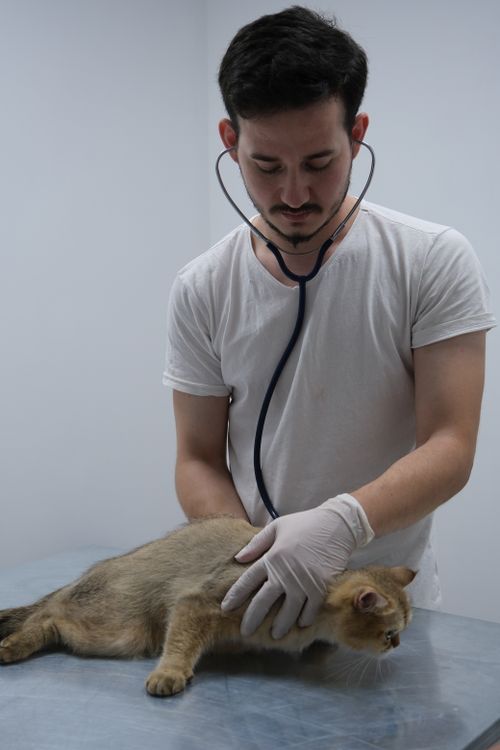
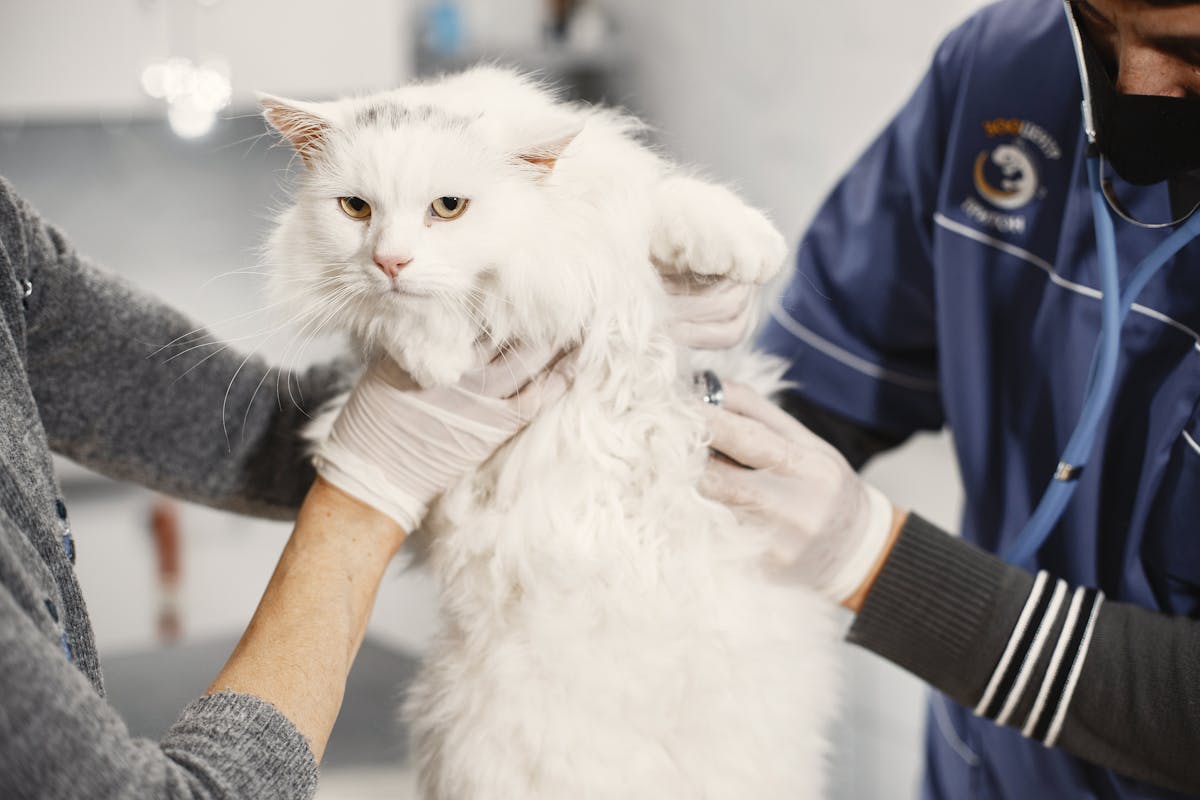
Older cats are typically seen more frequently than young healthy adults. A chronic disease or medication change may shorten the interval further.
Laboratory monitoring
CBC/chemistry, creatinine/SDMA, thyroid testing, glucose/fructosamine, urinalysis and urine protein testing may be used depending on the cat.
Blood pressure
Senior-care guidance emphasizes blood-pressure screening. Hypertension is especially important with kidney disease and hyperthyroidism.
Dental procedures
Dental disease often requires anesthesia and full-mouth radiographs, and extraction complexity can make the final bill much higher than the cleaning headline price.
Imaging and referral
Ultrasound, radiographs, echocardiography, CT/MRI or specialty consultation add substantial cost when a primary-care workup cannot answer the clinical question.
Medication and diet
Chronic medication, prescription food and supplies create recurring costs, but the treatment plan varies enough that a fixed annual “senior cat average” is not meaningful.
CKD: common in older cats, but there is no single annual cost
Cornell's Feline Health Center describes chronic kidney disease as one of the most prevalent diseases in older cats, affecting up to 40% of cats over age 10 and up to 80% of cats over 15. Those figures are more current and more specific than the older “30% over 12” shortcut.
CKD costs depend on stage, stability and complications. A stable cat may primarily need examinations, blood/urine testing, blood-pressure monitoring and a therapeutic diet. Another cat may also need anti-nausea treatment, phosphorus management, potassium support, subcutaneous fluids, anemia evaluation, hospitalization or specialist consultation.
Hyperthyroidism: compare treatment pathways, not just monthly medication
Feline hyperthyroidism occurs in middle-aged and older cats. Cornell lists four main treatment approaches: anti-thyroid medication, surgery, dietary management and radioactive iodine (I-131). Each has a different cost pattern and monitoring burden.
Medication can create recurring pharmacy and laboratory costs. I-131 creates a larger one-time treatment bill but may eliminate the need for long-term anti-thyroid medication in an appropriate patient. Kidney function and other disease can influence which approach is safest.
Connecticut owners do have an in-state specialty option for radioactive iodine: Pieper Veterinary's referral materials list Radioactive Iodine Therapy among specialty services at its Middletown center. The current public pages reviewed do not provide a universal I-131 price, so this article does not invent one.
Diabetes: the treatment path is no longer automatically “twice-daily insulin”
Insulin remains an important treatment for feline diabetes, but FDA has also approved oral SGLT2 inhibitors for carefully selected cats. Bexacat and Senvelgo can be appropriate only for specific cats that meet the labeling and screening requirements; they are not substitutes for insulin in insulin-dependent cats and carry serious safety warnings.
For budgeting, separate the initial diagnosis from ongoing care. Depending on treatment, costs can include medication or insulin, glucose/ketone monitoring, blood and urine testing, diet changes and urgent care if complications such as ketoacidosis occur.
Hypertension: do not rely on consumer home blood-pressure cuffs
High blood pressure commonly accompanies senior-cat diseases such as CKD and hyperthyroidism. FelineVMA guidance recommends regular blood-pressure screening in senior cats and more frequent rechecks when hypertension is being treated.
The same feline guidance explicitly cautions that commercial monitors intended for human or cat home use are not considered reliable for owner blood-pressure monitoring. That makes the old recommendation to buy a home feline blood-pressure cuff inappropriate.
Useful home monitoring instead includes appetite, body weight when feasible, water intake trends, litter-box output, mobility, grooming, breathing pattern, medication adherence and behavior changes—information your veterinarian can interpret alongside validated clinic measurements.
Dental disease: compare what the estimate includes
A senior dental bill can vary dramatically because dental cleaning under anesthesia is only one part of the procedure. The final total may include pre-anesthetic testing, IV catheter/fluids, full-mouth dental radiographs, nerve blocks, extractions, pathology and medication.
- Ask whether full-mouth dental X-rays are included.
- Ask how extractions are priced: per tooth, by complexity or by procedure/anesthesia time.
- Ask whether senior pre-anesthetic bloodwork is included.
- Ask what the low estimate assumes and what would trigger the high estimate.
- Request copies of the dental chart and radiographs for future continuity and insurance documentation.
Important Connecticut correction: UConn is not a Veterinary Teaching Hospital
UConn's Storrs campus is home to the Connecticut Veterinary Medical Diagnostic Laboratory (CVMDL), a nationally recognized veterinary diagnostic laboratory in the Department of Pathobiology and Veterinary Science. It provides diagnostic testing and laboratory expertise; it is not a small-animal teaching hospital where Connecticut owners book internal-medicine, cardiology, oncology or surgery appointments for their cats.
That means the older claim that “UConn VTH Storrs offers specialist care 20–40% below private specialty practices” was doubly unsupported: the clinical hospital itself was misidentified, and no public price comparison demonstrated that discount.
| Resource | What it actually is | How a senior-cat owner may use it |
|---|---|---|
| UConn CVMDL — Storrs | Accredited veterinary diagnostic laboratory | Your veterinarian may use laboratory services/testing; it is not a general specialty appointment hospital. |
| Pieper Memorial — Middletown | Connecticut 24/7 emergency + specialty hospital | Internal medicine, oncology, neurology, imaging and other referral services; radioactive iodine is listed among specialty services. |
| Tufts Foster Hospital — North Grafton, MA | Academic small-animal teaching/referral hospital | Board-certified specialty and emergency services for referred or appropriate regional cases. |
Reduced-fee and financial-assistance options in Connecticut
Connecticut has real affordability resources, but they have eligibility and capacity limits. Treat the following as a September 2026 snapshot, because availability can change.
| Program | Verified current benefit | Important limit |
|---|---|---|
| Connecticut Humane Society — Fox Memorial Clinic (Newington) / CHS Veterinary Clinic (Wilton) | CHS says services are typically 20–30% below many local veterinary clinics | Appointment-only, availability can be extremely limited, and the clinics do not provide emergency care. CHS says these clinics do not accept CareCredit or Scratchpay. |
| Connecticut Veterinary Medical Foundation — Companion Assistance Program | $125 voucher toward general veterinary care for eligible Connecticut residents | Limited distribution; 2026 update states 10 vouchers per month. Not intended for emergency/urgent or next-day care. |
| Connecticut Humane Society financial-aid resource list | Links to grants, crowdfunding, financing and reduced-cost resources | Programs have separate eligibility rules and funds may be limited. |
| Connecticut APCP | Spay/neuter and vaccination assistance for qualifying animals/owners | Not a chronic senior-disease treatment fund; FY2026 low-income applications were closed when checked. |
Pet insurance for an older Connecticut cat: current age rules matter
For a senior cat, the question is not “Which company has the cheapest Connecticut premium?” A useful comparison starts with whether the cat can still enroll, what type of coverage is available at that age, which conditions are already pre-existing, and how deductible/reimbursement/annual limits work.
| Insurer | 2026 senior-cat enrollment snapshot | Evergreen point to check |
|---|---|---|
| Trupanion | New cats can enroll up to age 14; no annual/lifetime payout limit on covered conditions | An older cat past the enrollment cutoff cannot start a new Trupanion policy. Pre-existing conditions remain excluded. |
| Embrace | No absolute enrollment-age ceiling, but cats under 15 can enroll in accident & illness; cats 15+ are offered accident-only | Do not read “no upper age limit” as meaning full illness coverage at every age. |
| Spot | No upper age limit for new enrollment; accident & illness plans remain available to seniors | Premium, deductible, annual limit and pre-existing history still determine value. |
| Lemonade | Available in Connecticut; its current FAQ acknowledges an enrollment age limit but does not publish one universal cutoff for every pet profile | Run a real quote for the cat's age/breed/ZIP rather than relying on “no age limit” summaries. |
For the broader U.S. rules on waiting periods and pre-existing-condition denials, see Patify's pet-insurance waiting-period and denial guide.
How to compare a senior-cat insurance quote without being misled
- Use the same annual limit, deductible and reimbursement percentage across quotes.
- Confirm whether exam fees are covered or require an add-on.
- Check dental-illness coverage and any dental sub-limit.
- Read how the insurer defines a pre-existing condition, including prior signs/symptoms.
- Ask whether curable pre-existing conditions can become eligible again and what chronic conditions are excluded from that pathway.
- Confirm the enrollment-age rule for your exact cat, not a generic insurer comparison table.
- Ask whether premiums may change with age and location at renewal.
- Save the policy form and declarations page that applied when you enrolled.
Home monitoring that actually helps your veterinarian
Home care can reduce stress and improve continuity, but it should support—not replace—hands-on senior examinations and diagnostics.
Weight and muscle
Track weight trends if you can do so accurately and safely. Unexplained weight loss can precede obvious illness.
Food and water
Record appetite changes and meaningful changes in drinking rather than relying on vague impressions.
Litter box
Watch urine volume/frequency, straining, stool quality and new accidents outside the box.
Mobility
Note reduced jumping, stiffness, reluctance to use stairs or changes in grooming that may indicate pain.
Medication response
Record missed doses, vomiting after medication, appetite changes and other adverse effects.
Videos
Short clips of coughing, walking, breathing, unusual behavior or litter-box attempts can help the veterinary team triage changes.
Virtual follow-up can sometimes complement senior care. Patify's 2026 U.S. cat telemedicine guide explains the difference between teletriage, prescription-capable telemedicine and symptoms that should go directly to an in-person clinic.
When cost planning should stop and emergency care should start
If a mature or senior cat stops eating, do not wait several days hoping it resolves. Cornell notes that sustained anorexia can seriously affect an adult cat's health in as little as 24 hours.
Frequently asked questions
How much does a senior cat cost per year in Connecticut?
There is no reliable single statewide or county average that applies to an individual senior cat. A healthy senior cat needing preventive exams and screening has a very different budget from a cat with CKD, hyperthyroidism, dental extractions or emergency hospitalization. Ask for a 6–12 month written care plan based on your cat's actual conditions.
Is Fairfield County definitely the most expensive place for cat veterinary care in Connecticut?
Southwestern Connecticut can be expensive, but this update found no transparent veterinary invoice dataset that supports publishing fixed county-by-county percentages or universal price bands. Compare identical service bundles from actual clinics instead.
Does UConn have a Veterinary Teaching Hospital in Storrs for cats?
No. UConn Storrs has the Connecticut Veterinary Medical Diagnostic Laboratory, an accredited diagnostic laboratory. It should not be described as a small-animal teaching hospital providing discounted specialist appointments.
Where can a Connecticut cat get specialty internal-medicine care?
Connecticut has private referral hospitals, including Pieper Memorial in Middletown, which lists internal medicine and other specialty services. Regional academic referral care is also available at Tufts Foster Hospital for Small Animals in North Grafton, Massachusetts when appropriate.
Can I insure an 11-year-old Connecticut cat?
Possibly. Several insurers still accept an 11-year-old cat, but the age rule differs by company and the medical record affects what will actually be covered. Spot has no upper enrollment age; Trupanion accepts new cats up to age 14; Embrace offers accident-and-illness enrollment below 15; Lemonade uses an age limit and eligibility should be checked with a live Connecticut quote.
My cat already has CKD. Will new insurance pay for it?
Do not assume so. Standard pet insurance generally excludes conditions that meet the policy's definition of pre-existing. A new policy may still cover unrelated future eligible conditions, but read the medical-history decision and exclusions before buying.
Does Connecticut have low-cost veterinary care for senior cats?
Connecticut Humane Society operates reduced-fee clinics in Newington and Wilton and says its services are typically 20–30% below many local clinics, but appointments are limited and the clinics do not provide emergency care. The Connecticut Veterinary Medical Foundation also has a limited $125 Companion Assistance voucher for eligible residents.
Should I buy a home blood-pressure monitor for my senior cat?
Not as a substitute for validated veterinary measurement. FelineVMA guidance says commercial monitors intended for human or cat home use are not considered reliable. Track other home observations and have blood pressure measured by the veterinary team.
Bottom line
The best Connecticut senior-cat budget is not a county average. It is a living care plan built from your cat's examination schedule, laboratory trends, blood pressure, dental health, medications, diagnostic needs and emergency risk.
For long-term planning, keep three layers separate: routine senior monitoring, known chronic-disease management, and unexpected future care. Reduced-fee resources can help with the first two when available; insurance can help with eligible future conditions when the policy terms fit; and an emergency fund remains important because reimbursement-based insurance and excluded pre-existing conditions can still leave significant out-of-pocket costs.
Cornell Feline Health Center — Chronic Kidney Disease
Cornell — Feline Hyperthyroidism
FDA — Bexacat and Senvelgo for feline diabetes
UConn — Connecticut Veterinary Medical Diagnostic Laboratory
Pieper Veterinary — Internal Medicine, Middletown CT
Pieper Veterinary — Specialty services including radioactive iodine
Tufts Cummings School — Foster Hospital for Small Animals
Connecticut Humane Society — Reduced-fee clinic services and limitations
Connecticut Humane Society — Financial Aid Resources
Connecticut Veterinary Medical Foundation — Companion Assistance Program
Connecticut Department of Agriculture — Animal Population Control Program
Trupanion — Current cat enrollment age and coverage structure
Embrace — Current senior-cat enrollment structure
Spot — Current no-upper-age enrollment rule
Lemonade — Current pet insurance FAQ and senior-pet eligibility context
Pexels — Gustavo Fring, Cat at the Veterinarian (free to use)