Daylight Saving Time Ends: Why Your Dog's Whole Schedule Falls Apart

Source-checked against a peer-reviewed 2025 dog DST study plus official U.S. time rules. The 5-day plan below is a practical gradual-transition framework, not a clinical treatment protocol.
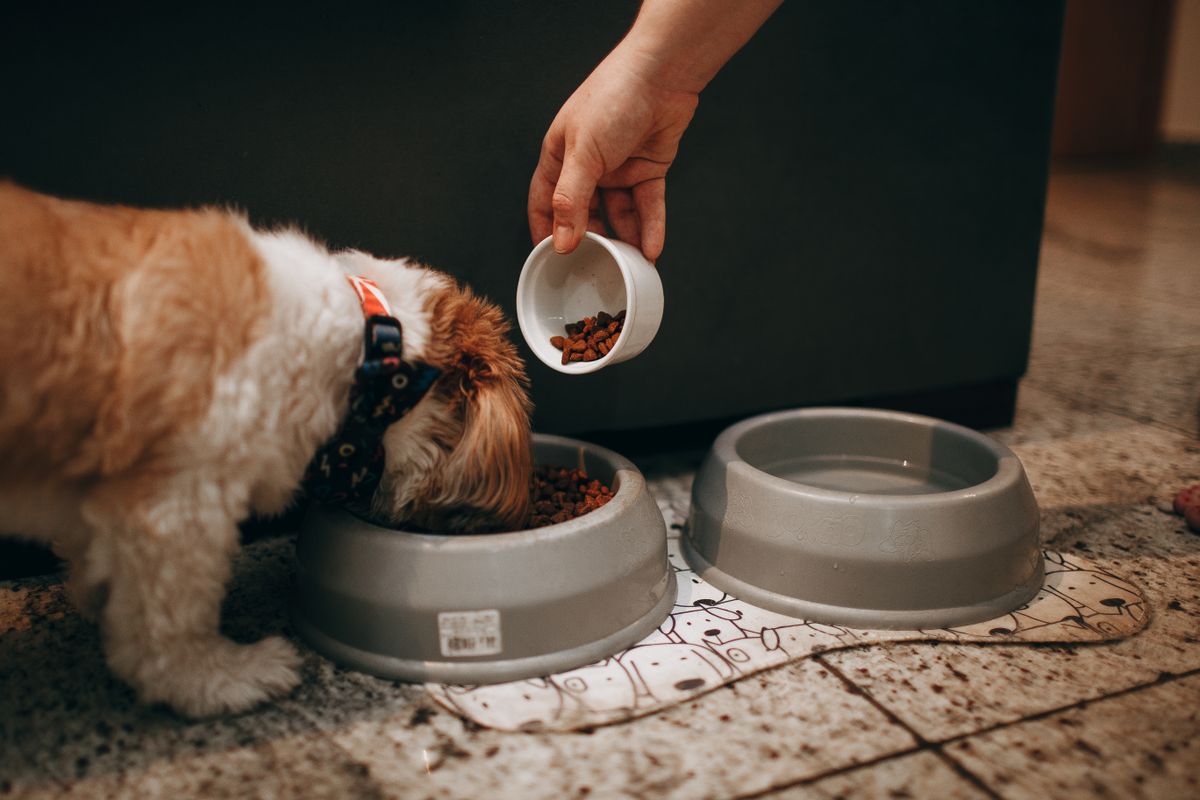
🕒 2026 date: In most of the United States, Daylight Saving Time ends on Sunday, November 1, 2026 at 2:00 a.m. local time. Clocks move back to 1:00 a.m. That means a breakfast you still serve at 7:00 a.m. new clock time arrives roughly one hour later relative to the previous day's clock schedule. Dogs that strongly anticipate meals, walks, medication-linked routines, or bathroom trips may notice that human-created delay.
Dogs do not read clocks, but they absolutely live inside patterns. Morning light, household movement, your alarm, food preparation, work departures, leash cues, and repeated activity all help structure their day.
That is why the fall-back time change can feel strange: the sun and your dog's learned expectations do not instantly obey the number on your kitchen clock. But the most important new research suggests we should stop assuming every pet experiences a one-hour behavioral crisis.
What this guide actually answers
- When does DST end in 2026?
- What the first dog-specific DST study found
- Why some dogs still notice the change
- The 5-day fix: about 12 minutes per day
- Feeding, walks, and bathroom breaks
- What if the clocks already changed?
- Dogs that need a more cautious transition
- When a behavior change is probably not “just DST”
- Frequently asked questions
When does Daylight Saving Time end in 2026?
NIST states that in 2026, U.S. Daylight Saving Time runs from March 8 at 2:00 a.m. to November 1 at 2:00 a.m. local time. At the November transition, 2:00 a.m. becomes 1:00 a.m., repeating that hour.
This article uses the U.S. 2026 schedule. DST is not observed in Hawaii and most of Arizona, and several U.S. territories also do not observe it. Rules differ in other countries and regions, so do not copy the November 1 date automatically if you live elsewhere.
Official U.S. fall-back date in regions observing DST.
At 2:00 a.m. local time, clocks return to 1:00 a.m.
Hawaii, most of Arizona, and several U.S. territories do not observe DST.
What research actually found when dogs went through “Fall Back”
A 2025 PLOS ONE study by Nagendran and colleagues directly examined the fall-back DST transition using activity monitors. The researchers followed 25 sled dogs and 29 companion dog-caregiver pairs in or near Ontario, Canada.
The result is much more interesting than the usual “DST confuses all dogs” headline:
- Companion dogs: researchers found no significant difference in morning onset activity after the DST transition.
- Sled dogs: morning activity increased when handlers arrived according to the shifted human schedule on DST Sunday, then returned to pre-transition levels on subsequent days.
- Practical interpretation: the working dogs took roughly one day to adjust, while companion dogs appeared more flexible in this measured outcome.
The study also found an age-related signal: older companion dogs showed a greater decrease in first-day morning activity relative to baseline. Because the sample was modest, that should not be turned into a sweeping claim that all senior dogs struggle with DST—but it is a sensible reason to transition older dogs gently.
The most useful DST lesson is not “dogs cannot handle a one-hour change.” It is that human schedules can shape canine activity—and different dogs respond differently.
So why does my dog still wake me up an hour “early”?
Because a dog can be flexible overall while still anticipating a specific event. A dog that has learned that morning light, your first movement, the coffee machine, and 7:00 breakfast occur together may start soliciting food before the new clock says 7:00.
Domestic dogs show daily activity rhythms, but they also live unusually close to human social schedules. Research on dog sleep-wake cycles shows that routines in the home track human weekday and weekend patterns, while the DST study found that human work schedule was especially powerful for working dogs.
A dog that anticipates food through repeated cues may ask for breakfast at what the new clock calls 6:00 a.m., because that moment resembles yesterday's 7:00 a.m. schedule.
Leash time can drift by an hour if the human keeps the same clock time after fall back. Dogs that strongly anticipate the outing may become restless beforehand.
Dogs with tight elimination routines—especially puppies—may not care that the clock changed. If they signal they need to go, take them out rather than forcing a schedule experiment.
Light exposure, household activity, and when people settle down can all shape rest patterns. One shifted clock hour is only one cue among many.
The 5-day fix: shift the routine about 12 minutes per day
AKC recommends gradually adjusting eating, walking, and bedtime during the week leading up to a time change. There is no peer-reviewed trial proving that a precise “five-day, 12-minute” schedule is medically superior. The plan below simply divides the one-hour fall-back difference into five small steps so the transition is easy to follow.
For fall back, the goal is to move the old schedule later before the clocks change. If breakfast is normally 7:00 a.m., the example looks like this:
Move breakfast, the main morning walk, and other flexible routine anchors about 12 minutes later.
Keep the change small. Your dog should barely notice the clock adjustment.
Shift flexible evening anchors too if your dog is strongly routine-driven.
Continue normal meal quantity and walk quality; only the timing is changing.
You have now moved one hour later on the old DST clock.
When clocks move back, 7:00 a.m. standard time lines up closely with the 8:00 a.m. DST schedule you reached the previous day.
✅ Do not chase perfect minutes. Ten to fifteen minutes per day is a practical range. The point is to avoid one abrupt human schedule jump for a dog that clearly relies on clock-like routine cues.
How to adjust feeding, walks, and bathroom breaks
| Routine | What to shift | What not to do |
|---|---|---|
| Meals | For a healthy adult dog, gradually move the meal time later before fall back if strict anticipation is a problem. | Do not change the amount of food just because the clock changed. |
| Walks | Move the predictable “main” walk gradually, while keeping exercise needs met. | Do not withhold a needed bathroom trip just to protect the timetable. |
| Potty breaks | Use the gradual plan for predictable outings, but respond to actual elimination signals. | Do not force puppies, seniors, or dogs with urinary/GI issues to wait an extra hour. |
| Bedtime | Shift the wind-down routine in small increments if your dog is highly schedule-sensitive. | Do not expect the clock alone to control sleep; household activity and light still matter. |
| Medication | Follow the timing plan your veterinarian prescribed. | Do not automatically move a time-sensitive medication by an hour without checking first. |
What if DST already ended and my dog is waking up at the old time?
You can use the same gradual idea after the transition. Suppose your dog used to wake for breakfast at 7:00 a.m. DST and now starts asking at 6:00 a.m. standard time. If your target is the new 7:00 a.m., move breakfast and the associated morning routine later in small increments over several days.
For example: 6:10, 6:20, 6:30, 6:40, 6:50, then 7:00. You do not need to reward frantic demand behavior at exactly 6:00, but you also should not ignore genuine medical, toileting, or distress signals simply because you are “training the clock.”
Which dogs need a more cautious DST transition?
Puppies still learning house training
Routine is especially useful during house training. VCA notes that puppies often need to eliminate shortly after meals, while AKC recommends frequent scheduled potty opportunities during puppyhood. The safest rule is simple: gradually shift the planned routine, but take the puppy out if the puppy needs to go.
Senior dogs
Older dogs may have less flexible sleep-wake patterns, mobility limitations, urinary needs, or cognitive changes. The 2025 DST study also found an age association in first-day companion-dog morning activity. Keep changes small and pay attention to whether a “DST problem” is actually revealing a new senior-health issue.
Dogs with diabetes or time-sensitive medication schedules
This is the exception where a casual one-hour DIY shift can be inappropriate. VCA notes that many diabetic dogs receive insulin on a consistent schedule, commonly about every 12 hours, linked with feeding. Ask your veterinarian how to handle the clock change for insulin or other time-sensitive medication. Do not simply apply the 12-minute plan to prescribed medication without approval.
💊 The 5-day plan is for flexible daily routines—not a universal medication protocol. Feeding that is medically linked to insulin or another treatment plan should follow veterinary instructions.
Do dogs understand that the clock changed?
Not in the human sense. There is no reason to think your dog understands “2:00 became 1:00.” What dogs can learn extremely well are recurring environmental and social cues: light, household movement, alarms, food preparation, departure patterns, and the sequence of events that predicts what happens next.
This is also why a rigid clock is not always the goal. The PLOS authors specifically highlighted flexible routines and gradual changes as useful ideas for helping dogs adapt to abrupt schedule modifications.
Does the earlier sunset cause the problem?
Fall back changes the relationship between clock time and daylight: mornings effectively gain an hour of light while evenings become dark earlier by the clock. Dogs are diurnal animals with activity patterns related to the light-dark cycle, but the DST study did not find companion dogs simply shifting morning activity to follow sunrise.
So “it gets dark earlier” is only part of the story. Human work, meal, walking, and sleep schedules can be equally important—or more important—for a household dog.
When a behavior change is probably not just Daylight Saving Time
A mild change in meal anticipation or waking time around the clock transition can be understandable. But DST should not become a catch-all explanation for significant or persistent changes.
Call your veterinarian if the timing change comes with:
- new confusion or disorientation
- persistent nighttime pacing
- marked lethargy
- loss of appetite
- vomiting or diarrhea
- new excessive thirst or urination
- pain, weakness, or mobility changes
- repeated house-soiling in a previously reliable adult dog
- a behavior change that continues or worsens well beyond the clock transition
🚩 Do not blame a medical change on the clock. DST can alter household timing; it does not explain every new behavior that happens in early November.
Related Patify guides
Frequently asked questions
When does Daylight Saving Time end in 2026?
Does DST really mess up a dog's routine?
Why is my dog hungry an hour early after fall back?
Should I change my dog's schedule before DST ends?
Is the 5-day, 12-minute plan scientifically proven?
What about my diabetic dog's insulin when the clocks change?
How long does it take a dog to adjust to fall back?
- PLOS ONE (2025) — The impact of Daylight Saving Time on dog activity
- NIST — Daylight Saving Time Rules (2026 dates)
- U.S. Department of Transportation — Daylight Saving Time
- American Kennel Club — How Does Daylight Saving Time Affect Dogs?
- VCA Animal Hospitals — Feeding Times and Frequency for Your Dog
- VCA Animal Hospitals — Diabetes Mellitus: Principles of Treatment in Dogs
- Cover image: Mister Mister / Pexels — small Chihuahua beside an alarm clock; source page marked “Free to use,” checked August 12, 2026.