Last updated: September 15, 2026 · Reading time: approx. 13 minutes
Canada emergency guideDog Ate a Weed Roach in Canada: Symptoms, What to Tell the Vet and What to Do

Pet emergency & toxicology content · Evidence checked against current MSD Veterinary Manual, Cornell University College of Veterinary Medicine, VCA and animal poison-control guidance.
If your dog picked up a discarded cannabis joint, butt or roach at a park, do not try to calculate safety from the size of what was left. Remove access, note the time, keep any safe-to-handle packaging or debris, and contact a veterinarian, emergency animal hospital or animal poison-control service promptly. THC concentration varies widely, the amount remaining in a roach is unknown, and dogs can show neurologic effects at relatively low doses.
The practical answer
No reliable roach-to-THC formula: plant potency, how much was smoked, residual resin/concentrate and the amount swallowed vary.
Low doses can cause signs: current veterinary references report mild signs around 0.3–0.5 mg/kg and moderate signs above roughly 2–3 mg/kg.
Oral signs often begin in 1–2 hours: onset can be earlier or delayed for several hours.
Most dogs recover: prognosis is generally good with supportive care; signs commonly resolve within 1–3 days.
Accurate disclosure matters: tell the veterinary team what you think was swallowed instead of hiding the cannabis possibility.
What to do right now
- Stop further access. Remove any remaining cannabis material or edible.
- Record the basics. Time, approximate amount, your dog's weight and current symptoms.
- Keep evidence safely. Photograph packaging or remaining material if it can be handled safely.
- Call veterinary help promptly. Your veterinarian, nearest emergency hospital or Pet Poison Helpline can triage the exposure.
- Do not induce vomiting at home unless specifically instructed.
- Go directly to emergency care for collapse, inability to stand, seizure, breathing difficulty, profound unresponsiveness, repeated vomiting or rapid worsening.
How much THC is dangerous? Why one cutoff is misleading
Current MSD Veterinary Manual guidance reports mild clinical signs at approximately 0.3–0.5 mg/kg THC and moderate signs above roughly 2–3 mg/kg. Product consistency and individual response vary substantially.
That makes a single “toxic dose” line unsuitable for home decisions. It also makes a discarded roach especially hard to quantify: the original potency, remaining plant material, resin or concentrate, combustion losses and swallowed amount are usually unknown.
When can symptoms start?
MSD reports that oral THC ingestion usually produces signs within about 1–2 hours, while Cornell describes a broader real-world onset window beginning around 30 minutes and extending for several hours. In more affected dogs, clinical signs can persist for 1–3 days.
| What you may see | Meaning | Action |
|---|---|---|
| Lethargy, dazed appearance, wobbling/ataxia | Common THC-intoxication pattern | Call a vet or poison service; prevent stairs and falls. |
| Urine dribbling, increased sensitivity to sound/touch, dilated pupils | Characteristic signs can support the history | Professional assessment is more useful than a home drug test. |
| Vomiting, tremors, marked agitation, abnormal temperature or heart rate | Potentially more significant intoxication | Veterinary evaluation is appropriate. |
| Collapse, seizure, respiratory depression, coma | Severe toxicity or another toxin may be involved | Emergency hospital immediately. |
MSD notes that seizures are rare with ordinary THC ingestion and that death from THC alone is extremely rare. Severe exposures and secondary complications can still require intensive support.
What exactly should you tell the emergency vet?
A useful one-sentence history
“My dog weighs about [X kg] and swallowed what looked like a cannabis joint roach at [location] around [time]. I don't know the THC strength or exact amount. Since then I've noticed [symptoms]. I don't know whether there were any edible or other drug ingredients.”
If you have labeled packaging, add the listed THC amount and complete ingredient list.
Cornell and VCA emphasize that accurate exposure history helps diagnosis and treatment. Human urine drug tests are not dependable in dogs and often produce false-negative results.
What about legal or police concerns in Canada?
Cannabis has been federally legal and regulated in Canada since 2018, subject to age, possession, source and provincial or territorial rules. Adults of legal age can generally possess up to 30 grams of legal dried cannabis or its equivalent in public.
That federal framework does not justify promising the same confidentiality or reporting outcome in every veterinary circumstance across every province. Professional confidentiality, reporting duties and exceptions are governed by provincial law and professional rules.
The practical medical advice is simpler: give the veterinary team an accurate exposure history. Withholding relevant toxicology information can delay diagnosis and treatment.
Do not use a human THC urine test to decide whether your dog is safe
Current MSD and Cornell guidance says human urine drug screens are unreliable in dogs and false-negative results are common. Diagnosis is usually based on history, clinical signs and examination.
Should you make the dog vomit?
Not on your own. MSD says veterinary decontamination may be considered within about one hour of ingestion in a clinically normal patient. Cornell warns against vomiting or activated charcoal once neurologic signs are present because aspiration becomes a concern.
What the veterinarian may do
Monitoring
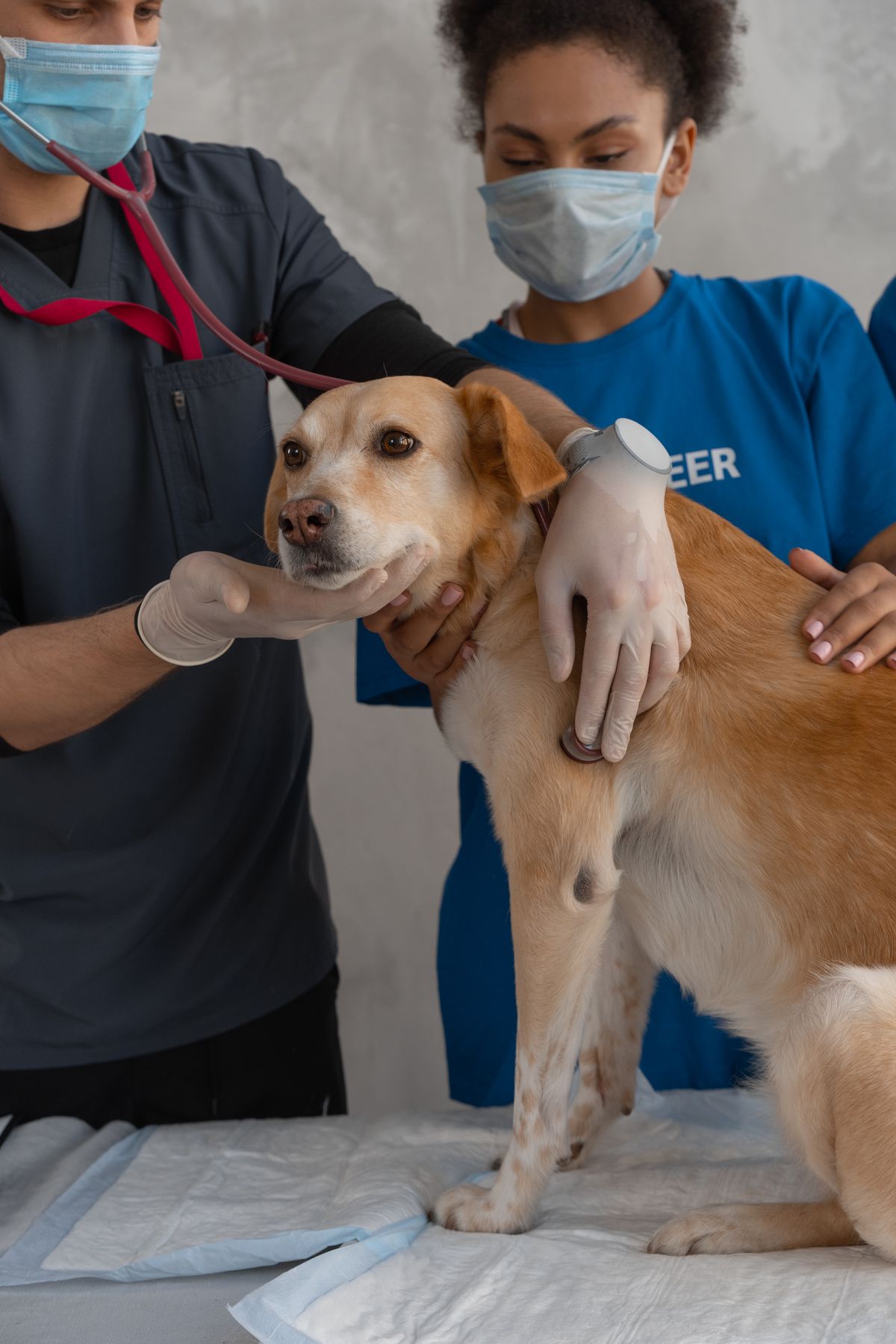
Heart rate, breathing, blood pressure, temperature and neurologic status may be watched until stable.
Fluids & nursing care
IV fluids, anti-nausea medication, thermoregulation and a low-stimulus environment may be used as needed.
Decontamination
Veterinary vomiting and/or activated charcoal may be considered in selected recent exposures before clinical signs develop.
Severe cases
Respiratory support, seizure control or intravenous lipid emulsion may be considered in selected severe or concentrated exposures.
A cannabis edible is a different emergency
If the dog ate a gummy, brownie, cookie, chocolate bar or another edible, tell the veterinary team exactly what it was. Edibles may contain other hazards that can matter as much as or more than THC.
| Possible co-ingestant | Why it matters |
|---|---|
| Chocolate | Creates a separate methylxanthine toxicosis risk. |
| Xylitol | Can cause severe hypoglycemia and, at higher exposure, liver injury. |
| Raisins | Can cause acute kidney injury in susceptible dogs. |
| High-fat butter/oils | Can add gastrointestinal and pancreatitis concerns. |
For xylitol label-reading, see Patify's xylitol and birch-sugar guide.
Do most dogs recover?
Yes. MSD describes a generally good prognosis, with clinical signs usually resolving within 1–3 days. Cornell says most dogs recover fully within one to two days with appropriate care, although more severe cases can take longer.
Emergency contacts in Canada
If your dog is collapsing, seizing, struggling to breathe or profoundly unresponsive, go to the nearest emergency veterinary hospital rather than delaying transport.
Pet Poison Helpline: (855) 764-7661 operates 24/7 in North America; its current published incident fee is $89 USD. Cornell also lists the ASPCA Animal Poison Control Center: (888) 426-4435 as a 24/7 resource.
What will treatment cost in Canada?
There is no defensible evergreen national price ladder. Cost varies by city, hospital, after-hours fees, observation time, IV treatment, diagnostics, hospitalization and whether another toxin is involved. Ask the treating hospital for an estimate after triage.
Will pet insurance cover cannabis poisoning?
Do not rely on a general article or an old insurer list. Coverage depends on the policy wording, effective date, deductible, exclusions and facts of the incident. Save the veterinary record, invoice and exposure details, then check the actual policy or ask the insurer.
Park prevention and reporting
- Use a short leash or strong “leave it/drop it” training in areas with discarded food or smoking debris.
- Carry a small bag or container so suspicious debris can be removed without direct hand contact when safe.
- Report persistent drug debris, needles or other hazards through the municipality's current parks/311 or public-safety reporting channel.
- If an unknown substance may be something other than cannabis, avoid handling it and contact local authorities or park staff as appropriate.
Current evidence check — September 15, 2026
| Old framing | Status | Evergreen replacement |
|---|---|---|
| One universal THC threshold determines toxicity | Too simplistic | Current veterinary data show signs can occur across a range of doses, with substantial product and individual variability. |
| A smoked roach can be converted into a precise THC dose from its weight | Not reliable | Residual potency and swallowed amount are unknown; use professional triage. |
| One nationwide reporting outcome can be guaranteed for all Canadian veterinary encounters | Too broad | Be medically honest; confidentiality and reporting rules are governed provincially and can depend on circumstances. |
| A Canada-wide urban-clinic ranking proves how common THC poisoning is | Not established by the cited evidence | Use current veterinary toxicology guidance rather than an unsupported national clinic ranking. |
| Static city price tables predict the bill | Not evergreen | Costs depend on hospital, severity, monitoring and co-ingestants. |
| Named insurers can be assumed to cover the claim | Policy-dependent | Check the actual policy and claim terms. |
| Most dogs recover | Supported | Prognosis is generally good; signs commonly resolve within 1–3 days and death from THC alone is extremely rare. |
Frequently asked questions
My dog ate only the end of a joint. Can I estimate the THC dose?
My dog looks normal two hours later. Is the danger over?
Will a human THC urine test help?
Should I give hydrogen peroxide?
How long can my dog act intoxicated?
Is an edible worse than a roach?
Bottom line
If your dog eats a weed roach at a Canadian park, the safest response is straightforward: call promptly, give an accurate exposure history, keep the dog safe from falls, and do not attempt home vomiting once neurologic signs are present.
Most dogs recover well, but you cannot judge risk from the roach's size or one internet dose threshold. Dog weight, timing, product type, symptoms and possible co-toxins are much more useful to the veterinary team.
This article provides general emergency and legal-context information, not veterinary or legal advice. THC potency, absorbed dose, co-ingestants, local laws and professional confidentiality/reporting rules can vary.