Dog Licked Antifreeze Off the Driveway: The 1-Hour Window That Matters

🚨 Do not wait for symptoms. If your dog may have licked automotive antifreeze or coolant from a driveway, contact an emergency veterinarian or veterinary poison service now. Ethylene glycol can be rapidly absorbed, and early treatment is far more effective than treatment after toxic metabolites have caused kidney injury. A dog can look normal—or merely a little “drunk”—while dangerous chemistry is already underway.
If you are reading this because you saw your dog lick a bright puddle under a car, the most important fact is simple: the first hour should be spent getting professional help, not waiting to see what happens.
But there is an important correction to the scary phrase “one-hour window.” There is not a universal rule that treatment becomes useless at exactly 60 minutes. Merck Veterinary Manual says gastrointestinal decontamination may be considered within roughly 1–2 hours, although rapid absorption can limit its usefulness, and it emphasizes early antidotal treatment with fomepizole or ethanol. Pet Poison Helpline similarly stresses immediate treatment and notes that therapy in dogs is ideally started within the first several hours.
In this emergency guide
- What to do in the next 60 minutes
- The “1-hour window”: what it really means
- Can one lick of antifreeze hurt a dog?
- Antifreeze poisoning timeline in dogs
- Why a dog can look normal at first
- Not every coolant contains ethylene glycol
- Should you make your dog vomit?
- What the veterinarian needs to know
- Frequently asked questions
What to do in the next 60 minutes
Move your dog away from the puddle or leaking vehicle. Prevent more licking and keep other pets away. If antifreeze is on the paws or coat, prevent grooming and contact your veterinarian or poison service for decontamination instructions.
Photograph the puddle, the leaking area of the vehicle, and—if available—the antifreeze/coolant container. The exact ingredient matters because “antifreeze” is a category, not one chemical.
Call an emergency veterinary hospital or veterinary poison service. Tell them this is a suspected antifreeze exposure and give your dog's weight, the approximate time, the amount you think was licked, and the product name or ingredient list if known.
Do not delay because your dog looks normal. Early treatment aims to stop ethylene glycol from being converted into the metabolites that drive metabolic acidosis and kidney damage.
⚠️ The most dangerous delay is “I'll watch him for an hour first.” The first hour is valuable precisely because symptoms may not have started yet.
The “1-hour window”: what it really means
The headline is intentionally urgent, but the medical nuance matters: there is no magical 60-minute cliff. If 61 minutes have passed, you should still go. If three hours have passed, you should still go. The correct response is not “too late”; it is “urgent veterinary assessment now.”
Why does the first hour matter? Merck explains that ethylene glycol is absorbed rapidly from the gastrointestinal tract. Veterinary decontamination methods such as inducing emesis or gastric lavage are time-sensitive and may be considered within approximately 1–2 hours, though rapid absorption means they may not always add much benefit. More importantly, treatment must begin early enough to prevent metabolism of ethylene glycol into its more damaging metabolites.
The first hour is not a countdown to hopelessness. It is the best time to avoid losing hours that matter.
Can one lick of antifreeze hurt a dog?
You should not try to declare a driveway lick “safe” based on what looked like a tiny amount. ASPCA notes that only a small amount of ethylene glycol can be potentially fatal, while Pet Poison Helpline warns that small volumes of ethylene-glycol antifreeze can cause death when treatment is delayed.
The problem is that an owner usually cannot measure the dose from a lick off pavement. You may not know the concentration, how many licks occurred before you noticed, whether the fluid was diluted by water, or whether your dog had already stepped in it and later groomed the paws.
That uncertainty is exactly why suspected ingestion should be triaged professionally rather than calculated at home from a puddle size.
Antifreeze poisoning timeline in dogs
| Time after ingestion | What may happen | Why it can fool owners |
|---|---|---|
| 30 minutes–12 hours | Vomiting, increased thirst and urination, depression, wobbliness/ataxia, stupor and other signs resembling alcohol intoxication. | Early signs may look mild, vague, or like the dog is simply tired or “drunk.” |
| Around 12 hours | A brief apparent recovery can occur. | The dog may look better even though toxic metabolism has not become harmless. |
| 36–72 hours in dogs | Oliguric acute kidney failure can progress toward anuria; vomiting, loss of appetite, lethargy, dehydration, oral ulcers, seizures, coma or death may occur. | By the time kidney failure is obvious, the prognosis is far worse than during the early treatment window. |
This timeline is the reason “wait for symptoms” is such dangerous advice. A dog can pass through an early phase, seem less abnormal, and then deteriorate as kidney injury develops.
Why your dog can look normal after licking antifreeze
ASPCA warns that early signs may be missed. Merck also describes a brief recovery around 12 hours after ingestion. That improvement is not proof that the poison has cleared.
Ethylene glycol itself causes early neurologic and gastrointestinal signs, but the metabolites formed as the body processes it are central to the later metabolic acidosis and renal tubular injury. This is why antidotal treatment targets the enzyme pathway that metabolizes ethylene glycol.
🔎 High-value clue for owners: “He seems fine now” is not a clearance test. The credible history of exposure is more important than the absence of symptoms in the first hour.
Not every antifreeze or coolant contains ethylene glycol
Pet Poison Helpline emphasizes that not all antifreeze products contain the same chemical. Some use ethylene glycol; others may contain propylene glycol or other ingredients. The product identity affects risk and treatment.
That is why the container, label, safety data sheet, vehicle service record, or a clear photo of the product can be extremely helpful. Do not use the liquid's color as your diagnosis. “Green,” “pink,” “orange,” or “blue” is not enough information to decide whether your dog is safe.
If the exact product is unknown, tell the veterinary team that it is an unknown automotive fluid from beneath or near a vehicle. Do not delay care while trying to identify it perfectly.
What antifreeze does inside a dog's body
Ethylene glycol itself is dangerous, but much of the severe injury occurs as the body metabolizes it. Merck describes metabolic acidosis and formation of oxalate, which binds calcium and contributes to calcium oxalate crystal formation in the renal tubules. These metabolites are associated with acute tubular necrosis and kidney failure.
The antidotal strategy is therefore time-sensitive: block alcohol dehydrogenase before too much ethylene glycol is converted into toxic metabolites. In dogs, Merck identifies fomepizole as the treatment of choice for inhibiting this pathway.
Should you make your dog vomit after licking antifreeze?
Do not improvise this at home. Merck notes that veterinary decontamination with emesis or gastric lavage is considered early—within roughly 1–2 hours—but also notes that rapid absorption may limit the benefit. It specifically warns against inducing vomiting in dogs or cats that are already showing neurologic signs because aspiration risk is increased.
Pet Poison Helpline likewise advises owners to consult a veterinarian or poison service before inducing vomiting or using home remedies. Your safest move is to call first and follow case-specific instructions.
🚫 Do not give milk, oil, alcohol, salt, charcoal, or a DIY “antidote.” The correct management depends on the chemical, timing, symptoms, and veterinary assessment. Do not waste the early treatment window on an internet home remedy.
What tests might the veterinarian use?
Veterinary assessment may include blood chemistry, urinalysis, blood gas testing, osmolality/osmole-gap evaluation, and a qualitative or quantitative ethylene glycol test. Merck notes that some point-of-care tests are most useful during a defined early time period after ingestion, which is another reason the time of exposure matters.
If the history strongly suggests ethylene glycol exposure and reliable testing is not quickly available, Merck states that treatment should begin based on a presumptive diagnosis rather than waiting for delayed confirmation.
What to tell the emergency veterinarian
- Your dog's weight, age, and medical conditions.
- The exact time—or best estimate—of the driveway lick.
- How many licks you saw and whether your dog could have had access before you noticed.
- The product name and ingredients, if known.
- Whether the fluid was concentrated or premixed, if you know.
- Any current signs: vomiting, wobbliness, sleepiness, increased drinking/urination, tremors, seizures, or unusual behavior.
- Whether antifreeze is still on the paws or coat.
Bring the container or a clear photo of the label if you have it. ASPCA specifically recommends bringing antifreeze packaging to the veterinary hospital so the ingredients can guide treatment.
What if more than an hour has already passed?
Go anyway. Do not turn a compelling headline into a reason to give up. There is no evidence-based rule that veterinary care is pointless after exactly 60 minutes.
Early intervention is critical, and treatment becomes more difficult as ethylene glycol is metabolized and kidney injury develops. But the correct action after a suspected exposure—even if you discovered it late—is still urgent professional evaluation.
✅ Remember this sentence: The “1-hour window” means start acting within the first hour if you can—not “do nothing if an hour has already passed.”
How to clean up the driveway after your dog is safe
Keep pets away from the area until the spill is fully cleaned. Pet Poison Helpline recommends cleaning antifreeze spills immediately and describes absorbent materials such as kitty litter, sand, or sawdust as options for containing a spill before disposal. Follow local rules for automotive-fluid disposal, and repair the source of any vehicle leak.
If your dog walked through the spill, prevent paw licking until you have received veterinary guidance and cleaned the contamination from the coat or paws as directed.
Frequently asked questions
My dog licked antifreeze once. Is that automatically an emergency?
Is the antifreeze antidote useless after one hour?
How soon do antifreeze symptoms start in dogs?
Can my dog seem better and still be poisoned?
When can kidney failure happen in dogs after antifreeze?
What if I do not know whether the puddle was antifreeze?
Should I wait to see whether my dog vomits or gets wobbly?
Can “pet-safe” antifreeze still be harmful?
- Merck Veterinary Manual — Ethylene Glycol Toxicosis in Animals
- ASPCA — Getting the Facts on the Dangers of Antifreeze and Your Pets
- Pet Poison Helpline — Antifreeze Toxicity in Dogs
- Cornell University College of Veterinary Medicine — Small Animal Toxins
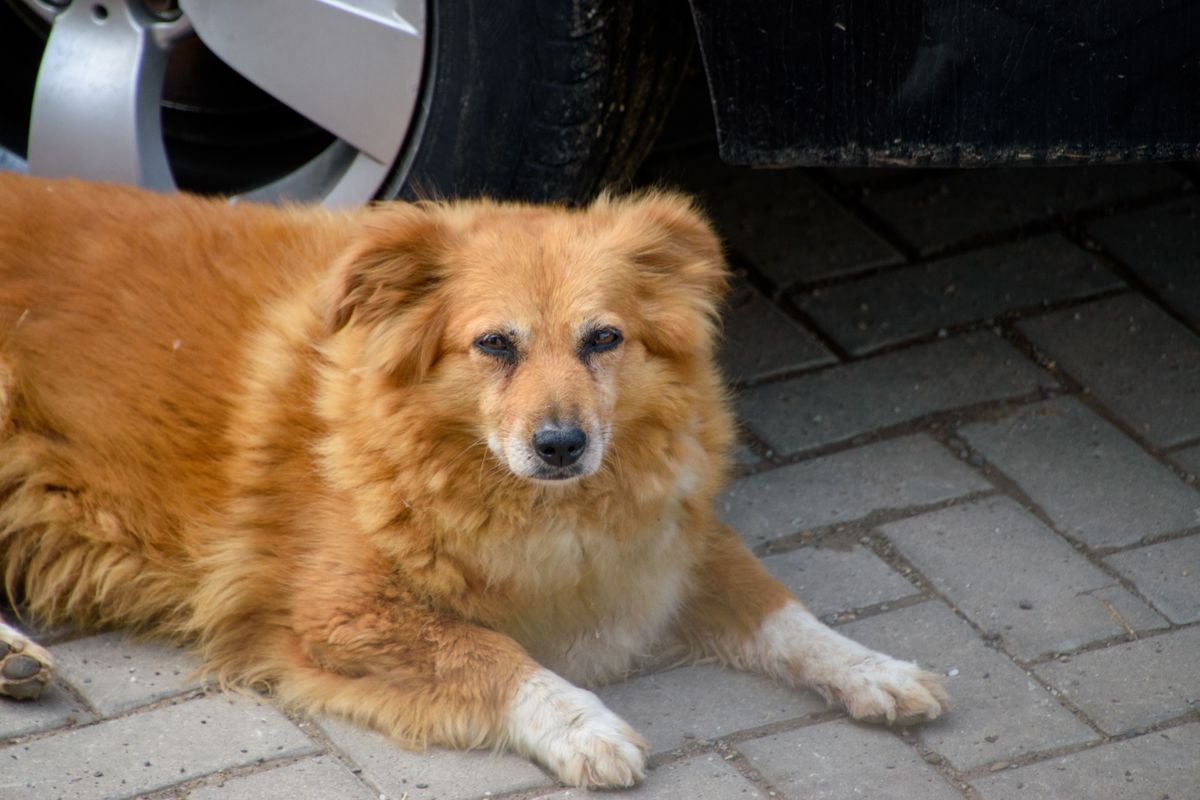
- Pexels — Ginger Dog Lying on Pavement, free-to-use stock photo