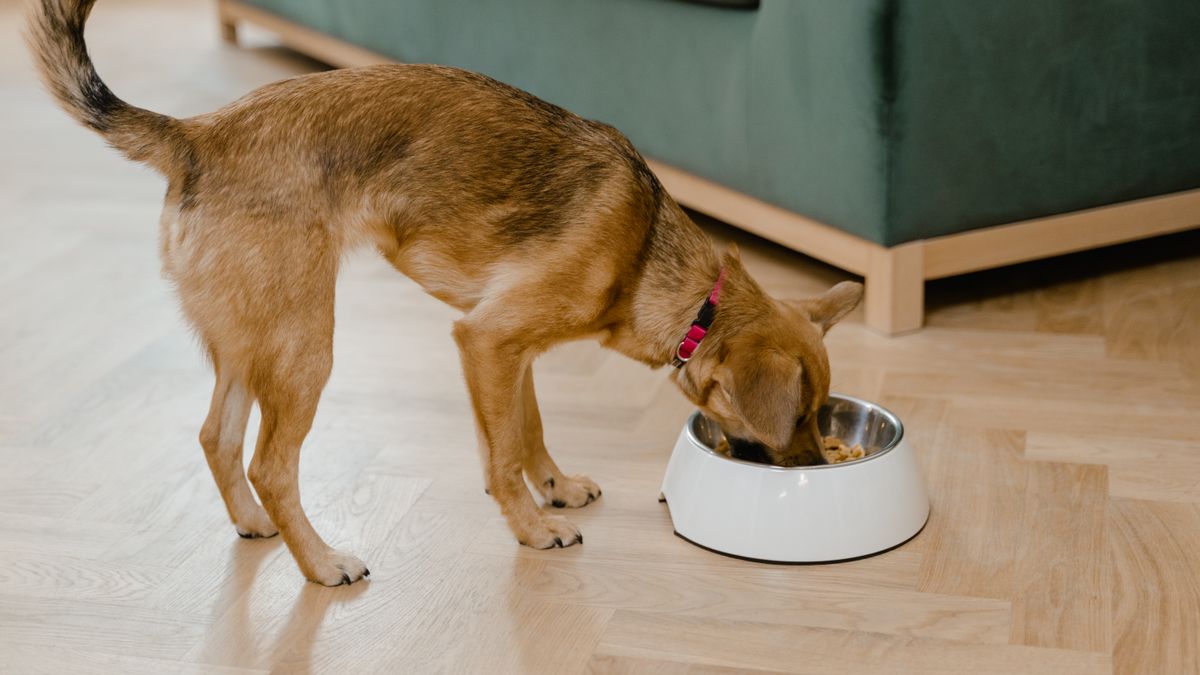


Feeding Toy Poodles: Portions, Meal Timing, and Food Choices
Age-specific mealtimes, real U.S. label comparisons, simple portion arithmetic, and a weigh-and-review routine that fits a tiny dog.
Quick answer. Feed your Toy Poodle a complete diet appropriate for their current life stage, measure the day's food in grams, and divide it into predictable meals. Puppies need smaller, more frequent meals than stable adults. For a healthy adult, a label-based portion and a veterinary calorie estimate can both supply starting points, but the correct amount is the one that maintains a healthy body condition over time. The calories in a cup vary substantially between foods. There is no responsible universal instruction to feed every Toy Poodle “half a cup.”
Toy Poodles pack a full-sized dog's food decisions into a small bowl. A ten-gram measuring error is easy to overlook on a kitchen counter, yet it can represent a meaningful fraction of a tiny dog's day's ration. New puppy owners also face another complication: toy-breed puppies may struggle when meals are too far apart. Those two realities—precision and age-appropriate frequency—make a useful feeding plan more specific than a generic small-dog chart. VCA's guidance for toy and small dogs supports smaller, more frequent meals for puppies and measuring portions by weight rather than relying on a cup.
This is an owner-facing planning guide, not a personalized prescription. It does not establish an ideal weight for an individual dog, diagnose low blood sugar, or substitute for veterinary advice. Puppies with poor appetite, very small puppies, pregnant or nursing dogs, and dogs with medical conditions need an individual plan. The companion calculator below converts an explicitly chosen calorie target into grams; it cannot determine whether that target is appropriate for your dog.
The first question is whether you are feeding a puppy, adult, or older Toy Poodle
The same Toy Poodle can need a substantially different feeding strategy at twelve weeks, twelve months, and twelve years. Puppies need diets formulated for growth and usually have less room for skipped meals. Adults usually transition to a maintenance diet once their growth is complete. Older dogs may remain healthy on a maintenance diet or need a veterinary change because of muscle loss, dental pain, illness, or altered appetite; age alone cannot determine an exact nutrient prescription.
| Dog's situation | Food-label checkpoint | Meal rhythm to discuss | What to monitor |
|---|---|---|---|
| Very young Toy Poodle puppy | Complete and balanced for growth or all life stages | Often three to four small meals; some especially tiny or vulnerable puppies need an individual, more frequent plan | Every meal eaten, alertness, growth and weight trend |
| Growing puppy beyond the earliest months | Growth-appropriate diet | Gradual meal consolidation as the veterinarian advises | Weekly weights, stool, appetite, healthy growth |
| Healthy adult Toy Poodle | Adult maintenance or appropriate all-life-stages food | Typically at least two measured meals daily | Body condition, stable weight, treat calories |
| Older Toy Poodle | Diet suited to current medical status; do not assume “senior” branding is enough | Consistent meals; modify texture or frequency when needed | Weight, muscle, teeth, thirst, appetite and energy |
These are decision categories, not an age-by-age dosing chart. VCA recommends at least three small meals for puppies under four months and at least two meals for adults; PetMD's veterinarian-reviewed Toy Poodle guide describes three to four meals for Toy Poodle puppies. A toy puppy with a documented history of hypoglycemia may need a different schedule supervised by its veterinarian. Never use a generic table to overrule that plan.
What about the often-quoted 4–6 pound adult range?
Vet-reviewed breed information describes a typical adult Toy Poodle weighing approximately four to six pounds, but “typical” is not an individualized target weight. A healthy dog may fall outside that range, and an overweight dog within the range still needs an assessment. Toy, Miniature, and Standard Poodles are different size varieties; applying one chart to all three is inappropriate. If your puppy's eventual adult size is uncertain, work from repeated weight measurements and the breeder or rescue's growth history rather than promising a final number.
Size affects more than the final portion. A small puppy's mouth, developing teeth, small stomach, and limited ability to tolerate long gaps between meals can determine which texture and schedule will work. An adult Toy Poodle that is thriving and maintaining healthy condition does not necessarily need a breed-labeled recipe; a suitable small-breed or other complete-and-balanced food can also meet the requirement.
How much should an adult Toy Poodle eat per day?
There is no reliable single answer in tablespoons or cups. You need at least the dog's current weight, body condition, whether they are still growing, their activity, and the food's calorie density. A manufacturer feeding chart is a starting point, not an individualized guarantee. The same dog may require less food after neutering or as activity falls and more when exercising heavily or recovering from an illness under veterinary guidance.
For a healthy adult only, AAHA's nutrition and weight-management guidelines describe resting energy requirement (RER) as 70 × body weight in kg^0.75, then apply a life-stage and activity factor to estimate daily energy needs. AAHA lists roughly 1.4–1.6 times RER for many neutered adults and 1.0–1.2 for inactive or obesity-prone adults. Those factors are starting estimates, not a guarantee that a particular dog should eat that amount. A veterinary team must interpret them alongside weight history, physical condition, and health.
Worked adult example: why grams beat “half a cup”
Imagine a healthy, fully grown Toy Poodle weighing 2.3 kg (about 5.1 lb). Suppose a veterinarian chooses a hypothetical daily target of approximately 183 kcal after examining the dog. Suppose you use a dry adult formula labeled 3,880 kcal/kg, equal to 3.88 kcal per gram. The mathematics is straightforward: 183 ÷ 3.88 = about 47 grams of food per day. Divided between two meals, that is about 23.5 grams per meal, before accounting for treats or other food.
This is an illustration, not a feeding prescription for every five-pound Poodle. The veterinarian could recommend a different calorie target for a similarly sized dog with a different body condition. More importantly, a Toy Poodle puppy of the same current weight cannot simply use an adult maintenance factor. Growth and illness change the problem. We deliberately do not publish a supposedly universal “cups by age” table because it would obscure those distinctions.
A few seconds with a kitchen scale make the calculation more reproducible. Zero an empty bowl on the scale, then add the intended day's allowance. Separate it into meals in the same gram units. If several family members feed the dog, pre-portion the day's food into one labeled container; otherwise two people can unknowingly double-feed. Check the bag when you switch foods: the gram equivalent of one cup and the energy per kilogram may be different.
A transparent adult calculation table—not a feeding chart
| Hypothetical current weight | Example estimated RER | Example RER × 1.4 | Grams/day at 3.88 kcal/g |
|---|---|---|---|
| 1.8 kg / 4.0 lb | ~109 kcal | ~152 kcal | ~39 g |
| 2.3 kg / 5.1 lb | ~131 kcal | ~183 kcal | ~47 g |
| 2.7 kg / 6.0 lb | ~147 kcal | ~206 kcal | ~53 g |
The factor 1.4 represents only one possible adult scenario from the AAHA framework; a veterinarian might use a different factor or base calculations on an adjusted target weight. If you treat this table as the amount every Toy Poodle must eat, you will use it incorrectly. Treat it as a demonstration of how much an energy-density change matters in a small dog. The calculator in the companion files uses the target you enter instead of guessing a daily requirement for a puppy.
Toy Poodle puppy feeding: prevent long gaps and choose growth nutrition
A Toy Poodle puppy does not need a shrunken adult feeding plan. The first priority is a food whose nutritional adequacy statement covers growth, or an appropriate all-life-stages diet with growth adequacy. Adult-maintenance food may be wrong for a growing puppy even when its calories seem adequate. AAFCO's label guide explains why the nutritional adequacy statement, rather than front-of-bag phrases, is the key life-stage checkpoint.
Very young toy-breed puppies often benefit from consistent meal timing and smaller servings. VCA recommends at least three meals for puppies under four months. PetMD describes three or four for Toy Poodles. Some very tiny or at-risk puppies need individualized more frequent feeding. Avoid turning that into the hard rule that every puppy of a given age must have exactly four, then three, then two meals: their weight, intake, health history, and growth pattern should determine the transition.
When you bring a puppy home, ask for the exact previous food, measured daily amount, meal times, and any history of missed meals or low blood glucose. Change food gradually if the puppy is doing well, and ask the veterinary team how soon to consolidate meals. A newly adopted puppy dealing with stress, travel, or a poor appetite should not simultaneously face a long fasting interval and a sudden recipe change.
Hypoglycemia is a medical risk, not a reason to force-feed a weak puppy
Toy-breed puppies can develop hypoglycemia, or abnormally low blood glucose. Veterinary Partner describes risk factors in exceptionally small puppies and signs including weakness, incoordination, reduced responsiveness, and seizures. These signs warrant urgent veterinary attention. Do not push food or liquid into the mouth of a collapsed, choking, seizuring, or unresponsive puppy; that creates additional risks. Follow emergency veterinary instructions and arrange immediate professional care.
A normal feeding schedule lowers the chance of avoidable missed meals but is not treatment for a sick puppy. If an alert puppy refuses several normal meals or becomes unusually quiet, call your veterinarian promptly rather than waiting to see whether a new topper fixes the problem. A dog that repeatedly requires coaxing or emergency sugar support needs assessment, not a permanent improvisation at the food bowl.
What if the puppy will not chew kibble?
Use food appropriate for growth and consider the kibble's physical size and texture. Some young toy puppies may find smaller pieces or a softened growth diet easier to handle. Add water only as appropriate for the product, prepare fresh portions, and discard uneaten moistened food promptly rather than leaving it out. If there is drooling, pain when chewing, coughing during meals, repeated gagging, or difficulty swallowing, do not simply assume the pieces are too large. Dental, oral, and swallowing problems need evaluation.
At what age do Toy Poodles change from puppy to adult food?
The right time relates to skeletal maturity, not a marketing birthday. VCA's toy/small dog guidance describes toy-breed skeletal growth commonly finishing around six to nine months, while some small breeds mature later. That does not mean every Toy Poodle should switch food at exactly six months. Genetics, weight trajectory, and the product's intended use all matter. Have the veterinarian confirm that growth is complete before replacing a growth-adequate diet with adult maintenance.
Some breed-focused puppy foods advertise an upper feeding age around ten months. That represents the manufacturer's intended product range, not proof that every Poodle variety matures at the same instant. In fact, a Royal Canin Poodle Puppy feeding table lists target adult weights of 3, 6, and 12 kg—many of those examples are larger than a typical mature Toy Poodle. You cannot simply lift the 6 kg column and feed it to a 2 kg Toy Poodle.
When changing foods, use a gradual transition when the dog is healthy and tolerating their current diet. Monitor stool, appetite and weight. If the puppy has vomiting or diarrhea, or a medical condition requiring dietary restrictions, get veterinary direction rather than following a fixed internet transition calendar.
Compare real U.S. Poodle formulas by life stage and energy
A brand-specific Poodle label can make shopping feel simple, but read the whole product panel. Below are three actual U.S. manufacturer-declared formulas. Their energy statements are real published label figures; they are not independent Patify lab tests or rankings. Product composition and availability can change, so always inspect the exact bag or can you buy.
| Product and form | Manufacturer-declared energy | Published life stage | Practical decision |
|---|---|---|---|
| Royal Canin Poodle Puppy, dry | 3,810 kcal/kg; 385 kcal/cup | Growth | For a growing Poodle; weight of kibble per cup differs from adult version |
| Royal Canin Poodle Adult, dry | 3,880 kcal/kg; 353 kcal/cup | Adult maintenance | Use the adult feeding chart only as a starting estimate |
| Royal Canin Poodle Adult Loaf in Sauce, wet | 948 kcal/kg; 81 kcal/can | Adult maintenance | Count each can's calories when mixing wet and dry |
Notice something easily missed: the puppy food lists more calories per cup than the adult dry food despite listing fewer calories per kilogram. Those figures are not contradictory. The manufacturer measures cups of food with different product-specific weights and shapes. That is exactly why a cup-based quantity does not transfer cleanly between formulas. If your vet says to feed a specific number of kilocalories, convert with kcal per gram, not a guess about cup volume.
What the Poodle Puppy chart really tells you
The current U.S. Poodle Puppy product page starts its feeding columns at an expected adult weight of 3 kg (6.6 lb). Its example at three months for that column is around 72 g/day. That is the manufacturer guideline for a puppy expected to mature around 3 kg, not a personalized ration for every three-month-old Toy Poodle, and not a command for a puppy expected to finish considerably below that weight. Puppies with different adult-size projections have different calorie and growth needs; consult the veterinarian and record actual growth.
The manufacturer's U.S. Adult dry chart begins at 2 kg / 4.4 lb and provides different gram amounts for low, medium, and high activity. That is more directly relevant to a Toy-sized adult, but it is still a standardized chart. Two 2 kg dogs can differ in neuter status, activity, muscle, age, and medical needs. Start with a defensible number, then reweigh and review body condition rather than chasing the package's printed cup fraction forever.
Does the “Poodle” label beat a suitable small-breed formula?
Not automatically. If two diets are appropriate for the dog's life stage and are complete and balanced, the better choice may hinge on measured tolerance, availability, the manufacturer's quality control, caloric density, and whether your dog can comfortably eat the kibble. A poodle silhouette on the bag does not certify better clinical outcomes, fewer allergies, or superior longevity. WSAVA's nutrition tools encourage evaluating the food manufacturer and individual patient rather than relying solely on marketing language.
Breed-focused diets can be convenient because they publish helpful tables and kibble forms, but they are neither mandatory nor inherently therapeutic. If your Toy Poodle has a medical diagnosis—such as pancreatitis, kidney disease, a food allergy, or recurrent urinary stones—medical suitability matters much more than the brand's breed designation.
Meal times: what a realistic daily schedule looks like
A feeding plan needs to fit the household without compromising a tiny dog's nutrition. For a healthy adult eating two meals, breakfast and dinner at predictable times often work. For a growing puppy, split the same measured daily food allowance into more frequent opportunities instead of improvising extra portions each time the puppy begs. Meal timing matters most when the puppy is young, at risk of missed meals, or on medication that needs to be given with food.
| Example daily routine | Mealtime pattern | The useful habit |
|---|---|---|
| Young puppy, veterinarian advises four meals | Early morning, late morning, afternoon, evening | Pre-weigh total daily growth food and divide it into four |
| Growing puppy, veterinarian advises three meals | Breakfast, midday, dinner | Record appetite and make transitions deliberately |
| Stable adult on two meals | Breakfast and evening | Keep portions consistent; include training rewards in the day total |
| Adult with a clinical diet schedule | As directed by veterinary team | Follow medical instructions over general schedules |
The clock times are flexible. What matters is whether your puppy can reliably eat, whether family members know who fed which meal, and whether medication or specific health needs constrain timing. If you work away from home and have a very young Toy puppy, arrange an appropriate midday caregiver or consult the veterinary team. Do not assume the puppy can safely follow the same schedule as your adult dog.
Should food be available all day?
Free-choice feeding can make intake hard to measure and obscure early declines in appetite. VCA's feeding-frequency guide notes that unlimited free feeding is generally not preferred for puppies. Some unusual medical or behavioral situations call for tailored advice, so consult your veterinarian if you have previously been told to leave food accessible. In most households, scheduled measured meals make it easier to notice a change.
If your dog leaves half a meal, measure what remains rather than guessing it was “about a quarter cup.” Record the change and identify whether the dog later ate treats, food from another pet, or kitchen scraps. That simple record helps distinguish a one-off distraction from a pattern worth investigating.
Dry food, wet food, or a combination?
Dry food can be convenient to weigh and store; complete wet food can help some dogs eat a palatable meal or provide a softer texture. There is no general rule that every Toy Poodle must eat dry kibble, nor that wet food is nutritionally inferior. The nutritional adequacy statement and the dog's response are more important than whether the food arrives in a bag or can.
When mixing foods, treat the mixture as one calorie budget. Suppose an adult dog has a veterinarian-agreed target of 183 kcal/day, and you offer one 81-kcal can of the aforementioned Poodle Adult wet food. The remaining energy allowance is 102 kcal. At 3.88 kcal per gram, that leaves approximately 26 g of the cited adult dry food. This is a transparent illustrative calculation—not an instruction to feed that specific mix or target. If you include treats, they must also fit within the plan.
Do not change wet food or kibble texture solely to solve ongoing food refusal. A dog with oral pain, fractured teeth, vomiting, or difficulty swallowing may appear picky but actually be ill. And a complete canned food is not the same as gravy, broth, or a topper labeled for supplemental use only. Those extras cannot safely replace the balanced main diet.
Treat calories add up quickly in a five-pound dog
A “tiny” treat is a human description, not an energy measurement. WSAVA advises keeping treats to about 10% or less of daily calories for typical adult feeding plans. For a hypothetical 180-kcal adult day, that means around 18 kcal from treats and other unbalanced extras combined. A handful of small training rewards can reach that amount faster than expected.
Use part of the daily ration for rewards when appropriate, rather than adding a second independent treat budget. If training intensifies, reserve and weigh the portion before the session. Family members should agree on one shared treat container and one daily limit. Dental chews, lick-mat toppings, little bits of cheese, and flavored medications may contribute calories even when they do not look like “a snack.”
For puppies, do not treat the adult 10% shorthand as permission to replace growth nutrition with rewards. The VCA toy-dog guidance recommends avoiding unbalanced treats and extras in growing puppies unless advised by the veterinarian. Rewarding with an appropriate portion of their own complete growth food can be a safer, easier-to-measure option.
Weigh food in grams rather than trusting a scoop
A measuring cup is a volume measure, while a feeding goal is usually set in calories. Kibble size and shape change how much mass fits in a cup. Even the same branded breed line illustrates the issue: the U.S. Royal Canin Poodle Puppy and Adult dry labels differ in kcal/cup and kcal/kg. A rounded cup, a loosely filled cup, and a manufacturer's standard measuring cup can also contain different amounts.
A small digital kitchen scale improves repeatability. Measure into the actual feeding bowl, use grams on the display, and avoid carrying over the previous food's cup fraction when switching. Keep the empty scoop and bag nearby, but write the daily gram amount on the container. If you prepare a week's portions, confirm that every bag holds the correct amount before closing it.
The conversion formulas owners actually need
- Dry-food kcal per gram: the printed kcal/kg divided by 1,000.
- Grams of that food per day: the veterinary daily calories allocated to that food, divided by kcal per gram.
- Calories from a wet food: number of cans multiplied by the printed kcal/can.
- Dry food left after wet food:
(daily target − wet-food calories − treat calories) ÷ dry-food kcal/g. - Per-meal grams: the day's measured grams divided by the chosen number of meals.
These are unit conversions, not a medical prescription. If the residual calories are negative, your proposed combination exceeds the target and requires a revised plan. If you do not know your dog's appropriate target, do not use a calculator's blank fields as an invitation to guess. The accompanying tool intentionally requires a daily target chosen with appropriate context.
How to judge body condition instead of chasing one ideal number
The scale is useful, but the dog's shape tells another part of the story. WSAVA's body-condition resources use a nine-point body-condition scoring system. A score around 4–5/9 generally corresponds to a healthy body condition for most dogs. The veterinarian should teach you how to assess the ribs and waist correctly; dense curls and thick grooming can hide a changing silhouette.
For a healthy adult Toy Poodle, keep a consistent weighing routine: same scale, similar time of day, and a note on recent meals if relevant. Evaluate trends over several readings rather than changing food after one fluctuating measurement. A puppy's increasing weight is expected; the goal is appropriate growth, not forcing the number to remain fixed. If an adult loses weight unexpectedly, or a puppy stops gaining as anticipated, contact the veterinary team.
Use a weekly weight note for Toy Poodles
The companion log has separate fields for weight, food grams, meals eaten, treats, and condition observations. An adult may only need an occasional check after establishing stability; a growing puppy can benefit from more frequent weight checks per veterinary advice. The form makes patterns visible without claiming to diagnose whether a rate of gain is healthy. Record the same units each time: pounds or kilograms, not a mixture you will forget to convert.
Try to collect a short story instead of disconnected numbers. “Weight stable but ribs harder to feel, extra cheese rewards this week” helps more than “dog gained 0.1.” Similarly, “missed breakfast, unusually sleepy, poor stool” calls for different action than “ate normally, was distracted for one lunch.” The notes are most useful when they inform the next conversation with your veterinarian.
What to do when your Toy Poodle seems constantly hungry
Begging does not necessarily mean the dog needs a larger ration. Some dogs learn that whining, sitting prettily, or hovering in the kitchen earns food. Before increasing calories, compare the dog's weight trend and body condition, confirm no family member is feeding on the side, and measure every snack. If the dog is underweight or losing weight, however, do not dismiss persistent hunger as a behavior issue. Veterinary evaluation may be warranted.
More food is not the only lever. Regular meal times, activity appropriate for the dog's size and health, and portioning part of the normal diet into training sessions may help manage requests for snacks. If you use a food puzzle, ensure its openings are suitable for a small dog, supervise the first sessions, and count the food inside it. For a puppy with meal-frequency or health constraints, do not use a difficult puzzle as the sole route to calories.
If hunger is new and accompanied by weight loss, increased drinking, increased urination, vomiting, or altered stools, schedule a veterinary appointment. Those combinations can suggest a problem that simply switching brands will not solve.
What if the Toy Poodle is picky or refuses meals?
First ask whether the dog is otherwise bright, hydrated, and behaving normally. Changes in routine, food temperature, storage, or a sudden recipe switch can affect intake. But repeated refusal, especially in a tiny puppy, deserves faster assessment than the label “fussy eater.” If an adult Toy Poodle eats less than usual for more than a short period or has additional symptoms, contact the veterinarian rather than repeatedly cycling among flavored toppers.
Review the environment: is another pet guarding the bowl? Is the food stored securely and within the recommended use period? Has anyone been feeding treats before dinner? Would a quieter meal area or a clean, shallow dish help? Simple observations are useful, but they do not rule out dental pain, nausea, or illness.
Do not force liquid or food into an unwell dog. A dog that is weak, collapsing, repeatedly vomiting, struggling to swallow, or refusing food while profoundly lethargic needs veterinary help rather than a new feeding chart. Puppy hypoglycemia is one reason this caution matters especially in toy breeds.
Dental comfort, kibble size, and texture choices
Toy Poodles can have crowded mouths and dental problems as they age. A dog dropping kibble, chewing on only one side, resisting face handling, or preferring soft food may be experiencing pain. Changing to smaller kibble can help with mechanics in some cases, but it is not treatment for dental disease. Schedule a dental examination when there are persistent signs. Conversely, a dog that is comfortable with regular-sized kibble does not automatically need a smaller piece because the bag lacks the word “toy.”
The most useful question about kibble is whether the dog can safely pick up, chew, and swallow it. Do not claim that ordinary hard kibble independently replaces brushing or professional dental care. If a veterinarian recommends a dental diet or soft food following oral treatment, follow that specific plan and reassess after the mouth heals.
When is a veterinary or special diet appropriate?
A Toy Poodle with recurrent gastrointestinal signs, food reactions, diabetes, pancreatitis, chronic kidney disease, dental pain, or another diagnosis may need a tailored feeding strategy. “Small-breed” and “Poodle” formulas are consumer categories, not stand-ins for prescription nutrition. If a veterinary diet has been selected, follow the clinician's instructions about meals, treats, medications, monitoring and follow-up.
Avoid assuming that switching to grain-free, high-protein, or homemade food will solve a poorly understood symptom. Some dietary choices change energy density substantially, and homemade recipes can be unbalanced if not formulated by a qualified veterinary nutrition professional. For readers comparing label claims, our grain-free dog food guide explains how to evaluate that term; it should not be interpreted as a recommendation for toy dogs.
The practical seven-day setup checklist
Day 1: Write down your dog's age, current weight, weight trend, the food's exact product name, and its nutritional adequacy statement. If the dog is a puppy, note the veterinarian's plan for growth and meal frequency. If the dog is an adult, write the current body-condition assessment rather than assuming that four, five, or six pounds automatically equals ideal.
Day 2: Find kcal/kg on the package or official manufacturer product page, and convert to kcal/g. Check the age and intended adult weight ranges on any puppy feeding chart. The Royal Canin Poodle Puppy chart is a useful lesson: its lowest target adult-weight column starts at 3 kg, so it may not map directly onto a considerably smaller predicted adult Toy Poodle.
Day 3: Measure a full day's food on a digital kitchen scale and label the container. If the dog receives wet food, deduct its labeled calories rather than adding a can on top of the old dry ration. If the dog is a healthy adult receiving treats, write those calories down as part of the daily budget.
Day 4: Set a repeatable meal schedule. Use the meal frequency recommended for your puppy's age, size, and health, rather than arbitrarily stretching intervals. Make sure any daytime caregiver can see both the schedule and the measured portions.
Day 5: Start the food and weight log. Record actual intake and any uneaten portions, not merely the amount offered. Note vomiting, stool changes, reduced energy, or difficulty chewing if present. Seek veterinary help if any worrying symptom occurs rather than waiting for the seventh day.
Day 6: Check that treats, chews, and food puzzles are counted and that everyone at home knows who feeds the dog. Inspect storage, clean the bowl, and make sure fresh water is accessible. Do not add supplements merely because the dog's meal looks small compared with a larger breed's serving.
Day 7: Review the trend with your veterinarian or adjust only within an already established veterinary plan. Do not expect an adult body-condition change or a puppy growth assessment to be fully determined by a single week's readings. Decide when the next weight check should occur and what sign would trigger an earlier call.
Questions to ask your veterinarian or food manufacturer
Good questions reveal missing data rather than demanding that a salesperson name one magical “best” formula. Ask your veterinarian what body-condition score and target weight are appropriate, whether your puppy is still in active skeletal growth, and how many meals are safe and practical. Ask whether a food change is necessary before you experiment with quantities, especially if the dog is losing weight or refusing meals.
For a manufacturer, request the current U.S. kcal/kg and kcal/cup or kcal/can statement, the precise growth or maintenance adequacy declaration, and the weight basis for its feeding chart. If you need a smaller kibble, ask about actual dimensions rather than a vague “perfect for small mouths” slogan. If the brand's published adult chart begins above your dog's size, ask for guidance and confirm the resulting plan with a veterinary professional.
Keep records of what the company actually provided. A general customer-service claim that a diet is “balanced” is less informative than the required life-stage nutritional adequacy statement. If the dog has a clinical diagnosis, ask the veterinary team how treats and medications interact with the diet, not just whether the primary protein is chicken or fish.
Frequently asked questions about feeding Toy Poodles
How many times a day should I feed a Toy Poodle puppy?
Often three or four small meals for young puppies, with more frequent or individualized schedules for especially tiny or medically vulnerable puppies. VCA advises at least three meals under four months, while PetMD describes three to four for Toy Poodle puppies. Your veterinarian should help decide when meals can be consolidated. Consistently missed meals, weakness, or unusual lethargy are not normal schedule-adjustment problems.
How many cups of food does a five-pound Toy Poodle need?
You cannot determine a reliable amount from weight alone. First establish life stage, ideal body condition, and a reasonable daily calorie target; then use the exact food's kcal/g or kcal/cup statement. Two dry formulas can have different cup weights, and adding wet food changes the equation. A food scale in grams is more reproducible than borrowing a generic “half-cup” rule.
Can a Toy Poodle eat ordinary small-breed food?
Yes, provided the specific food is complete and balanced for the dog's current life stage and works for its nutritional and medical needs. The presence of the word “Poodle” on a bag is not required. Your dog must be able to eat the food comfortably, and the daily calories must fit their condition. Ask the veterinarian for advice if there is an ongoing disease or growth concern.
Are Toy Poodles picky because of their breed?
Individual dogs develop preferences, but persistent appetite loss should not be written off as a breed trait. Oral pain, illness, food storage problems, treats before meals, or a stressful feeding environment can all matter. With a very small puppy, a prolonged missed meal and reduced energy are reasons to contact the veterinary team promptly.
When should I switch my Toy Poodle off puppy food?
When skeletal growth has ended and your veterinary team agrees that adult maintenance nutrition fits the dog. VCA describes toy-breed skeletal maturity often occurring around six to nine months, but exact timing varies. Some manufacturer Poodle Puppy products are intended through roughly ten months. Neither number alone is a personalized switch date.
Does a Toy Poodle need grain-free dog food?
Not simply because it is a Toy Poodle. A grain-free label does not establish superior nutrition or allergy safety. Assess the food's life-stage suitability, manufacturer expertise, overall composition, and whether your own dog has a veterinary diagnosis calling for a different diet. Avoid using breed name alone as a medical reason to eliminate grains.
What happens if I accidentally skip a puppy meal?
Contact your veterinarian for advice if you have a particularly small, young, or at-risk puppy, especially when the puppy is not eating normally or becomes weak. If there is collapse, seizure activity, severe weakness, or reduced responsiveness, seek emergency veterinary help immediately. Do not force-feed an unresponsive puppy. Stable healthy adult dogs and fragile toy puppies do not have the same risk profile.
Do treats count toward the measured portion?
Yes. For a typical healthy adult, treats and other unbalanced extras should collectively remain around or below 10% of daily energy, per WSAVA guidance. Use some measured complete food as training rewards if convenient. Growing puppies require extra care because an excess of treats can displace the nutrients needed for development.
Sources and methods
This guide relies on U.S. veterinary and manufacturer primary materials rather than an invented taste test, feeding study, owner survey, or commissioned veterinary endorsement. The following resources were checked in October 2026. Manufacturer energy and feeding information is reported as published and must be rechecked against the package being purchased; calculations are mathematical illustrations and not clinical prescriptions.
- VCA Animal Hospitals — Nutritional Considerations for Toy and Small Dogs.
- PetMD — Toy Poodle breed health and feeding (veterinarian reviewed).
- AAHA — Energy requirement calculation guidance.
- AAFCO — Reading Pet Food Labels.
- Royal Canin USA — Poodle Puppy Dry; Poodle Adult Dry; Poodle Adult Wet.
- WSAVA — Nutrition guidelines, body condition and feeding resources.
- Veterinary Partner — Hypoglycemia in Toy Breed Dogs.
- VCA — Feeding Times and Frequency.
Editorial disclosure: Patify has not conducted independent feeding trials on the named products. Product mentions illustrate label comparison rather than prove one food is best. Independent veterinary editorial review has not been completed; it is required before publishing this as a clinical health resource.