Last verified: October 2, 2026
Hognose Snake Enclosure: Build for the Species, Not Just the Label
Quick answer: a hognose enclosure needs enough horizontal space for the snake to stretch out, a real warm-to-cool gradient, deep loose substrate for burrowing, at least warm- and cool-side hides, fresh water and visual cover. But “hognose” is not one husbandry profile. Western Hognoses (Heterodon nasicus) are generally kept warmer and drier than Eastern or Southern hognoses.
Patify setup rule: identify the species first → size the enclosure to the adult snake → create the heat/light gradient → set humidity for that species → add enough substrate and cover that the snake can choose where to be.
1. First Confirm Which Hognose You Actually Keep
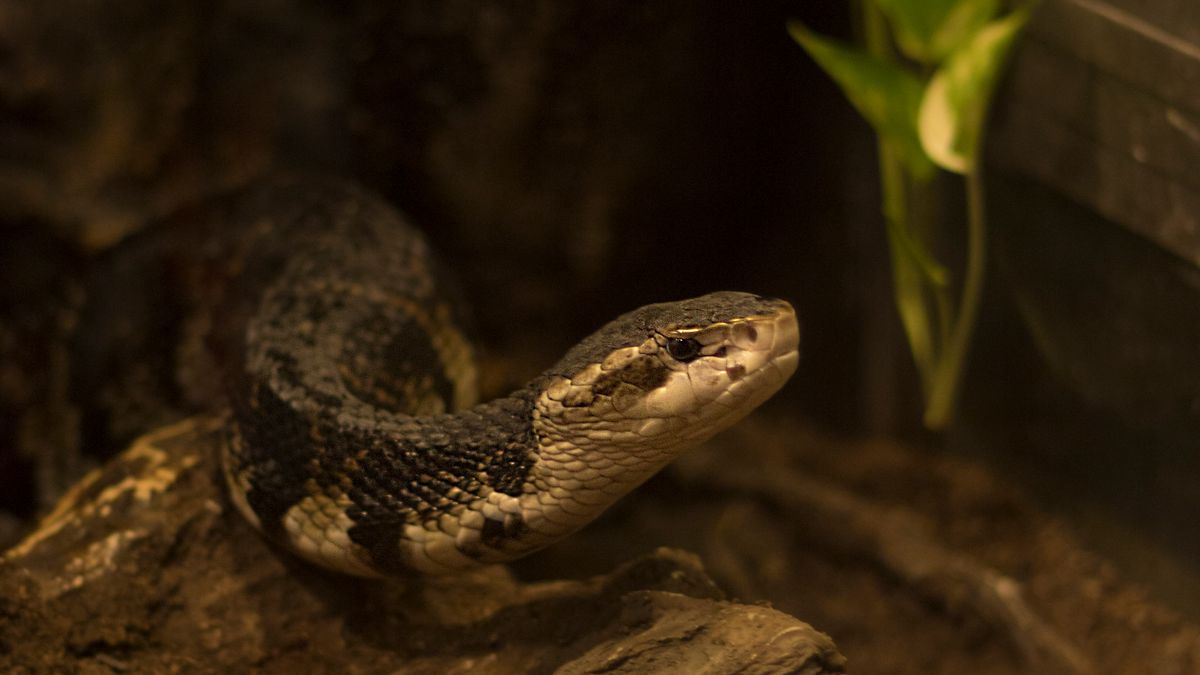
Most pet-trade hognoses are Western Hognoses, Heterodon nasicus. That matters because husbandry charts built for Westerns should not automatically be copied to Eastern (H. platirhinos) or Southern (H. simus) hognoses.
| Parameter | Western Hognose | Eastern / Southern Hognose |
|---|---|---|
| Basking zone | About 90–95°F (32–35°C) | About 86–88°F (30–31°C) |
| Mid-range | About 75–85°F (24–29°C) | About 75–85°F (24–29°C) |
| Typical ambient humidity | About 30–50% | About 50–60% |
| Burrowing substrate | Dry-to-moderately dry, loose and tunnel-friendly | Loose substrate with more moisture capacity |
These are husbandry target ranges, not permission to stop measuring. Room climate, enclosure ventilation, substrate moisture and lamp distance change the actual microclimates the snake experiences.
2. Hognose Enclosure Size: Use Snake Length, Not Gallons Alone
Current ReptiFiles guidance uses a practical terrestrial-snake rule: enclosure length at least the snake’s length, width about half the snake’s length and height about half the snake’s length. Gallon labels are useful for shopping but poor descriptions of usable floor area.
| Life stage / type | Current minimum benchmark | Why |
|---|---|---|
| Hatchling under ~6 in | About 16 × 8 × 10 in | Allows basic gradient and cover |
| Juvenile | About 20 × 10 × 12 in until roughly 1 year | More room for movement and deeper substrate |
| Adult Western male | About 30 × 13 × 13 in minimum | Males are typically smaller |
| Adult Western female / Eastern | About 36 × 18 × 16–18 in minimum | Large females need substantially more floor area |
Larger is appropriate when the enclosure remains well furnished. The problem is not “too much space”; the problem is large, bright, exposed space with nowhere to hide.
3. Build a Gradient, Not One Tank Temperature
A hognose needs to choose between warmer and cooler zones. Heat one end of the enclosure and leave the opposite end cooler rather than trying to make every square inch the same temperature.
- Western: basking surface/zone around 90–95°F (32–35°C).
- Eastern/Southern: basking zone around 86–88°F (30–31°C).
- Mid-range: roughly 75–85°F (24–29°C).
- Night: ReptiFiles allows seasonal/night drops but advises against going below about 60°F (16°C); Southern hognoses may be better kept no lower than about 65°F (19°C).
Use a digital probe thermometer at the warm hide/air zone plus an infrared thermometer for basking-surface checks. A thermostat or dimming control should regulate heat equipment. Do not trust bulb wattage as a temperature measurement.
4. Humidity: Western Is Not Eastern
For Western Hognoses, ReptiFiles gives roughly 30–50% ambient humidity. Eastern and Southern hognoses are generally managed around 50–60%, with extra local moisture useful around shedding.
Instead of making the entire enclosure wet, create options:
- keep the warm-side surface relatively dry;
- maintain species-appropriate ambient humidity;
- offer a humid hide with moist sphagnum when useful;
- for Eastern/Southern setups, allow the cool-side substrate to hold somewhat more moisture;
- increase ventilation if mold or persistent condensation develops.
Do not copy a tropical-snake misting routine onto a Western Hognose. Persistent wet substrate defeats the dry-to-moderate gradient this species uses.
5. Daylight and UVB: Hognoses Are Diurnal
Hognoses are active during the day. ReptiFiles recommends a consistent light cycle and classifies Western Hognoses in Ferguson Zone 2, with a suggested basking-zone UVI around 2.0–3.0 when UVB is provided.
UVB output depends on lamp model, reflector, mesh and distance, so a fixed “put the bulb 10 inches away” rule is incomplete. Follow the lamp’s measured output chart and ideally verify with a UV Index meter. Always provide shaded areas where UVI approaches zero.
Keep heat and brighter illumination on the same side. That creates a coherent “sun patch” and leaves a darker, cooler refuge at the opposite end.
6. Hognose Substrate Needs Real Depth
Hognoses are fossorial. ReptiFiles recommends at least 3 inches (8 cm) of substrate, with 4–5 inches (10–13 cm) as an acceptable minimum for large adult females. Deeper is better when the enclosure allows it.
| Substrate approach | Fit | Notes |
|---|---|---|
| Aspen | Often useful for Westerns | Dry, easy to burrow through, holds tunnels well; replace wet/soiled areas promptly |
| Naturalistic soil/sand mix | Western or Eastern depending moisture design | Needs correct composition, drainage/ventilation and monitoring |
| Topsoil-based moisture-retentive mix | More useful for Eastern/Southern | Supports higher ambient/substrate humidity without a swampy surface |
| Paper towel | Quarantine/medical use | Easy to inspect but does not support normal digging as permanent enrichment |
Avoid cedar/pine aromatic shavings, gravel and permanently hard/non-burrowable flooring. If you use heavy rocks, place them securely on the enclosure floor/base before adding deep substrate so a burrowing snake cannot undermine them.
7. Build the Enclosure in Functional Zones
Warm side
Heat source, basking surface and snug warm hide. The hide should be low enough that the snake can contact the walls when curled.
Middle
Leaf litter, grasses/cork, branches and broken sight lines. This is where the snake can travel without feeling exposed.
Cool side
Cool hide, water bowl and—when appropriate—a humid hide. ReptiFiles recommends at least a warm and cool hide even though hognoses also spend substantial time underground.
Vertical enrichment
They are fossorial, not incapable of climbing. Low, secure branches and textured surfaces can add exercise. Keep climbing structures low enough that a fall is minor and lock the lid.
For a Western-Hognose-specific genetics/color reference, Patify’s hognose morph guide stays separate from husbandry so morph shopping does not replace habitat planning.
8. Run the Setup Before the Snake Arrives
| Check | Warm side | Middle | Cool side |
|---|---|---|---|
| Air temperature | Record | Record | Record |
| Surface temperature | Measure basking surface | Spot-check | Spot-check |
| Humidity | Usually drier | Track ambient | Local moisture/humid hide if used |
| Cover | Snug hide | Broken sight lines | Snug hide |
| Substrate | Deep enough to tunnel through across the enclosure | ||
Run the enclosure long enough to see a full day/night cycle before moving the snake in. A setup photo is not proof that the thermal gradient works.
Common Hognose Enclosure Failures
- Using one temperature: removes behavioral thermoregulation.
- Shallow substrate: removes one of the species’ dominant natural behaviors.
- Copying Western humidity to Eastern/Southern: erases species differences.
- Large but bare enclosure: creates exposure without security.
- Heating without measurement: wattage and thermostat dial position are not actual temperatures.
- Wet substrate under heavy décor: raises hygiene risk and can create unstable structures.
- Unsecured lid: hognoses can climb décor and push at gaps.
Frequently Asked Questions About Hognose Enclosures
What size tank does an adult Western Hognose need?
ReptiFiles lists about 30 × 13 × 13 inches as a minimum for adult males and about 36 × 18 × 16 inches for adult females, with larger setups preferred when well furnished.
How deep should hognose bedding be?
At least about 3 inches; large adult females benefit from at least 4–5 inches and more where possible.
What humidity should a Western Hognose have?
About 30–50% ambient humidity is a common target. Eastern and Southern hognoses generally need somewhat higher humidity.
What basking temperature does a Western Hognose need?
About 90–95°F (32–35°C), with a cooler mid-range and nighttime drop.
Do hognose snakes need UVB?
They can survive without UVB when other husbandry is correct, but current welfare-focused guidance recommends offering appropriately measured low-to-moderate UVB with shade.
Do hognoses need two hides if they burrow?
Yes. Burrowing is important, but snug warm- and cool-side hides add security and let the snake choose temperature without sacrificing cover.
Can I keep two hognoses together?
Routine cohabitation is not recommended. They are not social animals and can compete for heat, food and hiding resources.
Sources Checked
- ReptiFiles — Hognose enclosure size
- ReptiFiles — Hognose heat, humidity and lighting
- ReptiFiles — Hognose substrate
- ReptiFiles — Hognose décor and enrichment
Sources reviewed October 2, 2026.