
Last updated: September 24, 2026
Quick answer: a strong leopard gecko setup gives one gecko enough floor space to move between a warm end, cool end and localized humid hide without having to choose between temperature and security. For a U.S. home setup, a 36 × 18 × 18 in (about 90 × 45 × 45 cm) enclosure is a practical adult target because it offers substantially more usable floor area than older 20-gallon-style minimums. Build the habitat around three functional hides, thermostat-controlled heat, independently measured warm/cool temperatures, low-level UVB with shade, dry ambient humidity, a separate humid microclimate, safe flooring and stable low climbing structure.
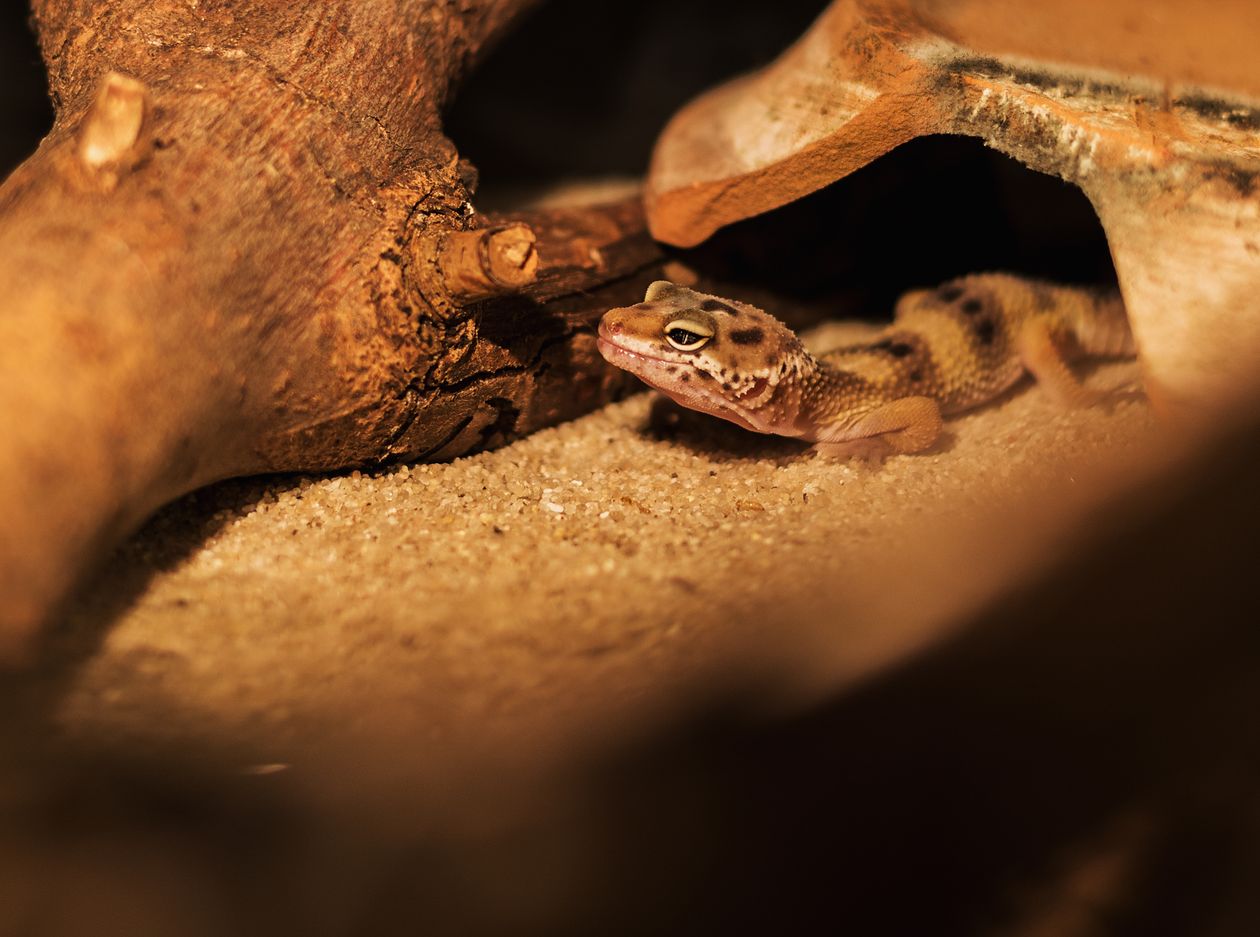
Think in three protected zones: warm hide for secure thermoregulation, cool hide for escape from heat, and humid hide for shedding support. A gecko should not have to sit exposed just to reach the temperature or humidity it needs.
What Size Tank Does an Adult Leopard Gecko Need?
Current care sources do not all use the same minimum, so it is better to show the disagreement than pretend there is one universally accepted number.
| Source | Adult enclosure guidance | How to interpret it |
|---|---|---|
| RSPCA | Minimum 60 × 40 × 30 cm; enclosure should be as large as possible | Formal welfare minimum, but relatively small by current hobby standards |
| PetMD (2026) | 20 gallons or larger | Veterinarian-reviewed baseline; emphasizes larger when available |
| ReptiFiles | No smaller than 36 × 18 × 18 in, about 4.5 sq ft of floor area | Modern welfare-oriented target focused on terrestrial floor space |
| Royal Veterinary College | As large as possible to allow exercise and a thermal gradient | Focuses on function rather than one gallon label |
For a new U.S. setup, 36 × 18 × 18 inches is a sensible practical target because it makes it easier to create separate warm and cool zones while still fitting three hides, water, feeding space and enrichment. It should not be described as a universal veterinary law; it is the roomier modern target among the sources above.
Floor area matters more than tall empty air because leopard geckos are primarily terrestrial. They can use low rocks and branches, but this is not an arboreal-gecko enclosure.
The Warm–Cool–Humid Hide Map
WARM END → heat source + low UVB overlap + warm hide + broad rock/slate
MIDDLE / TRANSITION → humid hide + covered route + feeding area
COOL END → cool hide + fresh water + shaded lower-UVI area
The exact humid-hide position can be adjusted, but placing it in a moderately warm part of the enclosure helps maintain usable localized humidity without turning the whole tank damp.
| Zone | Main job | Key item |
|---|---|---|
| Warm | Thermoregulation / digestion | Secure warm hide beneath or beside controlled heat |
| Humid microclimate | Shedding support | Enclosed humid hide with moisture-retaining material |
| Cool | Escape from heat / resting | Secure cool hide + water |
RSPCA specifically recommends several hides distributed across the enclosure so the gecko can choose temperature without sacrificing security. PetMD likewise recommends warm- and cool-side hiding areas plus a humid hide for shedding.
Heat Gradient: Measure the Gecko's Microclimate, Not the Lamp Label
RSPCA currently recommends a basking/warm zone around 28–30°C (82–86°F) with the opposite end around 24–26°C (75–79°F). PetMD uses a broader warm-end range of 80–90°F and cool-end range of 75–80°F.
The numbers differ partly because sources do not always describe the exact same measurement point. What matters is a repeatable gradient that gives the animal choice.
Use three measurement tools correctly
| Tool | What to measure | Where |
|---|---|---|
| Digital probe thermometer | Warm-side ambient / controlled heat zone | At gecko height, not touching the lamp |
| Second digital probe | Cool-side ambient | Near the cool hide |
| IR temperature gun | Surface temperature | Rock/slate and substrate areas the gecko actually contacts |
All heat sources should be controlled appropriately. RSPCA requires thermostat control and recommends checking actual temperatures daily because thermostat displays are not perfect measurements. PetMD also requires thermostat control for under-tank heaters and warns against hot rocks.
What about heat mats?
Sources still differ. RSPCA allows a thermostatically controlled heat mat in specific situations, especially for supplemental night heat, while PetMD lists both overhead and under-tank options. A modern setup can use overhead radiant heat, provided the source is guarded where necessary, controlled and measured properly.
Never use a hot rock. Concentrated contact heaters can burn reptiles and do not create a useful whole-enclosure thermal gradient.
Does a Leopard Gecko Need UVB?
Modern evidence supports giving leopard geckos access to low-level UVB. A 2020 controlled study showed that juvenile leopard geckos exposed to low-level UVB had significantly higher blood 25-hydroxyvitamin D3 than geckos receiving dietary D3 alone, confirming that the species can synthesize vitamin D3 through UVB exposure.
The study also found similar growth over the first six months in exposed and non-exposed groups, so it does not prove that UVB is the only way to prevent deficiency when dietary D3 is adequate. It does prove that calling leopard geckos “unable to use UVB because they are nocturnal/crepuscular” is incorrect.
RSPCA's current practical target
- 2–5% UVB tube appropriate to the enclosure;
- roughly one-half to one-third of enclosure length toward the warm end;
- UVI around 0.7 at the basking zone;
- gradient down to 0 in shade;
- 12 hours light / 12 hours dark;
- follow manufacturer distance guidance and verify output where possible with a UVI meter.
Mesh partially blocks UVB, so fixture strength and distance cannot be copied blindly from another setup. Pale/red-eyed morphs may be more light-sensitive; RSPCA advises seeking reptile-vet guidance for red-eyed morphs.
Setup principle: low UVB should overlap the warm active zone while multiple shaded hides remain available. The goal is a photogradient, not bright UV across the entire enclosure.
Ambient Humidity and the Humid Hide Are Two Different Things
Leopard geckos come from dry scrubland, but they still use moist microclimates for shedding.
RSPCA recommends general cool-end humidity around 30–40%. PetMD uses a broader “under 50%” enclosure target. The important part is to avoid turning the whole enclosure tropical while still providing a dedicated moist refuge.
Humid hide setup
- use a hide with a waterproof bottom;
- fill with damp—not dripping—moss or another appropriate moisture-retaining material;
- keep the entrance smooth and large enough to enter comfortably;
- mist/refresh as needed to keep the hide moist;
- replace organic material before it becomes moldy or dirty;
- keep the rest of the enclosure relatively dry.
RSPCA says to spray the humid-hide material with clean water every few days as needed; PetMD notes moist sphagnum moss can help healthy shedding and should be replaced frequently to prevent mold.
Patify's existing leopard gecko swollen-eye guide explains why retained shed around the eye/toes matters and when a shedding problem has crossed into veterinary territory.
How to Set Up the Three Functional Hides
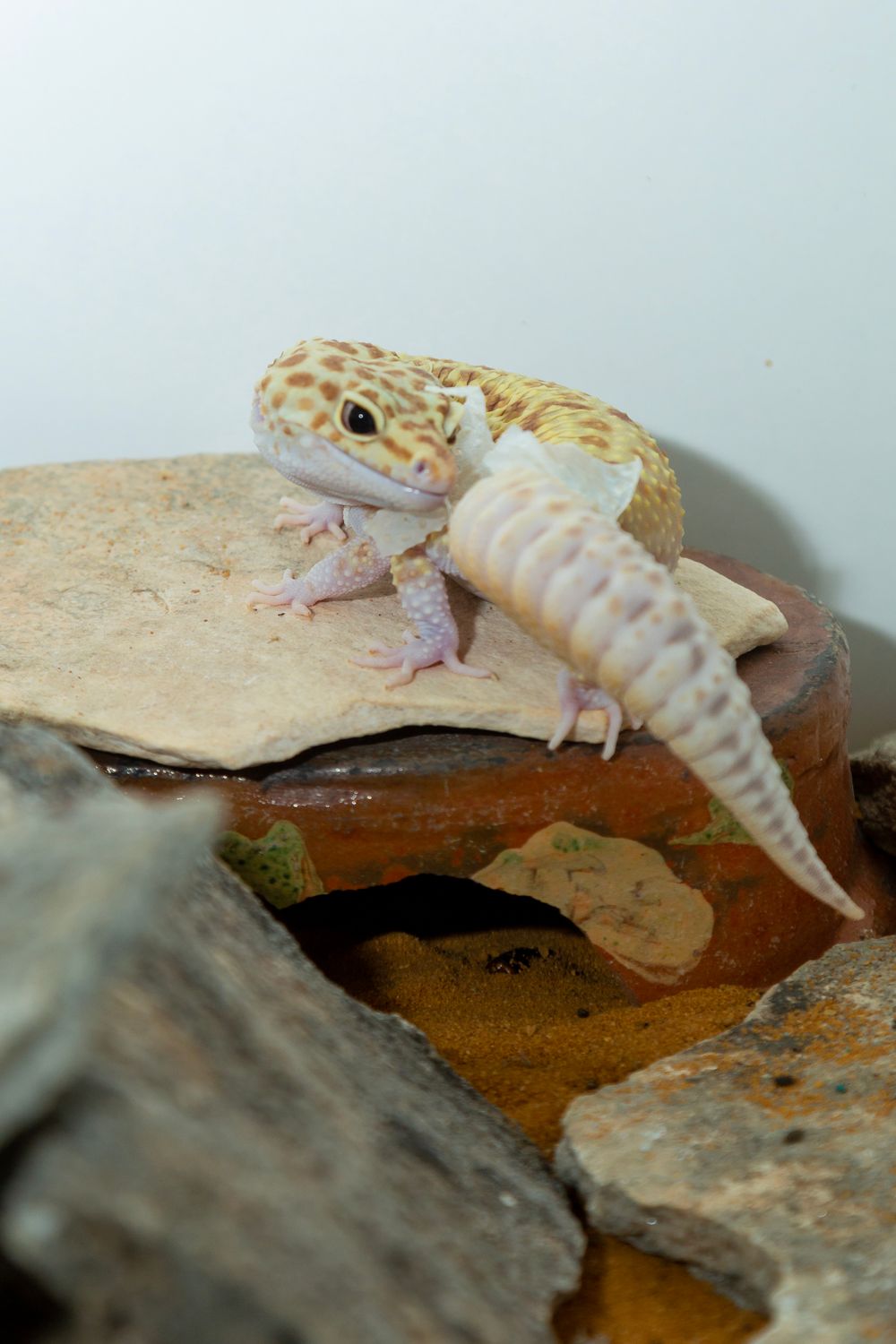
Warm hide
Place it in the warm zone so the gecko can thermoregulate while concealed. A warm side with no cover forces the animal to choose between safety and temperature.
Cool hide
Put a second secure hide at the cool end. Water can also sit on this side so it does not unnecessarily raise warm-end humidity.
Humid hide
Use a moisture-retaining enclosed hide, generally in the warm-to-middle portion of the enclosure. It should stay locally humid while the rest of the tank remains relatively dry.
More than three hides is fine if space remains functional. RSPCA explicitly recommends several hiding places throughout the enclosure.
Substrate: Keep #29 Simple and Save the Full Decision for the Substrate Guide
Substrate recommendations also differ by source, so this tank-setup page uses a conservative decision rule.
| Situation | Practical setup choice |
|---|---|
| New / very young / sick / unassessed gecko | Paper towel, paper or another easy-monitoring non-loose surface |
| Healthy established adult | Naturalistic substrate can be considered when heat, hydration and feeding are correct |
| Solid-floor setup | Rough slate/stone or clay-style substrate can provide traction and levels |
RSPCA says a healthy adult in a well-set enclosure can use approximately 50% organic soil + 50% suitable sand, while PetMD is more conservative and warns that swallowed loose substrate can obstruct the gastrointestinal tract. Both agree that hazardous particulates such as walnut shell/gravel-style bedding are poor choices.
The next Patify article, `leopard-gecko-substrate`, will handle the full sand/topsoil, slate, paper, clay and bioactive decision matrix. This page intentionally does not duplicate that search intent.
Rocks, Low Branches and Cover: Make the Floor Usable
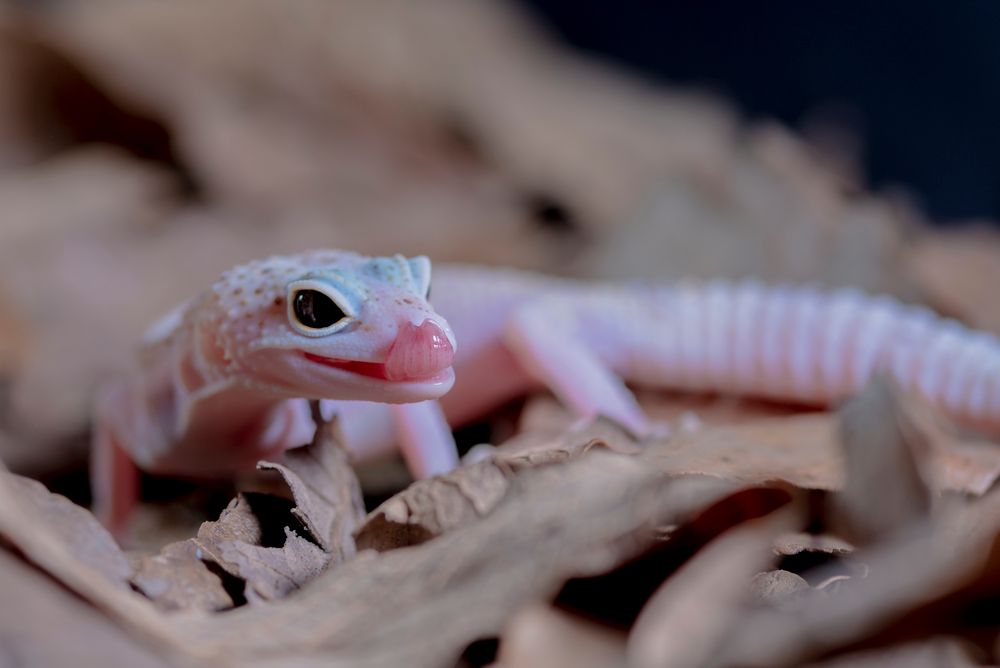
RSPCA recommends low sturdy branches and rocks for climbing/enrichment. Royal Veterinary College also recommends hides and environmental structure. The key is low, stable, terrestrial complexity.
Useful furnishings
- flat rock/slate at the warm end;
- low broad branch or cork piece;
- rock ledges that cannot collapse;
- artificial or verified non-toxic plants for visual cover;
- multiple covered routes between hides.
Do not stack heavy rocks directly on loose substrate where digging can undermine them. Support hardscape from the enclosure base or another secure foundation.
Food, Calcium and Water Placement
RSPCA recommends a shallow dish of clean fresh water at all times, placed at the cool end and changed at least daily.
Food
- use an escape-resistant worm/feeder dish when appropriate;
- remove uneaten insects so they do not bite the gecko;
- avoid letting prey disappear under inaccessible décor;
- keep feeding controlled if loose substrate is used.
Calcium
RSPCA recommends a small dish of plain calcium powder available for voluntary licking while livefood is supplemented according to the chosen product and UVB system. Because vitamins/minerals can be overdosed, supplement schedules should follow product and reptile-vet guidance rather than a generic internet calendar.
House One Leopard Gecko Per Enclosure
RSPCA recommends keeping leopard geckos singly because they do not need social company and can be aggressive. PetMD permits some female combinations under monitoring but also acknowledges stress and competition risks.
For a beginner setup, one gecko per enclosure is the lower-risk default. A larger tank does not remove:
- competition for the best warm hide;
- food monopolization;
- stress from another gecko's presence;
- injury risk;
- difficulty identifying whose stool/appetite changed.
A tank setup should therefore be planned around one animal, not “how many geckos fit.”
Leopard Gecko Tank Setup Shopping List
| Item | Job | Setup note |
|---|---|---|
| 36 × 18 × 18 in-class enclosure | Terrestrial floor space | Practical modern adult target; secure ventilation/doors |
| Controlled heat source | Warm zone | Appropriate thermostat required |
| Heat-source guard where needed | Burn protection | Gecko must not contact hot element |
| Low-level UVB system | Vitamin D3 / calcium physiology + photogradient | Target source-specific low UVI with shade |
| Timer | Consistent day/night cycle | About 12 h on / 12 h off per RSPCA |
| 2 digital probe thermometers | Warm/cool ambient checks | One at each end |
| IR temperature gun | Surface checks | Warm rock and substrate spots |
| Digital hygrometer | Ambient humidity | Monitor cool end |
| Warm hide | Secure warm retreat | Large enough to turn/rest |
| Cool hide | Secure cool retreat | Keep shaded |
| Humid hide | Localized shedding humidity | Waterproof bottom + damp material |
| Water dish | Hydration | Shallow, stable, cool side |
| Feeder/worm dish | Controlled feeding | Especially useful with loose substrate |
| Safe substrate | Traction / sanitation | Choose by health and husbandry stage |
| Low rocks/branches/cover | Enrichment and protected routes | Stable and easy to clean |
A product bundle is only useful if it creates the correct measured environment. A kit that contains the wrong heater, no thermostat, inadequate floor area or no humid hide is not automatically a complete setup.
Run the Tank for 7 Days Before the Gecko Moves In
RSPCA recommends running the vivarium for at least one week before introducing the gecko. This is one of the highest-value setup steps because it catches environmental problems without exposing the animal to them.
| Day | Check |
|---|---|
| Day 1 | Install heat, thermostat, UVB, timer and monitoring instruments; confirm all guards/locks |
| Day 2 | Record warm and cool temperatures through a full light cycle |
| Day 3 | Measure ambient humidity; adjust ventilation if the whole tank is too humid |
| Day 4 | Set the humid hide; confirm it stays moist without soaking the enclosure |
| Day 5 | Check UVB geometry / UVI if a meter is available; verify shaded retreat |
| Day 6 | Test furnishings for movement, collapse and escape routes; simulate cleaning |
| Day 7 | Repeat all readings; confirm the system is stable before move-in |
Commissioning log
Warm zone: ______
Cool zone: ______
Overnight minimum: ______
Cool-end humidity: ______
Humid hide: moist / too wet / too dry
Basking UVI (if measured): ______
Shade UVI: ______
Heat controlled by thermostat? Yes / No
Doors/mesh secure? Yes / No
12 Common Leopard Gecko Tank Setup Mistakes
- Using only one hide. Security must exist across the temperature gradient.
- Skipping the humid hide. Dry ambient air does not remove the need for a shedding microclimate.
- Keeping the whole enclosure humid. Localize moisture instead.
- Using one center thermometer. Measure warm and cool zones separately.
- Using an uncontrolled heater. Heat sources require suitable control.
- Using a hot rock. Burn risk without a useful gradient.
- Assuming crepuscular means “UVB cannot help.” Controlled research confirms cutaneous vitamin D3 synthesis under UVB.
- Putting UVB across every inch with no shade. Provide a low-UVI-to-zero gradient.
- Choosing a tall narrow tank. Terrestrial floor space is more valuable.
- Leaving the enclosure bare. Use stable cover and low climbing routes.
- Cohabiting because the tank is large. One-gecko housing is the safer beginner default.
- Buying the gecko before testing the setup. Run the habitat first.
Frequently Asked Questions
What size tank does a leopard gecko need?
Sources differ. PetMD lists 20+ gallons for an adult and RSPCA lists 60 × 40 × 30 cm as a minimum, while modern ReptiFiles guidance recommends at least 36 × 18 × 18 inches. A 36 × 18 × 18 in enclosure is a strong practical adult target because it gives more usable floor area for separate microclimates.
How many hides does a leopard gecko need?
Plan for three functions: a warm hide, a cool hide and a humid hide. More secure cover is fine if it does not block movement or the thermal gradient.
What temperature should a leopard gecko tank be?
RSPCA recommends about 28–30°C (82–86°F) at the basking/warm zone and 24–26°C (75–79°F) at the cool end. PetMD uses a broader 80–90°F warm-end and 75–80°F cool-end range. Measure your actual warm and cool zones rather than relying on heater wattage.
What humidity does a leopard gecko need?
RSPCA gives about 30–40% ambient humidity at the cool end; PetMD recommends under 50%. Maintain a separate humid hide rather than keeping the whole enclosure wet.
Do leopard geckos need UVB?
Modern evidence shows they can synthesize vitamin D3 from low-level UVB. RSPCA recommends low UVB with a basking UVI around 0.7 and shade down to zero. Dietary D3 still matters according to the overall supplement/UV plan.
Where should the humid hide go?
A moderately warm middle-to-warm area usually works well because the hide can retain useful moisture without making the whole enclosure humid. Monitor the material so it remains damp but not moldy or waterlogged.
Can I keep two leopard geckos together?
RSPCA recommends keeping them singly. Competition and aggression can occur even when obvious fighting is not seen, so one gecko per enclosure is the lower-risk default.
Should I use sand?
Substrate guidance differs. RSPCA permits a suitable soil/sand mix for healthy adults in well-set enclosures, while PetMD is more conservative about loose substrate. New, young or unassessed geckos are easier to monitor on non-loose flooring.
How long should I run the tank before bringing the gecko home?
RSPCA recommends at least one week. Use that period to stabilize heat, humidity, UVB, hides, furniture and monitoring equipment.
Bottom Line: Build Three Secure Microclimates Before You Buy the Gecko
A reliable leopard gecko enclosure should let one gecko:
- hide while warm;
- hide while cool;
- enter a localized humid hide for shedding;
- move through stable covered routes;
- receive low-level UVB with true shade;
- drink and eat without unnecessary substrate risk;
- live in an environment whose temperature and humidity are measured rather than guessed.
Set the complete habitat up first, run it for a full week, record what the gecko would actually experience at floor level, and correct the enclosure before the animal arrives.