
🦎👁️ Leopard Gecko Swollen Eye: Retained Shed, Infection, Vitamin A Deficiency or Injury?
A leopard gecko that suddenly keeps one eye closed, develops eyelid swelling, or has debris around the eye needs careful assessment. Retained shed around the eyelids is one possibility, but conjunctivitis, corneal injury, foreign material, abscesses, and nutritional disease—especially hypovitaminosis A—can look similar. Because the eye is delicate, the safest approach is to correct husbandry, avoid picking or prying at the eyelids, and use a reptile-experienced veterinarian when swelling, discharge, pain, or persistent closure is present.
Important anatomy correction: Leopard geckos have movable eyelids. Unlike snakes and many other geckos, they do not have a permanent transparent spectacle or “eye cap.” Abnormal shedding can leave skin or keratin around/inside the eyelids, but a classic retained snake-style spectacle is not the correct diagnosis in this species.
Quick Answer: When Is a Swollen Leopard Gecko Eye Urgent?
Same-day reptile-vet care is the safest choice if the eye is bulging, visibly injured, bleeding, very cloudy, associated with thick yellow/green material, or the gecko is lethargic, losing weight, or refusing food. A closed eye that persists beyond a short period after shedding, or swelling that returns repeatedly, also deserves veterinary evaluation.
Do not use tweezers, fingernails, cotton swabs inside the eyelid, or human medicated eye drops. Do not force the eye open. Corneal scratches and ulcers can worsen quickly, and steroid-containing eye products can be dangerous when an ulcer or infection is present.
What Can Cause a Leopard Gecko's Eye to Swell or Stay Closed?
1. Retained shed / periocular dysecdysis
Skin retained around the eyelids can irritate the ocular surface and may trap keratin or debris. Recurrent shedding trouble often points to a husbandry or health problem rather than a one-off cosmetic issue.
2. Conjunctivitis or keratitis
Inflammation may follow retained debris, trauma, infection, or ocular-surface disease. Redness, persistent squinting, cloudiness, and discharge are reasons for an examination rather than repeated home manipulation.
3. Foreign material or trauma
Loose substrate, feeder-insect parts, or enclosure trauma can irritate or scratch the cornea. A veterinarian can stain the cornea and examine beneath the eyelids safely.
4. Hypovitaminosis A
Vitamin A deficiency is an important risk factor for leopard-gecko ophthalmic disease. It can cause abnormal epithelial tissue, ocular debris, poor shedding, and secondary infection. Treatment should be diet- and veterinarian-directed because vitamin A can also be overdosed.
5. Abscess or deeper orbital disease
A firm mass, pronounced asymmetry, or an eye pushed forward suggests disease deeper than simple retained skin. Imaging, sampling, drainage, or surgery may be required.
Retained Shed vs Infection: Signs That Help, but Do Not Diagnose
| Finding | More compatible with shed-related irritation | More concerning for infection / injury / deeper disease |
|---|---|---|
| Timing | Starts during or immediately after an abnormal shed | Starts independently of shedding or worsens steadily |
| Visible material | Dry skin/keratin around the eyelid margin | Thick discharge, blood, marked redness, ulcer-like cloudiness |
| Eye position | Usually normal | Bulging/protruding eye or pronounced asymmetric swelling |
| General condition | Often still alert and eating | Reduced appetite, weight loss, lethargy, dehydration |
| Response to husbandry correction | Mild periocular skin may loosen as hydration/humidity normalize | Persistent closure, swelling, pain or discharge despite corrected husbandry |
No home “cotton test” can reliably distinguish shed from infection. Softening or movement of material does not rule out corneal injury or infection. Veterinary ophthalmic examination—often including fluorescein staining and careful inspection beneath the eyelids—is far more informative.
Safe Home Care While You Arrange Veterinary Advice
Home care should be conservative. The goal is to support normal shedding and prevent additional injury—not to extract material from the eye.
Correct the humid microclimate
Leopard geckos are arid-adapted, so the entire enclosure should not be kept constantly humid. Current veterinary husbandry references place routine ambient humidity roughly in the low range, while emphasizing a much more humid hide during ecdysis. Provide a clean moist hide with damp paper towel or suitable moisture-holding material and good ventilation.
Check temperature, hydration, and cleanliness
Confirm an appropriate thermal gradient, fresh water, and a clean enclosure. Poor temperature and hydration can impair normal shedding and immune function.
Use sterile saline only for external debris
If dried debris is sitting on the skin around the closed eyelids, sterile saline may be used to moisten the outside gently. Do not insert swabs under the eyelid and do not peel material that is attached.
Photograph and monitor
Take a clear photo once or twice daily, note appetite and body weight if possible, and record the last shed. Repeated handling to “check” the eye can add stress and trauma.
Do not treat a swollen eye by raising the entire enclosure to 80%+ humidity. Leopard geckos need a humid refuge for shedding, not a permanently tropical enclosure. Excess humidity without ventilation can create other husbandry problems.
Vitamin A: One of the Most Important Pieces Owners Miss
A large veterinary teaching-hospital study found ophthalmic disease in 52 of 112 leopard geckos examined, with corneal/conjunctival disease prominent. Lack of vitamin A supplementation was associated with ophthalmic disease, and head dysecdysis was a significant concurrent finding. A 2026 UK retrospective study also identified ophthalmic disease as a common clinical category and presumptive hypovitaminosis A among the most frequent diagnoses.
Do not respond by giving large doses of vitamin A on your own. Review the feeder-insect variety, gut loading, and reptile multivitamin program with an experienced reptile veterinarian. Nutritional correction is safer when the actual supplement type, dose, frequency, age, weight, and diet are known.
Humidity and Shedding: Updated Husbandry Guidance
Exact humidity targets vary slightly across veterinary references and enclosure designs. The Royal Veterinary College advises approximately 30–40% ambient humidity with a humid hide. Merck's veterinary table lists leopard geckos at approximately 20–30% baseline humidity while specifically noting that humidity requirements are substantially higher during ecdysis. The practical takeaway is more important than chasing one number: keep the enclosure ventilated and relatively dry overall, but provide a reliably humid microclimate for shedding.
| Husbandry point | Practical target | Why it matters |
|---|---|---|
| Ambient enclosure | Dry-to-moderate, measured with a hygrometer; follow your reptile vet's enclosure-specific recommendation | Prevents both chronic dryness and excessive whole-enclosure humidity |
| Humid hide | Consistently moist during shedding, never stagnant or moldy | Provides the high-humidity microclimate needed for normal ecdysis |
| Ventilation | Good airflow | Reduces stagnant moisture and microbial growth |
| Substrate | Choose a safe, clean setup appropriate to the individual gecko | Loose sand has been associated with dysecdysis in recent clinical research; substrate can also contribute to irritation |
When to Call a Reptile Vet
🚨 Same day / urgent
- Eye is bulging or pushed forward
- Bleeding, penetrating injury, or obvious trauma
- Marked corneal cloudiness or suspected ulcer
- Thick yellow/green discharge or rapidly increasing swelling
- Severe lethargy, weakness, or major appetite/weight change
⚠️ Prompt appointment
- Eye remains closed or swollen after the shed has finished
- Problem persists more than 24–48 hours despite corrected husbandry
- Episodes keep recurring
- Both eyes are repeatedly affected
- There is visible debris that cannot be removed without pulling
✅ Monitor closely
- Small amount of loose skin around the eyelid after a shed
- No redness, discharge, swelling, or behavioral change
- Skin is already detaching naturally after humid-hide use
What Might the Veterinarian Do?
Depending on the examination, a reptile veterinarian may inspect beneath the eyelids, flush trapped debris, perform fluorescein staining for a corneal ulcer, collect cytology or culture samples, assess diet and vitamin supplementation, and use imaging when a deeper orbital mass is suspected. Medication depends on the diagnosis. Antibiotics, antifungals, pain control, lubricants, nutritional treatment, or surgery are not interchangeable—and this is why naming a specific eye drug before examination can be unsafe.
Frequently Asked Questions
Do leopard geckos have eye caps like snakes?
No. Leopard geckos are eyelid geckos. They have movable eyelids rather than the permanent transparent spectacle seen in snakes and many other gecko species. Retained shed can still collect around or within the eyelids and injure the ocular surface.
Can retained shed make a leopard gecko keep its eye closed?
Yes. Periocular retained skin or keratin can irritate the eye and contribute to conjunctivitis or keratitis. Persistent closure should not be treated as “just shed,” especially if it recurs.
Can I pull off shed with tweezers?
Not around the eye. The risk of corneal or eyelid injury is too high. Support normal shedding with a humid hide and let a reptile veterinarian handle material attached near the ocular surface.
Can I use human antibiotic eye drops?
Not without veterinary direction. The wrong medication may fail to treat the cause, and products containing corticosteroids can be dangerous if a corneal ulcer is present.
Could vitamin A deficiency cause repeated eye problems?
Yes. Veterinary studies support hypovitaminosis A as an important risk factor for leopard-gecko ophthalmic disease. However, vitamin A should be corrected carefully because excessive supplementation is also harmful.
Is a swollen eye always an emergency?
No, but eye problems deserve a low threshold for veterinary care. Mild loose periocular shed without swelling or discharge can be monitored; bulging, pain, discharge, trauma, cloudiness, or persistent closure warrants prompt examination.
Sources & Veterinary References
- Journal of the American Veterinary Medical Association / PubMed — ophthalmic disease in 52 leopard geckos
- Veterinary Record / PubMed — 2026 study of husbandry factors and disorders in leopard geckos
- Merck Veterinary Manual — reptile management, humidity and leopard-gecko husbandry
- Royal Veterinary College — Leopard Gecko Care
- Veterinary Partner / VIN — retained spectacles and the eyelid-gecko distinction
Track sheds, diet and vet notes with Patify
Recording shed dates, appetite, weight changes, supplements, enclosure changes and eye photos gives your reptile veterinarian a much clearer history when a problem recurs.
DOWNLOAD PATIFY FREEThe Bottom Line
A leopard gecko with a swollen or closed eye should not automatically be labeled “retained eye cap.” Leopard geckos have eyelids, and similar symptoms can arise from retained periocular shed, corneal/conjunctival disease, foreign material, nutritional deficiency, or deeper orbital disease. Correct the humid hide and basic husbandry, avoid manipulating the eye, and seek reptile-veterinary care when the eye is swollen, painful, discharging, cloudy, bulging, or not improving quickly.
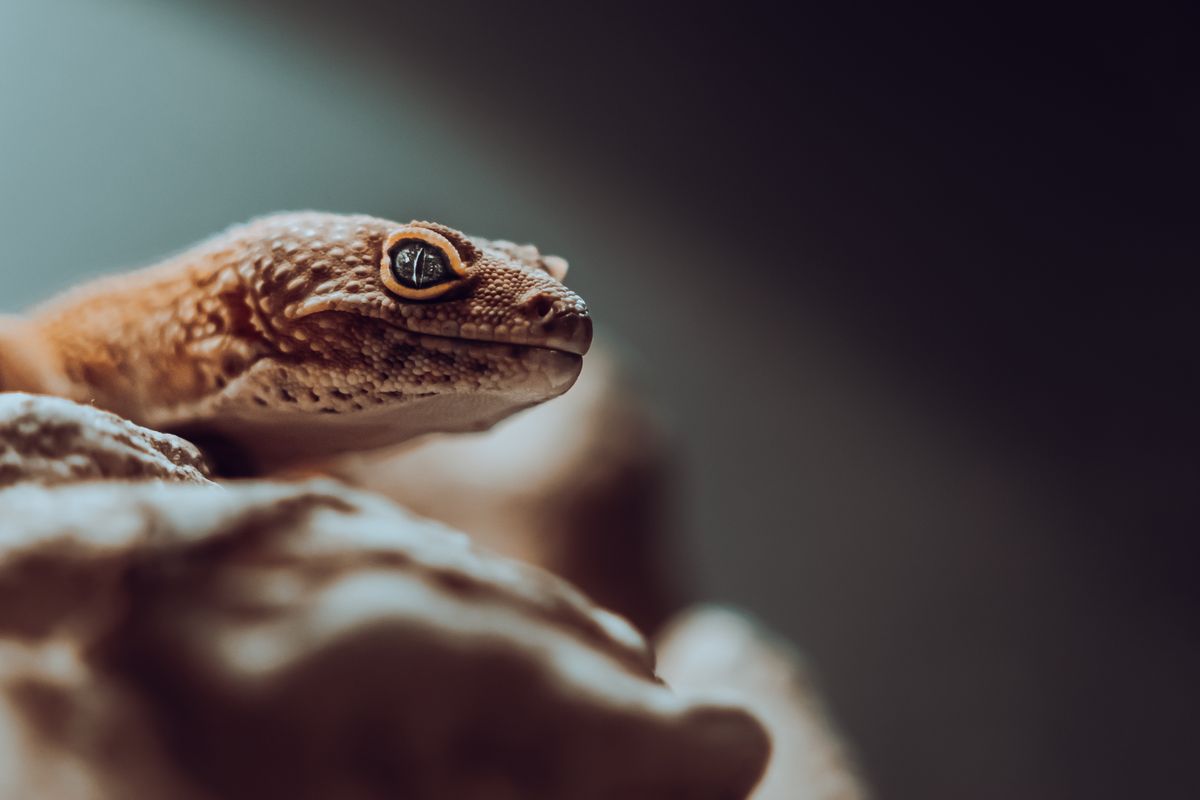
Cover photo: Caden Van Cleave via Pexels — free to use under the Pexels license.